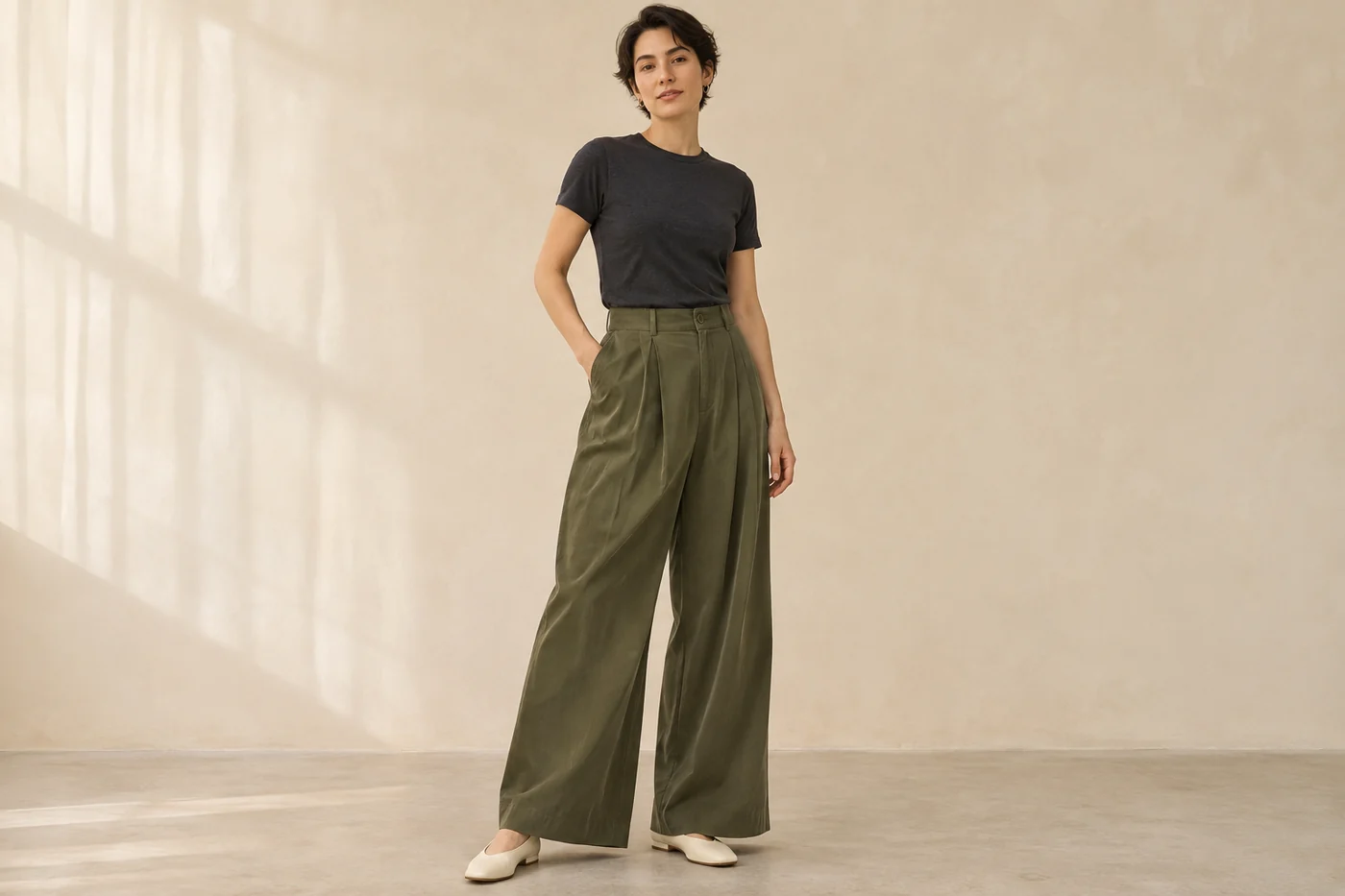
A small top can mean short, close-fitting, narrow-shouldered or simply visually quiet. Those are different choices. You can pair a compact top with a wide bottom without making the top tight or exposing skin. Decide which dimension you want to reduce, then let the skirt, short or trouser carry the larger shape.
This guide uses three different bottoms so the idea does not become another rule about wide trousers. The point is to see clothing boundaries clearly, not to correct a body or make every outfit reproduce the same silhouette.
Separate short from fitted
A boxy tee can be short and roomy. A long tank can be close-fitting. A short cardigan can have generous sleeves. Each creates a different upper shape even when a photograph might call all three small tops. Choose the feature that helps your outfit rather than searching for one ideal category.
For more coverage, try a waist-length tee over a thin longer base in a similar color. For less upper volume without a shorter hem, tuck a comfortable tank into a secure waistband. The relevant question is whether the arrangement stays where you want it during the day. You do not need an exposed waist to create a clear boundary.
Wide skirt formula: let the fullness start visibly
Try a short navy tee with a cream A-line midi and dark strapped flats. The tee's hem ends near the skirt waist, so the skirt's width can be seen from its beginning. The upper half can remain relaxed through the shoulder and sleeve. A plain tee also leaves the skirt movement as the main visual interest.
If your tee is longer, compare a loose tuck instead of buying a cropped version. Sit and reach forward, then see where the fabric settles. With a fuller skirt, a bulky knot or tight belt may add another shape you do not want. Try the simplest secure arrangement before adding accessories to explain the waist.
Wide shorts formula: compare two horizontal boundaries
Try broad knee-length shorts with a compact sleeveless knit and low sneakers. The knit and short hems create two clear upper-and-lower boundaries, while the shoe adds a third endpoint. A charcoal knit with stone shorts and black sneakers is a quiet first version that lets those lengths show.
Short width and short length are separate. A knee-length pair can still feel narrow through the thigh, and a broad pair can finish well above the knee. Use the pair you actually own and compare its opening with your chosen shoe. If the outline feels crowded, a different sock height may change the spacing without replacing the shorts.
Wide trouser formula: use fit or length as the contrast
Try full navy trousers with a close-fitting gray tank and an open short shirt. The tank creates a compact center, while the shirt supplies optional coverage and a firmer outer edge. The trousers remain the main width. You can remove the shirt if the base works for your setting, or keep it as part of the complete outfit.
A short boxy tee gives a different result with the same trousers: more upper width, but still a clear hem. Compare those versions rather than assuming fitted is the only opposite of wide. Set the trouser hem with the actual shoes so excess length does not become confused with intentional leg width.
Choose an outer layer that has a job
A short jacket repeats the compact upper boundary. A long open coat creates a larger frame around the whole outfit. A medium-length overshirt may cover the top-to-bottom transition and produce a broader column. Any of those can work; decide whether the layer should reveal, frame or replace the small-top effect.
For example, keep the cream skirt and navy tee, then compare a short dark cardigan with a long open denim shirt. The cardigan reinforces the skirt's visible start. The shirt adds a relaxed vertical frame and more side volume. These are different styling directions, not different levels of success at disguising a body.
Use color to reinforce or soften the split
A pale top above a dark bottom creates a strong division even when both pieces are loose. Similar colors can make a fitted top and broad bottom read as one continuous shape. If you like compact-over-wide proportions but want a quieter result, compare navy with charcoal instead of cream with black.
Keep the shoe fixed while making that color comparison. Otherwise a new sole color can add another contrast at the foot and make it harder to see what the top changed. You can repeat a top color in the shoe or bag, but the outfit does not need a repeated color to be legitimate. A single light panel can stand on its own.
Keep the version that works in movement
Reach, sit and walk in each combination. Check whether a close-fitting top rides up, a short top exposes more than you want or a tucked hem becomes uncomfortable. Choose a different length or coverage layer when needed; there is no styling achievement in maintaining a pose throughout the day.
Save one skirt, short or trouser outfit with a note about what made the upper shape feel compact. That note might be short hem, tucked center or quiet neckline. It is more useful than a body-type label, because it points to a clothing relationship you can repeat with other pieces you already enjoy.
Put the idea to work
Your wardrobe. Your version.
Sources and scope.
These combinations and styling examples are original editorial proposals. They are not a wear test, a statement of product availability or a manufacturer’s fit recommendation.
What this article can establish
- Outfit formulas are editorial proposals, not photographs of exact purchasable sets or results from a wear test.