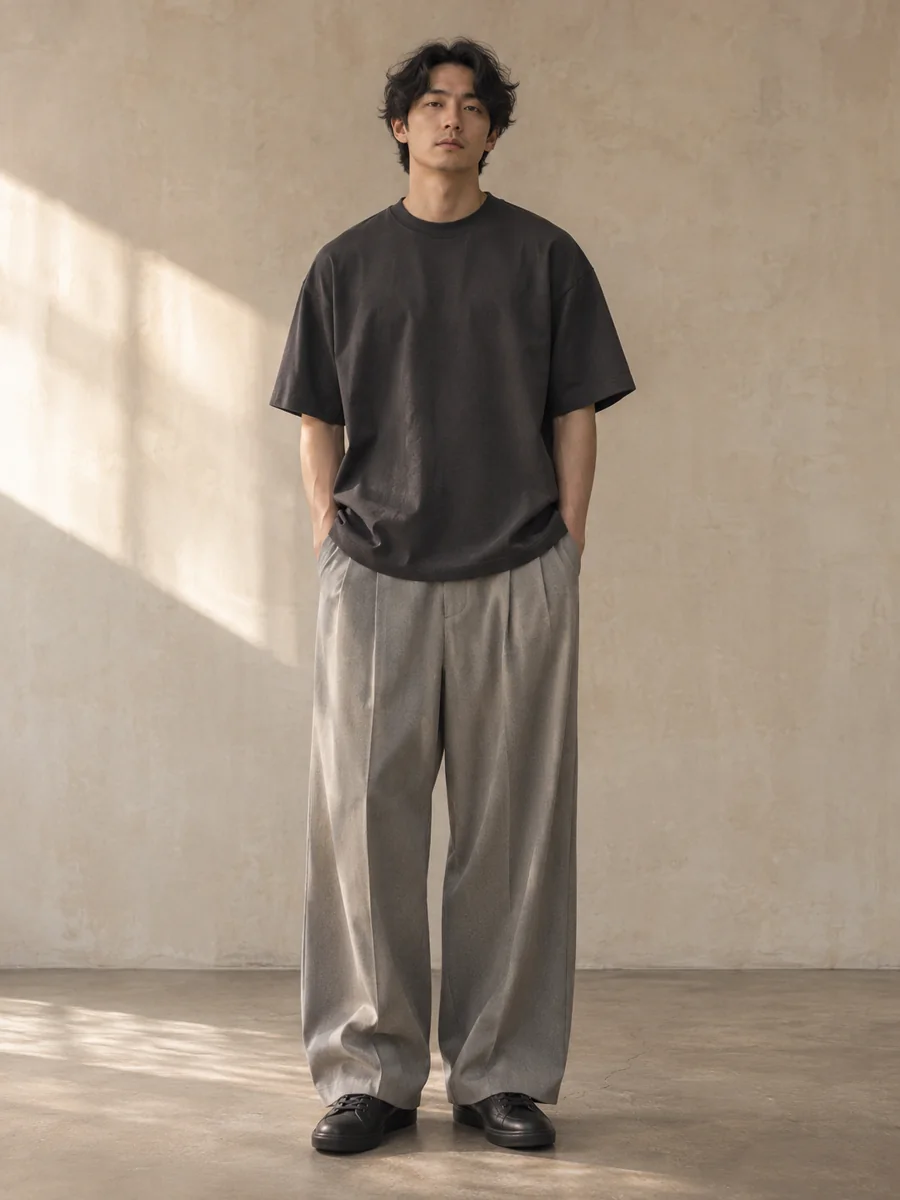
Establish the waist, then the hem
Wide-leg trousers become easier to style when you settle their position at the waist and their meeting with the shoe before choosing a top. A secure waistband lets the fabric hang. A deliberate hem gives the broad leg an endpoint. The top can then be short, long or layered without having to compensate for trousers that keep slipping.
Try them with the shoes you expect to use most. Stand normally rather than lifting the waistband for a mirror photograph. Check front, side and back, then walk a few steps. The aim is a comfortable line you can repeat, not a proportion that exists only while you hold a particular pose.
Make room for the pleats to work
Pleats need space to open when you move and fall back when you stand. If they spread outward constantly at the waist, examine the fit rather than assuming the trousers simply need pressing. A very tight belt can also pull the waistband into a shape that interrupts the intended drape.
Fabric changes the result. A fluid trouser makes softer folds, while a firmer material holds a broader outline. Neither should be judged by the same still image alone. Sit down, check the rise and move your legs. Choose a shape that feels natural in those positions before deciding how much volume to add above it.
Use a boxy tee for the clearest casual version
A boxy tee with broad trousers and low shoes creates a simple two-part silhouette. The tee does not need to cling to provide balance. Its shoulder width, sleeve length and hem can give it a clear boundary while the lower half remains generous. Keep accessories limited until those larger relationships feel right.
If the tee covers most of the trouser rise, try a shorter tee or a relaxed partial tuck. A tuck should leave enough fabric for comfortable movement. Do not pull it so tightly that the front looks clean but the sides strain. Check the side profile after sitting, because the hem may settle differently from its initial arrangement.
Boxy tee, wide-leg trousers
Add a soft blazer without building a suit
A navy soft blazer, light fine knit, grey relaxed trousers and simple sneakers creates a more composed version. The blazer frames the torso, while the fine knit avoids adding too much bulk beneath its front. The trousers can stay broad because the upper layers have recognisable edges and relatively quiet surfaces.
Compare blazer length with the trouser rise. A longer blazer can work, but its hem should not feel accidentally suspended over a mass of fabric. Check the entire line from shoulder to shoe. If the combination looks heavy, first simplify the knit or trouser break. Choosing narrower trousers is only one possible adjustment, not the automatic answer.
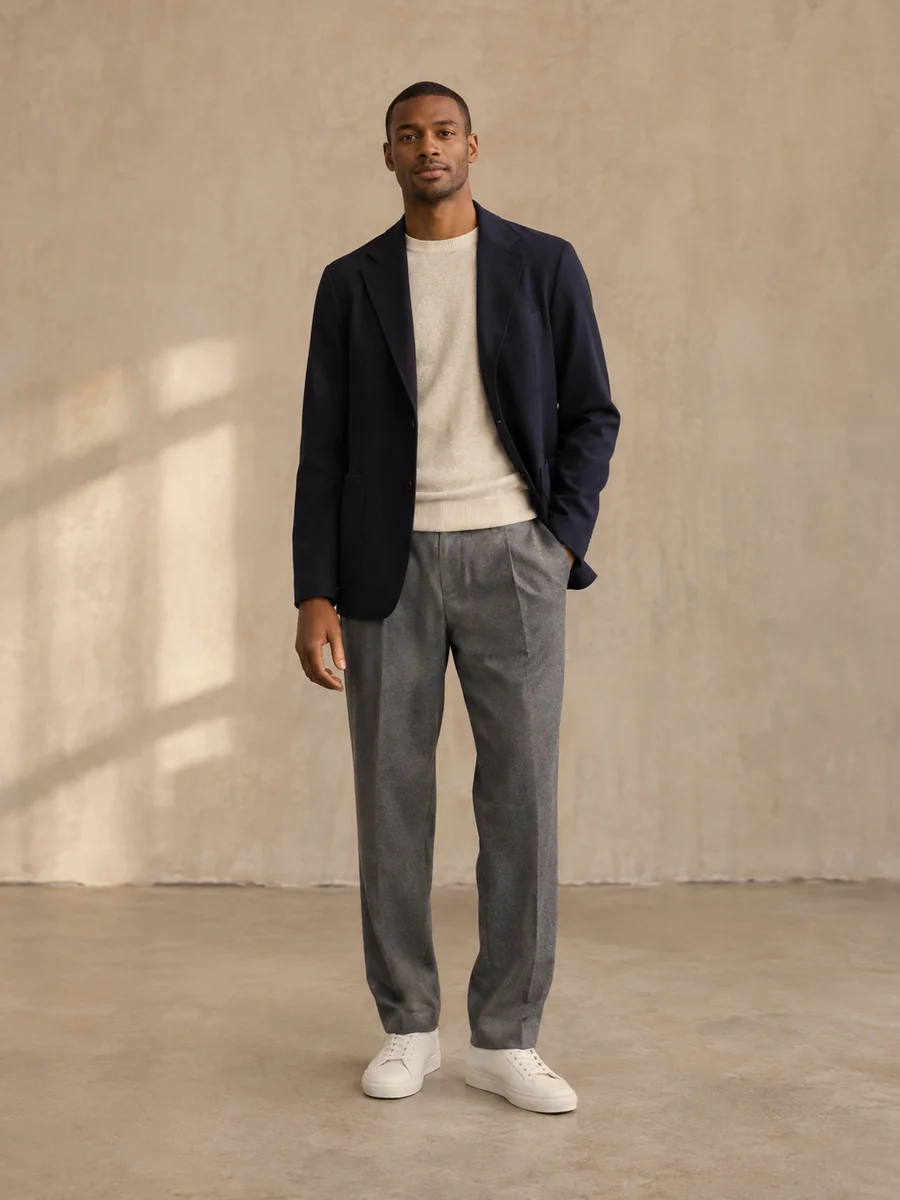
Navy soft blazer with relaxed grey trousers
Try a shorter outer layer with pleated trousers
A brown bomber over a grey crewneck, charcoal pleated trousers and black loafers lets the trousers occupy more of the visible outfit. The short jacket creates a strong dividing line. Keep the crewneck hem contained enough that the bomber still reads as the shorter layer.
The loafers introduce a low, relatively compact endpoint, so inspect how much trouser fabric sits over them. A deep pile can swallow the shoe and obscure the intended line. A light break or a more direct drop may work better with your particular pair. Have the length assessed with those shoes rather than asking for a generic trouser measurement.
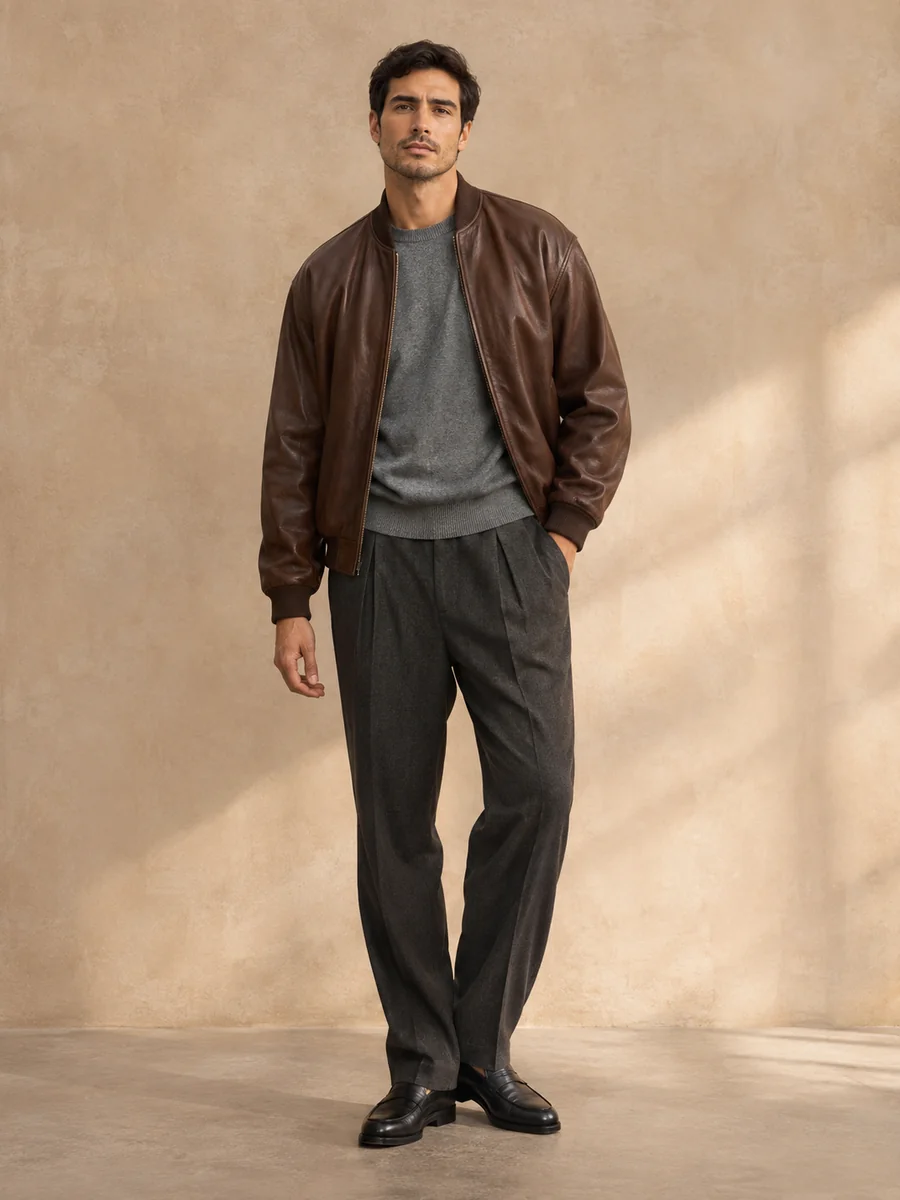
Brown bomber with charcoal pleated trousers
Use a vest or a long coat for different outlines
A forest knit vest over a white Oxford, with roomy black trousers and derbies, gives the top half a short, defined layer. Keep the shirt tails controlled so the vest does not float over a long white panel. A relaxed tuck can connect the shirt to the trouser waist while leaving comfortable room at the shoulders.
A navy overcoat, grey knit, wide charcoal trousers and boots creates a different approach: one long outer line around a quiet base. Here the coat can provide the boundary the trousers need. The two formulas show why a short top is helpful but never the only way to wear wide trousers.
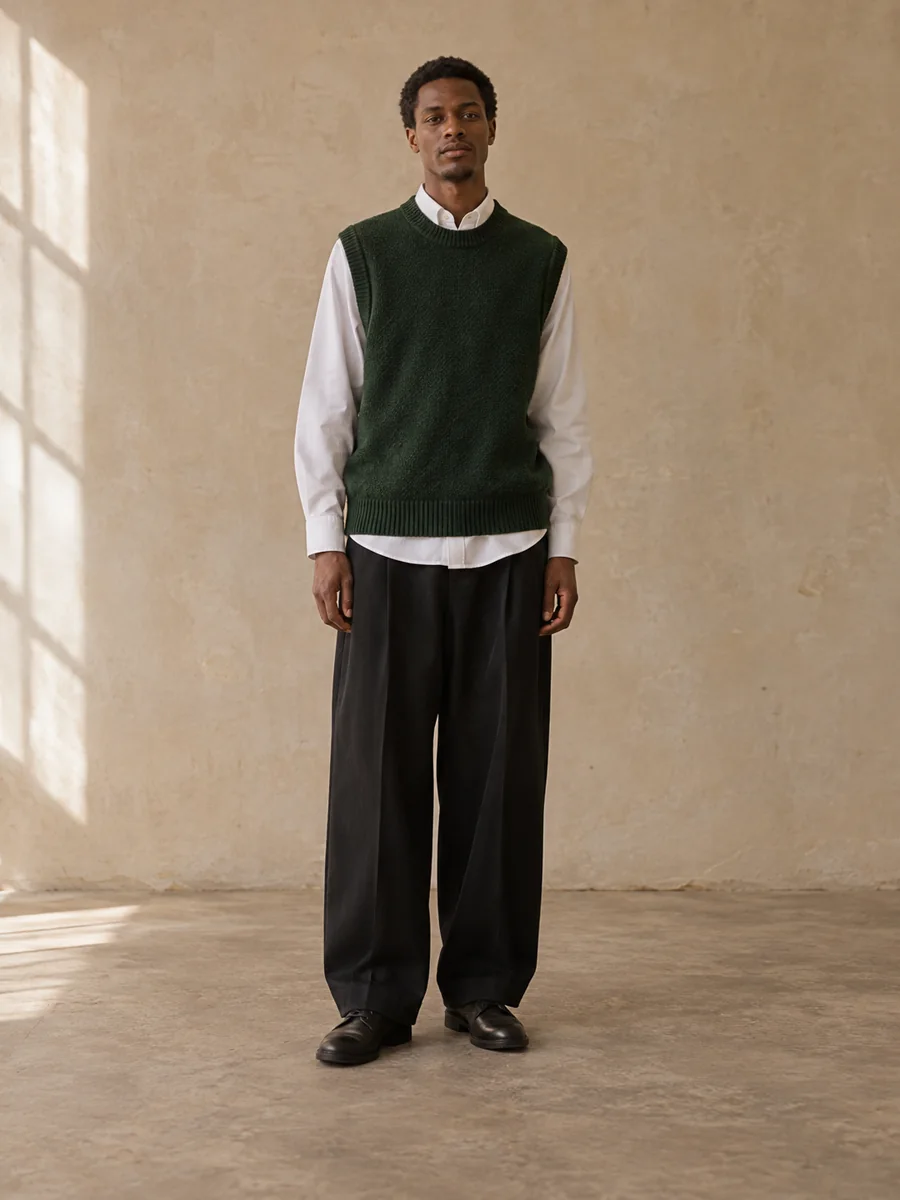
Forest knit vest with a white Oxford
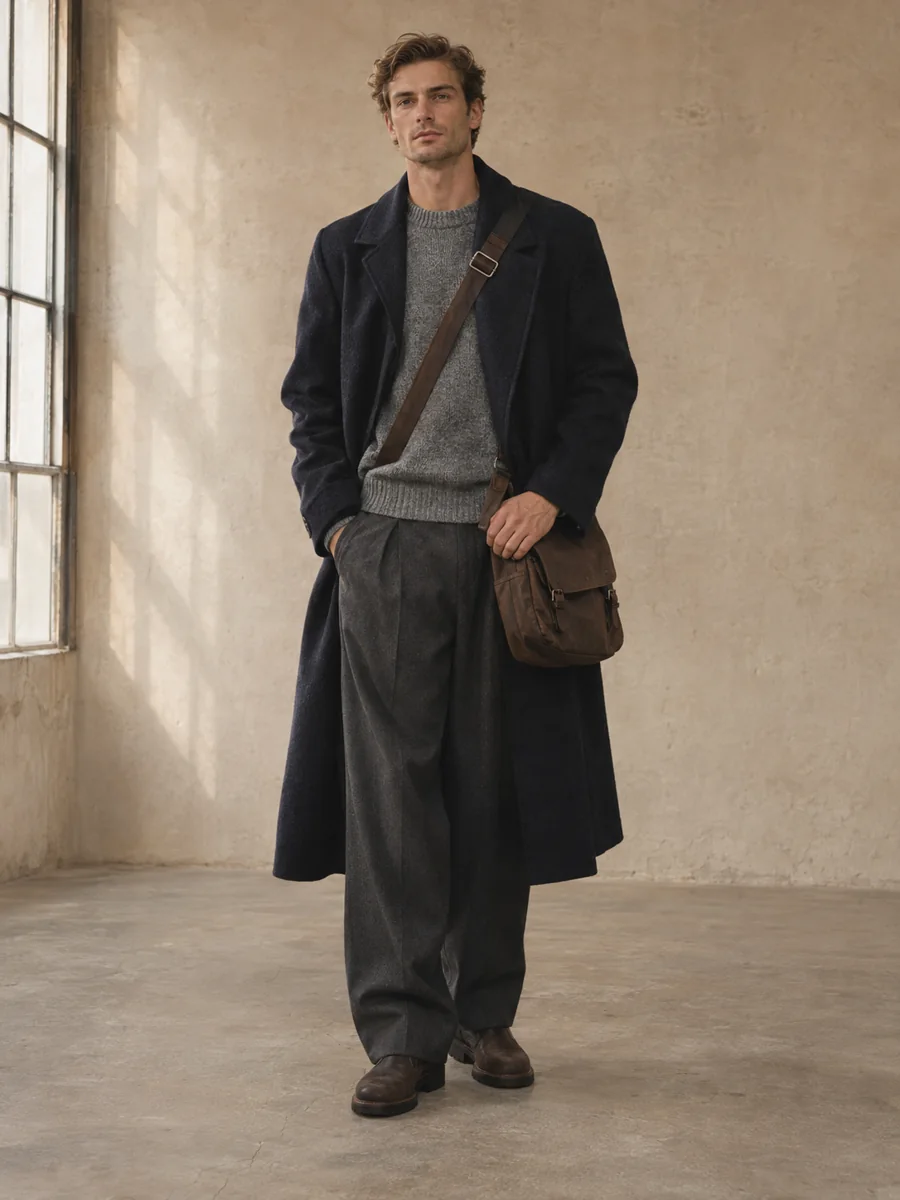
Long navy coat with wide charcoal trousers
Decide which adjustment actually solves the issue
If the outfit looks shapeless, identify where the shape disappears. Is the waistband hidden, the top unusually long, the coat too crowded with layers, or the trouser hem collecting on the shoes? Change one relationship at a time. Several simultaneous tweaks make it difficult to know which one helped.
Check practical details before finishing: pocket access, seated comfort, belt tension and whether the hem catches under a heel. Wide trousers can be casual or more dressed up depending on their fabric and partners. They do not guarantee either effect by themselves. Keep the occasion in view and use the silhouette as a tool rather than a rigid rule.
Explore more outfit ideas or compare the style files.