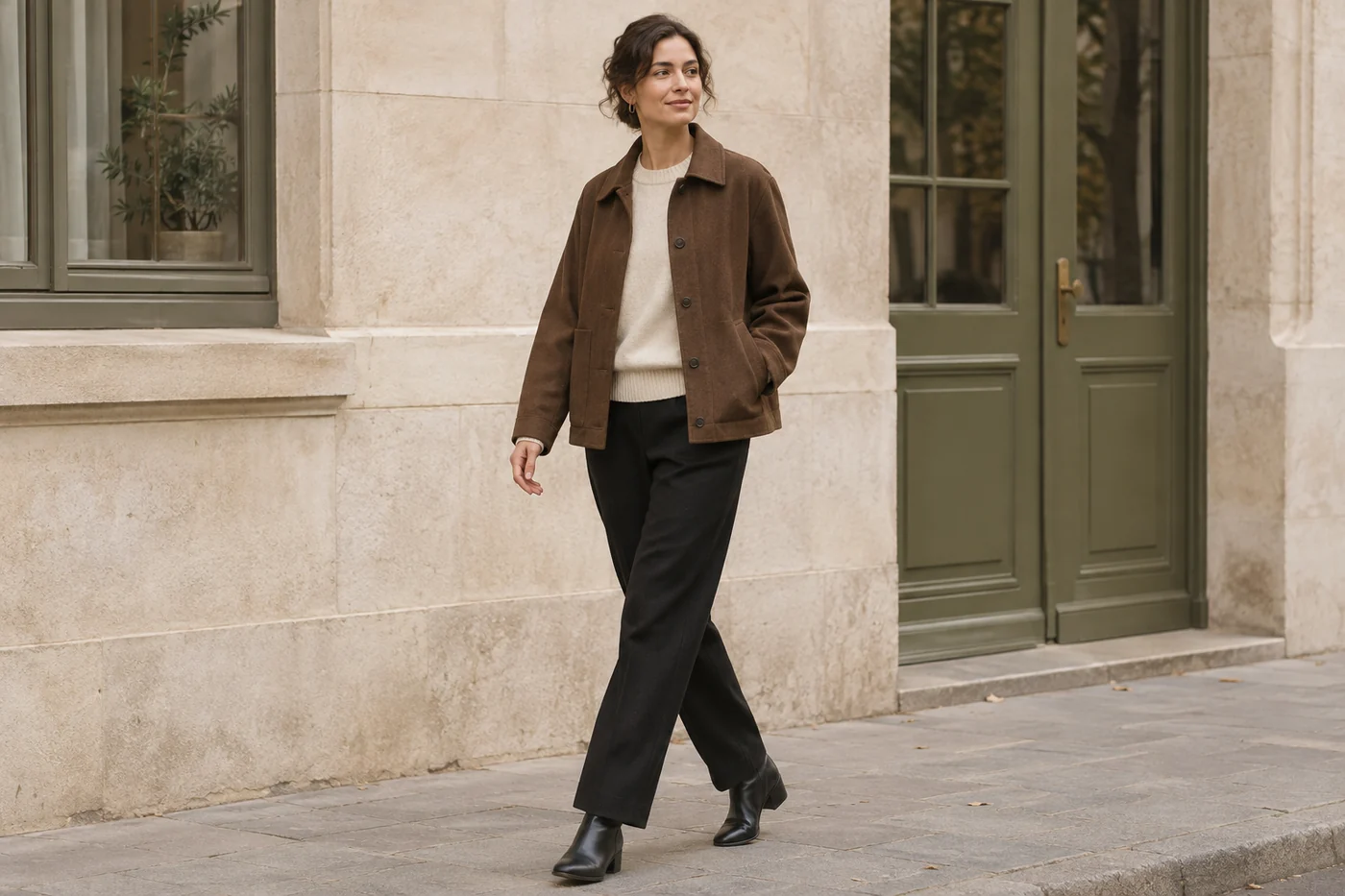
Dark brown, black and cream can make a useful outfit palette when each color has a clear place. Black can form the base, brown an outer frame and cream a small light panel. You can also reverse those roles. The colors do not need to match a rigid formula; they need to look intentional to you in the actual clothes.
Begin with two substantial garments and one smaller area. Compare them together in ordinary light, because a brown that looks almost black on a screen may separate clearly in person, or the other way around.
Choose the color roles before adding more pieces
Think in visible areas rather than a required number of items. A cream tee beneath a brown jacket is only a narrow panel if the jacket stays mostly closed. A cream coat would occupy much more of the outfit. The same three color names can therefore produce very different balances.
Set the clothes beside one another, then put them on. Decide which color should be most visible, which should frame it and which should make the clearest contrast. You do not need a numerical proportion or a matching accessory for each one. The exercise works because it gives each garment a purpose, not because it obeys a color percentage.
Formula one: black base, brown outer frame, cream center
Try black straight trousers, a cream tee and a dark brown jacket with black shoes. The trousers and shoes provide a continuous dark lower half. The brown jacket frames the light center. Keep the tee neckline simple while deciding whether you like that clear pale panel.
Compare the jacket open with the jacket fastened. Open, the cream becomes more visible and the outfit feels more divided. Fastened, brown occupies more of the torso and the tee may appear only at the neck. Save the arrangement you will actually use; a palette that depends on holding the jacket open may not reflect your normal day.
Formula two: cream lower half beneath dark layers
Try cream wide trousers, a black crewneck and a dark brown cardigan with black loafers. The large light lower shape becomes the main contrast. Keep the crewneck and cardigan lengths deliberate so they do not form several almost-aligned hems around the hip. A shorter knit can reveal more of the trouser rise.
The black shoes connect to the black center without needing a black belt. Compare another dark shoe you already own before buying an exact match. If the lower contrast feels too strong, try a darker cream or stone bottom, or use the first formula with cream in a smaller area. The preference belongs to the outfit, not a universal rule about light trousers.
Formula three: a dress as the dark base
Try a black midi dress, dark brown blazer and cream scarf or small bag with dark flat shoes. The dress supplies one long black panel, while the brown jacket changes the upper frame. The cream accessory is the lightest area without becoming a second large garment.
Use either the scarf or bag for the first version. A scarf changes the neckline and can cover the blazer's lapels; a bag adds contrast lower or at the side. They do different work even in the same color. Choose the accessory whose placement improves the arrangement you want rather than adding both to make the palette more obvious.
If brown and black merge, decide whether that matters
A very dark brown cardigan can look close to black against black trousers. You may enjoy that subtle difference. If you want more separation, use a visible front opening, a different surface or a small cream panel. A light base beneath the cardigan can distinguish its edges without replacing either dark piece.
Do not infer exact fibre content from a textured appearance. A smoother black trouser and visibly ribbed brown knit can create contrast through their surfaces even when the colors are close. Examine them in the light where you expect to wear them. A heavily edited reference image can exaggerate both the color gap and the texture.
Keep hardware and accessories quiet until the palette works
A visible belt buckle, bag hardware and jewelry can become additional points of contrast. Add them after the larger color areas are settled. Brown shoes do not require a precisely matching brown bag, and black shoes do not prevent you from using a brown jacket. Look at their actual visible areas in the full outfit.
For a restrained version, repeat a dark color at the foot and keep the bag close to the main outer layer. For a more expressive version, let a cream bag interrupt the dark shapes. Both can use the same garments. The accessory choice should change something you can name, such as where the lightest area sits.
Keep a palette note you can reuse
Save one complete outfit and note the color roles: black base, brown frame, cream center, for example. That note transfers to another set of garments without pretending the replacement pieces are identical. A cream shirt may occupy more space than the original tee; reassess the visible balance rather than trusting the color names alone.
Use a color tool as a way to compare ideas, then verify the real pieces together. Screen swatches cannot guarantee dye matching or how a fabric looks in different light. You already have a useful palette if it helps you wear existing pieces more often; you do not need another brown or cream item simply to complete a theoretical set.
Put the idea to work
Your wardrobe. Your version.
Sources and scope.
These combinations and styling examples are original editorial proposals. They are not a wear test, a statement of product availability or a manufacturer’s fit recommendation.
What this article can establish
- Outfit formulas are editorial proposals, not photographs of exact purchasable sets or results from a wear test.