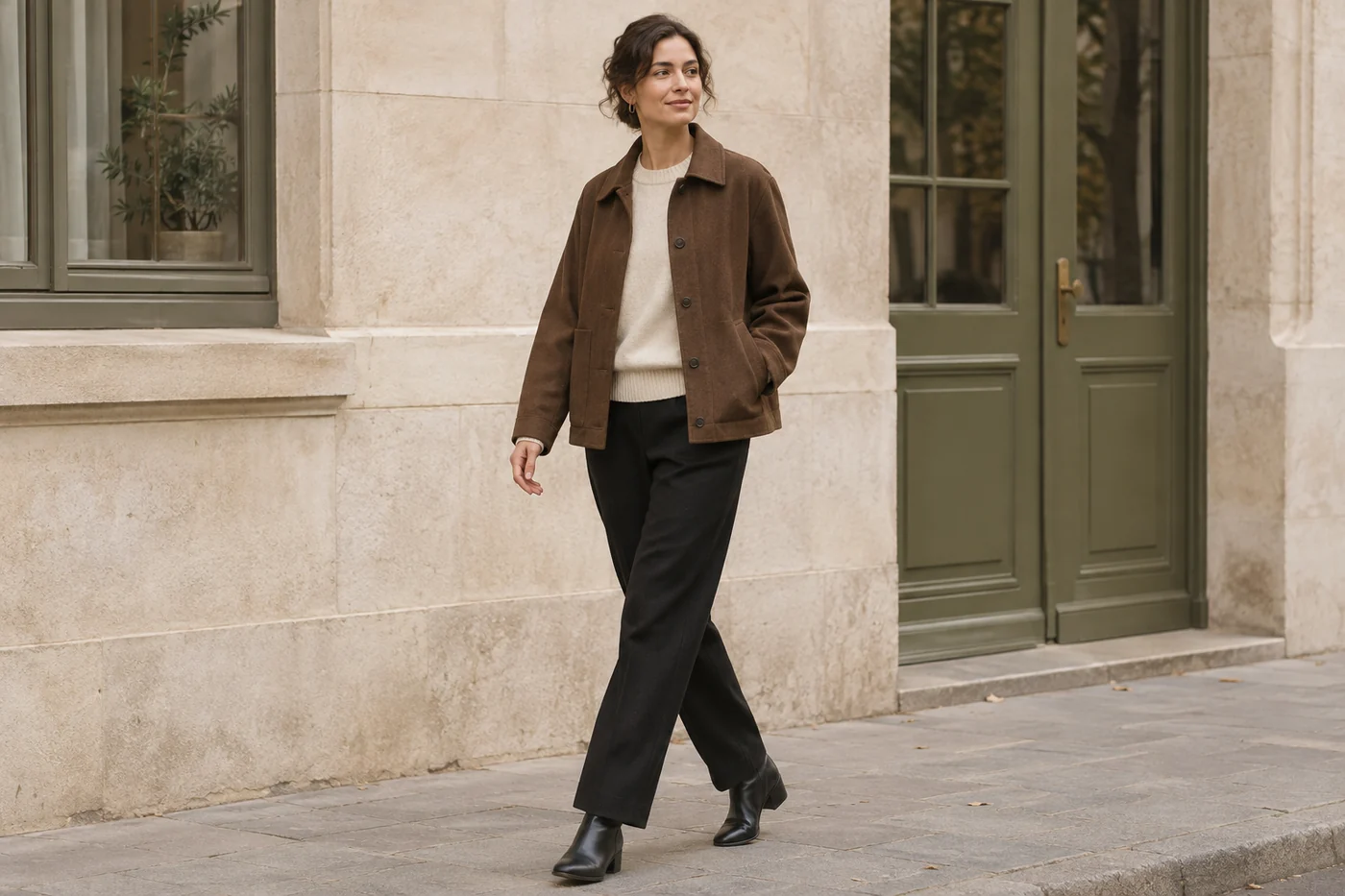
A simple base gives you a stable place to try a stronger idea. Keep the clothes that already feel easy to wear, then change the outline, the surface or one focal detail. Comparing those versions makes it clearer which part of an inspiration you actually enjoy.
The base does not have to be black, tight or anonymous. It could be a blue tee with relaxed trousers, a plain midi dress, or a cream shirt with a straight skirt. Simple means that you understand its main shapes and can repeat it comfortably. Your base can occupy any part of a gender expression or size range.
Choose a base with a settled silhouette
Put on the top, bottom and shoes you reach for together, or use a one-piece garment with familiar footwear. Check the neckline, waistband and hem as worn normally. Resolve an uncomfortable fastening or a dragging hem before deciding the outfit needs a more interesting accessory.
For the comparison here, imagine a navy tee, gray straight trousers and dark sneakers. Keep those three pieces fixed at first. The purpose is to see what a change does to the outfit. It is not a claim that navy and gray are better foundations than brighter colors or patterned clothes.
Version one: change the outer outline
Add a short, broad jacket above the straight trousers. The upper half now has a clearer horizontal edge. Remove it and try a long open coat instead. The coat supplies two longer edges and changes how much of the base remains framed between them. Those are different compositional ideas even in the same color.
Choose the one you enjoy while moving and using your bag. You can prefer the larger outline without narrowing the rest of the outfit. If a jacket needs a different top length, record that dependency; the expression may come from two cooperating pieces rather than one statement purchase.
Version two: change the surface
Return to the original base and add a layer with a visibly different surface, such as a ribbed-looking cardigan or a patterned overshirt. Keep the outline close to a layer you already like so the surface becomes the main variable. Look at the outfit from a normal distance, not only in a close-up photograph.
Use the description the evidence supports. A nubbled surface does not identify wool, and a smooth sheen does not prove silk. For an item you own, read the composition label. For an inspiration image, describe what you can see: coarse texture, shine, fine stripe or matte finish. Those observations are enough to guide a styling experiment.
Version three: place one accent deliberately
Return to the unchanged base once more. Try a bright bag, a visible belt, a scarf or an unusual shoe that you already own. Choose where you want attention to sit and compare its scale against the surrounding clothes. A small vivid bag at the hip creates a different emphasis from a broad scarf around the shoulders.
There is no requirement to repeat the accent color elsewhere. Repetition is one option; a single isolated color is another. If the bag and shoe both compete for the effect you want, remove one and compare. The useful decision is specific to this outfit, rather than a permanent limit on the number of expressive pieces you may wear.
Transfer the experiment to a dress or skirt base
Try a plain dress with a short jacket, then the same dress with a longer open layer. Keep the footwear fixed. For a skirt base, compare a broad bag carried at the hip with a smaller bag worn higher. These changes let you explore outline and placement without assuming a trouser outfit is the default.
Use your own comfort and access needs to set the arrangement. A scarf that crowds a neckline or a bag strap that interferes with movement is giving you useful practical information. Adjust the placement, the object or the whole idea. You do not need to disguise a body feature to make an outfit considered.
Keep the version you would use again
Make separate boards for the silhouette, surface and accent experiments. Keep the base pieces identical while comparing, then save the version that feels worth wearing. A moodboard note such as long frame around a quiet base is more reusable than a shopping link with no explanation.
You can combine two successful ideas later: the long coat and the bright bag, for example. Try them together before assuming their separate success will transfer. Expressive dressing can develop through small, repeatable decisions. The base simply helps you understand which decision changed the look and whether you want that effect again.
Put the idea to work