Give one piece the clearest job
An eclectic outfit can mix colors, patterns and textures while still making one choice easiest to notice. Begin with the piece you want to use: a patterned cardigan, a bright jacket or an unusual shirt. Keep the first supporting pieces simple enough that you can see what that choice is doing.
There is no requirement to make every garment equally expressive. A plain trouser or shoe can connect several details above it. Try the base alone before adding the statement piece so you know which part changes the overall effect.
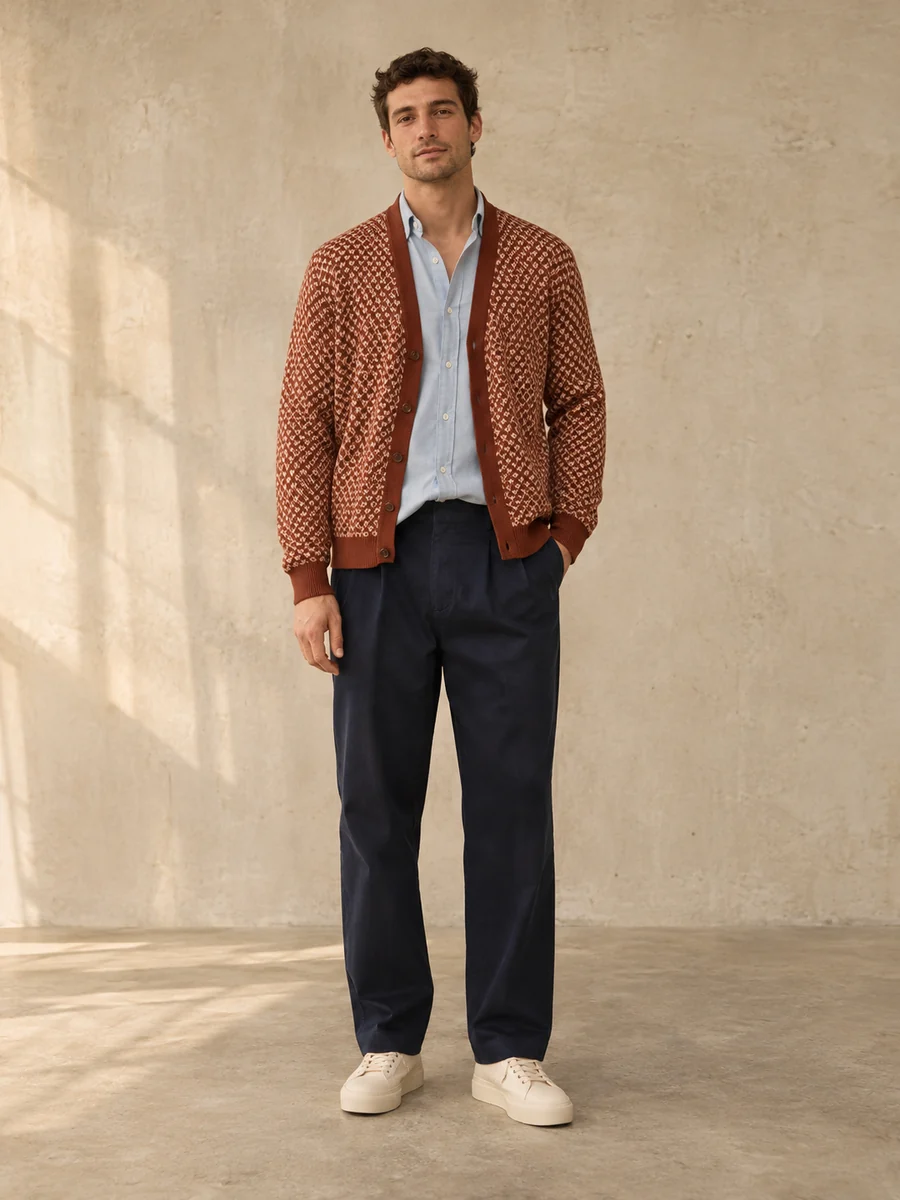
Use a patterned cardigan as the larger detail
Rust patterned cardigan over a pale blue shirt places a rust patterned cardigan over a blue shirt and navy trousers. The cardigan supplies the main pattern; the quieter trouser area gives it space. The blue shirt is a color decision with its own boundary rather than a second large all-over motif.
Look at the outfit at normal conversation distance. A pattern that appears busy close up may combine into a calmer surface farther away. Keep that distance similar when comparing another shirt or fastening the cardigan.
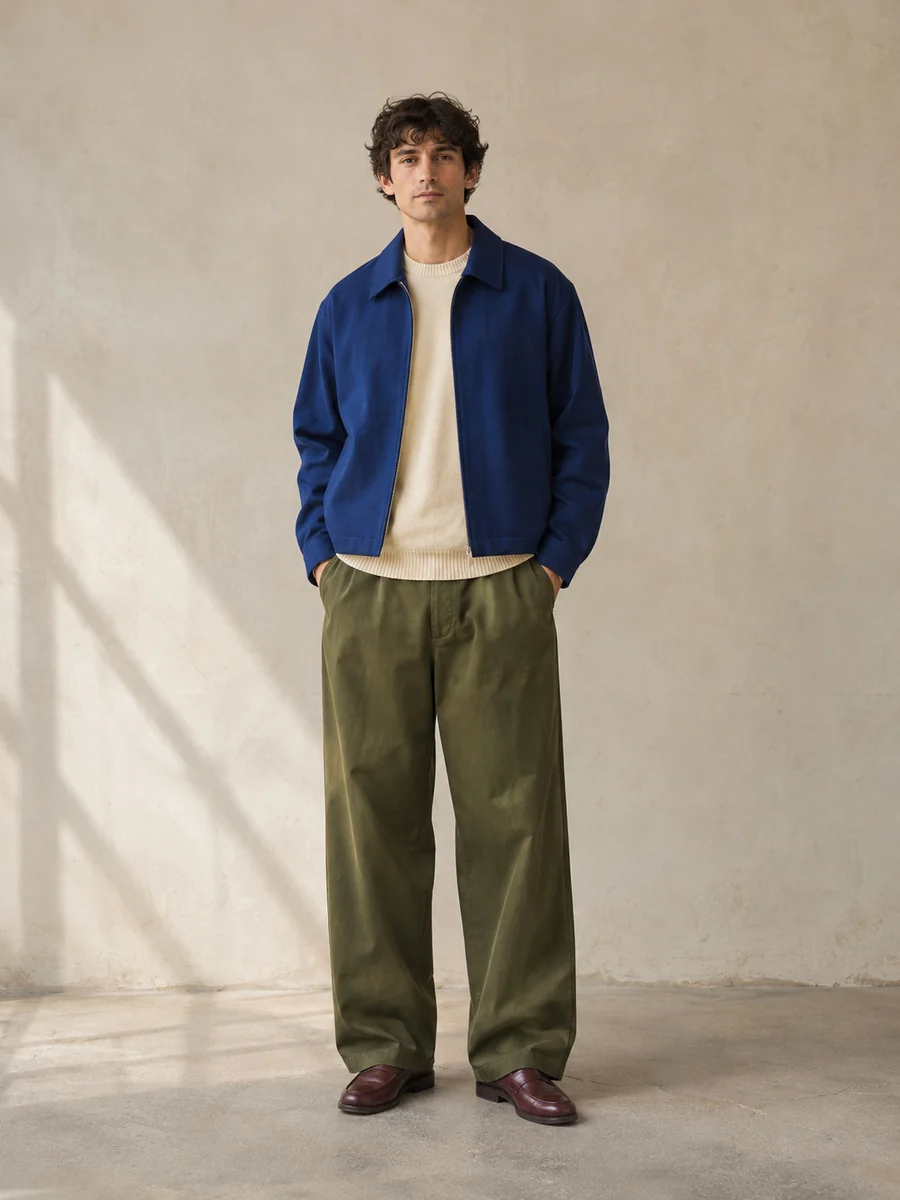
Make a bright jacket the outer frame
Cobalt jacket, ecru knit and olive trousers uses a cobalt jacket, ecru knit and olive trousers. The jacket provides one large bright area around a lighter center, with a more muted lower half. The point is the placement of those areas, not a universal rule that these colors must always be combined.
If you want another accent, repeat a small part of a color already visible. Then inspect the outfit without that addition. A repeat can connect two areas, but it should not become an obligation to match a hat, bag, socks and shoes exactly.
Mix pattern through scale and spacing
When trying two patterns, compare the size of their repeat and the amount of plain space between them. A small stripe under a larger check gives you a different relationship from two checks of nearly the same size. The patterns guide shows a controlled comparison with the rest of the outfit unchanged.
If both compete for attention, separate them with a plain layer or replace one with texture. A ribbed knit can add visual interest without introducing another printed repeat. Make one adjustment so you can tell which change helped.
Practice with a pattern that already has clear colors
Brown rugby stripes with navy track pants and a cream beanie puts a brown-and-cream rugby stripe above navy track trousers. The top contains its own repeated color relationship, while the lower half stays comparatively calm. It is a useful practice case because you can borrow the idea of one clear patterned area without needing the same garment or a full sporting reference.
Put one patterned top beside two plain trousers you own. Choose one trouser color already present in the pattern and one that is not. Inspect the complete combinations rather than the swatches alone, keeping the shoes unchanged. You may prefer the repeated color, or the separate color may make the patterned top easier to notice. The exercise identifies your chosen balance rather than proving one universal palette rule.
Then try an outer layer open and closed. The visible patterned area changes even though you have not bought or swapped anything. If that adjustment supplies the amount of detail you want, keep it as part of the formula. Add a second pattern only when it has a clear job, and keep a plainer version in your notes for easy reuse.
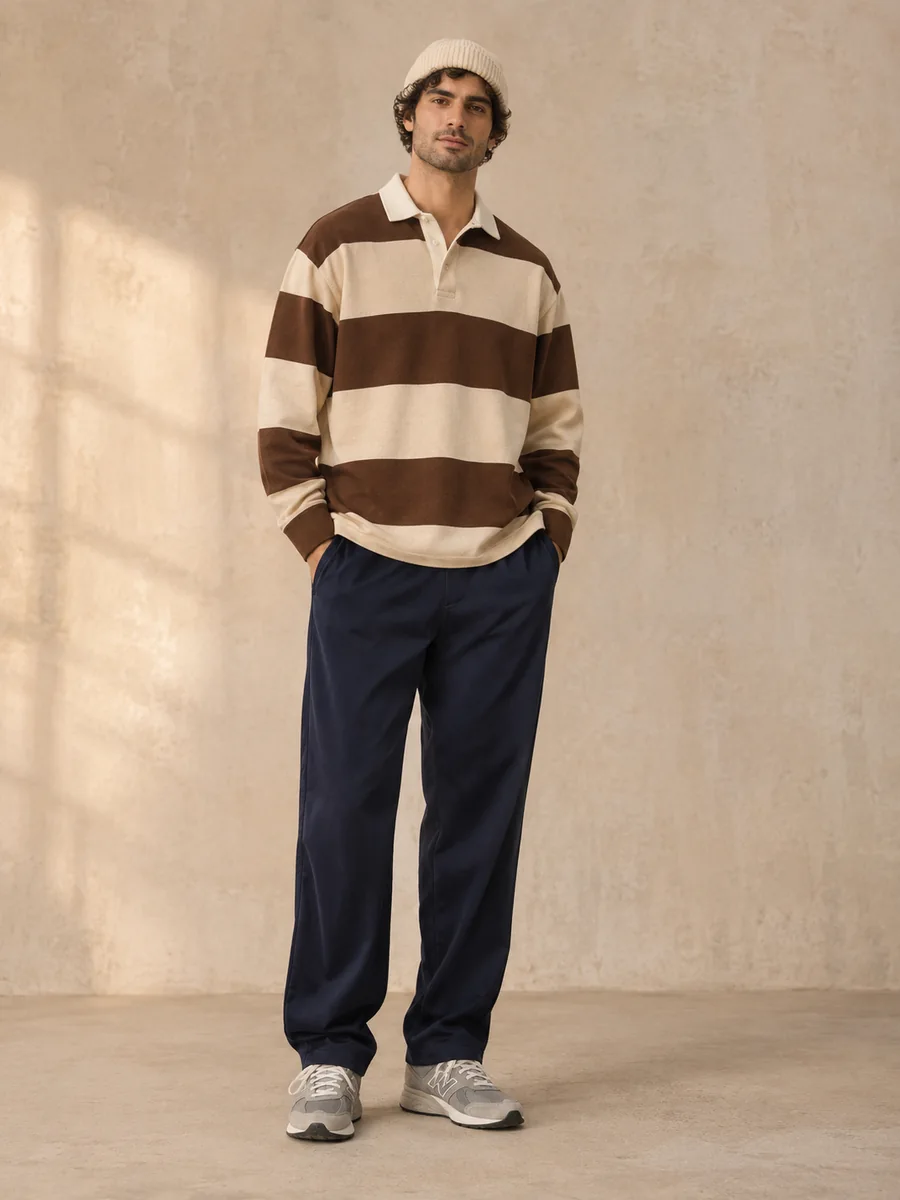
Brown rugby stripes with navy track pants and a cream beanie
Save the relationship rather than a random collection
An eclectic moodboard becomes more useful when a note explains what you want to borrow. Record the main pattern, the quieter base and any small color repeat. A board of unrelated bright objects does not show how they become a complete outfit.
Use your existing wardrobe to test a single relationship. You may already own a plain trouser, a colored shirt or a textured layer that supplies the needed support. Keep the combinations that feel comfortable and easy to repeat.
Make expressive tailoring work at your chosen volume
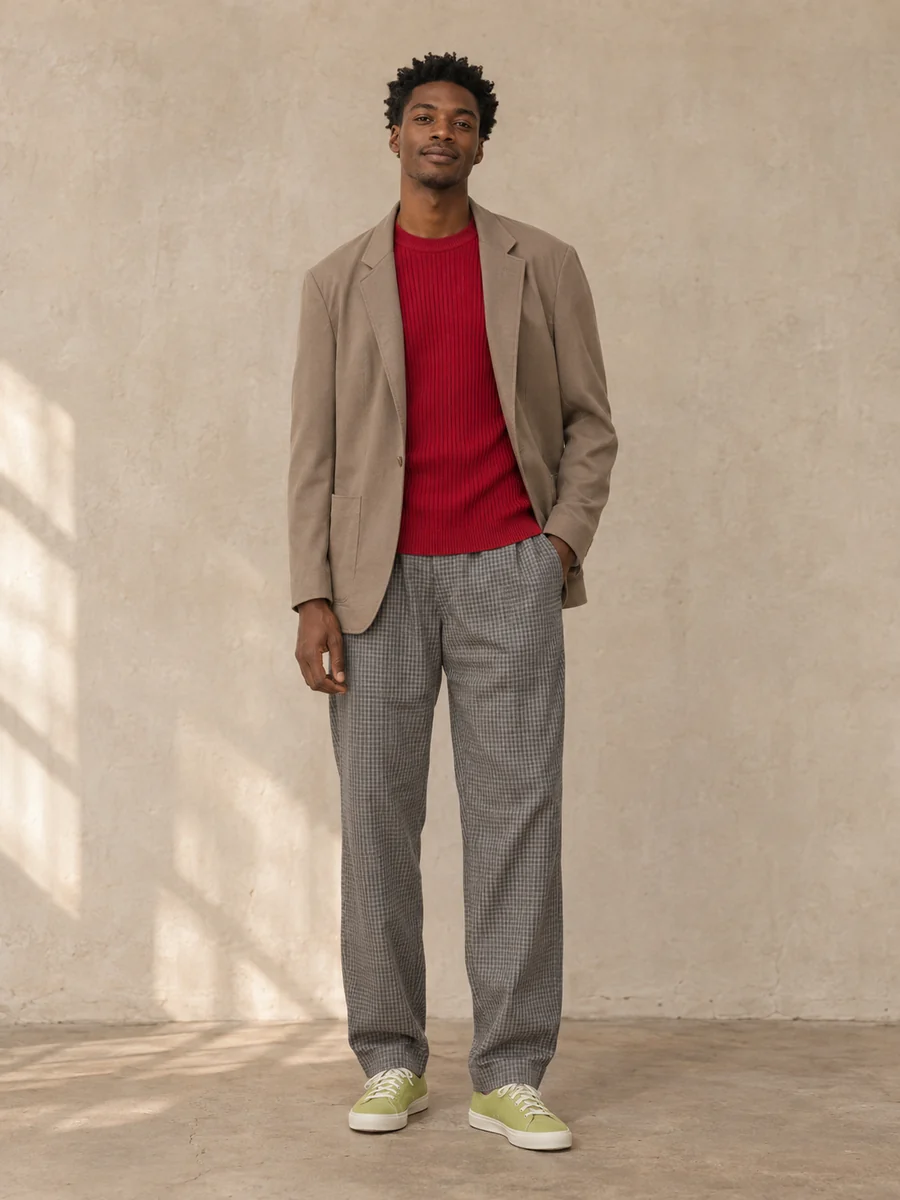
Red ribbed knit with a muted checked trouser combines a taupe soft blazer, red knit, small-check trousers and pale green sneakers. The blazer gives the brighter centre a recognisable frame, while the small check adds a second kind of detail. This is an editorial combination, not evidence that a forecast requires you to wear those colours.
To quiet the idea, keep the red knit and blazer, then try a plain trouser and a more muted shoe. To explore the patterned trousers instead, keep the layers above them calmer. Save both versions if they serve different days. The useful question is which area you want to notice first, followed by whether that version fits the destination.
Explore more outfit ideas or compare the style files.