Use the labels to compare emphasis
Poetcore and dark academia can share textured knits, shirts, blazers, corduroy and dark shoes. For building outfits here, the useful distinction is emphasis: a softer, more relaxed literary mood on one side, and a darker, more structured academic mood on the other. The labels overlap, so choose the pieces and proportions you enjoy rather than trying to pass a category test.
This is an editorial framework for our outfit ideas, not a fixed definition of either community. An outfit can borrow from both. Start by comparing palette, structure and visible layers; those decisions will help you dress far more directly than accumulating accessories associated with a name.
Compare four choices before shopping
A darker palette can create a more concentrated outfit, while cream and brown can soften the transitions between layers. Structure changes the effect too: a firm blazer frames a shirt differently from a relaxed cardigan. Neither choice belongs exclusively to one label. Use the table as a set of tendencies you can vary.
Keep the comparison grounded in clothes you would wear for ordinary activities. If you enjoy the colour palette but dislike a blazer, begin with a cardigan. If you like tailoring but not layered accessories, keep the front simple. A convincing outfit comes from coherent choices, not from including every reference at once.
| Decision | Softer poetcore direction | Darker academic direction |
|---|---|---|
| Palette | Cream, brown, softened accents | Charcoal, navy, deeper contrast |
| Outline | Relaxed knit or fluid layer | More defined jacket or coat |
| Texture | Visible knit and soft surfaces | Textured tailoring with quieter base |
| Useful shared pieces | Oxford, cords, loafers | Oxford, cords, loafers |
Start with a cardigan if you want an easy entry
A brown textured cardigan, cream Oxford, dark jeans and loafers brings the idea into an everyday wardrobe. The denim keeps the outfit familiar, while the knit and collar provide the character. You can use it as a starting point without acquiring a blazer, overcoat and several accessories at the same time.
Check the shirt hem and cardigan length together. A long curved tail can make a soft combination appear less settled than intended. A relaxed tuck or a shorter shirt may provide enough clarity. Keep the shoes comfortable and the denim hem controlled so the outfit works as ordinary clothing rather than a carefully held pose.
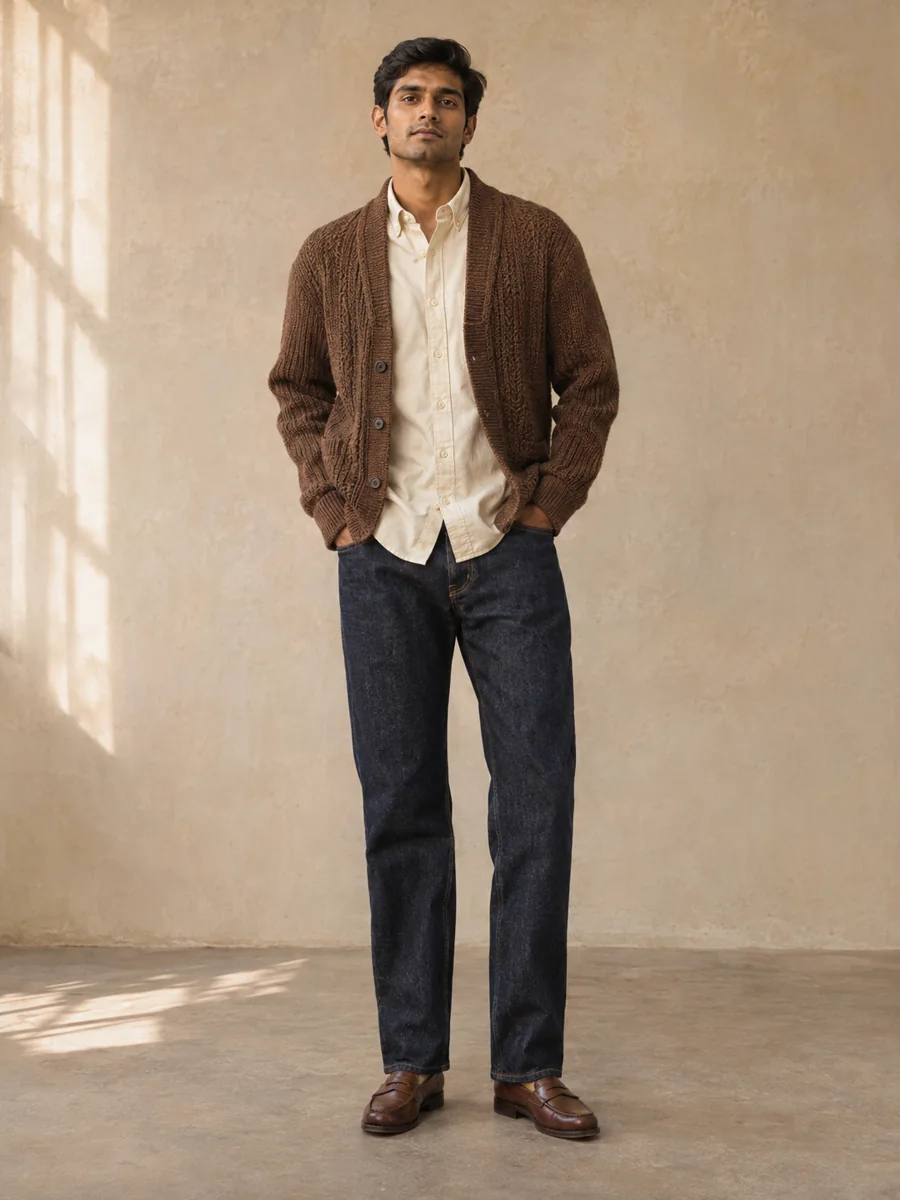
Brown cardigan with a cream Oxford and dark jeans
Use a blazer to bring the outline into focus
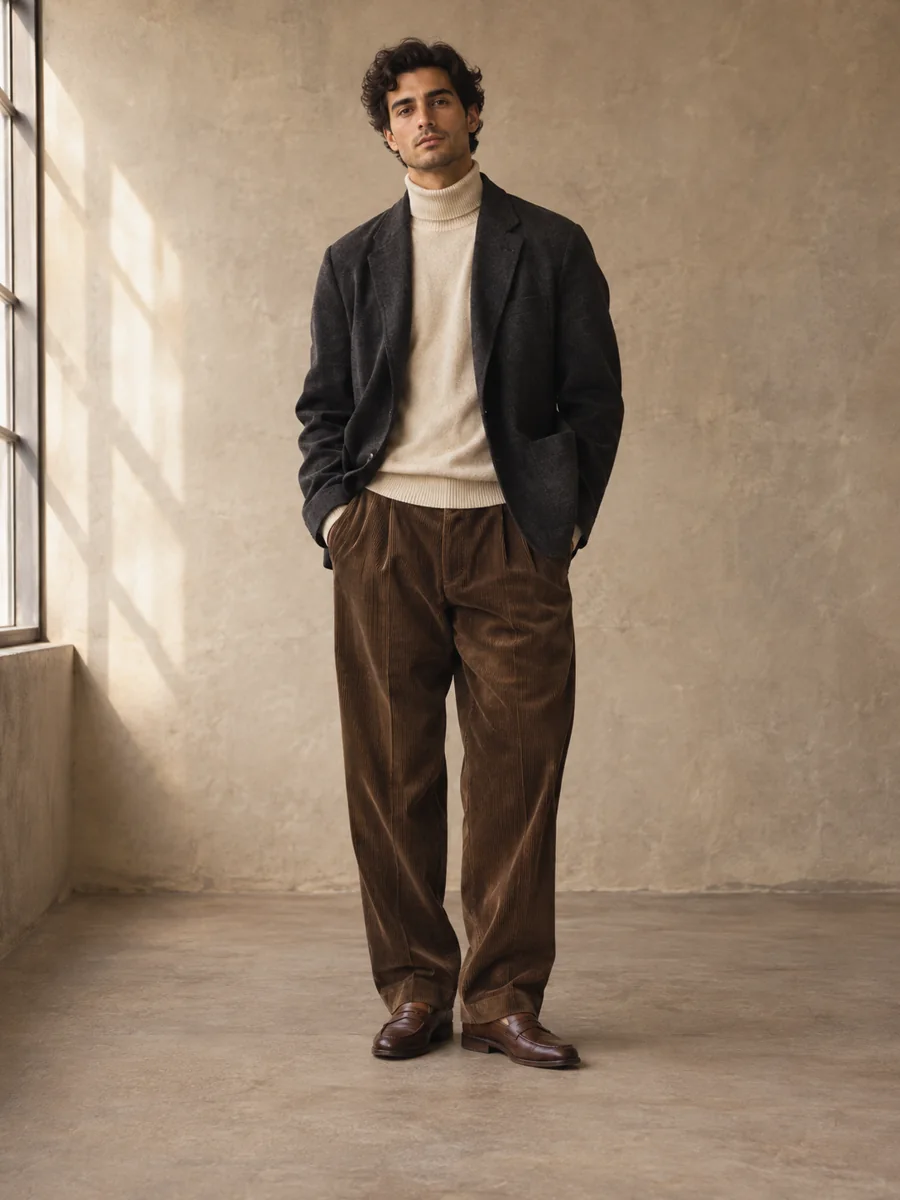
A charcoal blazer over an ecru rollneck, with brown cords and loafers, shares the same gentle texture family but gives the upper half a clearer frame. The pale rollneck makes the jacket edges readable. Brown trousers keep the palette from becoming an uninterrupted dark block.
A tweed-like textured jacket with a navy rollneck, grey pleated trousers and brown boots shifts the emphasis toward structure and darker contrasts. The actual fabric need not be assumed from its appearance: check garment information when choosing a jacket. For styling, notice how the collar, trouser pleats and boot shape create several defined boundaries without requiring decorative props.
Charcoal blazer with an ecru rollneck and brown cords
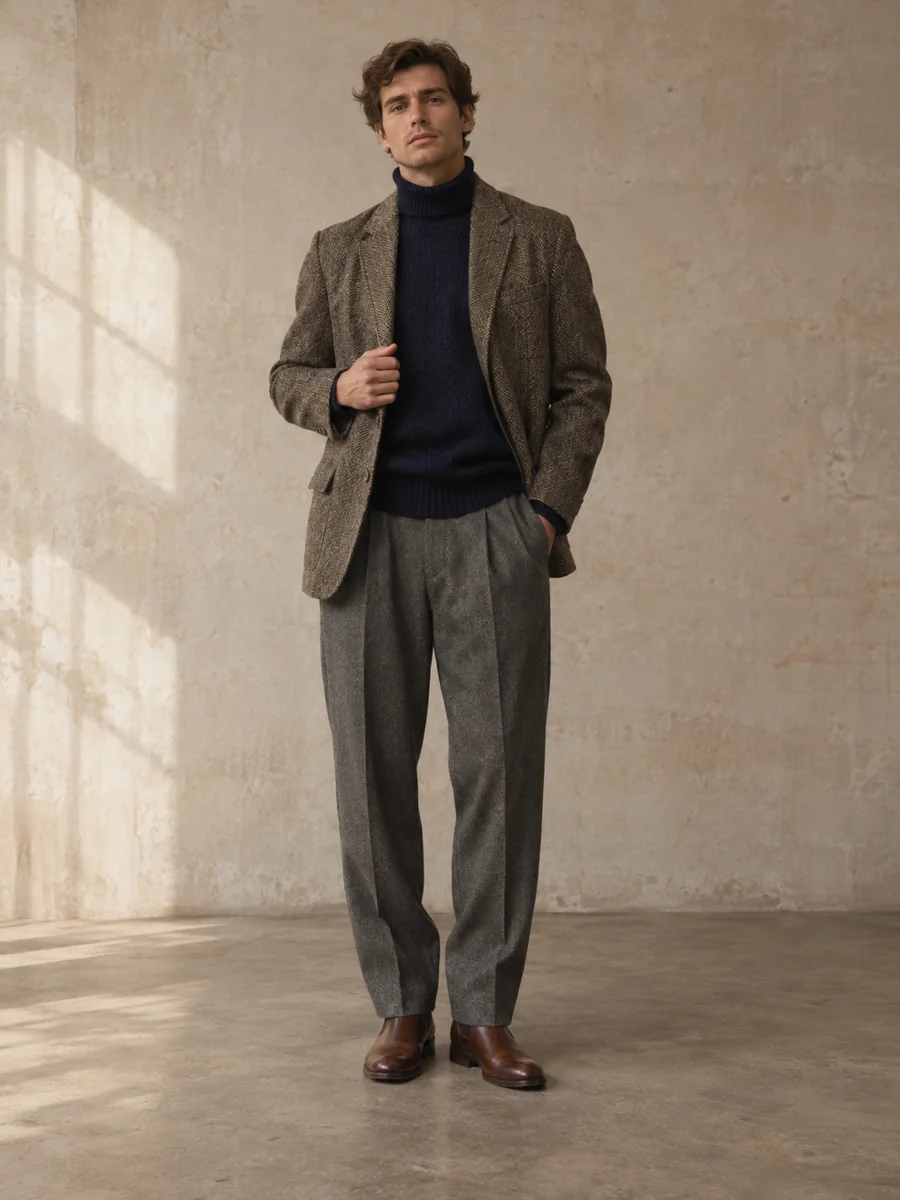
Textured jacket with a navy rollneck and grey pleats
Try a short knit layer over a visible collar
A forest knit vest over a white Oxford, roomy black trousers and derbies makes the layering especially clear. The short vest defines the upper half, while the shirt supplies a lighter collar and sleeves. It can feel related to either direction depending on the rest of the palette and the way the shirt is arranged.
Keep the shirt tails intentional. A very long panel beneath the vest can undermine the short-layer effect, while a tight tuck may restrict movement. Leave enough ease to sit and reach comfortably. The broad trousers can stay broad; a clearly placed waist and a controlled shoe meeting make the combination readable without narrowing every piece.
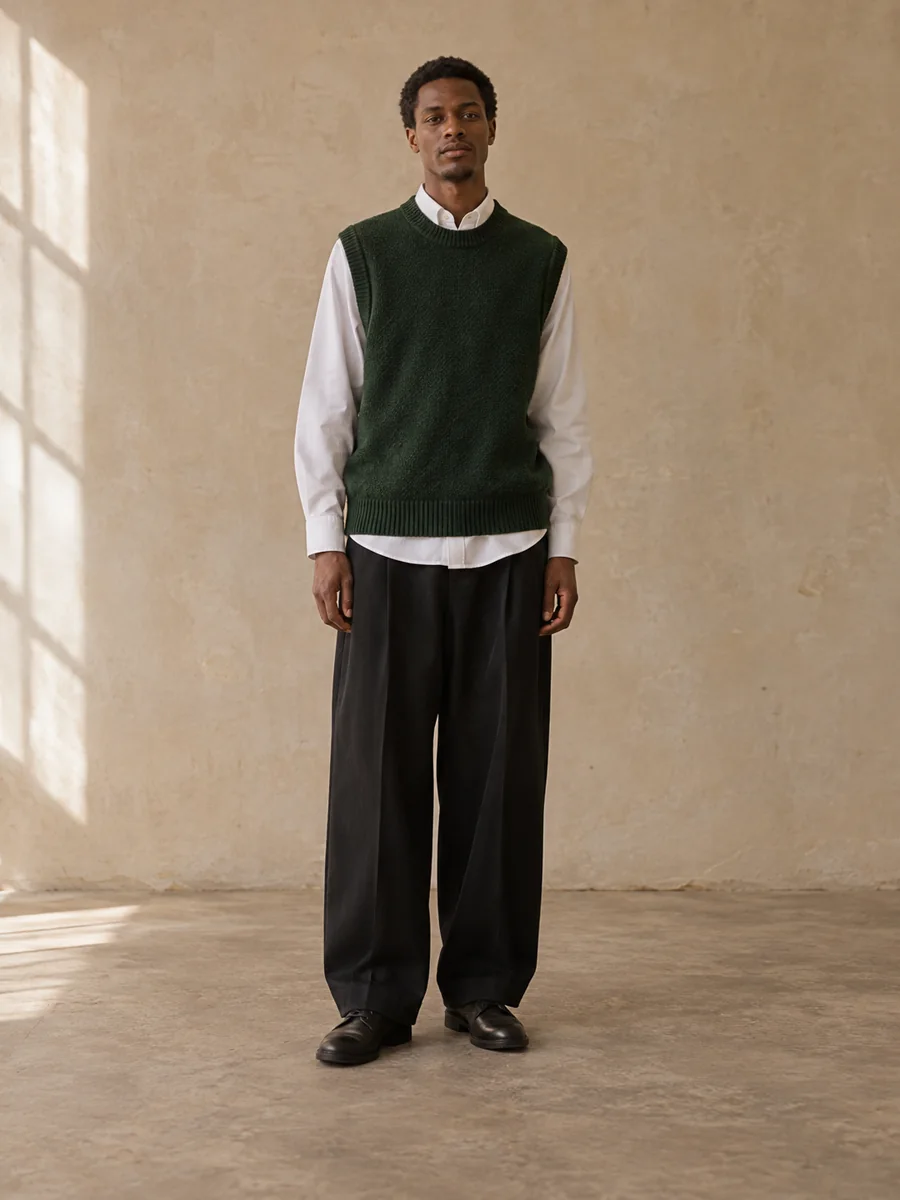
Forest knit vest with a white Oxford
Use an overcoat without adding a character costume
A charcoal overcoat, burgundy scarf, black knit, relaxed denim and derbies offers a practical-looking darker option. The scarf is one accent, and the jeans keep the base familiar. The long coat supplies much of the mood, so you do not need a stack of symbolic accessories to make the style legible.
Judge the coat with the actual scarf and bag. Both can change how its collar and front hang. Choose layers for your real journey and conditions, rather than treating a dark coat image as evidence of winter performance. The same outfit idea can be adapted through suitable materials and construction without changing its basic colour relationships.
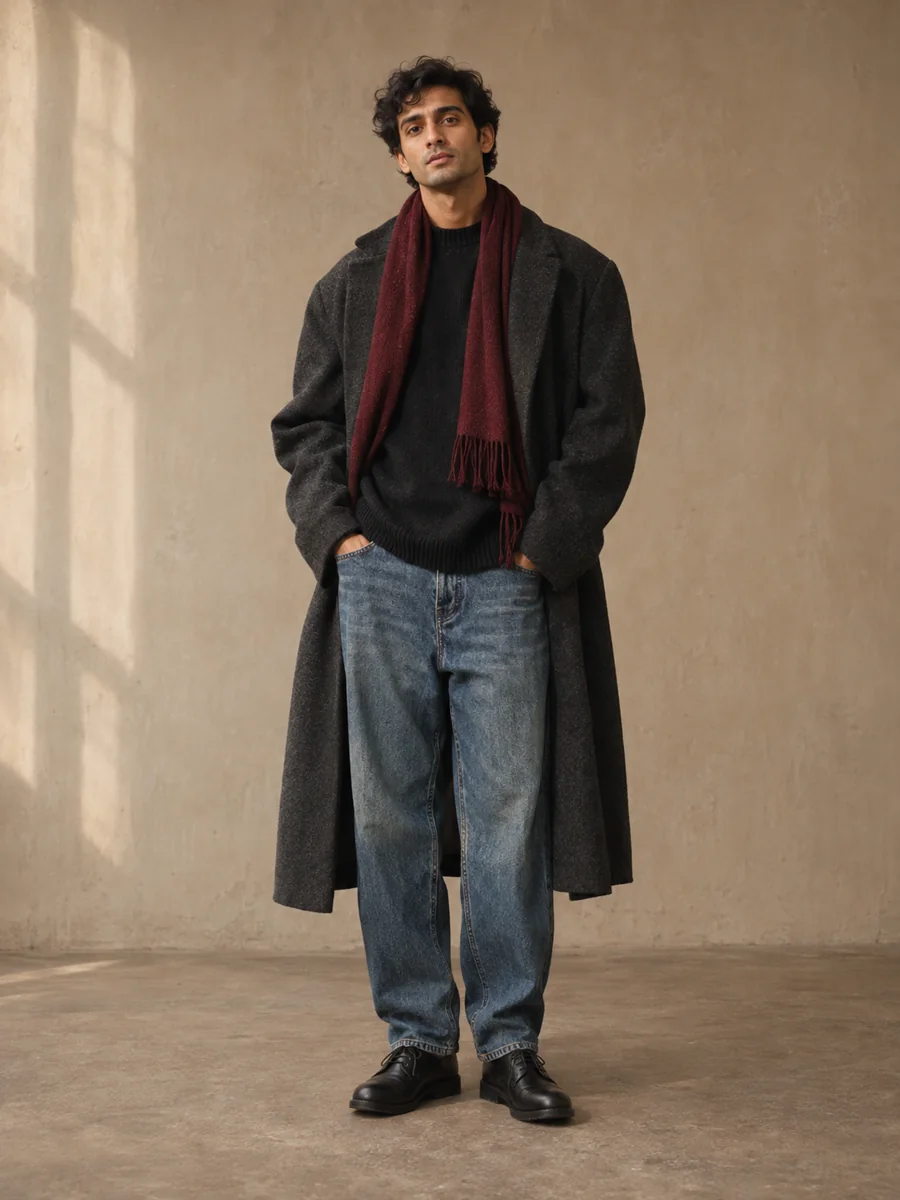
Charcoal overcoat with a burgundy scarf and denim
Keep what repeats in your own wardrobe
Choose two or three features you want to repeat: perhaps brown knitwear, a pale collar and dark denim, or a defined jacket, navy rollneck and grey trousers. Build one comfortable outfit around them before adding anything else. If it works with your routine, vary one piece while keeping the rest stable.
The overlap is useful because it increases your options. A shirt, cardigan and pair of cords can serve several moods without needing a different identity for each. If a piece feels like dressing as someone else, leave it out. The goal is a wardrobe you use, with enough texture and shape to express your preference clearly.
Explore more outfit ideas or compare the style files.