A strap across the foot can connect very different shoes. Mary Janes may be low and rounded, sharply shaped, doubled with straps or placed on a substantial sole. Treat the name as the start of a design comparison, rather than a complete description of the wearer or the outfit.
Museum objects and later brand interpretations show a form moving across ages, occasions and materials. The history is richer when the actual shoe stays visible: where the strap sits, how much of the foot is covered and what the sole adds to the outline.
A form can predate the name that becomes familiar
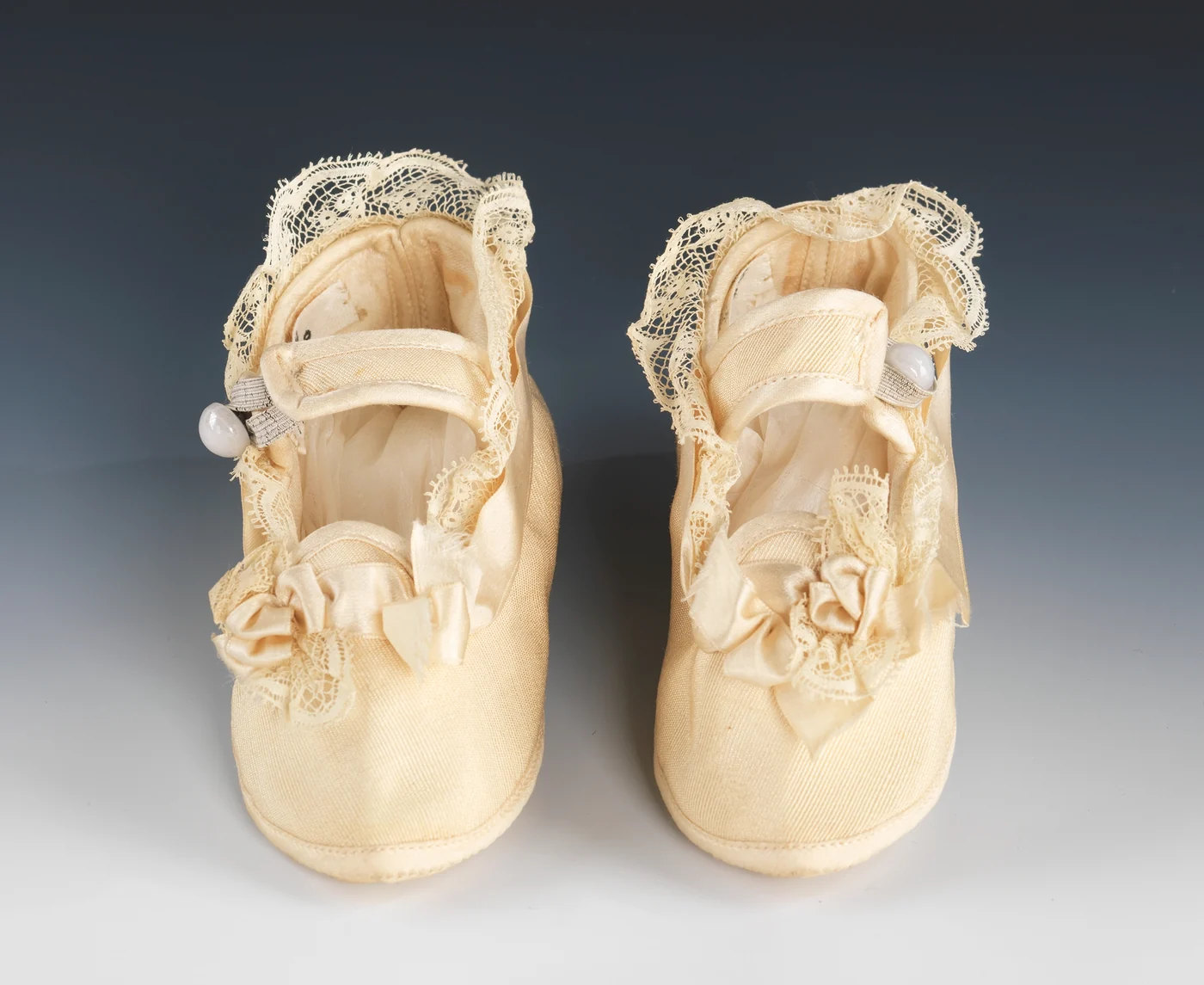
The Metropolitan Museum of Art records an American infant’s strap shoe dated 1869 and describes it as a predecessor to the later Mary Jane style. This is a useful caution against giving one later name the power to erase earlier bar and strap shoes. A familiar label can arrive after related construction has already existed.
The object is evidence of a specific use and date, not a universal model for every contemporary Mary Jane. Nor does a children’s example prove that the form has always belonged only to children. Keep the historical object’s wearer and context separate from the wider design category you are exploring.
A 1920s object shows ideas crossing between age groups
Another Met record, dated about 1925, describes a girl’s shoe combining a Mary Jane shape with a T-strap detail associated with women’s footwear of the period. The museum identifies a round toe, low heel and instep fastening in that particular object. Its usefulness lies in the specific comparison, not a claim that all later versions share those proportions.
This makes the history less like a fixed uniform and more like a conversation between forms. A strap can be combined with different toes, heels and upper patterns. When you compare current shoes, use the same attention to components rather than deciding from the name that the whole result must be delicate, nostalgic or formal.
Later reinterpretations can change the shoe’s weight
Dr. Martens describes its 8065 as a Mary Jane reinterpretation associated with the 1980s. Current documented versions use double straps and a more substantial outsole than the light flat shoe many people first imagine. The exact materials and details remain specific to the selected version; the model name alone does not identify them.
A thicker-looking sole and more upper coverage change how much visual weight sits beneath a hem. They do not establish comfort, safety or fit on your foot. Likewise, a narrow strap can look light without guaranteeing security during movement. Keep appearance and the maker’s specification separate, then assess the real shoe.
Compare the parts that shape the outline
Begin at the toe: rounded, square-looking and more tapered forms lead the eye differently. Next look at the opening and strap height. A high strap divides the exposed foot differently from a low strap; a T-bar introduces a vertical line as well as a horizontal one. Finally, compare heel and sole volume.
Those features can matter more than a styling keyword. Two shoes both labelled Mary Jane may sit very differently under the same trouser opening. Keep the camera angle consistent where possible and avoid comparing a close overhead image with a distant side view as though they were calibrated measurements.
Try three roles without assigning a character
With straight trousers, let the hem reveal enough of the upper to see the strap if that is the detail you want. With a fuller skirt, compare whether a compact shoe or a heavier sole gives the base the weight you prefer. With a simple dress, the shoe can add structure without requiring another decorative accessory.
Socks or tights change the visible boundary around the strap and opening. You can explore a continuous dark line or a strong contrast, depending on the actual colours and the outfit. These choices do not require a school-uniform reference, a gender rule or a claim to one subculture. Describe the composition you see rather than assigning a personality to its wearer.
Choose the exact shoe for the job
If you need an everyday alternative to a sneaker, check the actual sizing guidance, fastening range and sole specification. The presence of a strap is not enough to predict how a shoe will fit or feel during a long day. A photograph is useful for outline and detail, while fit needs more direct evidence.
Build the intended outfit with shoes you own first, then compare what a Mary Jane candidate would change. You may want a visible strap, a lower collar or a different relationship with a skirt. Naming that change keeps the choice practical. The history opens up the form; your own wardrobe decides which version has a useful place.
Put the idea to work
Your wardrobe. Your version.
Sources and scope.
- The Metropolitan Museum of Art — American Shoes, 1869
- The Metropolitan Museum of Art — American Shoes, circa 1925
- Dr. Martens — 8065 Mary Jane Product History
- Dr. Martens — 8065 Smooth Leather Mary Jane
What this article can establish
- The feature deliberately omits a definitive naming-origin story not established by the retrieved institutional records. Form and cultural context do not predict personal fit.