Open the chart for the product you are considering
Start on the actual product page and follow its size-guide link. Check the market, category and size system before reading a number. A men’s, women’s or unisex chart may use different labels; a number copied from another listing may belong to a different system.
Keep the product name, version and chart link beside your note. The chart is a reference for that brand and category. It does not establish that every shoe carrying the same label has the same internal shape.
Read the measurement heading literally
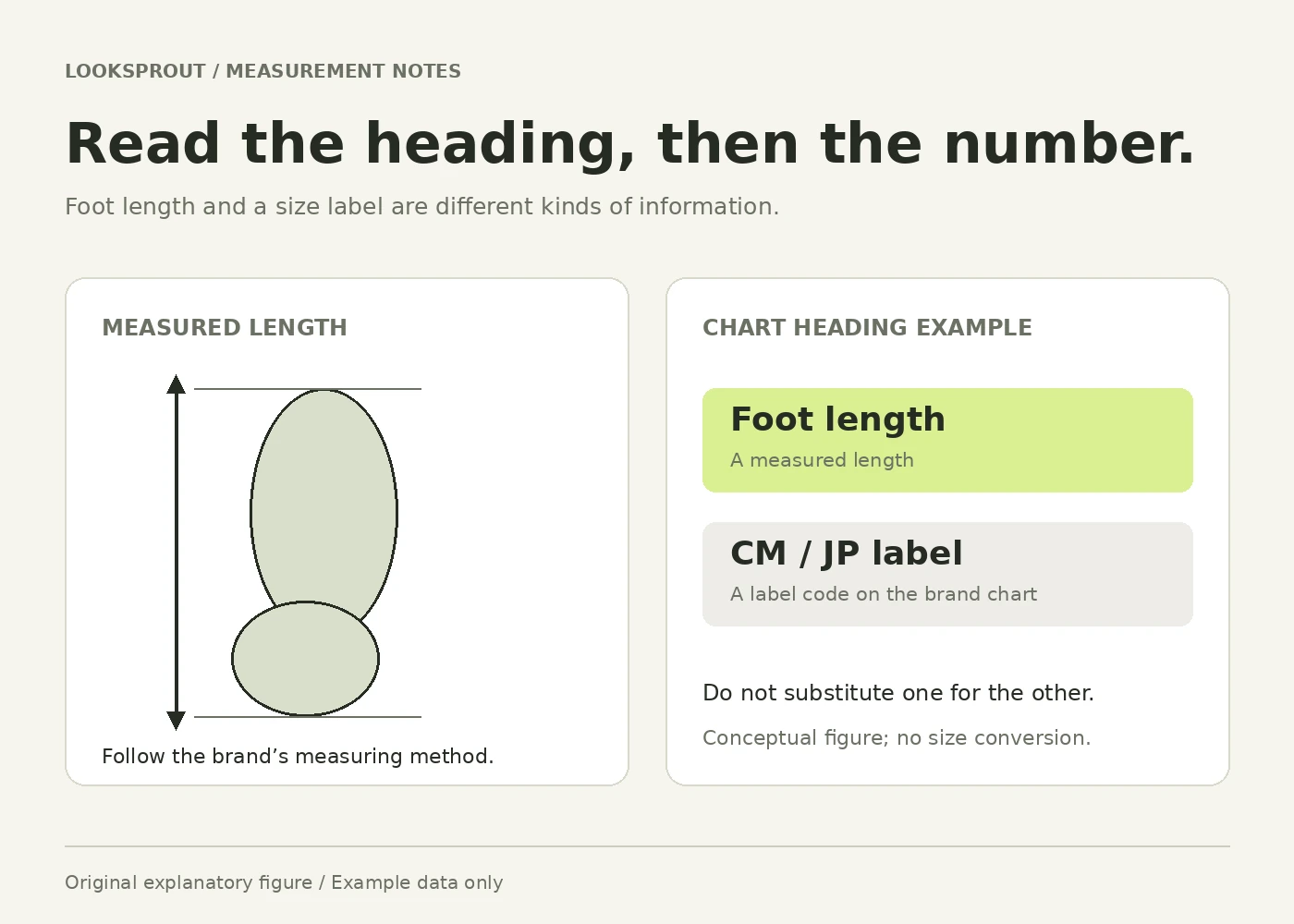
Nike’s men’s chart separates measured foot length from the CM/JP size printed on boxes and labels. Those entries should not be swapped simply because both contain centimetres. Look for the row that matches what you actually measured.
A unit conversion changes the unit of a known length. It does not turn a label code into an internal shoe measurement or prove that a different brand will fit identically.
Follow the brand’s measuring method
Use the instructions attached to the chart, including how to stand and where to mark the heel and toe. Measure both feet when the method asks for both. If your readings differ when repeated, check the paper, tape and marks before keeping extra decimal places.
Record what remains uncertain. Length alone may not answer a question about width, toe shape or the volume over the foot. A product-specific note from the brand is useful evidence; a generic outfit picture is not.
Keep the outcome as a comparison
Save your measurement, its method and the chart you used. If two options remain plausible, check the actual product’s additional guidance and the seller’s current exchange conditions. Do not treat a converter result as a promise of comfort.
When you can try the shoes, use the socks and intended activity that matter to you. Keep any personal fit note attached to that exact version so that a later purchase does not rely only on the brand name.
Sources and useful references
Explore more outfit ideas or compare the style files.