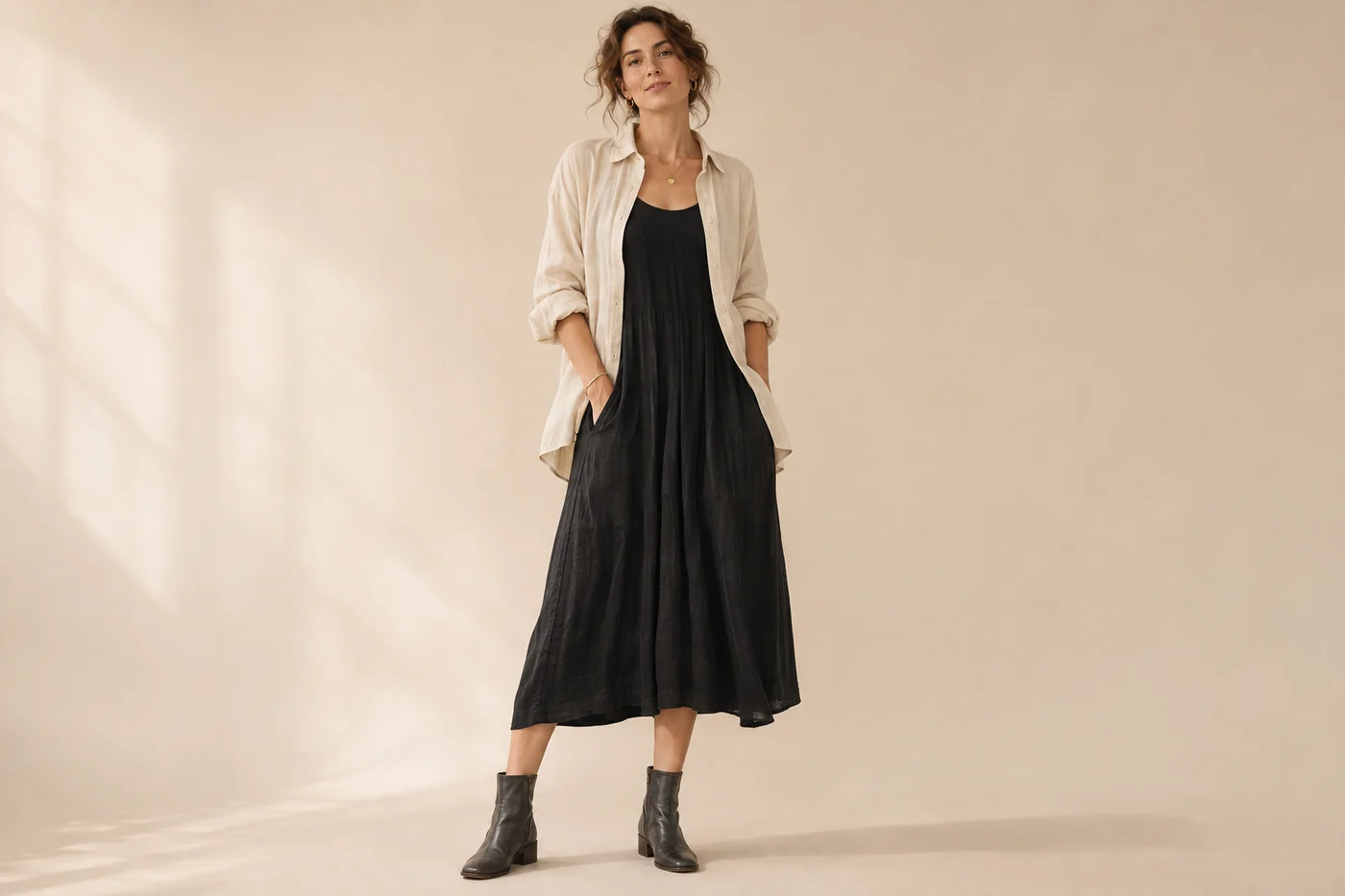
A slip-style dress can stay the main shape even when you add coverage or a layer. Choose which part you want to keep visible: the neckline, the long front panel, the waist area or the hem. Then make the added piece support that feature instead of covering every boundary at once.
These formulas begin with a dress that already fits and moves comfortably. They are styling ideas, not a promise that every thin-strapped dress will accept the same underlayer or work in the same weather.
Check the actual dress first
Slip-style dresses differ in cut, lining, strap adjustment and closure. UNIQLO's documented Printed Front-Slit Camisole Dress, for instance, has adjustable straps and a relaxed fit-and-flare shape. That example is a reminder to inspect the specific dress rather than assume that all slips are bias-cut, silk or closely fitted.
Put yours on without the extra layer. Set adjustable straps within their intended range, check the neckline from the side and notice where the hem settles. If the dress already catches or pulls in ordinary movement, adding another garment may emphasize the problem. Styling is easier after the base fit is comfortable.
A thin tee underneath: keep the center quiet
Try a black slip-style midi over a close-fitting cream tee, with black flat shoes. The tee adds sleeves and changes the neckline while the dress retains a visible long front panel. A plain tee makes it easier to judge the relationship before adding stripes, graphics or jewelry at the neck.
Check the armholes and bust area after sitting. A tee with substantial sleeves or seams may gather beneath a closer dress. If it bunches, compare a smoother underlayer or choose an outer layer instead. Do not size down the tee simply to make it disappear; the finished combination still needs comfortable reach and breathing room.
A fine long sleeve underneath: compare the necklines
A dark long-sleeved crewneck beneath a dark dress can create a quieter color transition than a pale tee. A mock neck introduces a stronger vertical panel near the face. Put both on if you own them, because the distance between the dress neckline and the underlayer neckline changes the result more than the category names suggest.
Use one simple shoe and leave a necklace out during this comparison. If you prefer a more visible contrast, try a gray base under navy rather than assuming the entire outfit should be black. The layer may add coverage, but its thickness and the conditions determine whether it provides enough warmth; appearance is not a temperature rating.
A short cardigan over the dress: reveal the lower shape
Try a cream cardigan that ends near the waist over a brown midi slip dress, with dark Mary Janes. Leave the cardigan open or close only the buttons that sit comfortably. Its shorter boundary lets a substantial part of the dress remain visible, while the sleeves create a different upper outline from the tee-underneath formula.
A longer cardigan can work too. Compare it open so the dress appears as a center panel. If both hems are close in length, the cardigan may hide more of the dress outline than you intend. Choose whether you want a broad layered column or a more obvious short-over-long relationship; neither needs a waist-cinching accessory.
An open shirt or blazer: create an outer frame
Wear a pale shirt open over a dark slip dress and low sneakers for a relaxed version. The front opening preserves the dress neckline and center, while the shirt supplies sleeves and a longer side panel. A shirt with enough room through the upper arm is more useful than one you have to keep carefully arranged.
A blazer changes the same dress by adding lapels and a more defined shoulder. Compare its hem with the dress waist and skirt width. A long straight blazer can create an intentional column; a shorter jacket makes the dress lower half more prominent. Wear the jacket closed as well if that is how you expect to use it.
A sweater over the dress: decide which garment it becomes
A sweater covering the dress neckline makes the dress read more like a skirt. That is a valid way to reuse it, but it is a different result from preserving the slip outline. Try a gray knit above a navy dress with boots, keeping the knit hem stable rather than holding it in a temporary crop.
Avoid improvised arrangements that put persistent pressure on delicate straps or require hidden pins to stay in place. If you want a shorter sweater, choose a real shorter garment or a relaxed fold that remains comfortable. Check the whole combination seated, including whether the dress rises or gathers beneath the knit.
Keep one practical alternative
Build the underlayer version and the open-outer-layer version as separate boards using your real dress record. Note which layer can be removed without making the outfit incomplete for your needs. Include underwear, tights or socks in your practical check even when they do not need a public styling photograph.
Finish by walking, reaching forward and checking the hem at the back. Keep the label's care advice with the dress, especially when layers have different instructions. The useful result is a combination you can wear through the planned activity, with the dress shape visible to the degree you actually want.
Put the idea to work
Your wardrobe. Your version.
Sources and scope.
What this article can establish
- Outfit formulas are editorial proposals, not photographs of exact purchasable sets or results from a wear test.