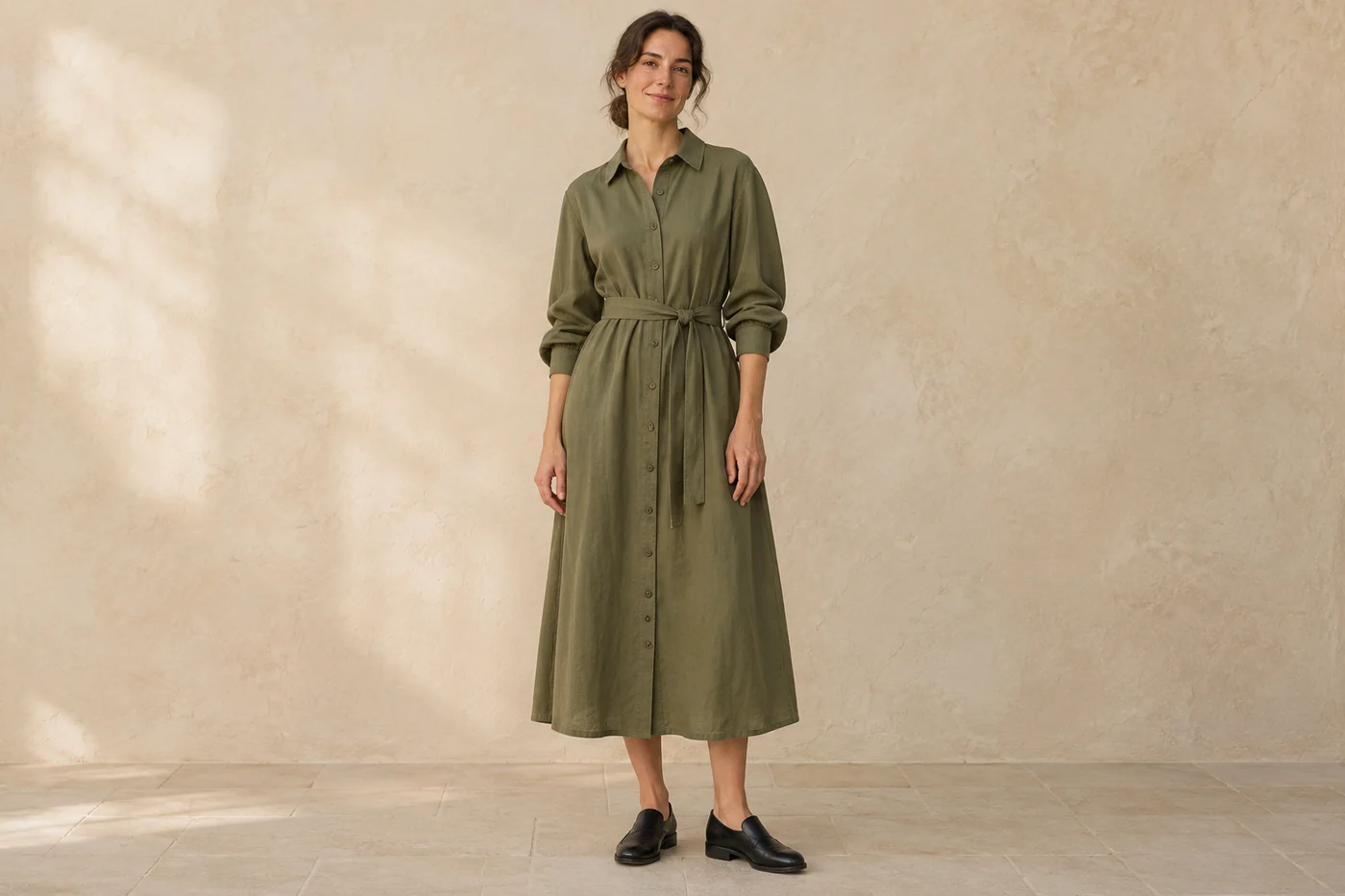
A shirt dress gives you a collar, sleeves and a long body in one piece. You can emphasize its complete dress shape, place a shorter layer above it or use a fully opening version as an outer frame. Those are meaningfully different outfits, rather than the same combination with a different bag.
Begin with the dress you own. Button positions, side slits, waist ties and fabric change what is practical. A style with a partial placket cannot simply become an open coat, and a decorative tie is not evidence that every dress needs a belt.
Find out what the dress actually allows
Look at the full front opening, the back and the side seams. Check whether buttons run to the hem and whether any ties are attached, removable or purely decorative. UNIQLO's archived Fall/Winter 2023 dress collection showed a drawstring shirt dress both closed and unbuttoned as a layer. That is a documented example of an option, not a claim that all current shirt dresses behave alike.
Try yours seated and walking before adding another garment. Watch for pulling between buttons, a slit that opens farther than you want and a hem that catches at the knee. A styling arrangement should work with secure coverage. Choosing another base layer can be useful; it should be a conscious choice rather than an emergency correction.
Formula one: let the dress stay the whole silhouette
Wear a blue shirt dress with low black loafers and a simple shoulder bag. Leave the collar and front fastening as the main details. If the dress has a designed waist tie, compare it loosely tied with the tie removed or left relaxed, where its construction permits. Each version changes the outline without adding another clothing category.
For a straighter version, leave more ease through the waist and choose a quiet shoe. For a more defined waist, use the dress's own adjustment rather than pulling a belt so tight that the buttons strain. Check the back after sitting. The point is a comfortable shape you prefer, not making every shirt dress resemble a fit-and-flare dress.
Choose sleeves and socks as part of that formula
A sleeve cuff can make the collar-and-placket structure feel more relaxed, but only fold it if there is comfortable room at the forearm. One stable turn is more useful than a roll that needs constant repair. Leave the sleeve as designed if a fold becomes bulky or restricts movement.
Try a dark sock with the loafers if you want a stronger lower endpoint, or a finer tonal finish if you prefer less interruption. A contrasting sock adds a separate line between dress and shoe. Use the contrast because you like it, not as a mandatory styling trick. Footwear fit and the actual setting still take priority.
Formula two: add a short knit above the long dress
Wear a cream crewneck sweater over a navy shirt dress, with dark ankle boots. Let the collar appear above the knit and most of the dress skirt remain below it. The new upper boundary gives you a short-over-long arrangement; it is a different structure from simply belting the dress.
Check where the sweater settles naturally. A very long knit may hide the dress waist and create a broader column, which can also be deliberate. If the shirt sleeves crowd the knit's upper arm, compare a more generous sweater or a sleeveless knit vest. Layering should leave enough room to bend the arms and reach comfortably.
Keep the dress identity visible in the layered version
The collar, cuff and lower hem can all show, but they do not all need equal emphasis. Try the collar and skirt first, then decide whether visible cuffs improve the result. Several small edges in different colors can become busy even when each garment is simple.
A gray vest over an olive shirt dress and black shoes offers a quieter alternative to cream over navy. Keep the dress straight if you want one long panel below the vest. Use the waist tie only if it remains comfortable beneath the knit. A concealed bulky knot may change the upper layer's fall in a way that a front photograph misses.
Formula three: use a fully opening dress as a long shirt
If the front opens completely and the garment hangs comfortably unfastened, wear it over a tank and straight trousers. Try a pale striped shirt dress, a navy tank, dark trousers and low sneakers. The dress supplies long outer edges, while the tank and trousers become a separate base visible through the center.
Keep the inner layers relatively plain while assessing the shape. A dress hem, wide trouser opening and large sneaker can create three competing lower shapes. You can enjoy that volume, or compare straighter trousers and a quieter shoe. Keep the open dress clear of anything it could catch on during your planned activity.
Record three complete outfits, not three accessory swaps
Save the closed dress, short-knit version and open-layer version separately only when they work with your actual garment. Note any underlayer and fastening choices. If your dress has a short placket, keep the first two formulas and use a genuinely different shoe-and-layer combination as the third.
The useful outcome is knowing which role the dress can play on different days. A one-piece base may make getting dressed simpler; an open dress asks you to plan a complete base underneath. Keep those roles clear in your board so the saved outfit is ready to wear rather than an attractive list missing an essential piece.
Put the idea to work
Your wardrobe. Your version.
Sources and scope.
What this article can establish
- Outfit formulas are editorial proposals, not photographs of exact purchasable sets or results from a wear test.