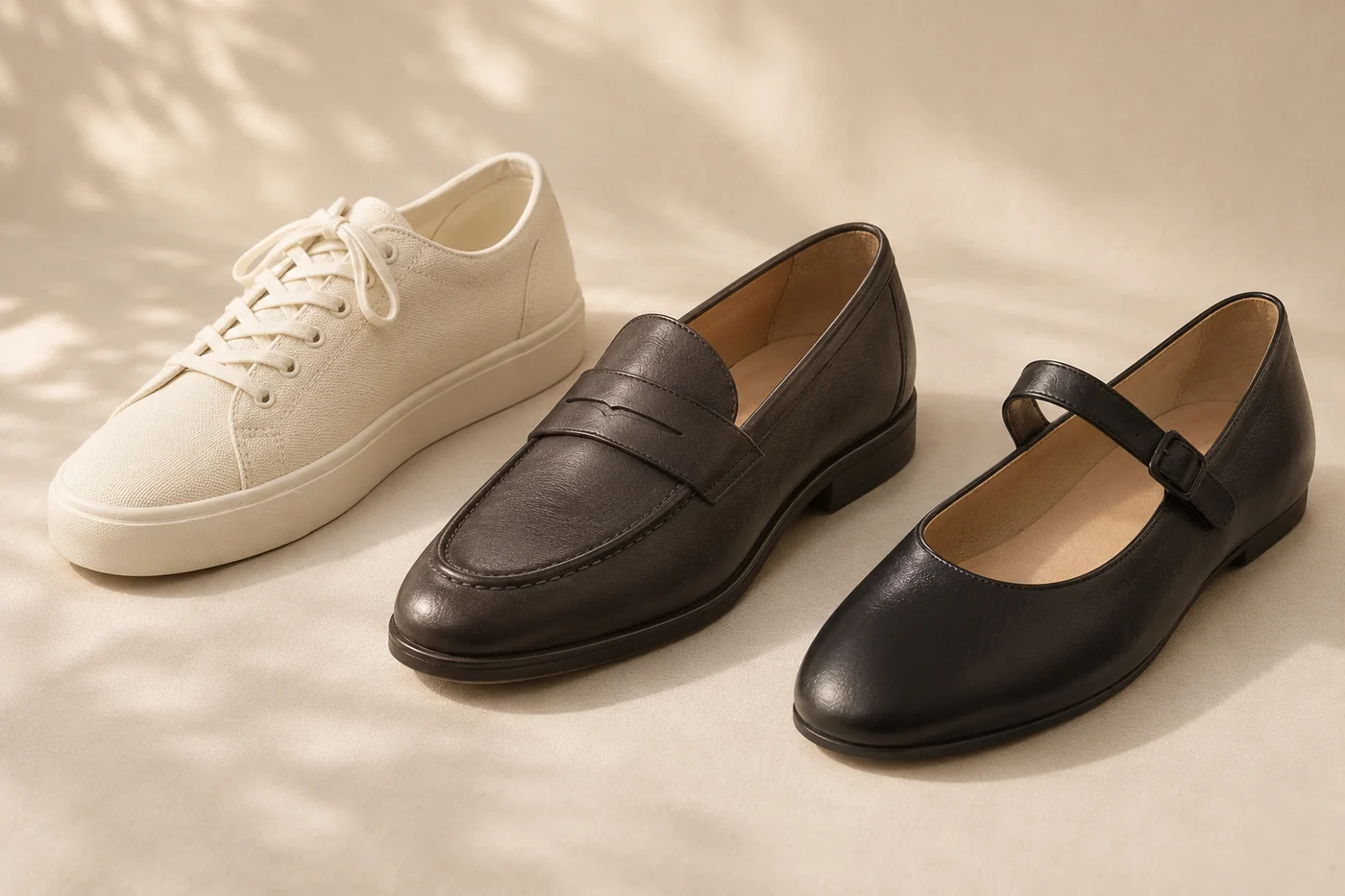
Building an outfit around shoes works best when you begin with their role in your day. A pair can be visually interesting and still be wrong for the route, setting or weather. Choose the pair you can actually use, then let the trouser or skirt hem decide how much of it appears. The top comes after that relationship.
The aim is not to match every color in the shoe. It is to give the pair a convincing place in a complete outfit. These three formulas show different ways to do that with clothes you may already own.
Read the pair before choosing its partners
Put the shoes on the floor beside a familiar bottom. Notice three things: the height of the sole, the shape of the toe and the strongest area of color. A slim dark shoe, a light runner with layered panels and a tall boot ask different questions of a hem. Those are visual observations, not evidence that one pair is more comfortable or technically capable.
Name the feature you want to show. It might be the long toe, an unusual buckle or a contrasting sole. If the feature is hidden beneath your usual trousers, a different hem may do more than a new top. You can also choose to let the shoe recede; an outfit anchor does not have to remain its loudest element.
Formula one: a low shoe and a clear trouser line
Try low-profile sneakers, straight trousers and a plain tee beneath an open overshirt. Set the trouser length so a useful part of the shoe remains visible without the back hem dragging. The open shirt gives the top half an outer frame, while the tee supplies a quiet center. This is a practical starting point for a casual day rather than a complete dress-code answer.
For example, combine dark navy trousers, a cream tee, an olive overshirt and black low sneakers with a pale sole. The tee loosely echoes the sole without requiring an exact match. If the shoe almost disappears, first compare a small temporary hem adjustment. Changing all three garments at once makes the useful difference difficult to identify.
Formula two: a fuller shoe beneath a quieter upper half
Try a visually substantial runner with full-length, wide charcoal trousers and a compact gray sweatshirt. Here the trousers and shoes carry the main volume. The sweatshirt can remain roomy, but a hem that settles around the high hip gives the larger lower shapes a clear beginning. Keep a jacket optional until that basic outline works.
Suppose the runner includes silver, white and small blue details. You do not need silver accessories and a blue jacket. A white tee at the neckline can be enough of a connection. If the shoe catches the trouser fabric, compare the opening and length together. A thicker sole is not a guarantee that a long hem will fall neatly over it.
Formula three: a visible shoe under a skirt
Start with a midi skirt, a plain knit and a shoe with one distinct detail, such as a Mary Jane strap or a penny-loafer keeper. A straighter skirt and shorter knit can create a calm column above the detailed foot. With a fuller skirt, try a top whose hem sits closer to the waistband so the skirt has room to remain the main moving shape.
Use a black shoe, charcoal skirt and cream knit as the first version. Compare bare ankles, a fine dark sock or tights according to comfort and the day. Each changes the visible spacing around the shoe. None is the universally correct finish, and a photograph cannot establish whether the shoe fits securely when you walk.
Make one substitution with a reason
A useful alternative preserves the job of the original piece. Replace a cream tee with a cream fine knit when you want a similar light center with a different surface. Replace a straight skirt with another skirt before adding trousers to a formula built around a dress or skirt. Replacing everything produces another outfit, but teaches less about your starting pair.
If the shoe is already colorful, compare a plain supporting outfit with one that repeats a single color. Keep the stronger version only if you prefer it. This small comparison is more useful than a rule that every shoe detail needs a partner somewhere above the ankle.
Save the combination you can repeat
In your wardrobe, select the exact pair you own as the starting piece, then build around available clothing records. Keep that shoe fixed while comparing supporting bottoms. Catalogue references remain references until you deliberately add your own item; a similar photograph does not make it the same pair.
Save the strongest complete combination in the outfit builder and add a short note about the hem and socks. Check it standing, seated and walking before planning it for a long day. If the occasion requires different footwear, make that practical change first and reassess the hem. The method should support the day you are dressing for.
Six directions around a separately photographed grey 574
A photographed New Balance 574 reference gives this method a concrete endpoint. The credited image on its model page shows a grey and white low-top with a visible heel block. That picture establishes a documented photographed reference, rather than the retail identity, new condition or current availability of a pair. The six concepts below use generic footwear. Read them as proportion experiments before comparing your actual 574 or another shoe with a related outline.
Roomy blue Oxford with wide beige chinos starts with wide beige chinos: leave room around the grey endpoint and compare the opening with the reference heel. Pale blue knit with ecru jeans and a navy jacket puts ecru straight denim beside a pale blue knit, so grey adds contrast beneath a light lower line. Grey half-zip with straight navy track pants switches to straight navy track trousers; the darker leg changes how visible the grey and cream panels become.
Teal track jacket with loose grey jersey trousers uses loose grey jersey trousers with a teal upper layer. The grey base stays quiet while its hem must be checked against the real heel. Burgundy sweatshirt with black jeans and a charcoal jacket places black straight denim under burgundy, making a grey shoe a more separate endpoint. Navy hoodie and loose grey trousers under a black padded jacket combines loose grey trousers with a padded layer and a substantial generic sneaker: a more contained 574 alternative would reduce the visual weight at the bottom.
Open a concept, inspect its trouser and shoe pieces, then carry its clothing roles into the builder. A generic role is not recorded as a possession. If you own a pair, add your actual garment and keep that physical record while trying supporting pieces. Compare the hem with the real pair before deciding on an alteration; the illustration does not establish a correct inseam, width or size.
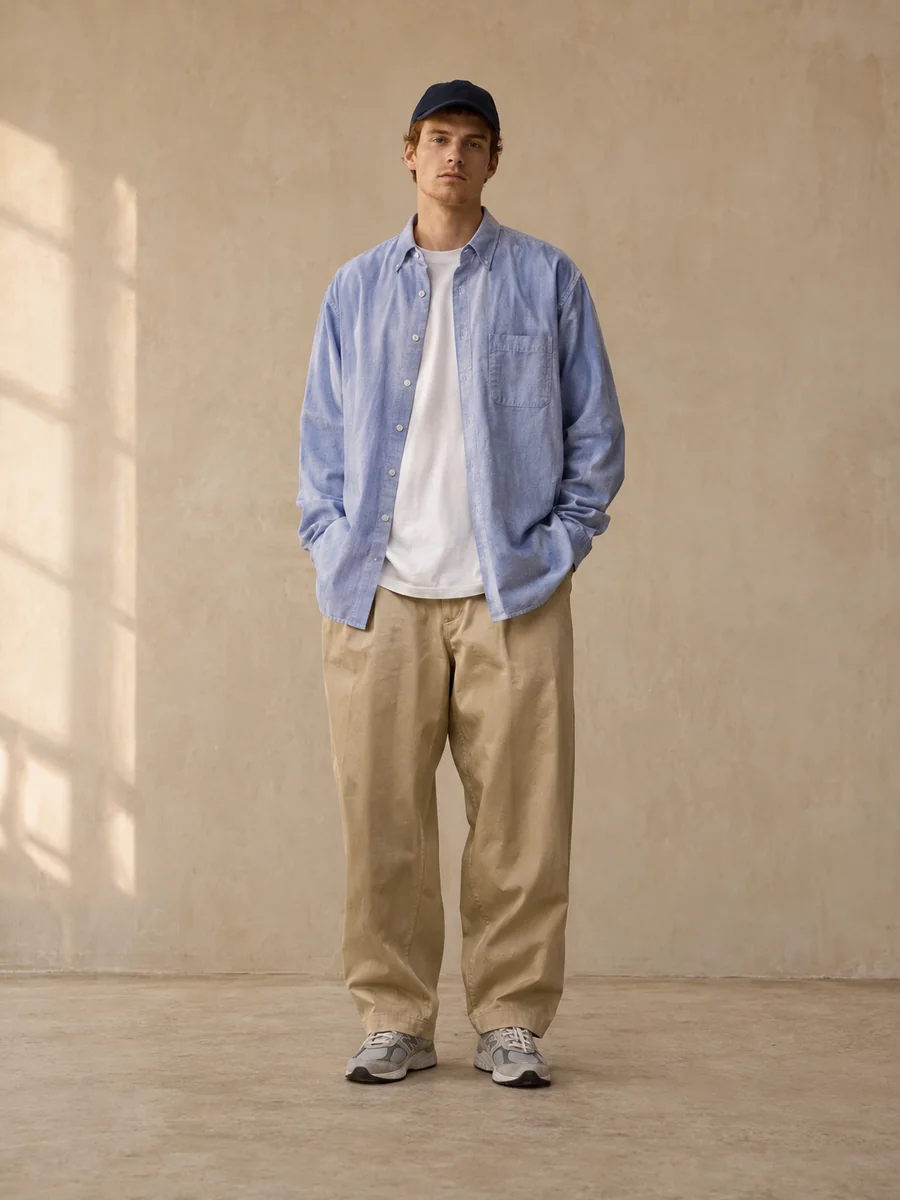
Roomy blue Oxford with wide beige chinos
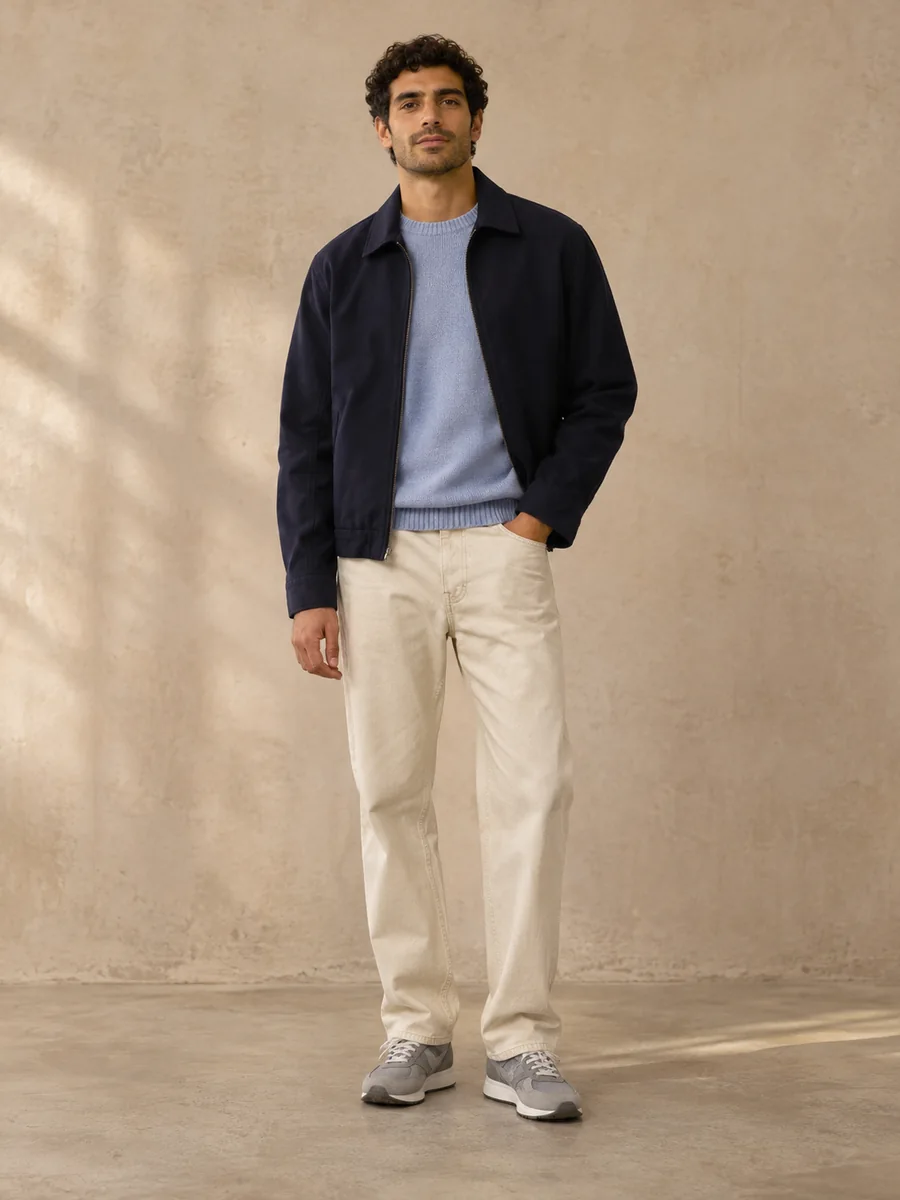
Pale blue knit with ecru jeans and a navy jacket
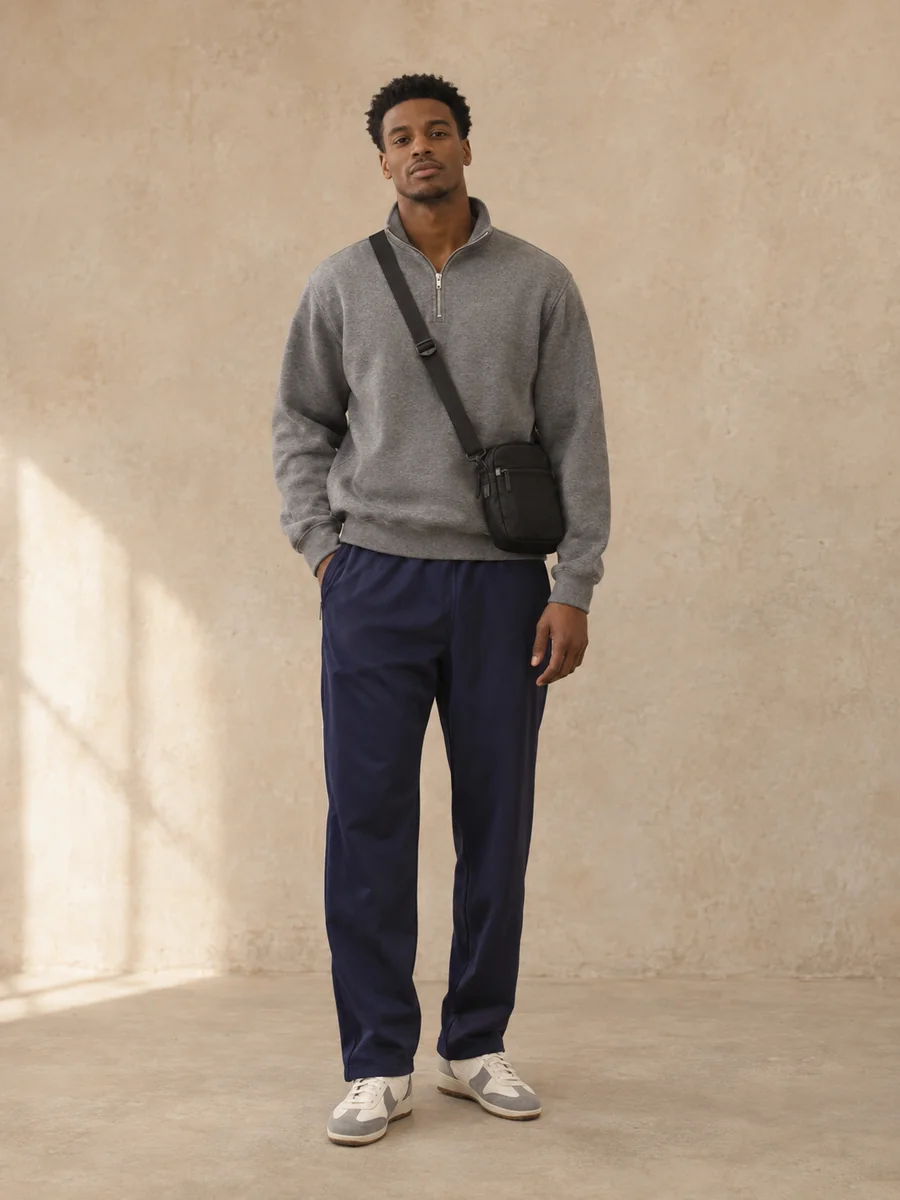
Grey half-zip with straight navy track pants
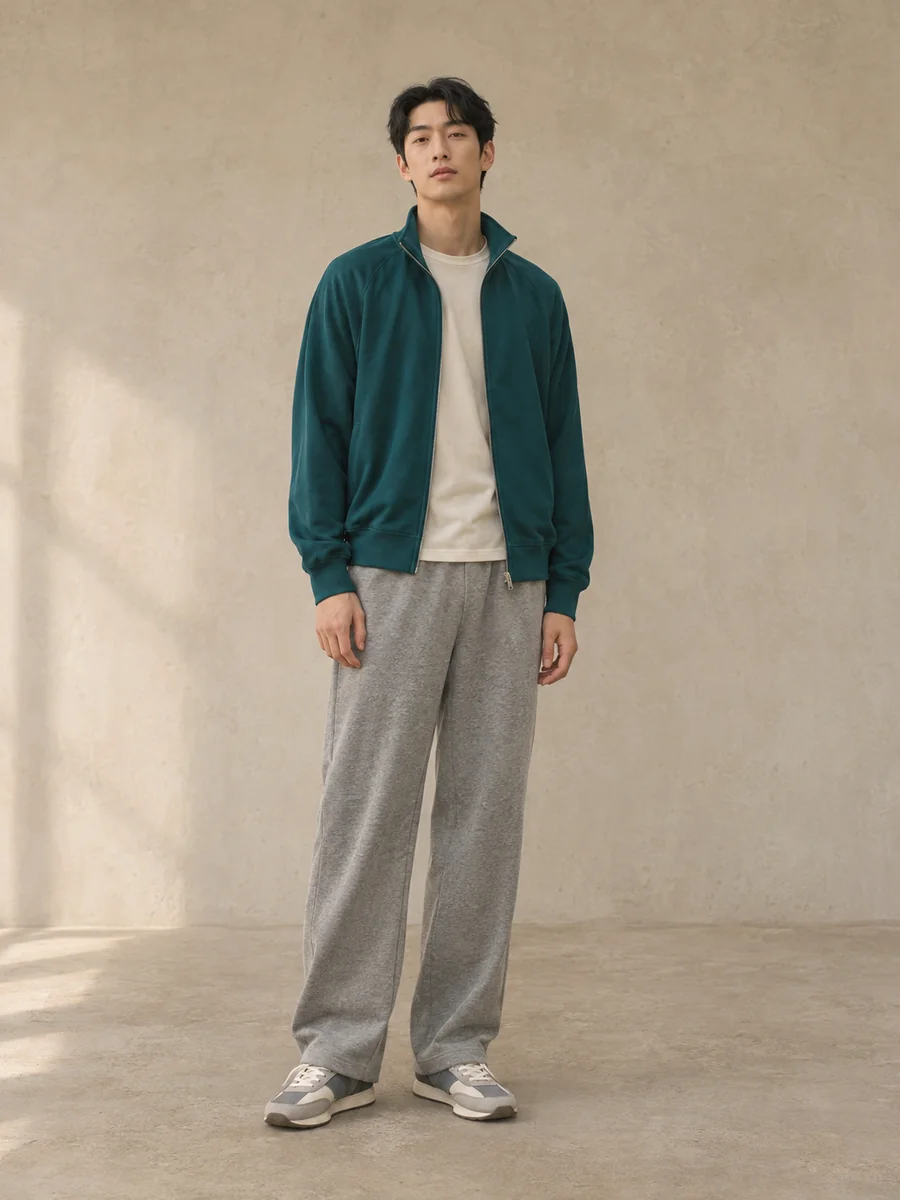
Teal track jacket with loose grey jersey trousers
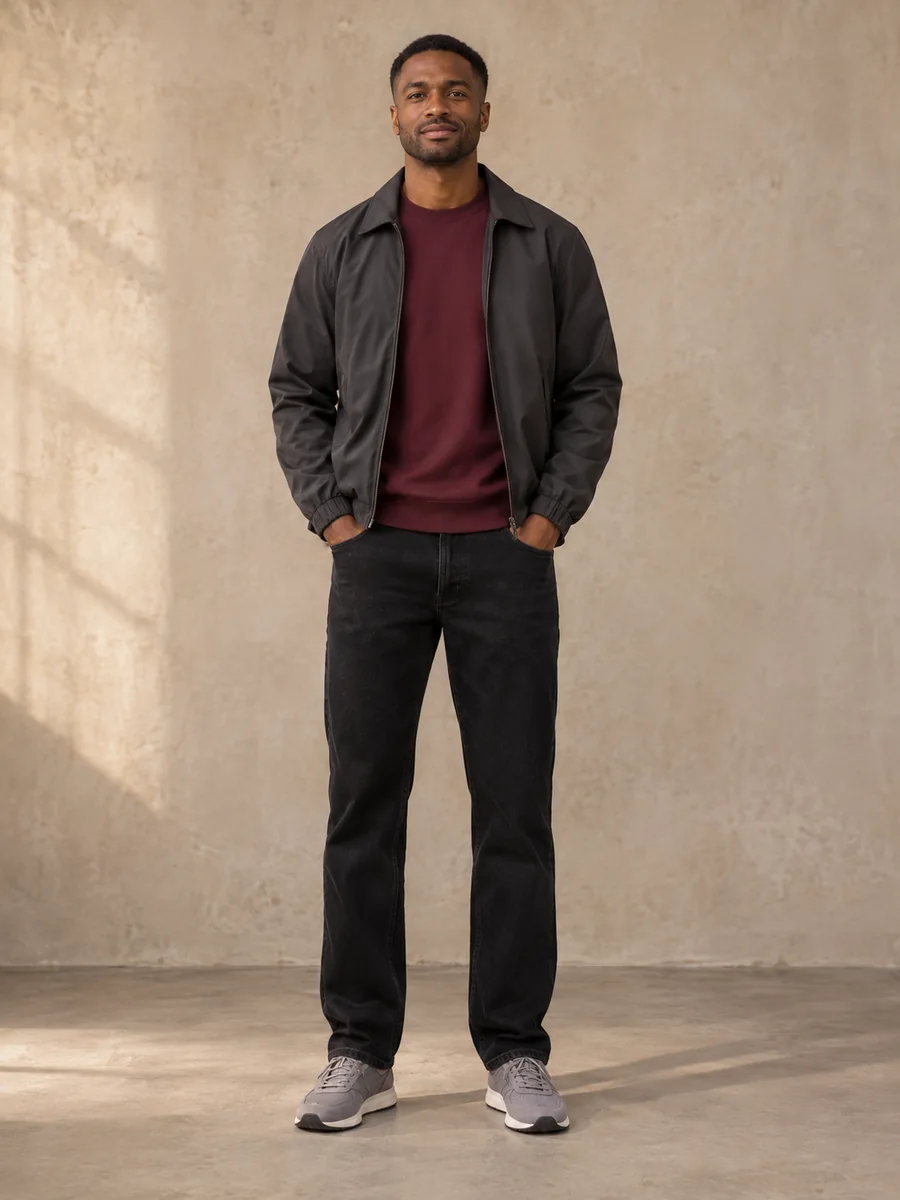
Burgundy sweatshirt with black jeans and a charcoal jacket
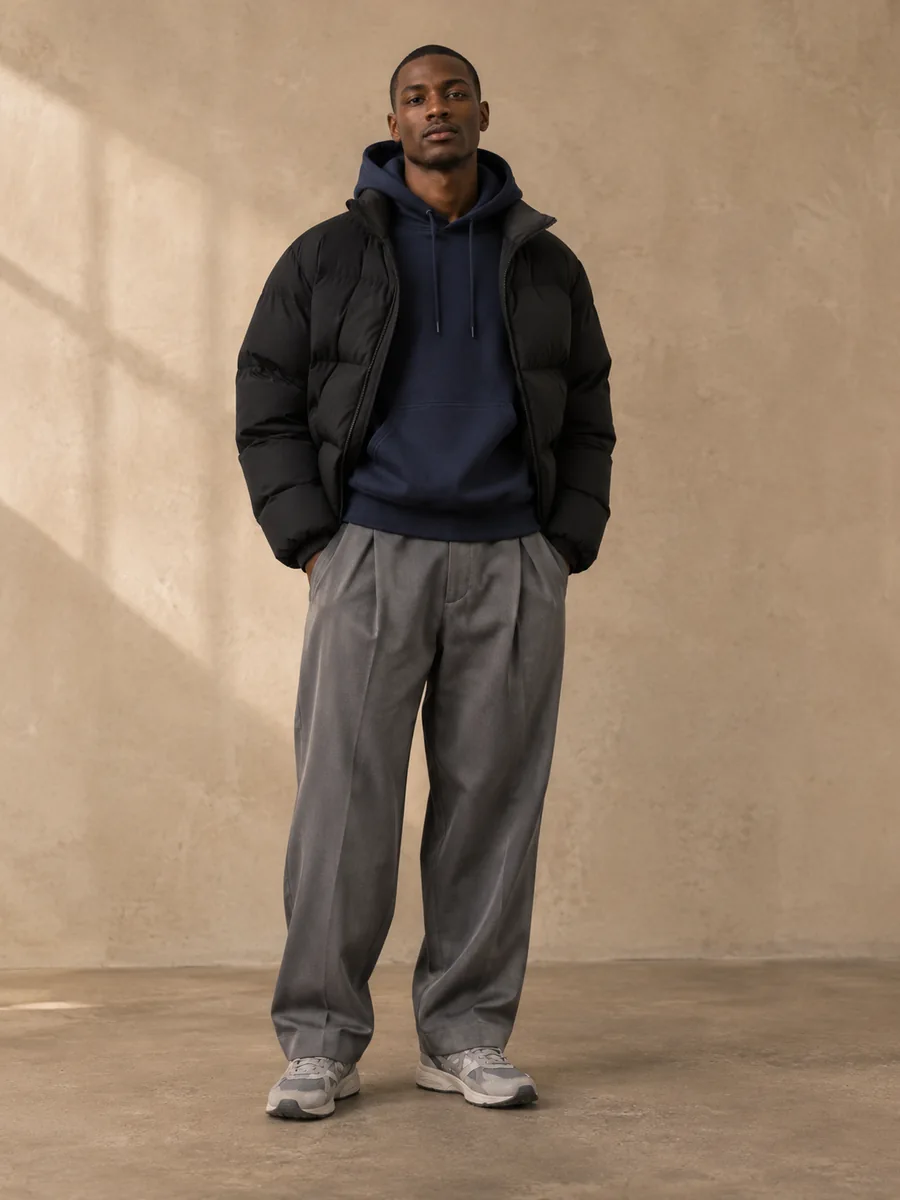
Navy hoodie and loose grey trousers under a black padded jacket
Put the idea to work
Your wardrobe. Your version.
Sources and scope.

What this article can establish
- Outfit formulas are editorial proposals, not photographs of exact purchasable sets or results from a wear test.