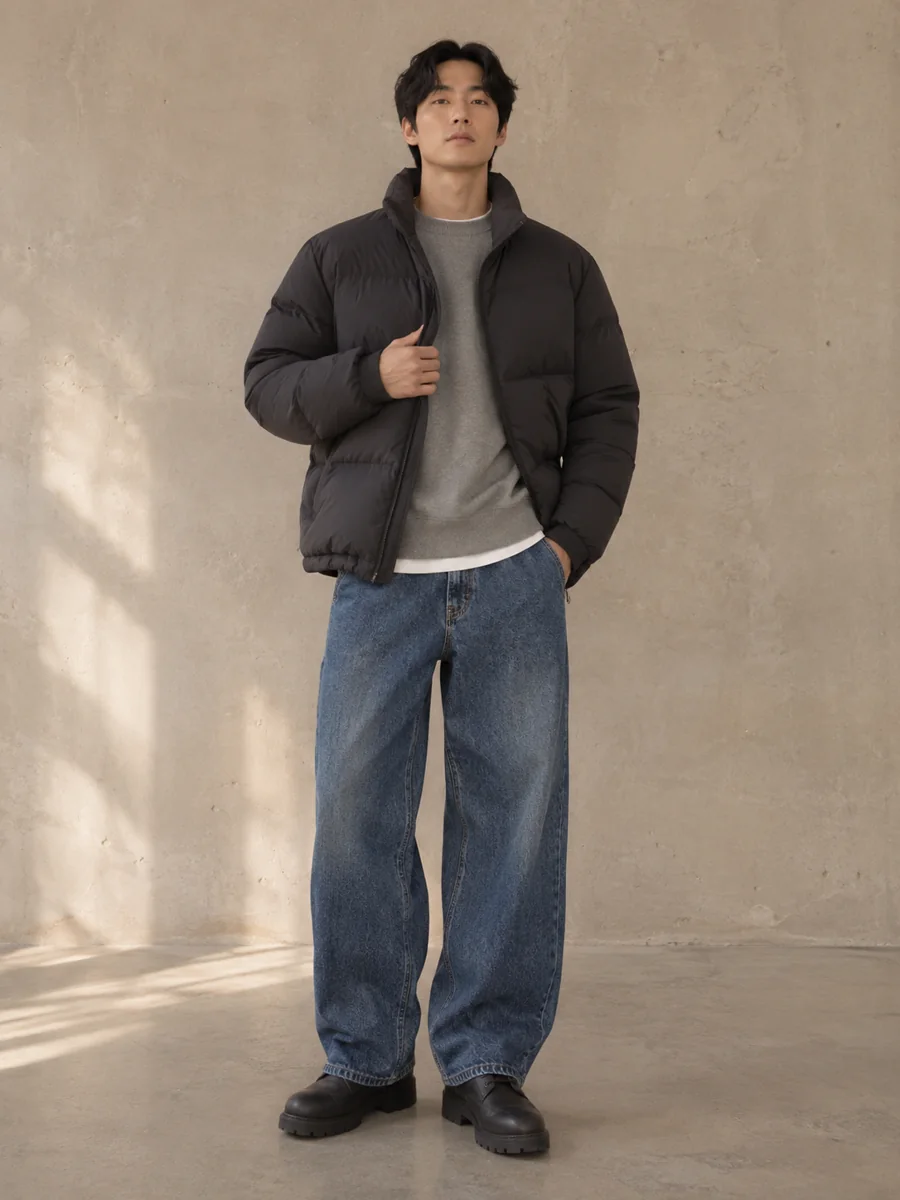
Check the opening over the actual boot
To wear boots with wide-leg jeans, make sure the leg opening clears the boot shaft, then choose how much fabric should rest on the upper. The width of the jeans and the height and shape of the boot work together. Start with the pair you intend to wear, not with a generic idea of boots or a photograph of a different shoe.
Put the jeans at their normal waist position and stand naturally. Look at the front, side and back, then walk. You are checking whether the hem falls, catches or slips beneath the heel. That behaviour tells you more than a single front-facing mirror view.
Separate shaft clearance from sole size
The boot shaft is the section above the foot. A broad jean opening can still catch on it if the fabric folds inward or the shaft has prominent edges. Check where the leg is snagging before assuming the jeans need more length. Adding length may simply create another fold above the same obstruction.
Sole profile is a separate visual question. A substantial sole can provide a strong endpoint beneath broad denim, while a quieter boot can make the leg look more continuous. Neither automatically fixes a hem that is too long. Choose the effect you enjoy, then establish a length that works with the actual shape of the boot.
Choose a break you can maintain
A direct drop with little break gives the leg a clearer line. A modest break introduces a relaxed fold over the boot. More stacking can create a deliberately loose effect, but it also adds fabric that may drag or catch. There is no single correct amount for every jean weight, leg width or boot.
Judge the back hem as carefully as the front. Fabric trapped beneath the heel is likely to suffer during ordinary walking, and a large fold can hide that problem in a still photograph. If you want a stacked effect, keep it controlled enough that you can walk normally without lifting the jeans or rearranging them after every few steps.
| Hem result | What to inspect | Possible adjustment |
|---|---|---|
| Little break | Clear fall over the boot | Check seated length and movement |
| Modest break | One manageable fold | Check heel clearance |
| Heavy stacking | Fabric pooling or catching | Review length and shaft interaction |
Wide blue denim beneath a puffer
The puffer, layered tops, wide blue jeans and boots example uses a substantial upper silhouette and a clearly grounded lower half. The boots help finish the broad denim, but the important check is how the hem settles over them. A large jacket does not justify fabric dragging at the back of the jeans.
Try the whole outfit, including the layers beneath the puffer, because the waistband position may change as you dress. A tuck, belt or thicker underlayer can affect how the jeans sit. Make the final hem decision from the arrangement you will actually wear, rather than adjusting the jeans in isolation and hoping the rest leaves them unchanged.
Puffer, wide denim and boots
Use dark denim to compare texture and outline
A long black coat, textured black knit, broad black denim and black boots creates a relatively continuous line. Similar colours can conceal where the jean stops and the boot begins, so check the silhouette from the side. A dark palette does not make a congested hem disappear; it can simply make the problem less visible in photographs.
A brown jacket with a black knit, washed grey denim and black lace-up boots gives the footwear more contrast. Use that example to see the boot shape more clearly. The jeans need not have exactly the same width as the all-black pair for the comparison to be useful: observe the opening, shaft and break separately.
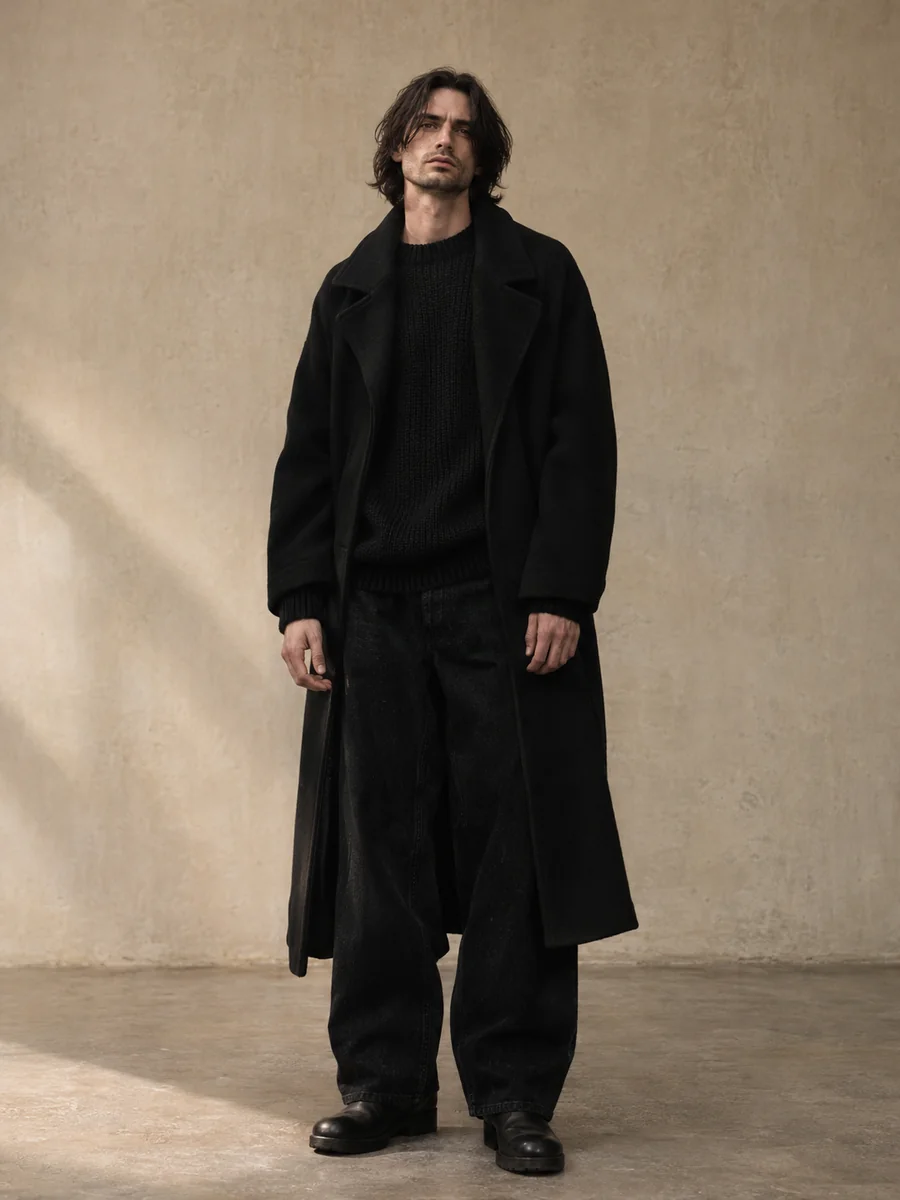
Long black coat with textured black layers
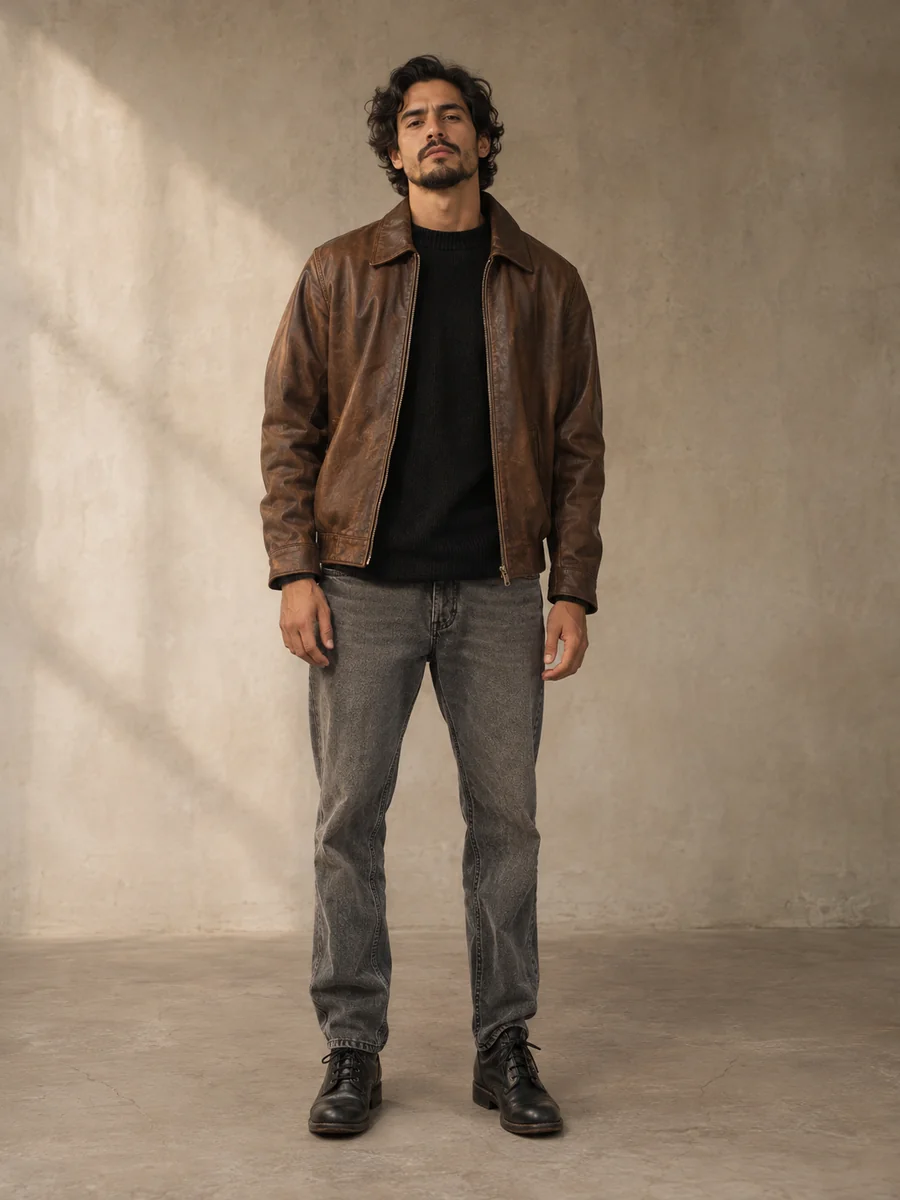
Brown leather-look jacket with washed grey denim
Compare with a straighter leg before altering
A brown work jacket, black denim and boots provides a quieter comparison, while a sand chore jacket, ecru tee, straight indigo jeans and brown boots makes the leg shape especially easy to read. These are straight-denim references, not examples of the widest possible jean. They show how less fabric changes the meeting at the foot.
If you prefer the wider leg, keep it and solve its own length. You do not need to narrow the entire jean simply because a straight pair looks tidier. A careful alteration, a different cuff or another boot may address the actual issue. Compare options with the same top so the lower-half difference remains clear.
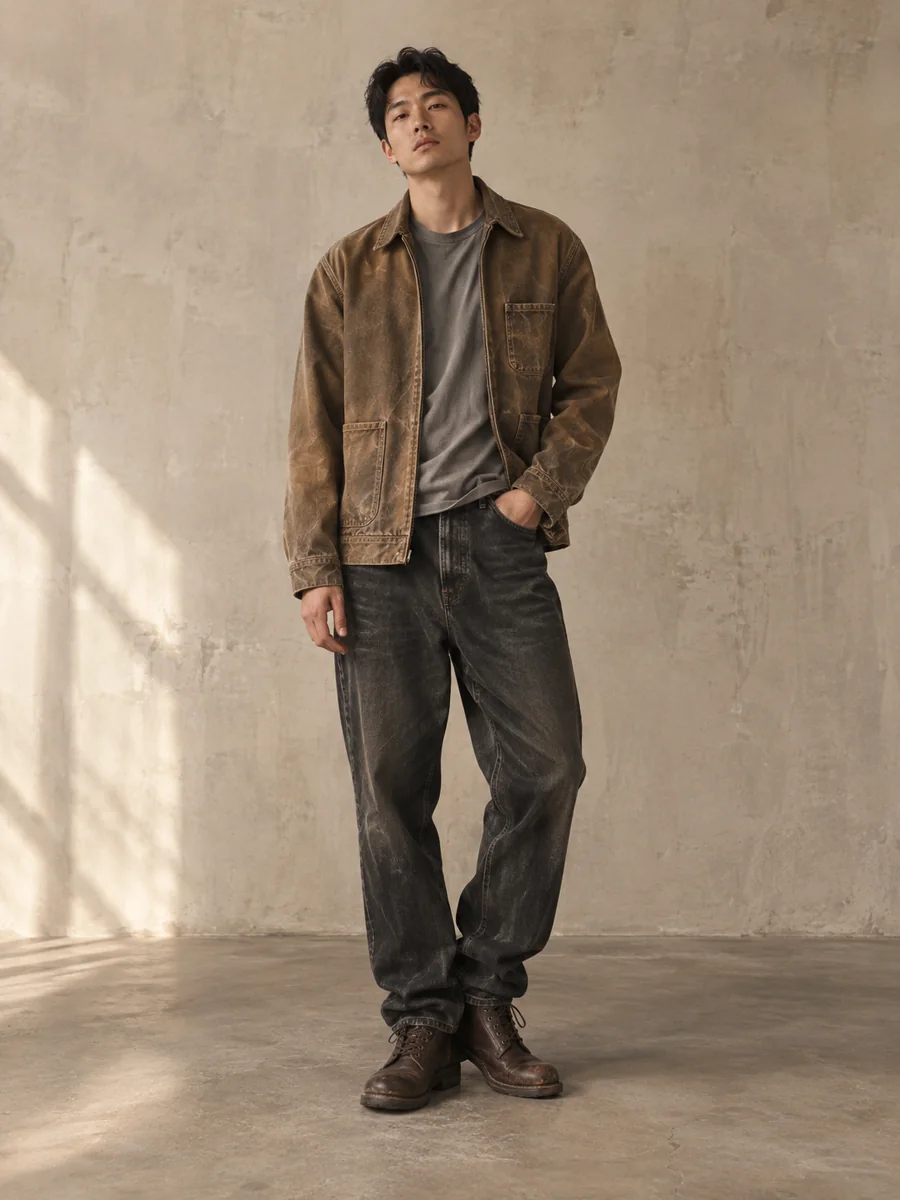
Brown work jacket, black denim
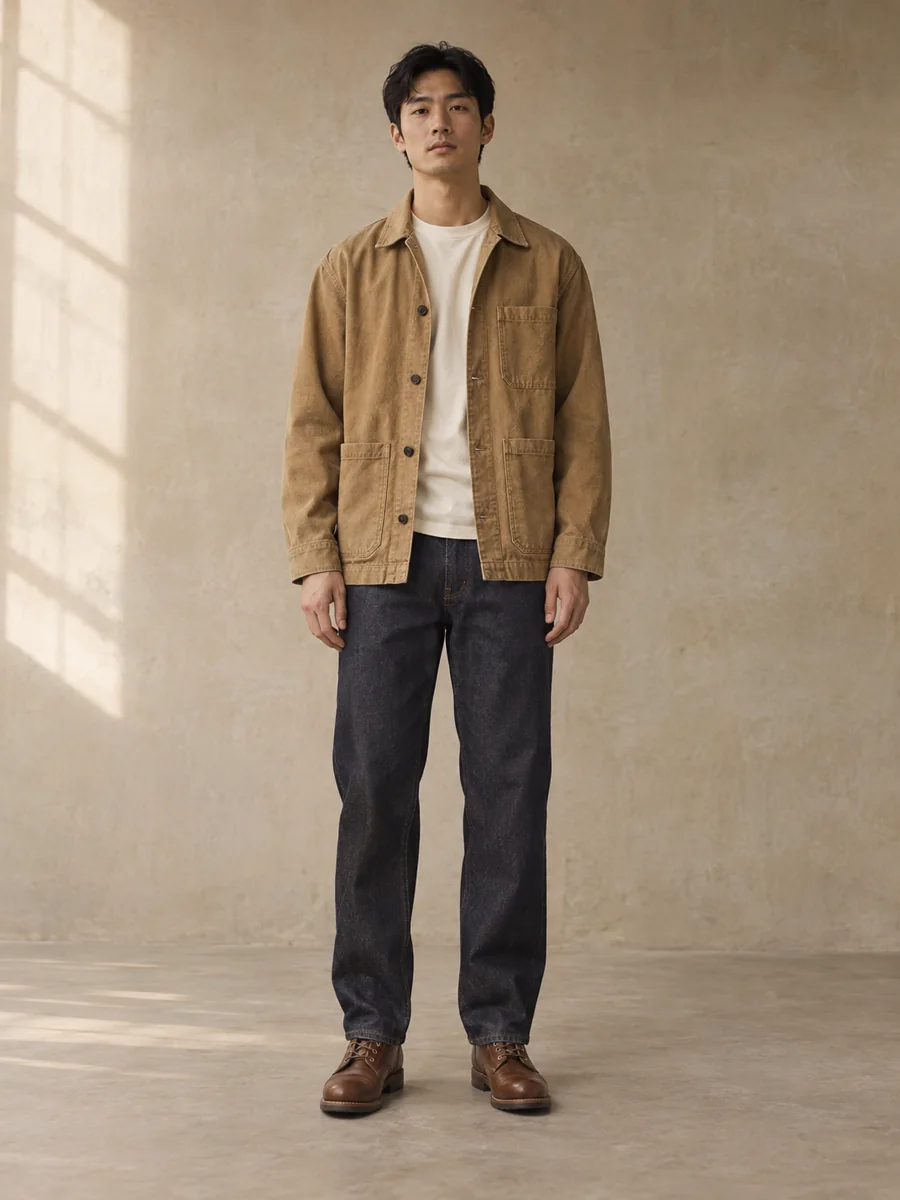
Tan chore jacket with straight indigo jeans
Ask for an alteration in the shoes you will wear
If the hem needs changing, take the intended boots and wear the jeans at their normal waist position when discussing the alteration. Explain the break you want and check the back clearance. Do not rely on an exact measurement borrowed from another person’s outfit: rise, inseam, boot and stance all affect the result.
Afterwards, check the hem periodically for dragging and wear, and follow the jeans’ care instructions. Different footwear may need a different length, so accept that one pair of jeans may not work equally well with every shoe. Finally, verify the boots’ suitability for the actual conditions. Their visual weight says nothing reliable about traction, insulation or water resistance.
Explore more outfit ideas or compare the style files.