Build around combinations, not a list of brands
A small workwear wardrobe starts with pieces that repeat comfortably: two jackets, three underlayers, two trousers and two pairs of shoes are enough for the planning exercise below. The goal is six outfits you would actually wear, rather than collecting every recognisable workwear garment. Begin by checking what you already own.
Here, workwear describes an everyday style built around practical-looking construction, denim and canvas. It does not mean protective equipment or clothing certified for a particular job. If you need garments for workplace hazards, use the requirements of that job. Visual pocket detail cannot establish safety performance, durability or suitability for professional tasks.
Choose a nine-piece starting set
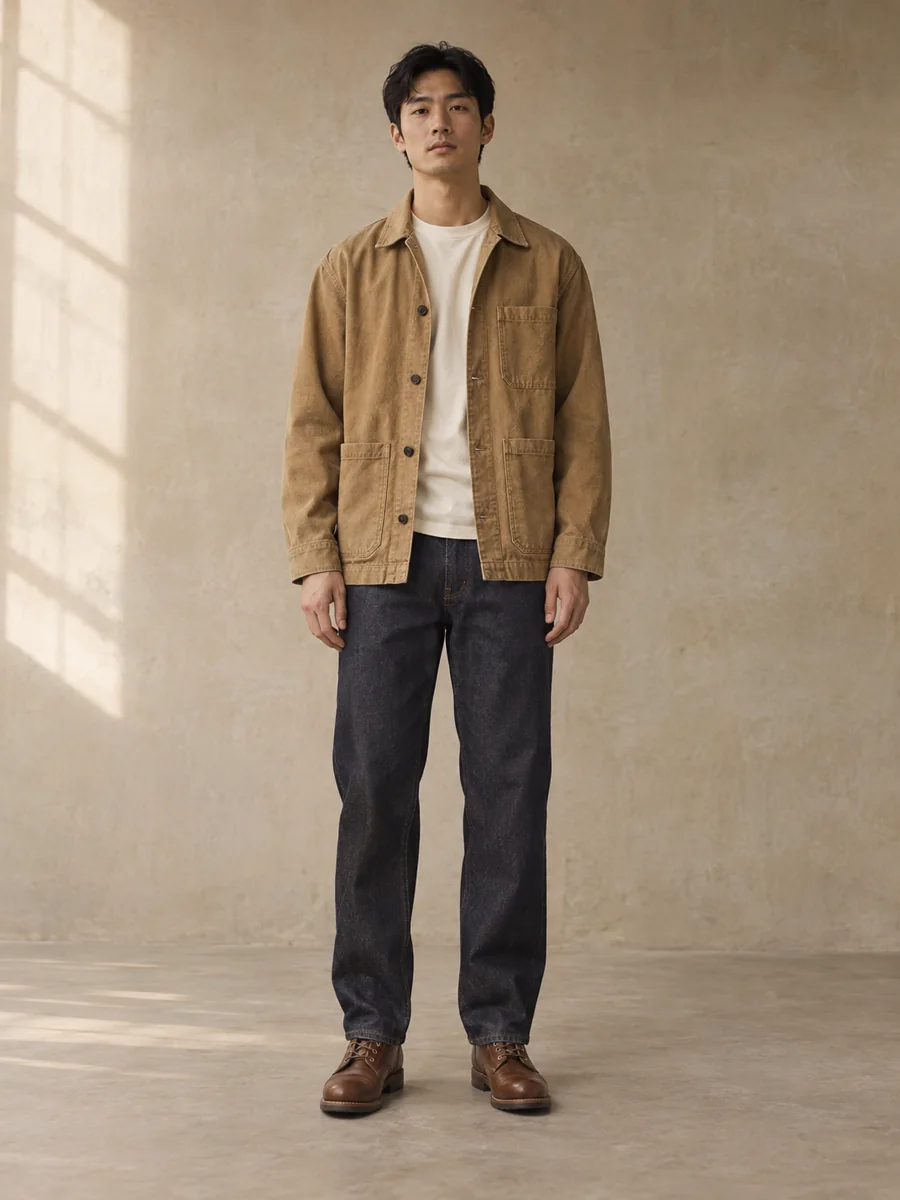
Use a sand chore jacket and navy work jacket; an ecru tee, grey hoodie and pale blue Oxford; straight indigo jeans and cream carpenter pants; brown boots and simple retro sneakers. Treat these as roles, not compulsory purchases. Similar pieces you own can fill them if they work together in shape and colour.
Try each jacket over all three underlayers before committing to the plan. A jacket that works only over the tee has a different role from one that comfortably holds the hoodie. Check trouser length with both shoes too. Shared colours help, but physical compatibility is what allows the wardrobe to repeat without constant adjustment.
Tan chore jacket with straight indigo jeans
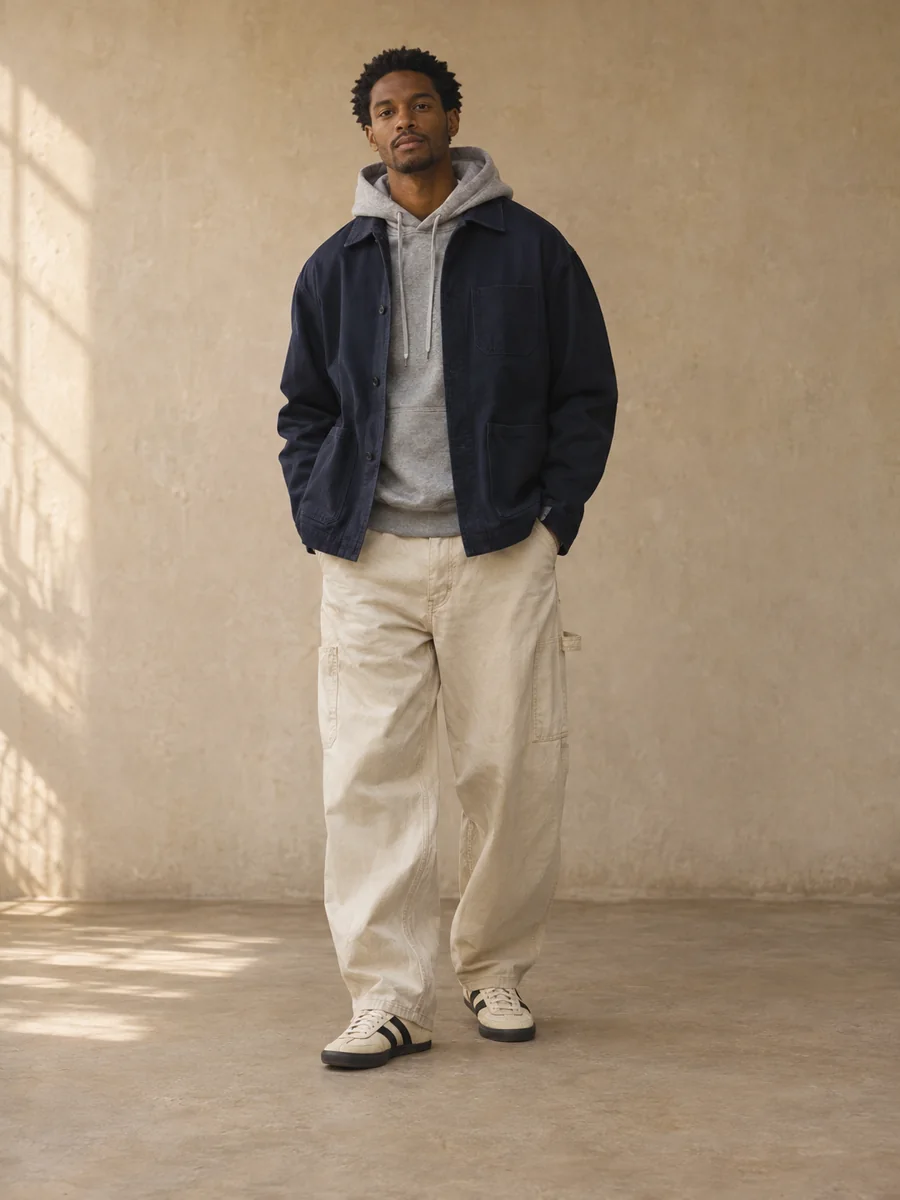
Navy chore coat with cream carpenter pants
Map six outfits before adding anything
The matrix uses only those nine roles. It is a planning tool, not a claim that every linked image shows every exact combination. Outfits A and B closely follow our sand-jacket and navy-jacket examples. The other columns show controlled variations using the same small set, so you can identify where an actual garment fails to mix.
Put a mark beside combinations you would wear for your ordinary week. If most of them depend on the hoodie, it may be a more important purchase than an extra jacket. If cream trousers are impractical for your routine, replace that role with another useful neutral rather than preserving the palette just to imitate the examples.
| Piece | A | B | C | D | E | F |
|---|---|---|---|---|---|---|
| Sand chore jacket | Yes | — | Yes | — | Yes | — |
| Navy work jacket | — | Yes | — | Yes | — | Yes |
| Ecru tee | Yes | — | — | Yes | — | — |
| Grey hoodie | — | Yes | — | — | Yes | — |
| Pale blue Oxford | — | — | Yes | — | — | Yes |
| Indigo jeans | Yes | — | Yes | Yes | — | — |
| Cream carpenter pants | — | Yes | — | — | Yes | Yes |
| Brown boots | Yes | — | Yes | — | Yes | — |
| Retro sneakers | — | Yes | — | Yes | — | Yes |
Use the Oxford to extend the mood
An Oxford shirt changes the wardrobe more than another similar tee because it introduces a collar and a cleaner front. Our brown canvas jacket, pale blue Oxford and wide denim example illustrates that relationship, even though its brown jacket is outside the nine-piece set. Borrow the shirt-and-jacket idea without treating the picture as an exact inventory match.
Check the shirt tail beneath your own jackets. A tuck may help a longer curved hem, while a straighter casual shirt may sit comfortably outside. Try it with both trousers. If it only works with one, decide whether that limited role is worthwhile before expanding the wardrobe to accommodate it.
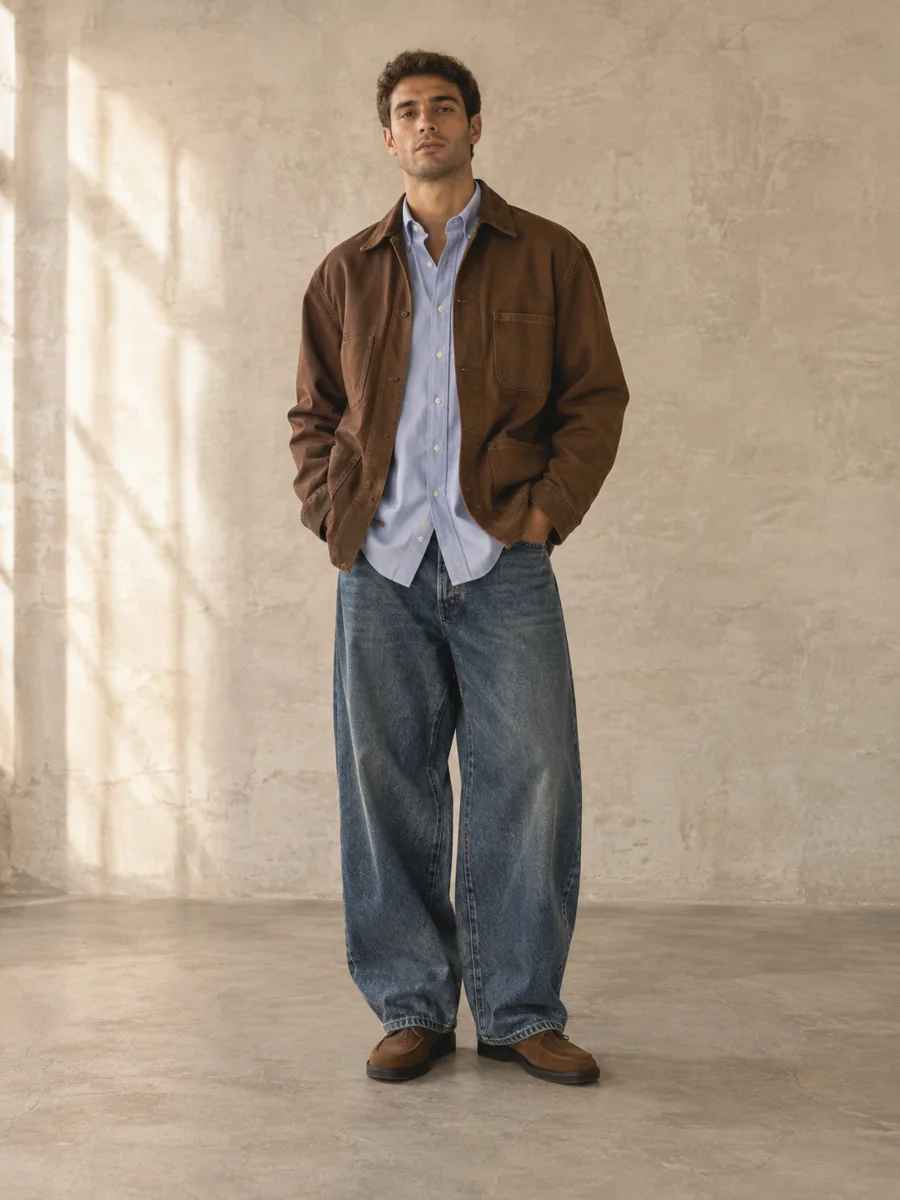
Brown canvas jacket with a blue Oxford
Choose the next trouser by a missing function
Olive fatigue pants offer a different pocket arrangement from cream carpenter pants. The denim jacket, cream henley and olive fatigue example shows a practical-looking lower half without large side cargo pockets. Consider that direction if your current trousers are all denim and you want a genuinely different shape or surface.
Double-knee trousers are another possibility. A sand utility overshirt, black tee and grey double-knee pair shows how construction can provide the interest. You do not need both types immediately. Decide whether the missing role is colour, pocket layout, leg shape or compatibility with an existing jacket, then choose the piece that answers that specific need.
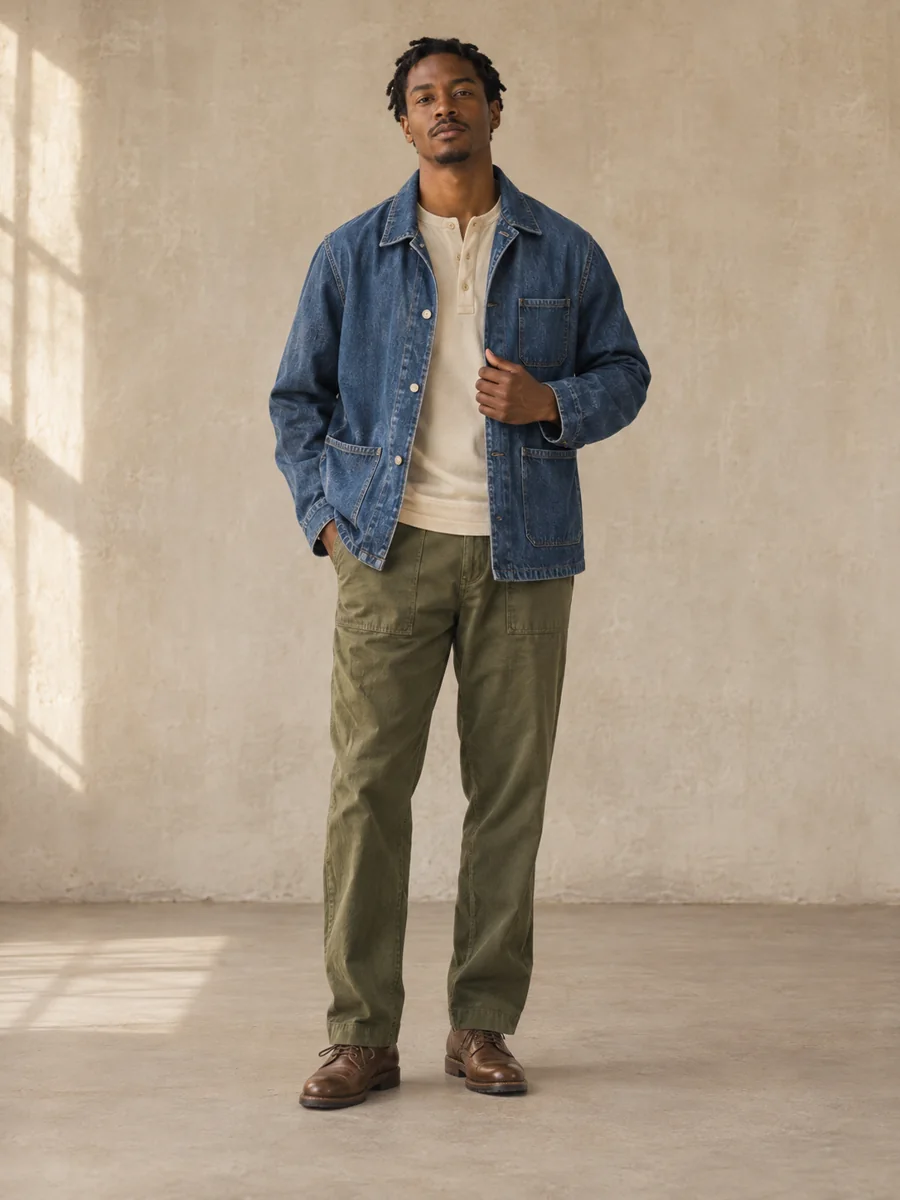
Denim chore jacket with olive fatigue pants
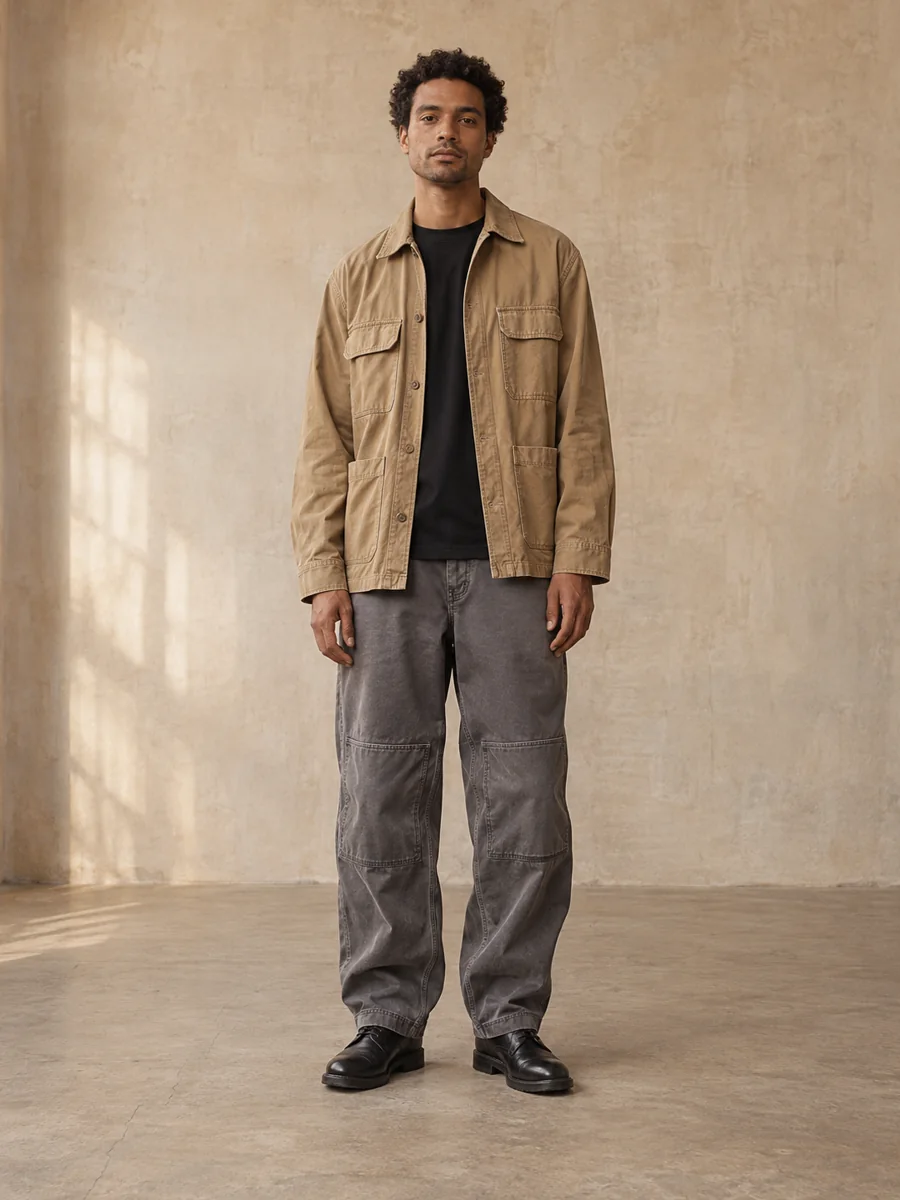
Sand utility overshirt with grey double-knee pants
Add a field jacket only when it changes the options
An olive field jacket over an ecru knit and dark denim brings a different front, collar and pocket arrangement from the chore jackets. That can be a worthwhile addition if you enjoy its shape and it fits your actual layers. It is less useful if you would wear it only in the same situation as a jacket you already prefer.
A new jacket also brings care, storage and fit requirements. Check them before treating it as a simple extra outfit count. The point of a small wardrobe is not to reach a permanent minimum number of pieces, but to understand which additions increase your usable choices and which merely resemble clothes already hanging there.
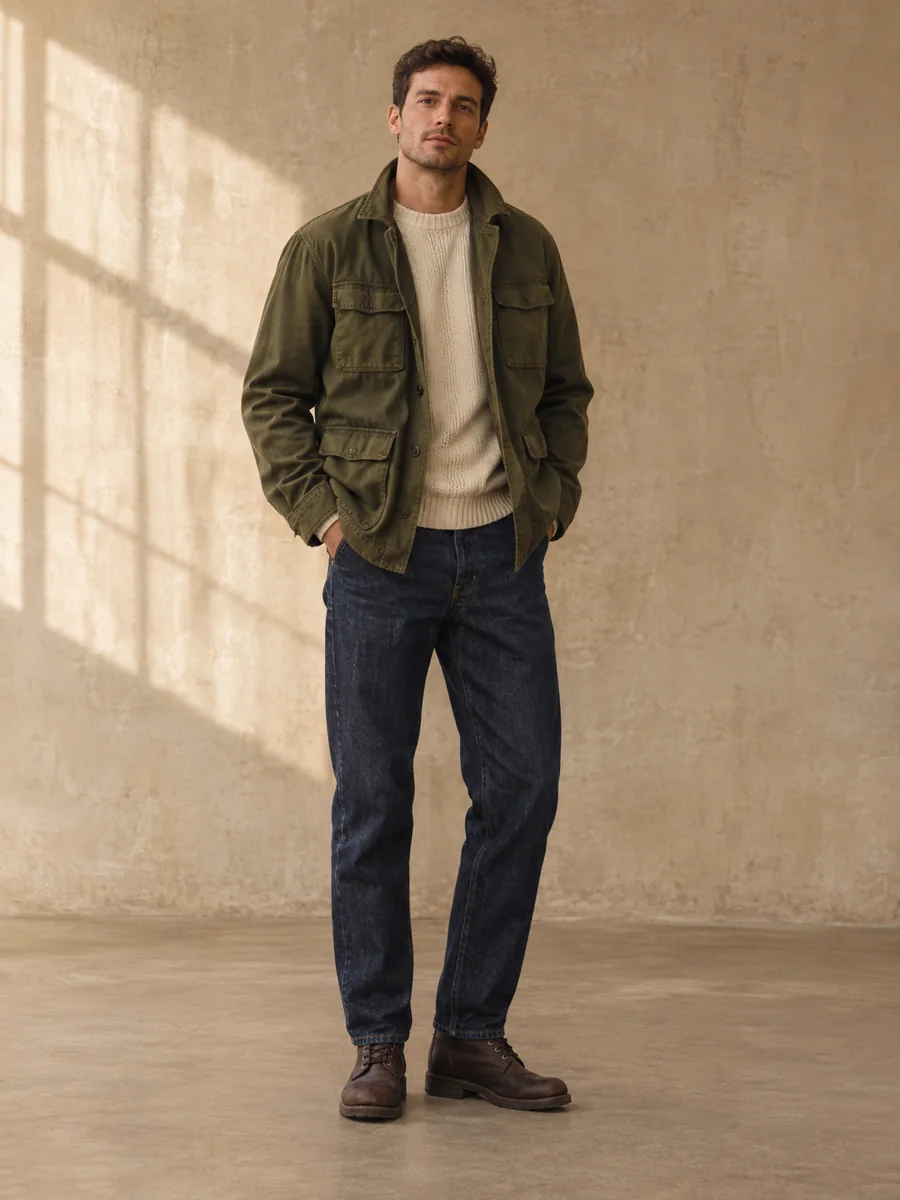
Olive field jacket with an ecru knit
Test the wardrobe through your normal week
Record what you actually reach for and what stays unused. Separate fit issues from preference: a trouser you like but cannot wear with either shoe needs a different solution from one whose colour you never enjoy. Adjust one role at a time so you can see whether the change improves several outfits.
Leave room for cleaning, weather and your routine when judging the plan. Nine roles are an exercise, not a promise that nine garments cover every person’s life. Build additional pieces around repeated needs rather than a new label or trend. A wardrobe becomes useful through comfortable repetition, sensible care and combinations you can assemble without solving the entire outfit again.
Explore more outfit ideas or compare the style files.