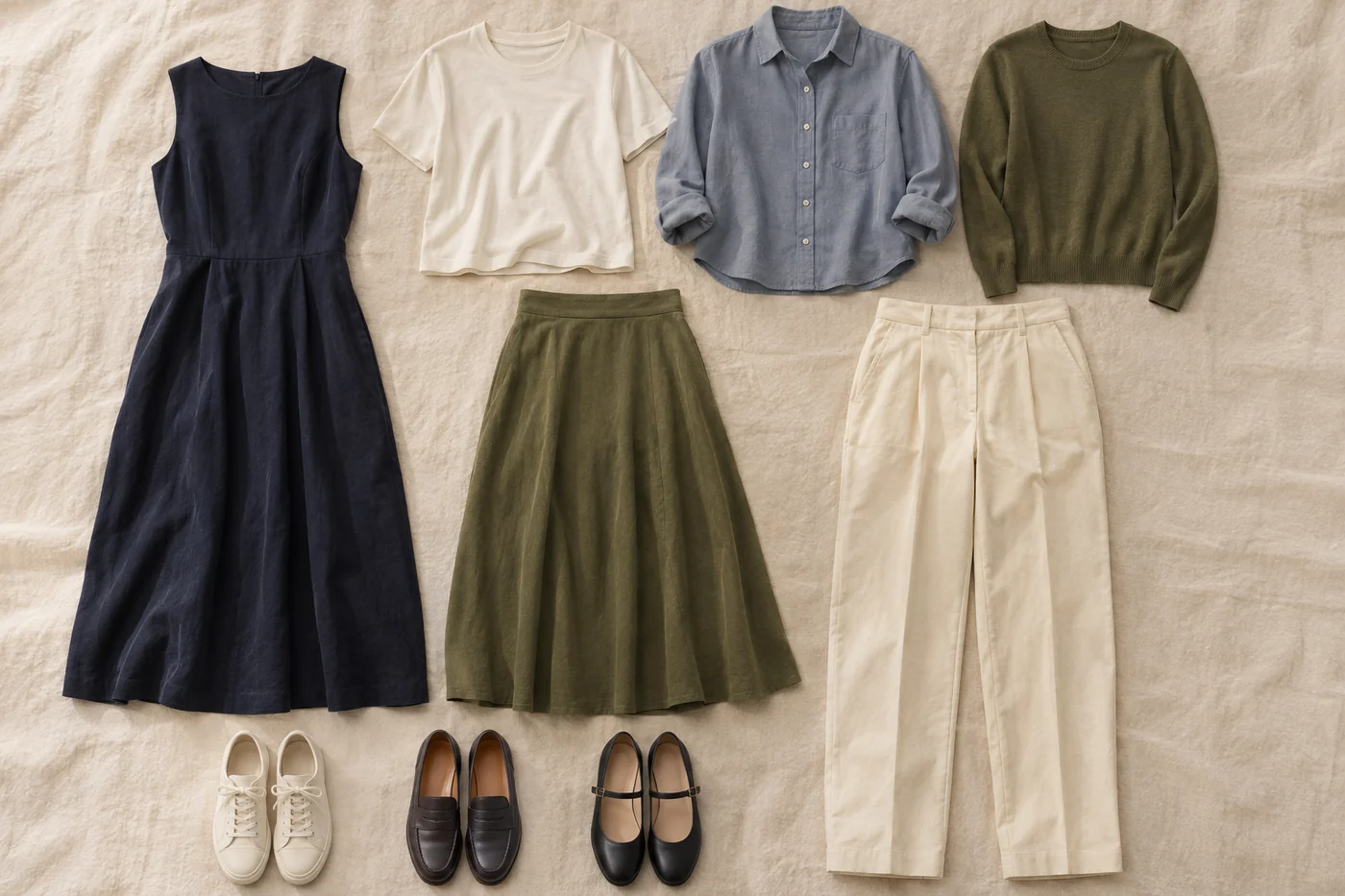
An activity-based travel capsule begins with what the trip asks you to do. Write down the travel day, walking time, indoor stops and any event with a dress requirement. Make complete outfits for those activities, then derive the packing list from the clothes in those outfits.
The worked example is a three-day city break with a train journey, museum afternoon, extended walk and casual dinner. It assumes access to your room each evening and no planned laundry. It is an illustration of a planning method; check your own forecast, access needs, venue expectations and luggage allowance before choosing garments.
Turn the itinerary into five clothing decisions
Day one needs a comfortable travel outfit that can continue into a museum visit. Day two needs a walking outfit and a dinner version. Day three needs a final daytime combination and the return journey. That creates five decisions, though some can use the same complete outfit.
Write the difficult constraint beside each decision: long seated journey, many steps, outdoor exposure or a dinner dress code. Include the real walking distance and your experience of your shoes. A shoe that photographs well with three outfits is not automatically comfortable for your trip.
Start with eight main pieces
Try two tops, one pair of trousers, one skirt, one dress, one cardigan, one weather-appropriate outer layer and one pair of walking shoes. Those are eight main pieces. Add another shoe only if the activities require it and you can carry it. Underwear, socks, sleepwear, medication and personal equipment need their own quantities.
Use actual garments rather than a generic neutral inventory. A short tee may work with the skirt but not give you the coverage you want with the trousers. The cardigan may fit over one dress and crowd another. Check the relationships before treating the small number as an achievement.
Make each activity into a complete board
For the journey, pair top one with trousers, walking shoes and the cardigan. For the museum, retain that base and remove the cardigan indoors if comfortable. For the extended walk, use top two with the trousers and the chosen outer layer. For dinner, use the dress with the cardigan and the same shoes if the venue allows them.
For the last day, try top one with the skirt and walking shoes, allowing for whether the top will be ready to wear again. This last dependency matters: an outfit board can show a repeat, but it cannot establish that the garment will be clean, dry or comfortable after the previous use.
Keep the weather alternative explicit
Check an up-to-date forecast yourself before departure and enter the relevant conditions in the weather planner. Note time outdoors, wind and rain as well as a headline temperature. Choose protective clothing by its documented features and your real experience; a shell-like image does not establish waterproofing.
If rain would make a skirt hem, footwear or planned walk unsuitable, save a separate alternative. If the weather alternative requires an extra piece, it belongs in the list. You can also change an activity rather than force a small wardrobe to handle conditions it was never chosen for.
Move from the planner to the packing list
Save the complete combinations and assign them to the trip days in the outfit planner. Then bring the planned outfits into the packing list and review the pieces. Shared garments should appear once only when they represent the same physical item. Similar names are insufficient evidence that two catalogue references are your one pair of shoes.
Link the relevant references deliberately to the same wardrobe item where appropriate. Review quantities after deduplication: one shoe pair may be used across several outfits, while several pairs of socks are still needed. Add personal items and any clothing worn during travel so the list explains what is packed and what is already on your body.
Run the whole trip before closing the bag
Try the combinations in sequence at home. Put the real bag on, sit in the journey outfit and move in the walking version. Check that you can carry a removed cardigan and that fastenings remain manageable. A complete board is a useful plan, but it cannot perform those physical checks.
Finally, remove one optional garment from the list and see which activity loses its outfit. If nothing changes, it may be a spare you consciously want or an unnecessary addition. If an essential activity becomes uncovered, put it back. A good travel capsule has understandable dependencies and a practical fallback, even when that means packing more than the smallest possible selection.
Put the idea to work