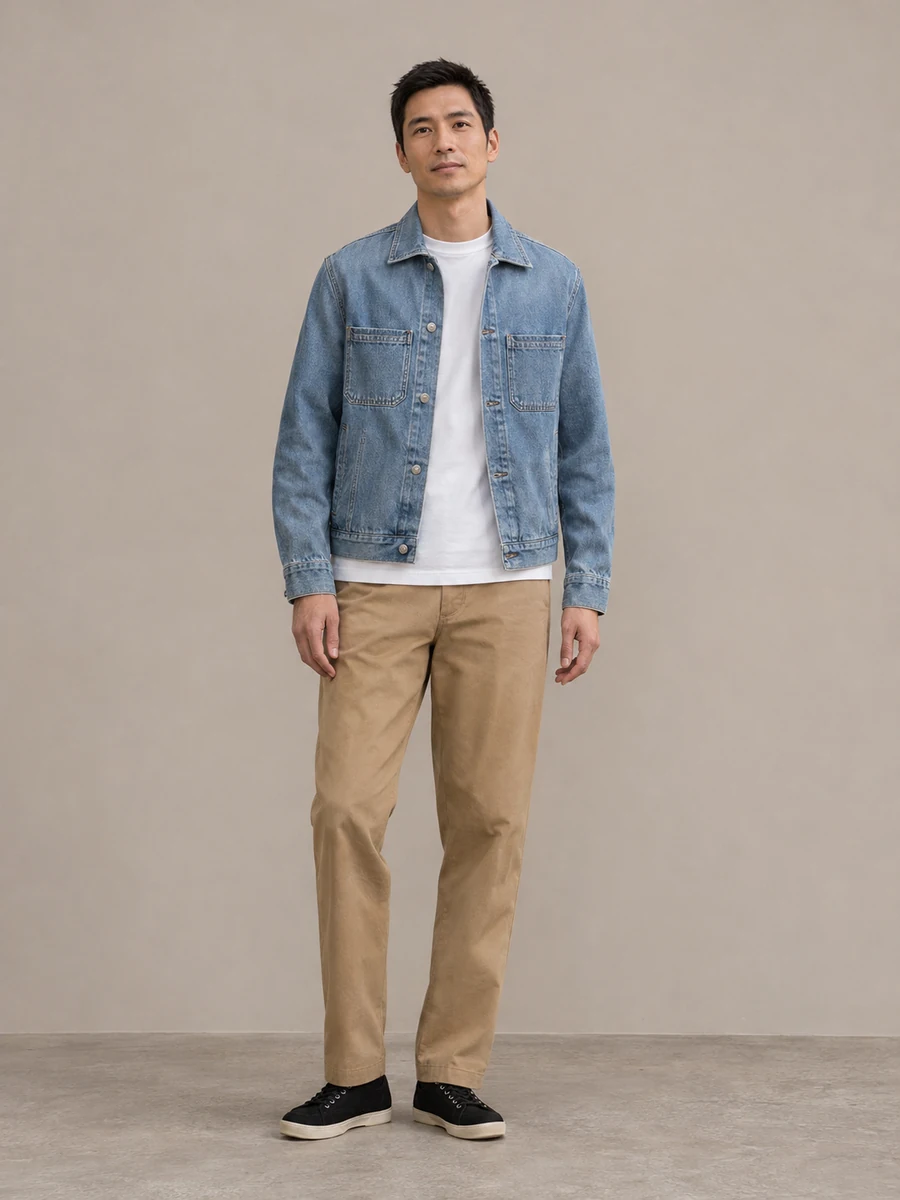
Normcore
The considered edit / 8 outfit concepts
One familiar white tee idea. Several different silhouettes.
A white tee is a useful starting point because its neckline and light surface remain easy to read beside very different clothes. These recipes compare what happens around that familiar role: a shorter jacket, a broader trouser, a more defined shoe or an open layer.
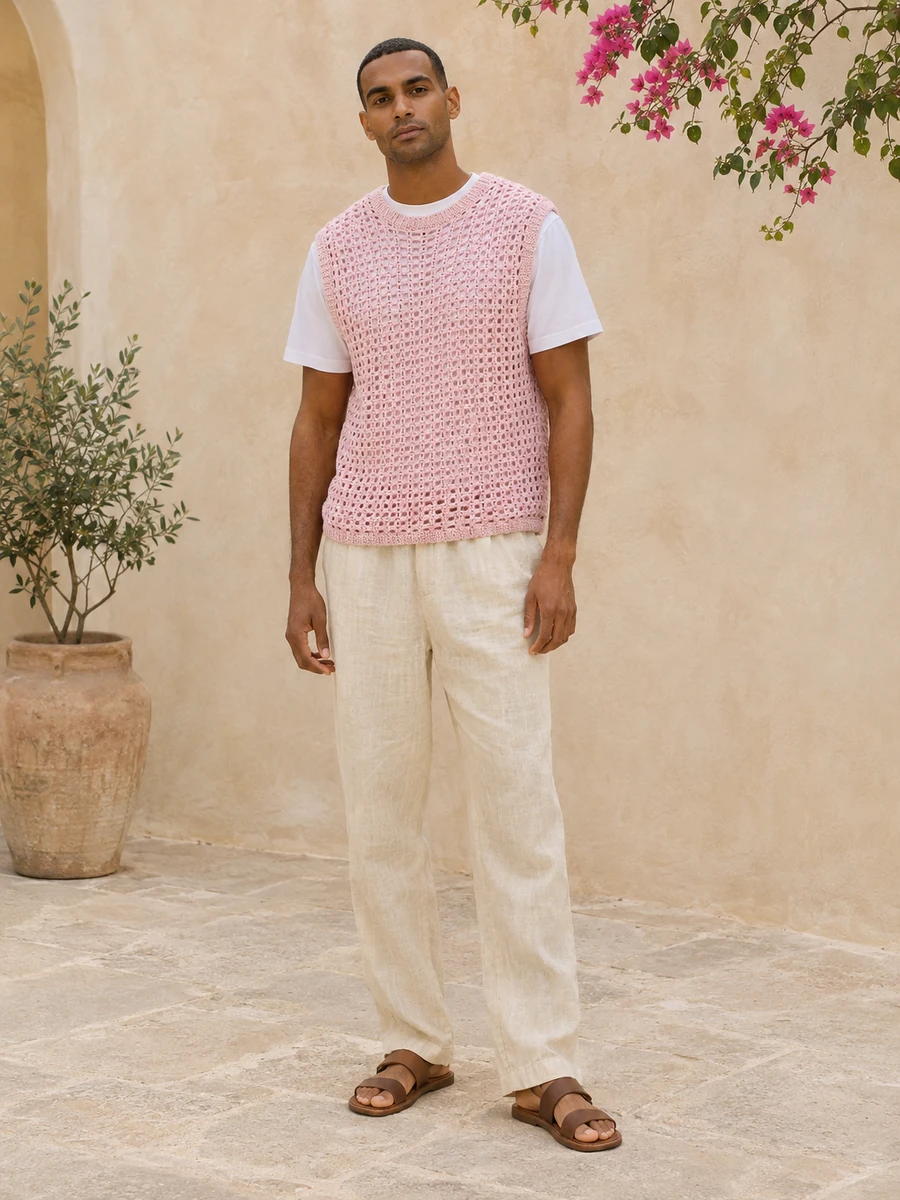
Resortwear
Pink crochet-style vest over white and cream
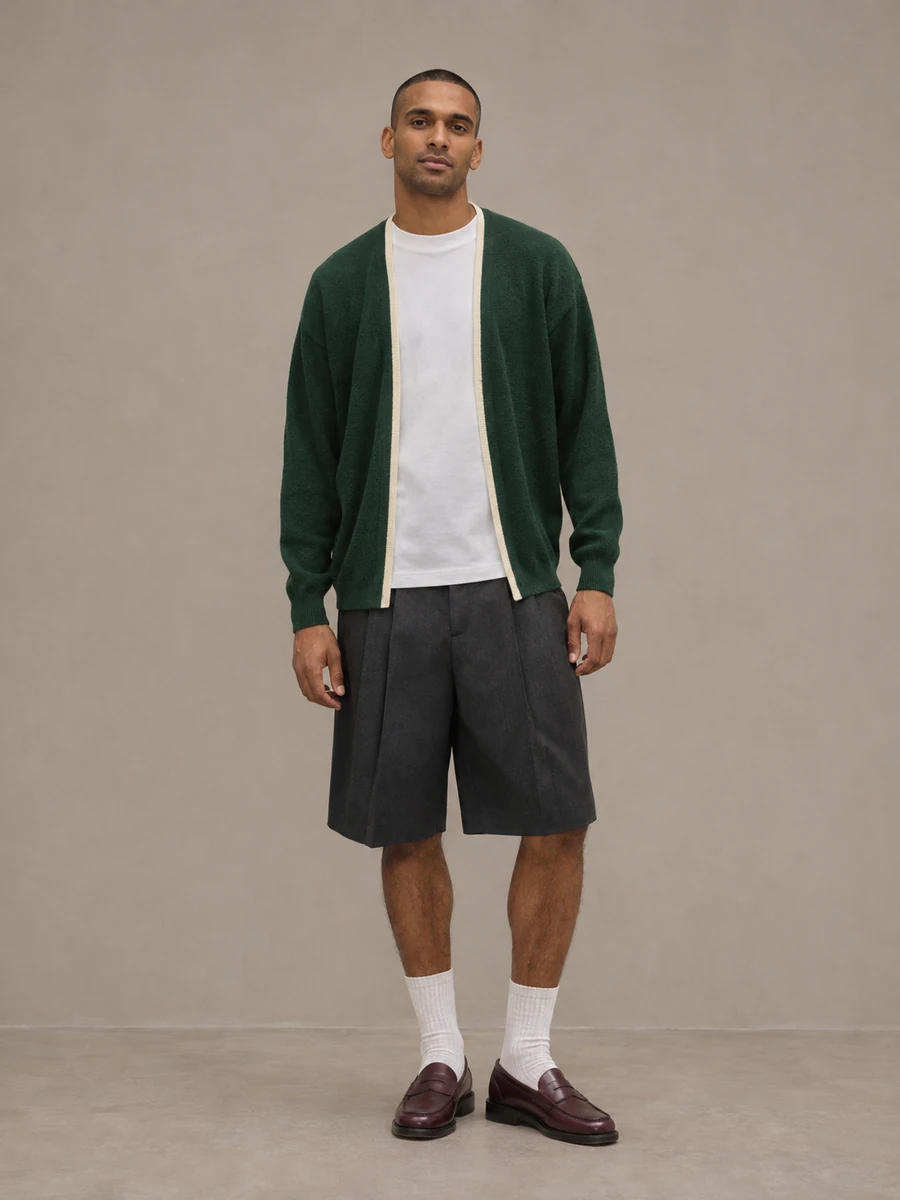
Preppy
Forest collegiate cardigan with grey pleated shorts
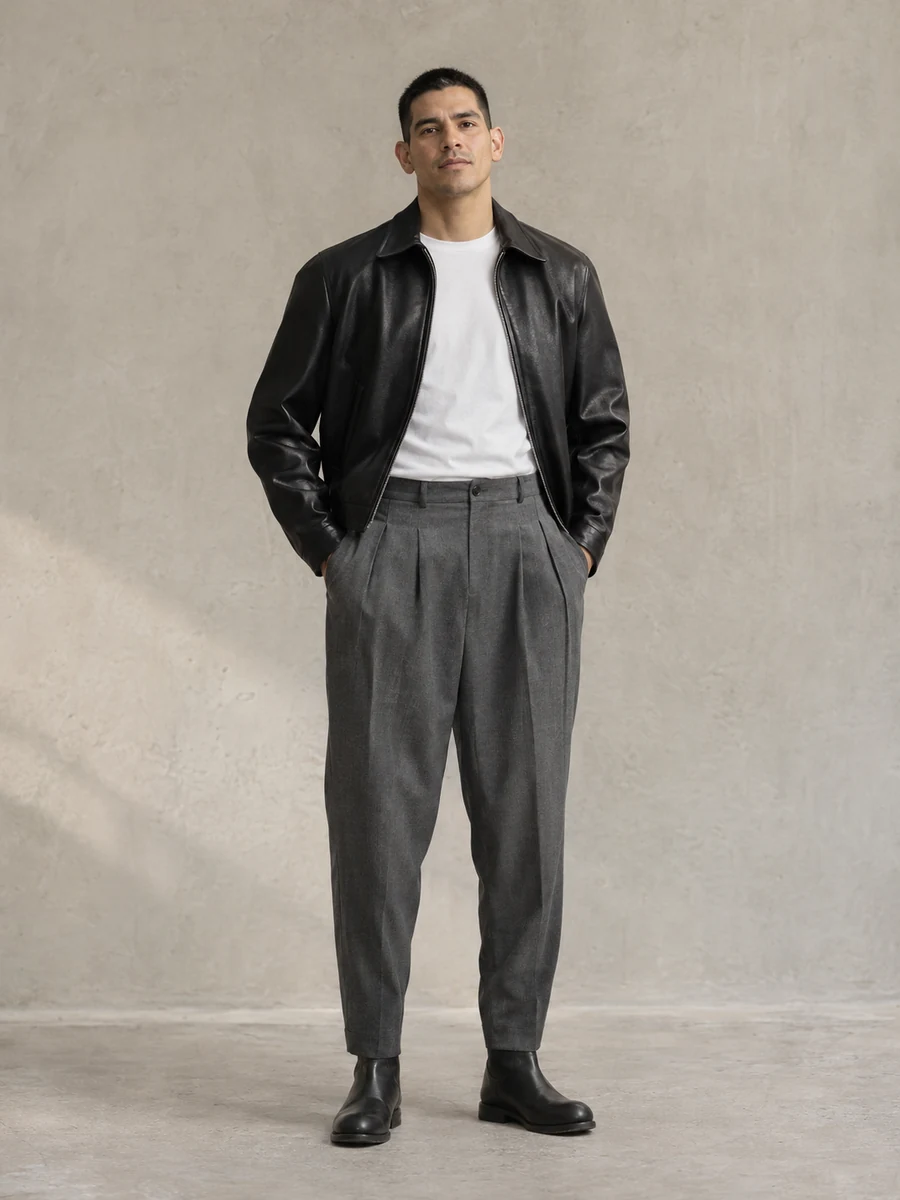
Rockabilly
Short black jacket and grey pegged trousers
Soft Boy
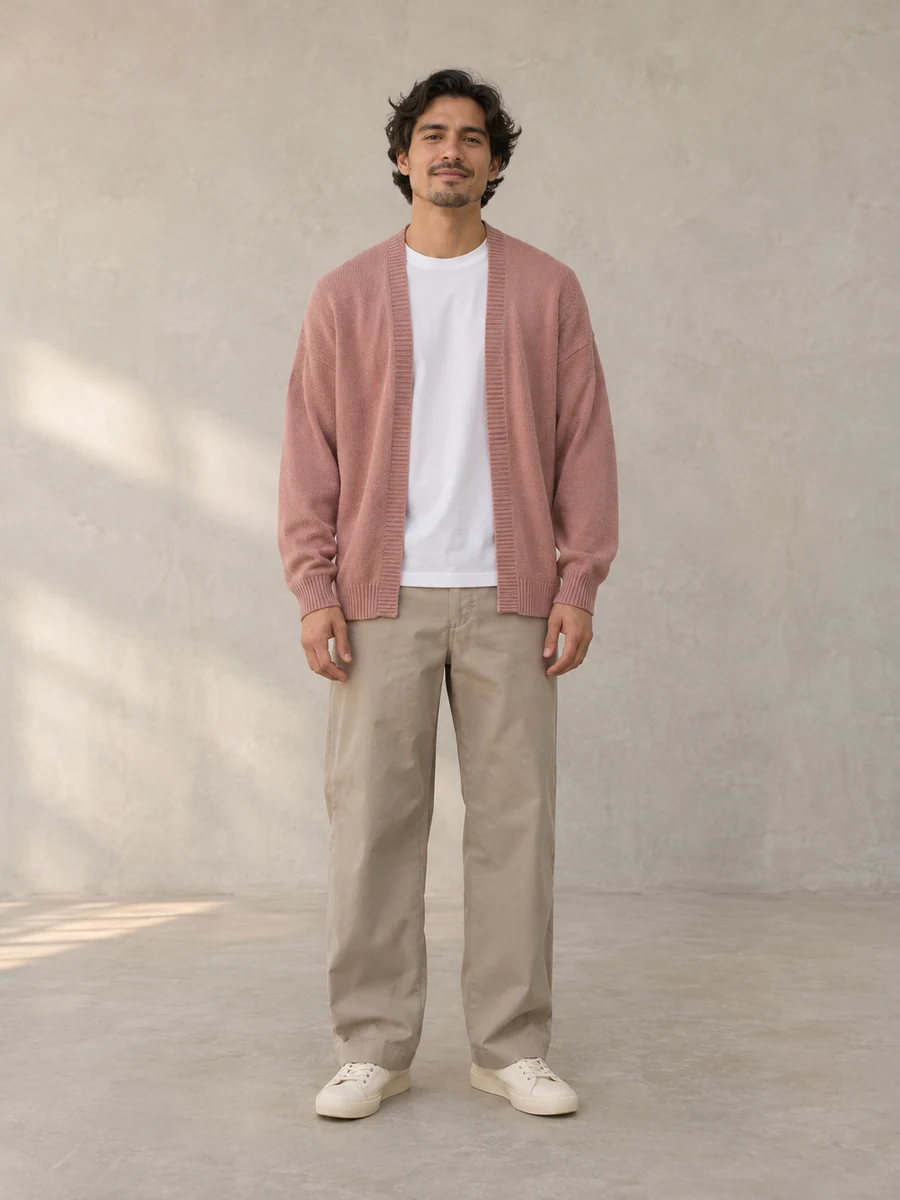
Dusty-pink cardigan with loose stone chinos
Punk
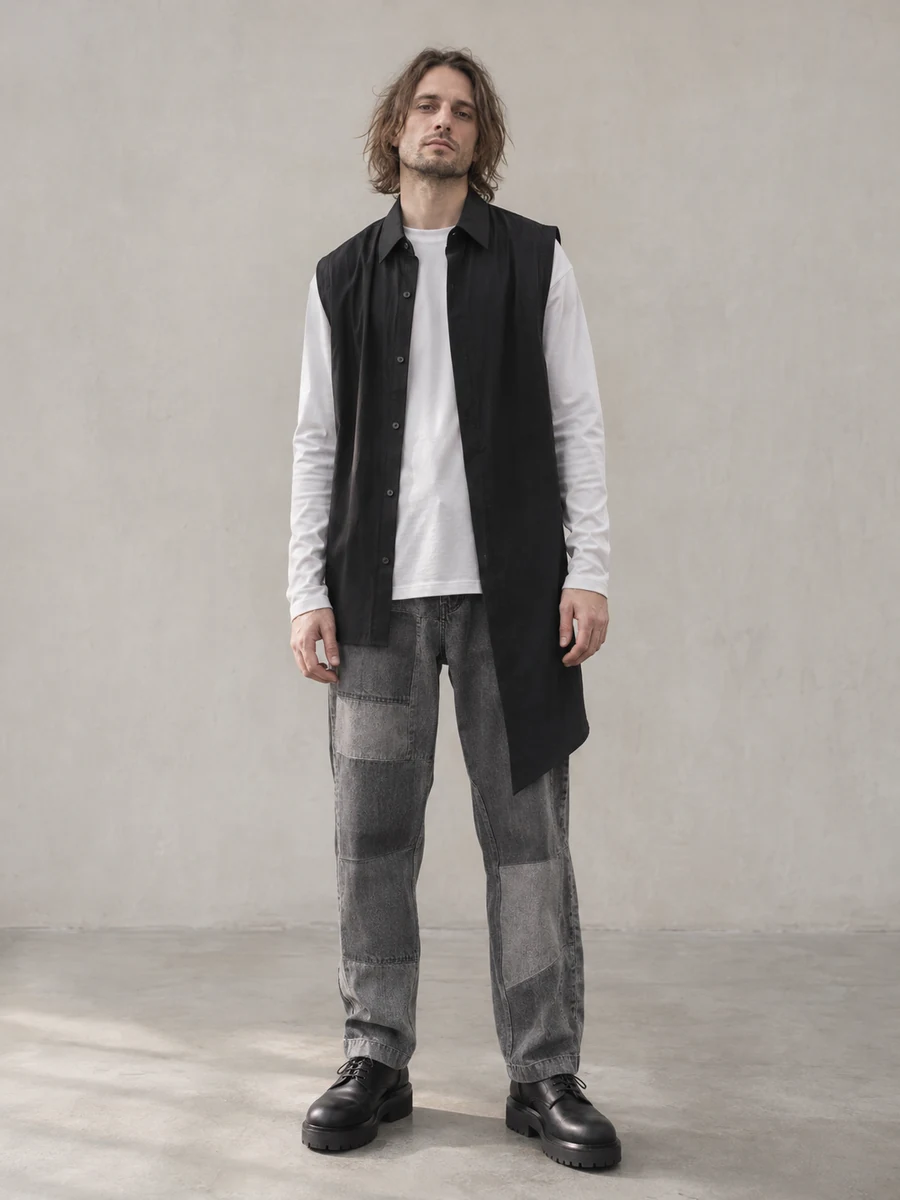
Asymmetric black tunic over white sleeves
Streetwear
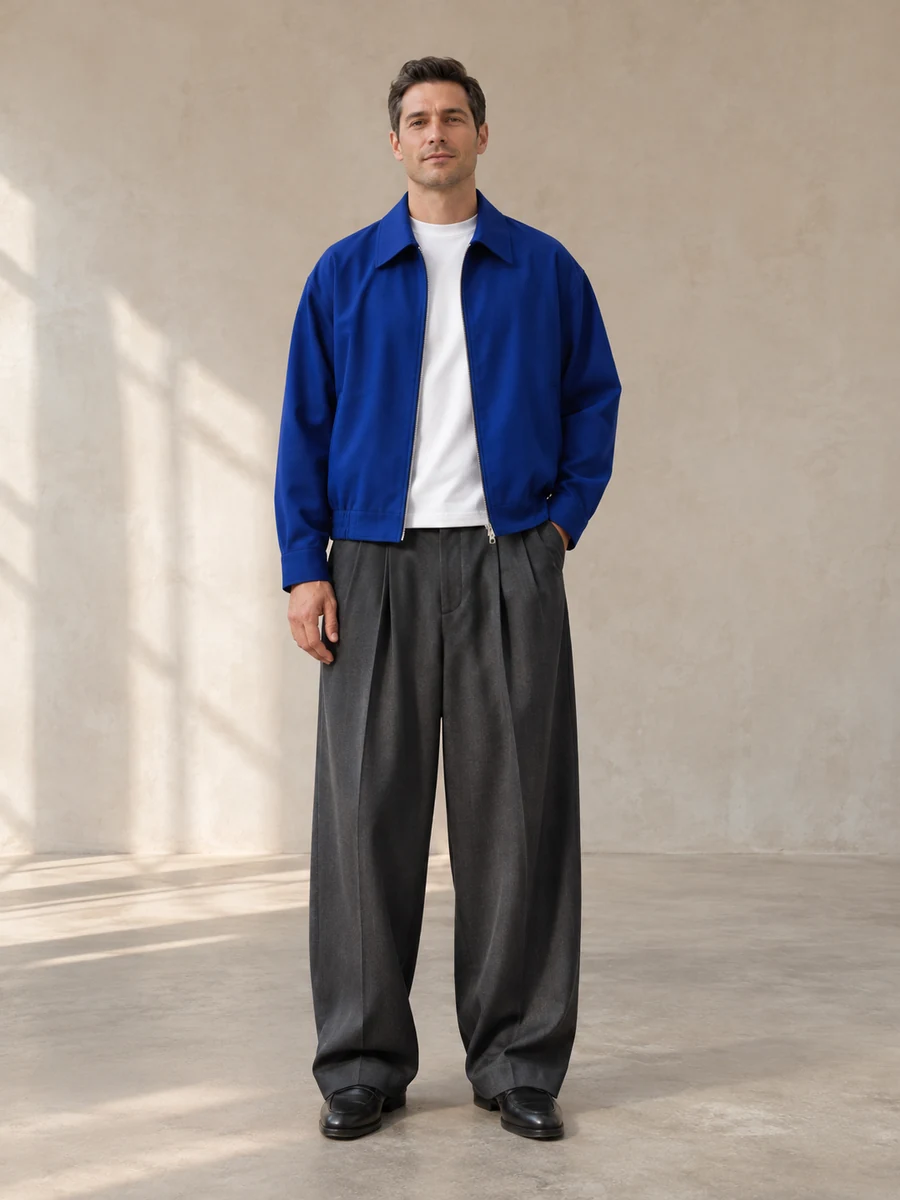
Cobalt short jacket with charcoal wide pleats
Avant Garde
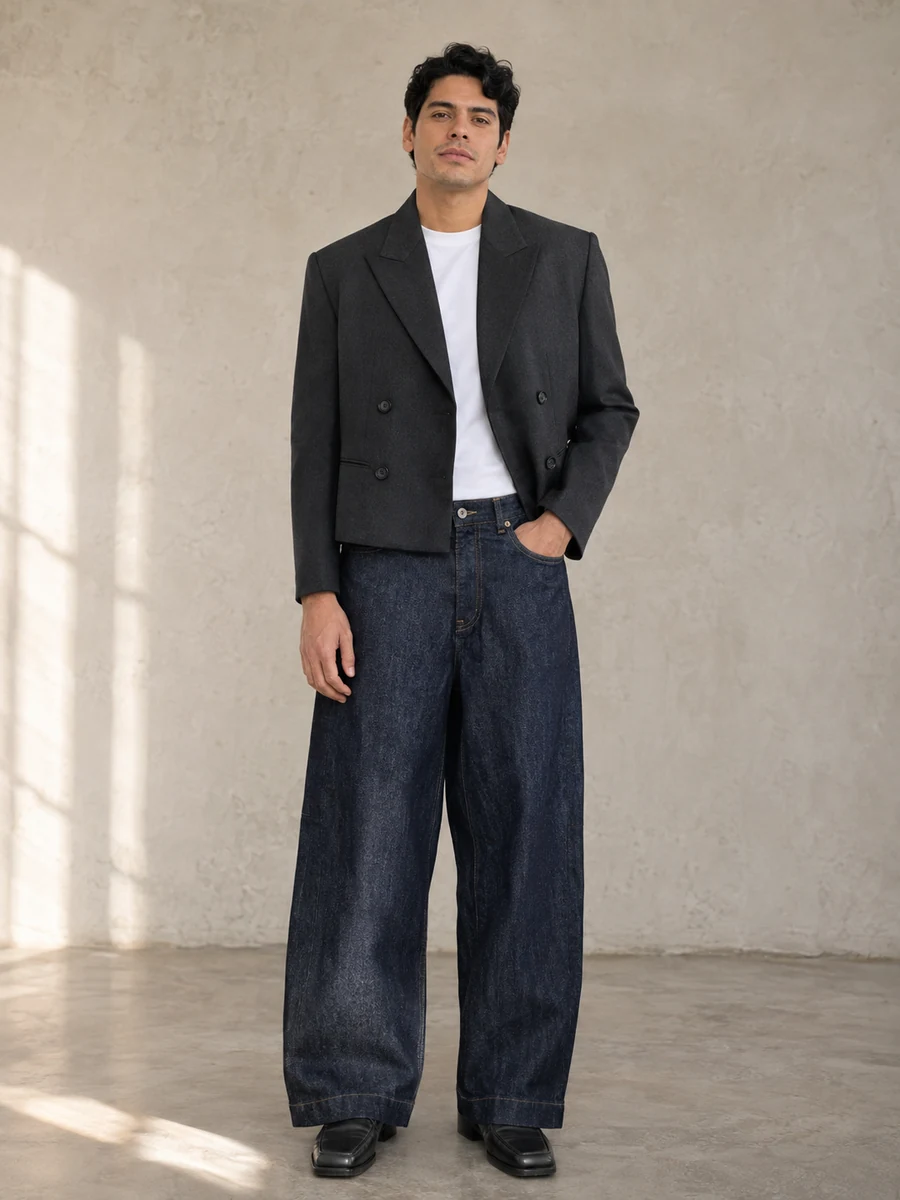
Short double-breasted blazer and wide indigo denim
Compare the bottom before changing the tee
A straight jean, broad pleated trouser and roomy short create different lower outlines. Keep your familiar tee first and compare the opening where the bottom meets the shoe. A light center can connect the upper half to a pale sole without matching every detail.
Read every appearance on its own
Two white tees can have different sleeves, shoulders and hems. The piece pages retain the cut described in each image and distinguish shared labels from one physical garment. Check those descriptions before treating a tucked, untucked or layered recipe as interchangeable.
Keep a role or keep your own garment
Open a tee from the recipe and choose Adapt this recipe. The builder keeps that generic starting role without marking it owned. To keep a physical garment instead, add your real wardrobe record and use it as the starting piece. Missing supporting roles remain visible.
Begin with the relationship you like, rather than assuming the same tee cut works under every outer piece. The concepts are illustrated separately; they do not prove that one physical shirt or one purchasable product appears in all the pictures. Open each recipe to inspect the described shape, then follow its tee into the piece library. You can keep that generic role while asking the builder for supporting wardrobe pieces, or replace it with an actual garment you own. A saved recipe stays separate from ownership, shopping and confirmed wear.
Why these looks made the edit
- Light denim jacket with tan regular chinos
- A pale center separates jacket and trouser colours. A basic denim jacket and tan chinos make a familiar everyday pairing, with a white tee keeping their two colours separate at the center.
- Pink crochet-style vest over white and cream
- A solid base gives the open texture a clear background. Pink appears in a sleeveless textured layer rather than a shirt, creating a different holiday combination from a camp-collar top and shorts.
- Forest collegiate cardigan with grey pleated shorts
- The pale center lets the cardigan edges remain readable. The green cardigan uses cream trim to frame a plain white tee, giving the upper half a collegiate reference without a crest or lettering.
- Short black jacket and grey pegged trousers
- The pale center separates the black jacket edges. The short black jacket acts as a compact frame around a clear white center.
- Dusty-pink cardigan with loose stone chinos
- The bright plain center separates the pink knit from stone trousers. The dusty-pink cardigan introduces color through a soft-looking outer surface rather than a strong graphic.
- Asymmetric black tunic over white sleeves
- The pale base makes the sleeveless asymmetric frame readable. The asymmetric sleeveless shirt creates unequal dark lengths over a plain white long-sleeve tee, making the outer hem the principal detail.
- Cobalt short jacket with charcoal wide pleats
- The pale central opening keeps the blue jacket edges distinct. A bright jacket becomes easier to wear when it has a simple surrounding structure.
- Short double-breasted blazer and wide indigo denim
- The narrow pale opening separates the charcoal jacket from dark indigo denim. Short tailoring and very wide denim create a deliberate change of scale at the waist.
Find your direction
Put the pieces together
Read the field notes.
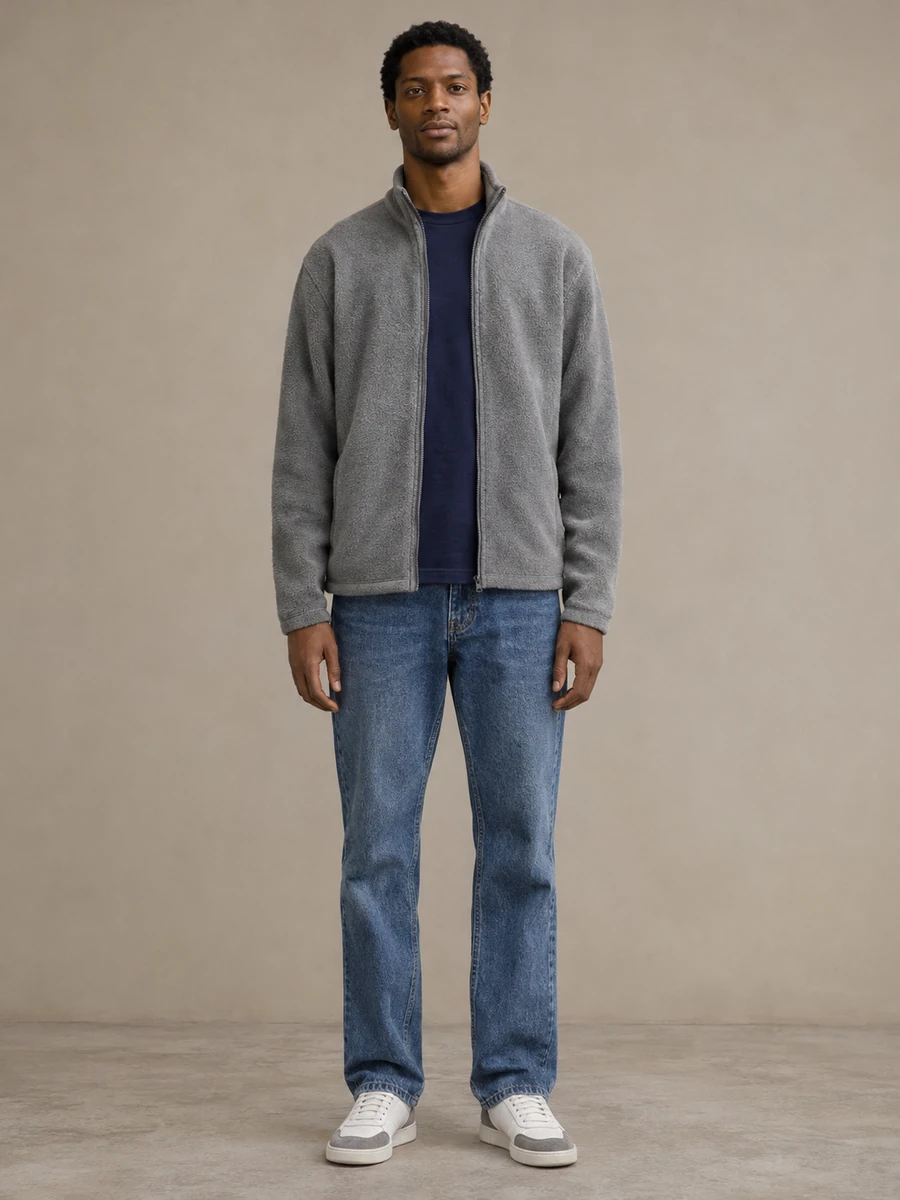
The field notes · 4 min read
How to build a normcore outfit from ordinary clothes
Use familiar tees, polos, straight trousers and everyday sneakers to compare quiet proportions without replacing your wardrobe.
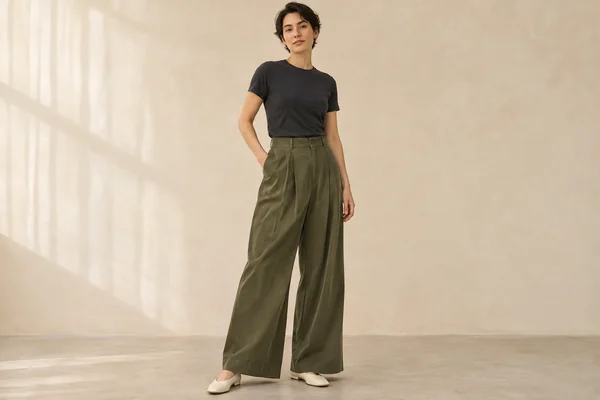
Style foundations
Combine fitted and relaxed clothes through length and shape
Compare close and roomy garments across tailoring, dresses, skirts and casual layers, using visible boundaries and your own comfort.
Read the guide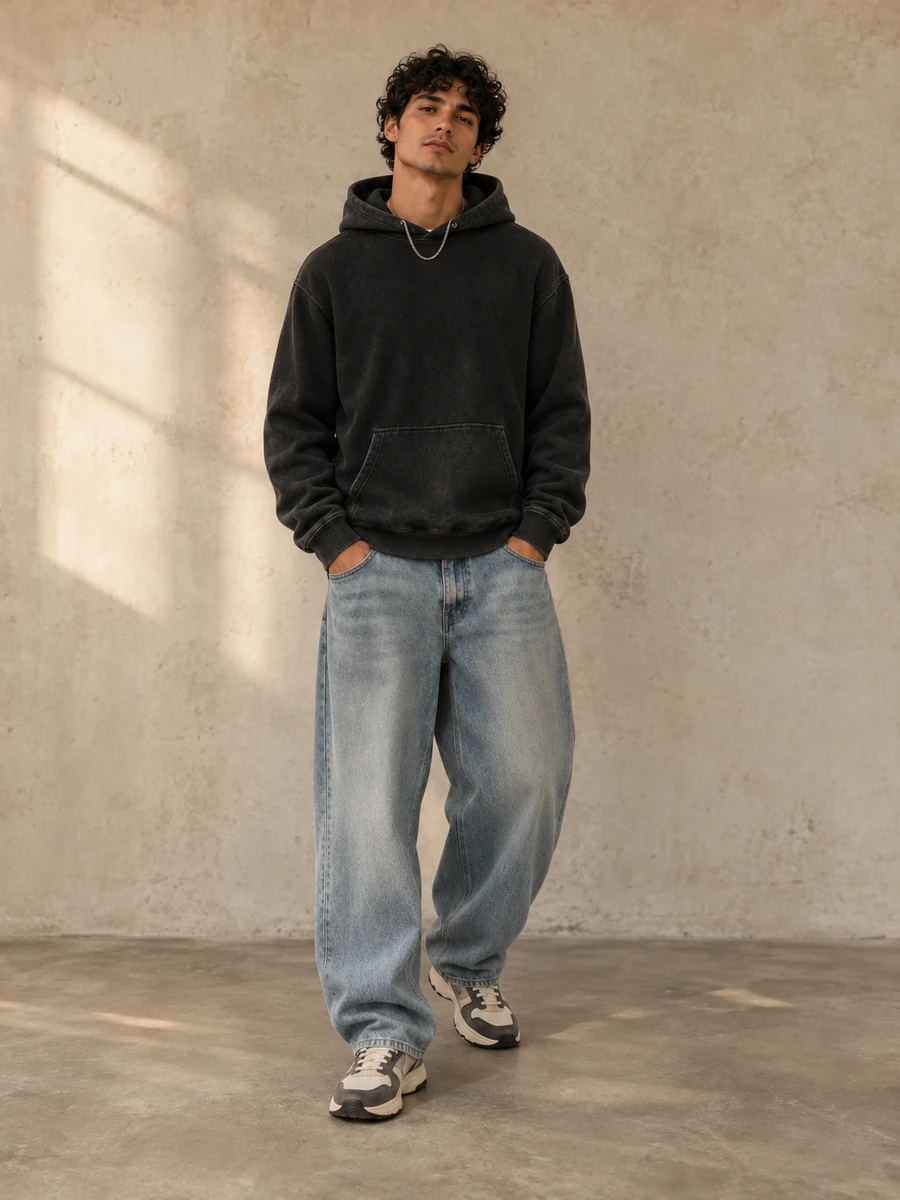
The field notes · 4 min read
Sneaker profile atlas: compare the shape below your trousers
Compare low court, terrace, canvas, runner and trail-inspired sneaker shapes with trouser openings and hem choices.