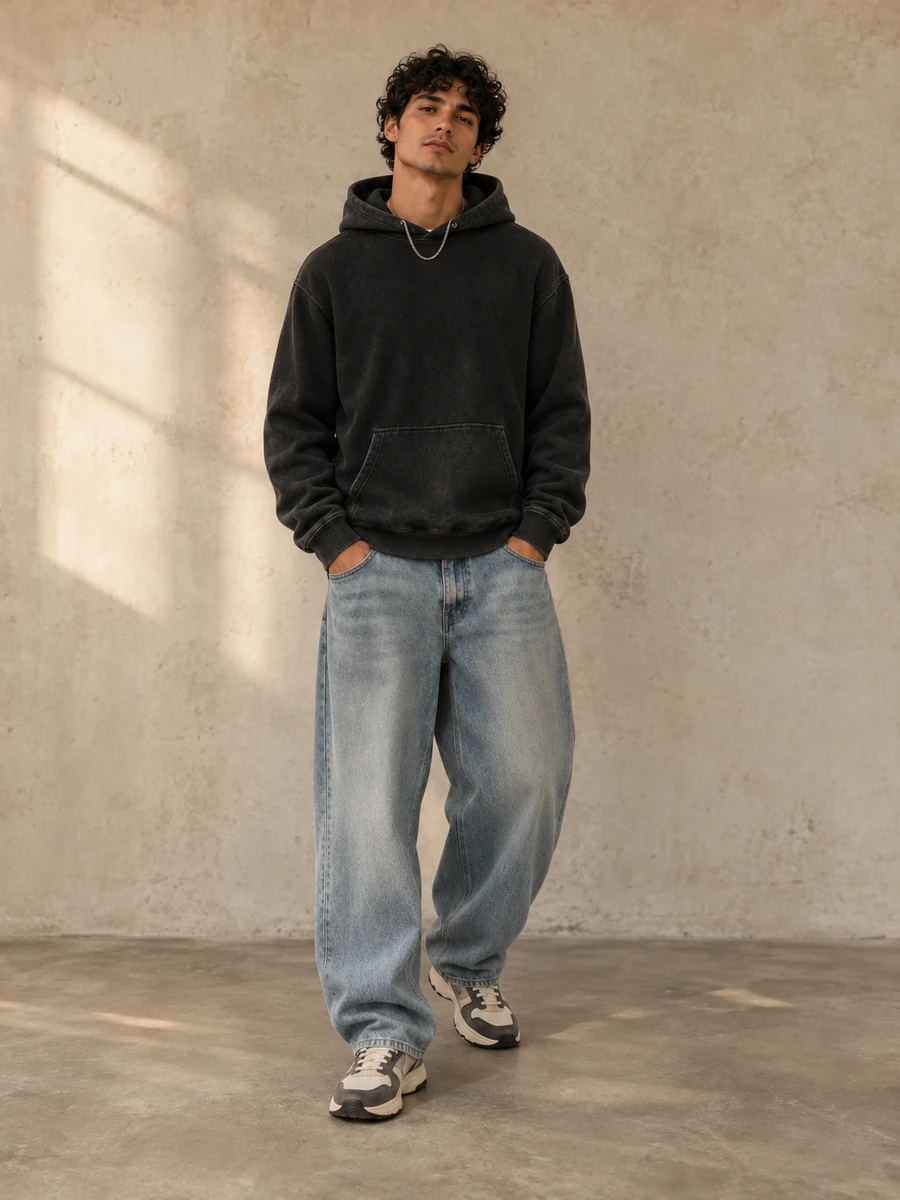
Read a sneaker as a shape before choosing the trousers
For outfit planning, the useful first distinction is the shoe’s visible profile: the height of the upper, the apparent size of the toe, the sole’s outline and the amount of detail across the surface. These observations help explain why two sneakers can change the same trouser. They do not predict the internal fit, cushioning, grip or all-day comfort of either pair.
This atlas is an original LookSprout styling framework. Its groups are practical comparison categories, not manufacturer standards or a physical testing study. Exact model identities belong in the sourced sneaker catalogue. A generic shoe in a generated outfit can illustrate a profile without becoming a photograph of a commercial model.
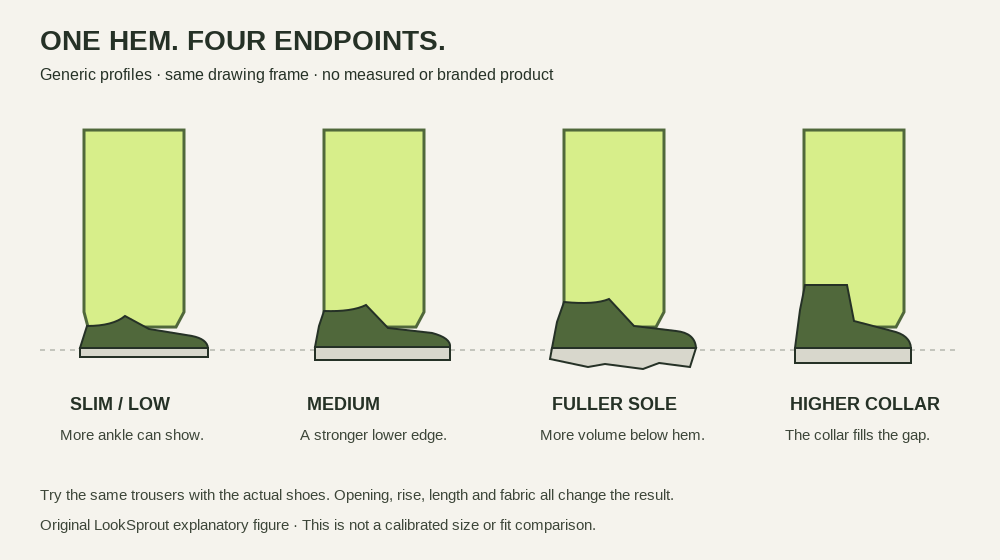
A comparison matrix, not a compatibility ranking
Choose the row closest to the visible shoe you are considering, then test the two alternatives against the same trousers. The table describes what to inspect, rather than assigning a winning combination. Terms such as low, broad and fuller are qualitative in this resource. They do not substitute for a measured shoe, a garment chart or an on-body trial.
| Visible profile | First relationship to compare | Second relationship to compare | What to inspect |
|---|---|---|---|
| Low court-inspired | Straight leg, clearer front hem | Relaxed leg, small front fold | How much of the upper and toe remains visible |
| Slender terrace-inspired | Straight leg, visible side profile | Wide leg, restrained shoe exposure | Whether the toe gives the lower silhouette a readable endpoint |
| Flat canvas-inspired | Straight or relaxed leg, clean hem | Fuller leg, deliberate soft fold | Sole edge, sock exposure and fabric clearance behind the heel |
| Padded skate-inspired | Fuller leg, visible tongue edge | Straighter leg, cleaner front hem | Whether the hem settles or catches on the padding |
| Layered retro runner | Straight leg, small fold | Relaxed leg, clearer hem | Panel detail and the balance between leg width and shoe volume |
| Sculpted runner-inspired | Wide leg, restrained fold | Straight leg, more exposed shoe | How strongly the side sole shape dominates the bottom of the outfit |
| Trail-inspired | Plain straight leg, visible upper | Fuller utility trouser, controlled fold | Surface detail, collar clearance and repeated utility cues |
Low court: a contained endpoint beneath a straight leg
A low court-inspired shoe often gives a fairly contained upper and a clear sole edge. Start by comparing a straight trouser with a clean or small front break. More of the upper remains visible when the hem is clearer; a longer wider leg can turn the same shoe into a quieter endpoint. The result depends on the real pair and the garment, so neither approach is a universal pairing rule.
Keep the top fixed while you compare the two hem effects. A short outer layer can make the lower line easier to inspect, while a longer overshirt creates a more continuous casual shape. If you choose a real named model, retain the photographed variant and its source separately from this general profile description.
Terrace and slender retro shapes: decide how much to reveal
A visually slender shoe can provide a small contrasting edge under a full trouser. It can also become the focus when a shorter hem exposes its whole side. Compare these two intentions before deciding that a wide trouser must always have a heavy shoe. The amount of visible toe and the contrast between shoe and trouser can matter as much as nominal bulk.
The terrace group is a styling reference rather than a guarantee that every model shares the same construction, fit or material. Manufacturer variants can differ. If the catalogue source does not establish the exact generation or colorway, leave that uncertain and use the general outline only as an alternative for comparison.
Canvas and skate-inspired shapes: look at collar and padding separately
A canvas-style low top and a padded skate-inspired shoe can both have a flat-looking sole while creating different volumes above it. Compare the actual upper rather than grouping them only by sole height. A wider hem may cover a low collar completely; a fuller tongue or collar can stop the fabric higher and change the fold.
With a higher collar, inspect whether the trouser is hanging freely or catching. With a low collar, inspect how much sock appears as you sit. Neither observation establishes fit or support. If the outfit concept uses a generic canvas shoe, the shoe remains generic even when a separate catalogue link offers a broadly similar real family.
Retro runners and sculpted runners: distribute the lower volume
A runner-inspired shoe can add layered panels, a raised-looking sole or a pronounced heel shape. Compare it with a straight trouser, a fuller leg and a cuffed or cropped arrangement. A straight leg can leave the profile visible without matching every curve. A full leg can repeat the shoe’s volume, while a shorter hem can make the shoe more dominant.
These are alternatives with different effects, rather than a score ranking one as the best. Hold the color and upper outfit constant while comparing the lower shape. No height in millimetres should be inferred from a concept image, and no visual width should be treated as the internal width available to a foot.
Trail-inspired shapes: separate outdoor references from protection
A trail-inspired upper may introduce more lines, protective-looking panels or a strongly patterned outsole edge. In an everyday outfit, those details can make a quiet trouser feel more technical. A plain straight leg leaves the detail exposed; a fuller cargo can repeat the utility theme and add volume. Try both before assuming that all outdoor references need to be combined.
The styling category does not establish suitability for hiking, weather or slippery surfaces. Those decisions require information about the actual product and conditions. A decorative-looking tread in a generated concept is not a performance test. Keep product claims attached to an appropriate source rather than copying them onto visually similar shoes.
Use the atlas as a controlled comparison
Choose the trousers, waistband position and upper outfit first. Compare two shoe profiles with a similar stance and viewing distance. Then keep the preferred shoe and compare a cleaner hem with a modest fold. Changing one relationship at a time helps explain the outcome. A photo can record the comparison, but a camera angle is not a calibrated measurement.
If you have real garment dimensions, enter the leg-opening method and unit alongside the number. If you do not, leave the measurement unknown and compare qualitatively. Our hem guide explains why a flat width and a doubled opening figure need different labels. The pants-and-shoe tool should preserve that distinction while showing inspectable choices.
Continue into a real outfit and keep the limits visible
Open an example that actually exists in the lookbook, inspect its full composition and use the builder to retain your own anchor item. A lookbook example can show a relationship between pieces; it does not establish that the exact commercial sneaker is being worn. When a separately photographed reference is supplied, compare the differences in shape and color instead of treating it as an exact match.
You can reuse the original atlas wording and its comparison categories with attribution to LookSprout. Third-party sneaker photographs keep their individual source and license conditions; the text’s reuse permission does not transfer image rights. No laboratory measurements, purchase prices or wear-test verdicts have been produced by this resource.
Read three complete silhouette examples
Roomy blue Oxford with wide beige chinos places a grey sneaker idea under wide beige chinos. Compare the opening and the compact endpoint before choosing how much of the shoe to expose. Pale blue knit with ecru jeans and a navy jacket uses ecru straight denim and a pale blue knit: its lighter lower line gives a grey reference a different amount of contrast. Navy hoodie and loose grey trousers under a black padded jacket puts a substantial sneaker beneath loose grey trousers and a padded jacket, repeating a fuller volume at the two ends of the composition.
These are separate generated concepts with generic footwear. They do not demonstrate three photographs of one commercial pair. Open each recipe to inspect its actual pieces, then use the hem comparator to isolate the lower relationship. A real reference such as the separately photographed 574 can be considered afterward, with its documented collar, color and heel differences kept visible.
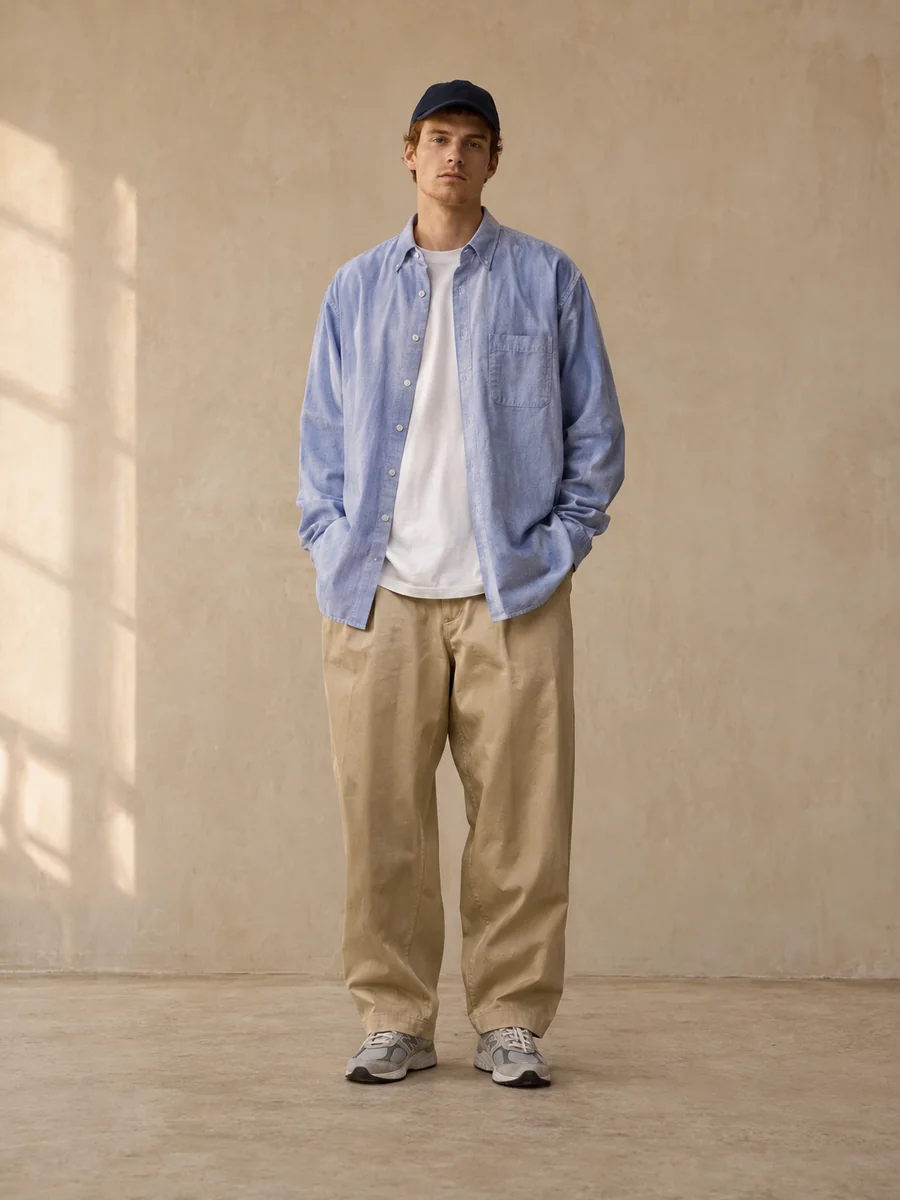
Roomy blue Oxford with wide beige chinos
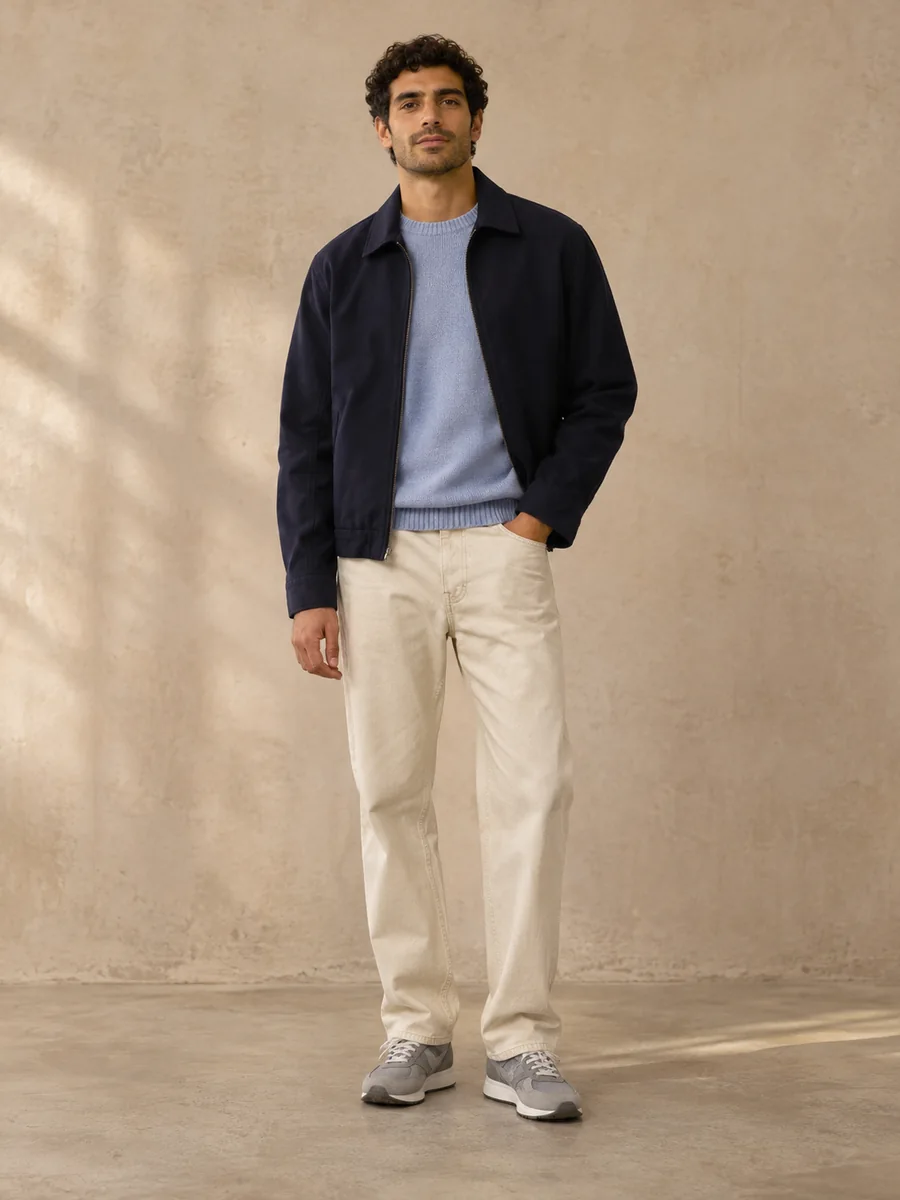
Pale blue knit with ecru jeans and a navy jacket
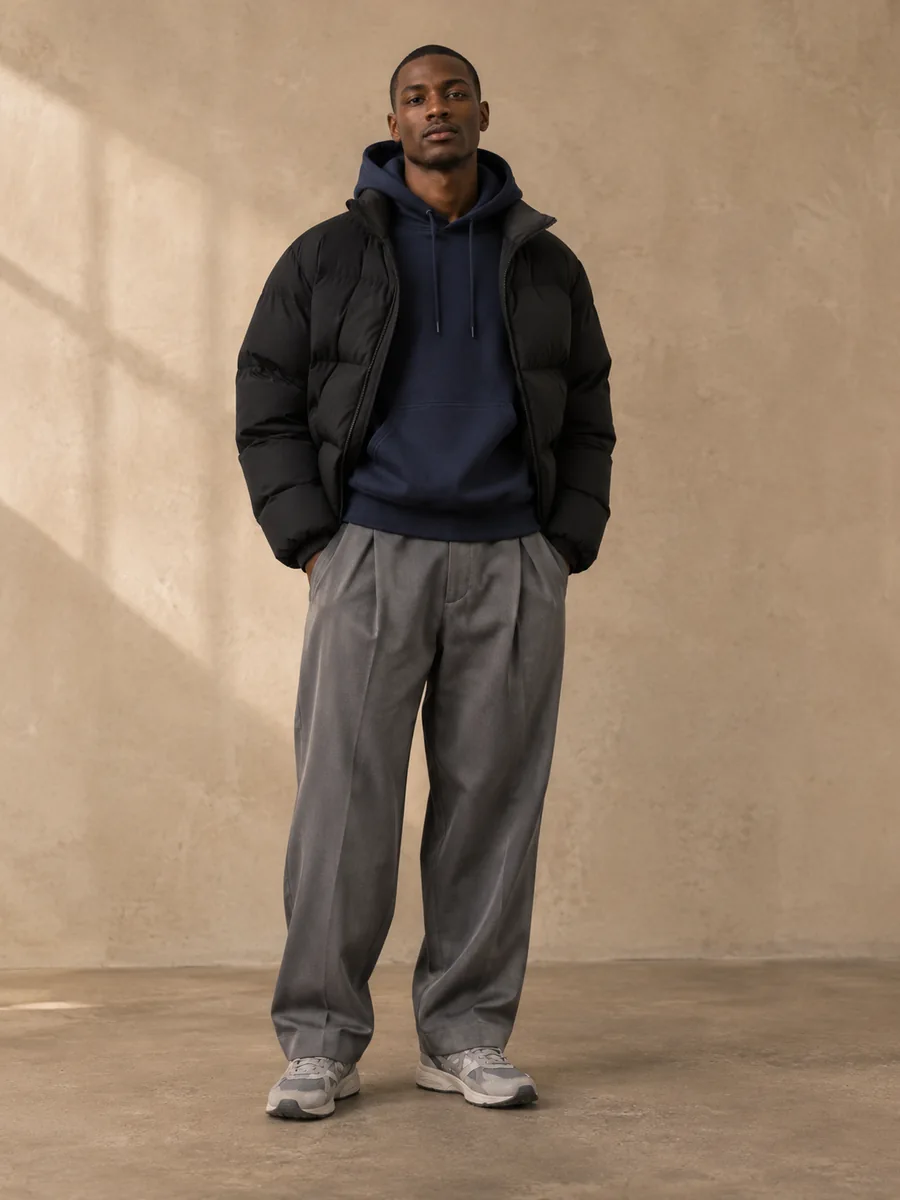
Navy hoodie and loose grey trousers under a black padded jacket
Sources and useful references
Explore more outfit ideas or compare the style files.