Oversized works through relationships
To balance oversized clothes, compare the pieces to each other rather than applying a rule that one half must always be tight. A wide top and wide trousers can work together when the lengths, layers and footwear establish a clear outline. Comfort and movement remain part of that decision.
Start with one full outfit and view it from a few angles. Notice where each garment ends and where the widest points sit. If the composition feels unclear, adjust one boundary before changing the entire outfit. Small changes in hem length can make a large difference to how the same pieces read.
Make the top length deliberate
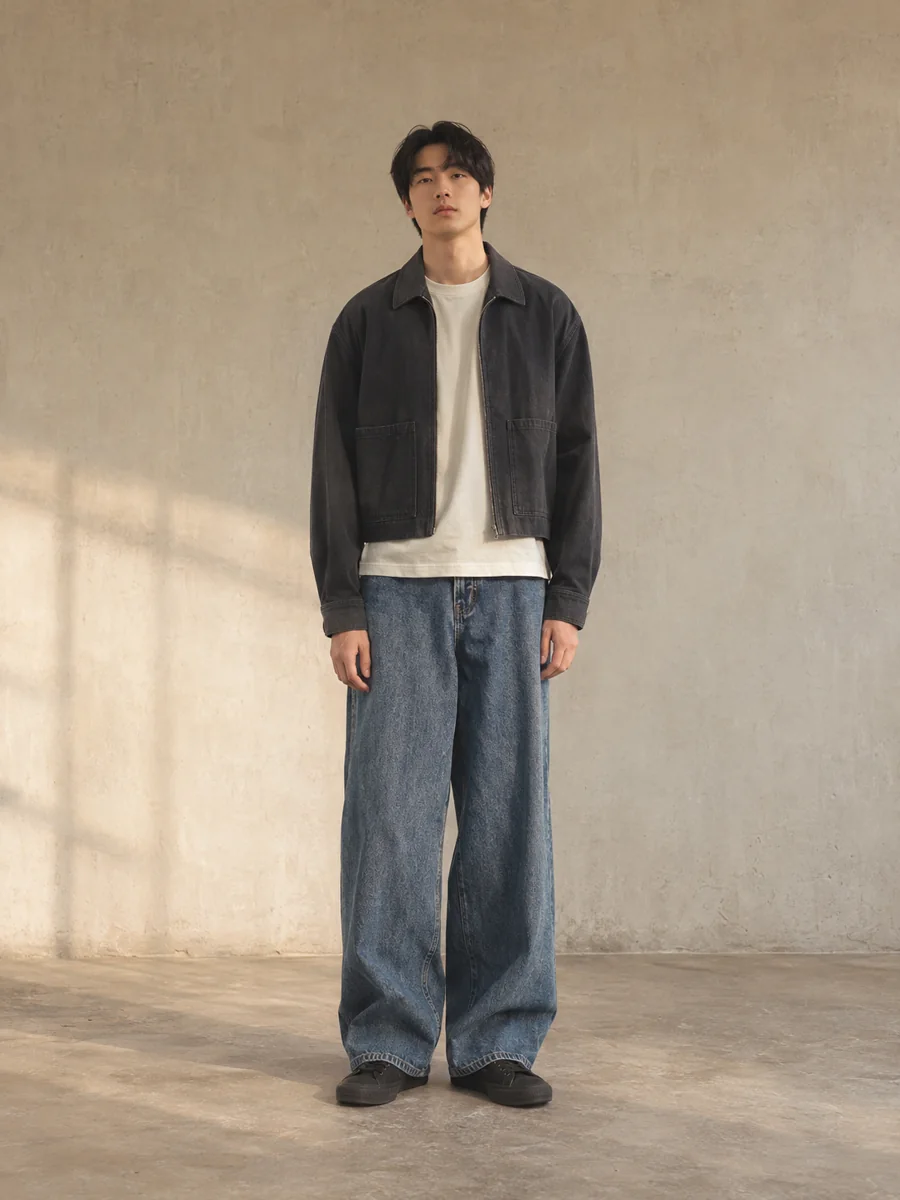
A shorter jacket over wide denim creates a visible division between the upper and lower halves. The jacket does not have to be extremely cropped. Its hem simply needs a clear relationship to the waistband and the tee underneath, rather than drifting across several competing layers.
Compare two versions with the same pieces: one with the tee hanging far below the jacket and one with less extra length. The second may feel more defined, while the first may be a deliberate layered choice. Pick the result you like rather than treating either arrangement as universally correct.
Short jacket, wide-leg denim
Keep width, but control where it falls
A boxy tee with wide trousers shows that volume can exist in both halves. The tee’s shoulder, sleeve and body width work together; a large size label alone does not create the same cut. Check whether the fabric holds a shape or collapses into the waistband area.
For the trousers, look at how the leg falls from the hip and knee. A broad straight line differs from fabric ballooning around a tight ankle. When evaluating the outfit, describe the actual shape first. That makes it easier to understand which piece you want to adjust.
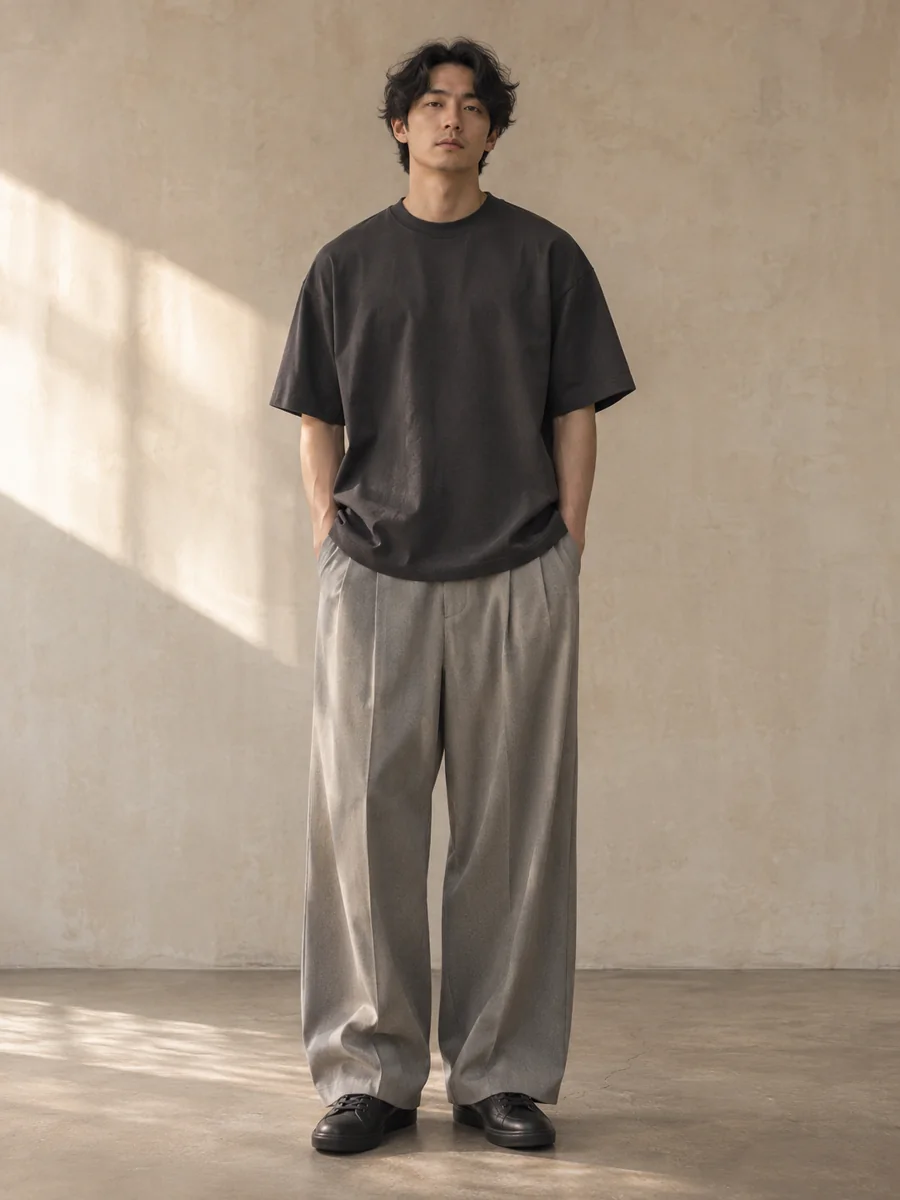
Boxy tee, wide-leg trousers
Use the shoe as a visible endpoint
Baggy jeans and a roomy hoodie need a finish at the ground. A substantial sneaker can give the hem something to rest over, but excess length may still cover it. Compare the outfit while walking to see whether the hem stays in place or slides underneath the heel.
If you prefer a lower profile shoe, experiment with a cleaner trouser break. You can keep the width through the leg while reducing the pile of fabric below. The goal is to preserve the relaxed silhouette while making its endpoint clear and comfortable.
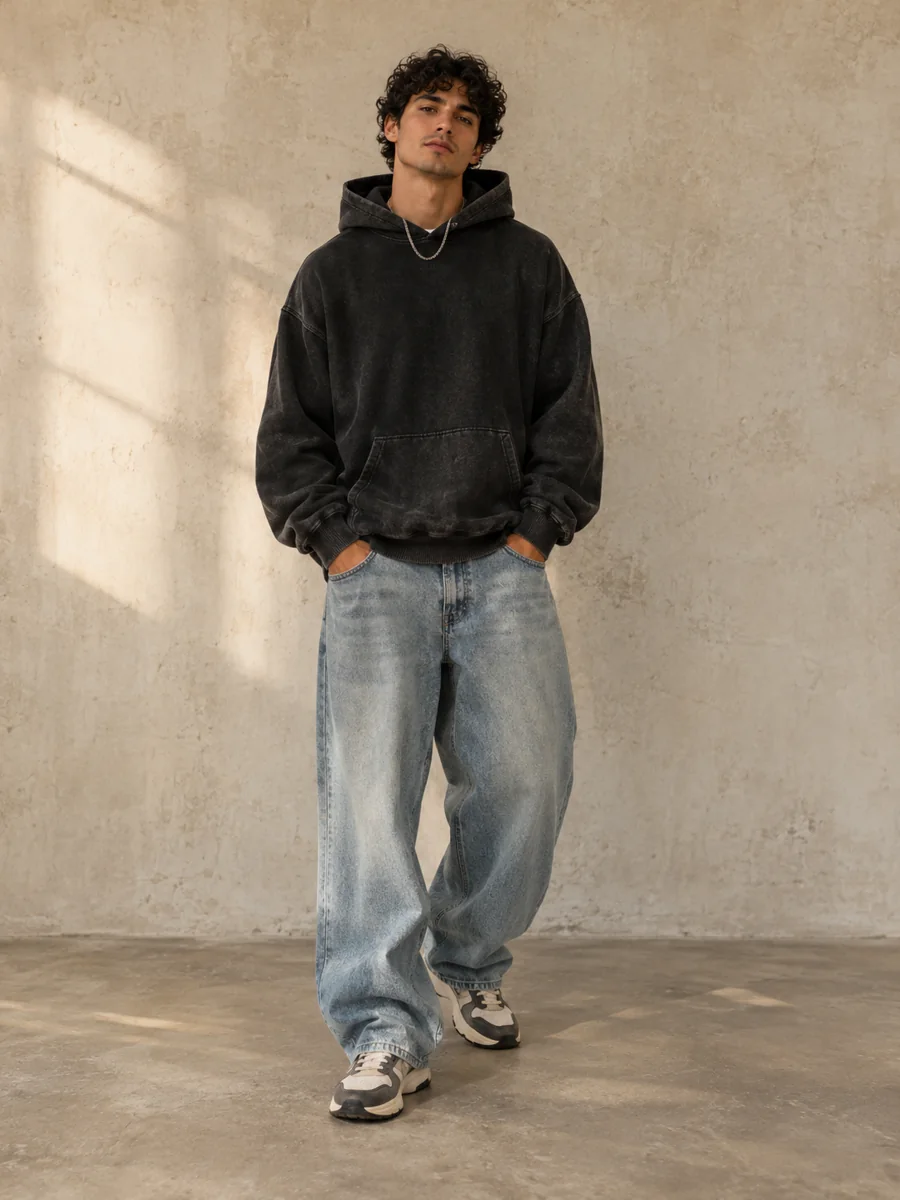
Washed hoodie, baggy denim
Separate layers through texture or contrast
An open cardigan over a plain base gives the upper half vertical edges. Its texture remains readable when the tee is quieter and the jeans provide a different surface. This can help roomy pieces feel distinct without needing a fitted garment underneath every layer.
Colour can play the same role. A small area of light tee inside a dark layer or a difference between faded and solid fabric gives the eye a boundary. Avoid adding contrast at every possible seam; a few clear divisions are easier to read than many unrelated details.
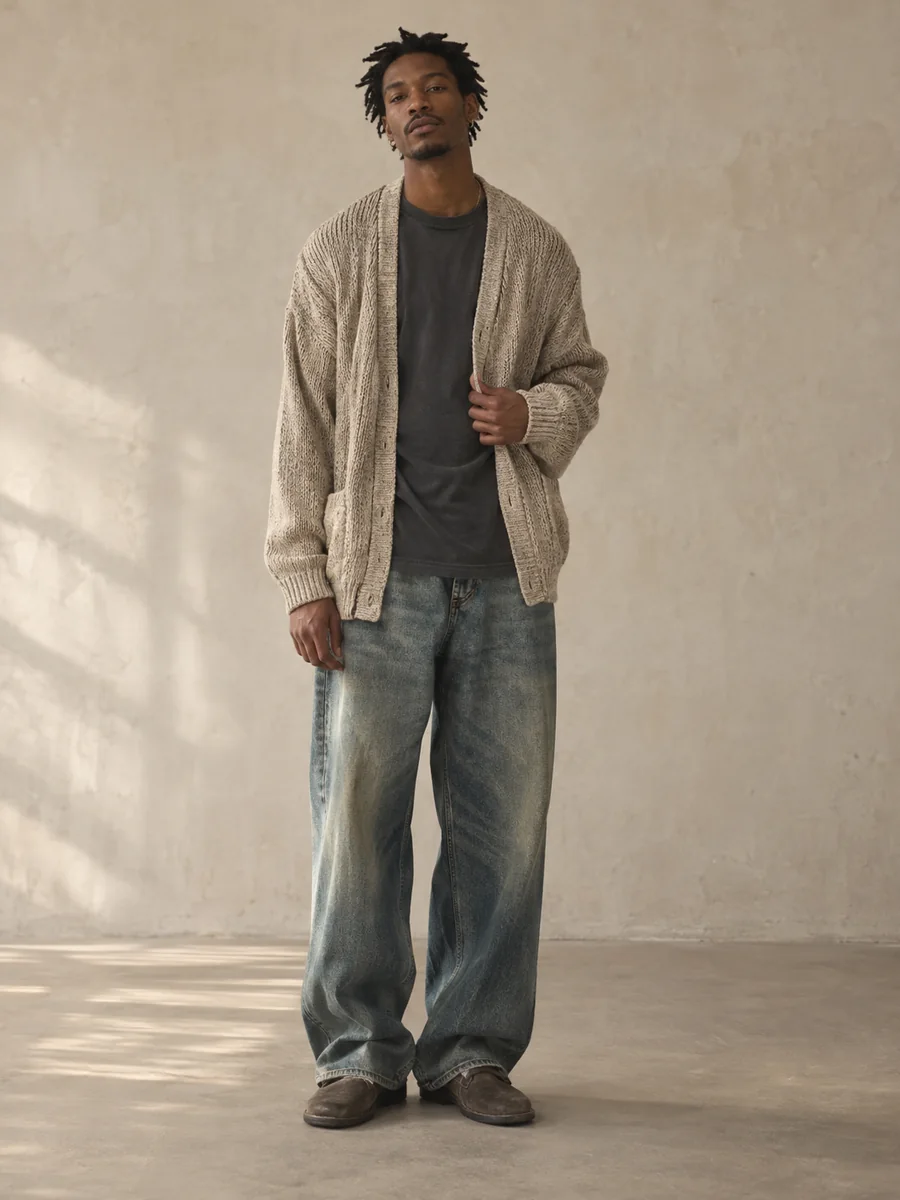
Textured cardigan, wide-leg denim
A long coat can organise volume instead of reducing it
A navy overcoat around a grey knit and broad charcoal trousers shows a different way to balance generous clothing. Rather than shortening every upper layer, the coat supplies two long edges around a quiet base. The wide trouser line remains visible beneath it. This approach can work when you prefer length and flow over a short-jacket silhouette.
Check the coat shoulders and sleeves over your intended layers, then inspect the hem with your shoes. A long coat and wide trousers can concentrate fabric near the ground if both ends are unresolved. Solve that specific meeting before deciding the whole outfit needs to become narrower. Your bag matters too: a messenger strap creates a diagonal boundary that changes the outline, while the bag itself adds volume at the hip. Try the real objects you carry. An oversized outfit needs clear relationships among those shapes, not an abstract rule about how many roomy pieces are allowed at once.
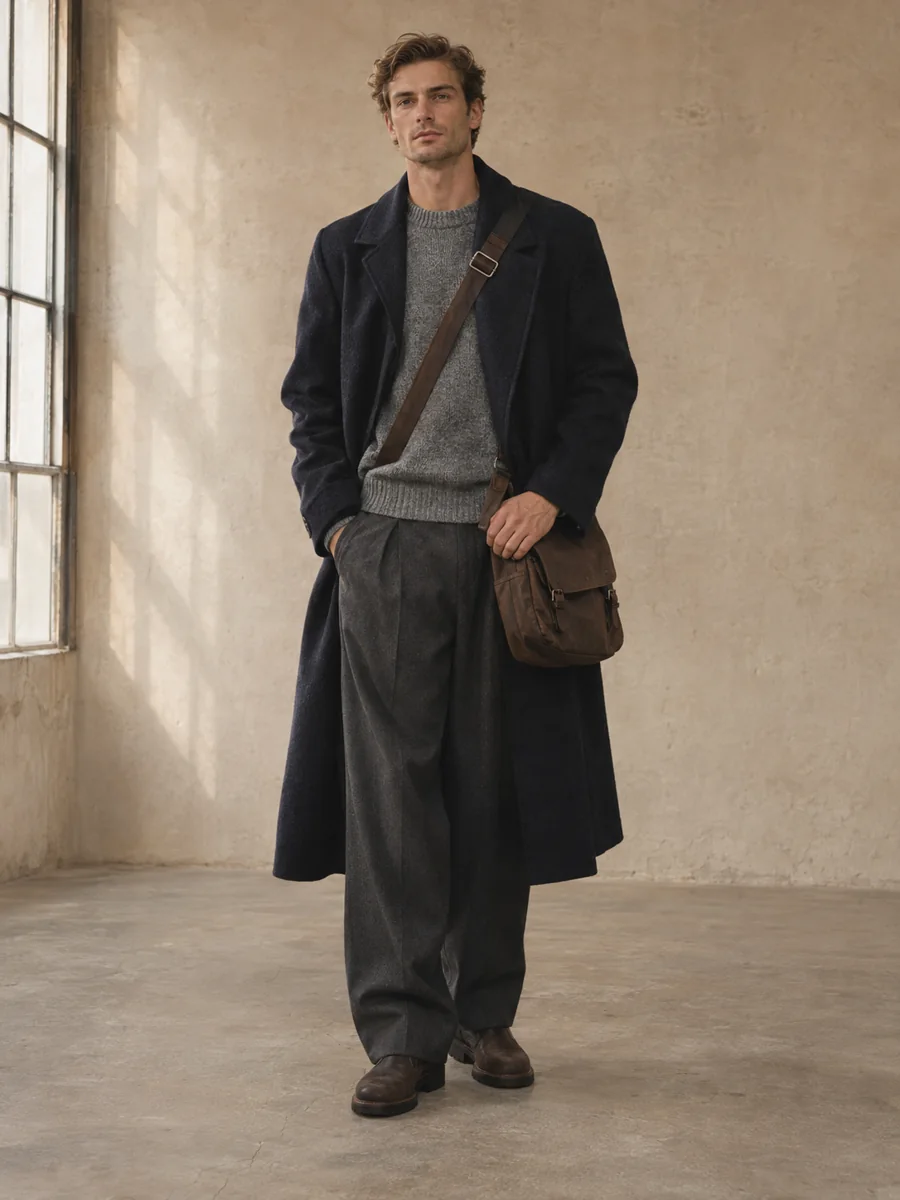
Long navy coat with wide charcoal trousers
Try a simple before-and-after exercise
Use your phone to record the outfit without changing your stance. First photograph it as worn. Then make one adjustment: shorten the visible tee, open the outer layer, change the trouser break or swap the shoe. Keep the camera position similar so you can judge the garment change rather than a different angle.
Choose the version that feels right while moving as well as in the picture. There is no need to disguise your body or follow a fixed ratio. The exercise helps you identify the lengths and shapes you enjoy, so future outfits can start from a formula that already feels comfortable.
- Change one variable per comparison.
- Keep the same camera distance and standing position.
- Check side and back views as well as the front.
- Sit and walk before deciding the outfit is finished.
Explore more outfit ideas or compare the style files.