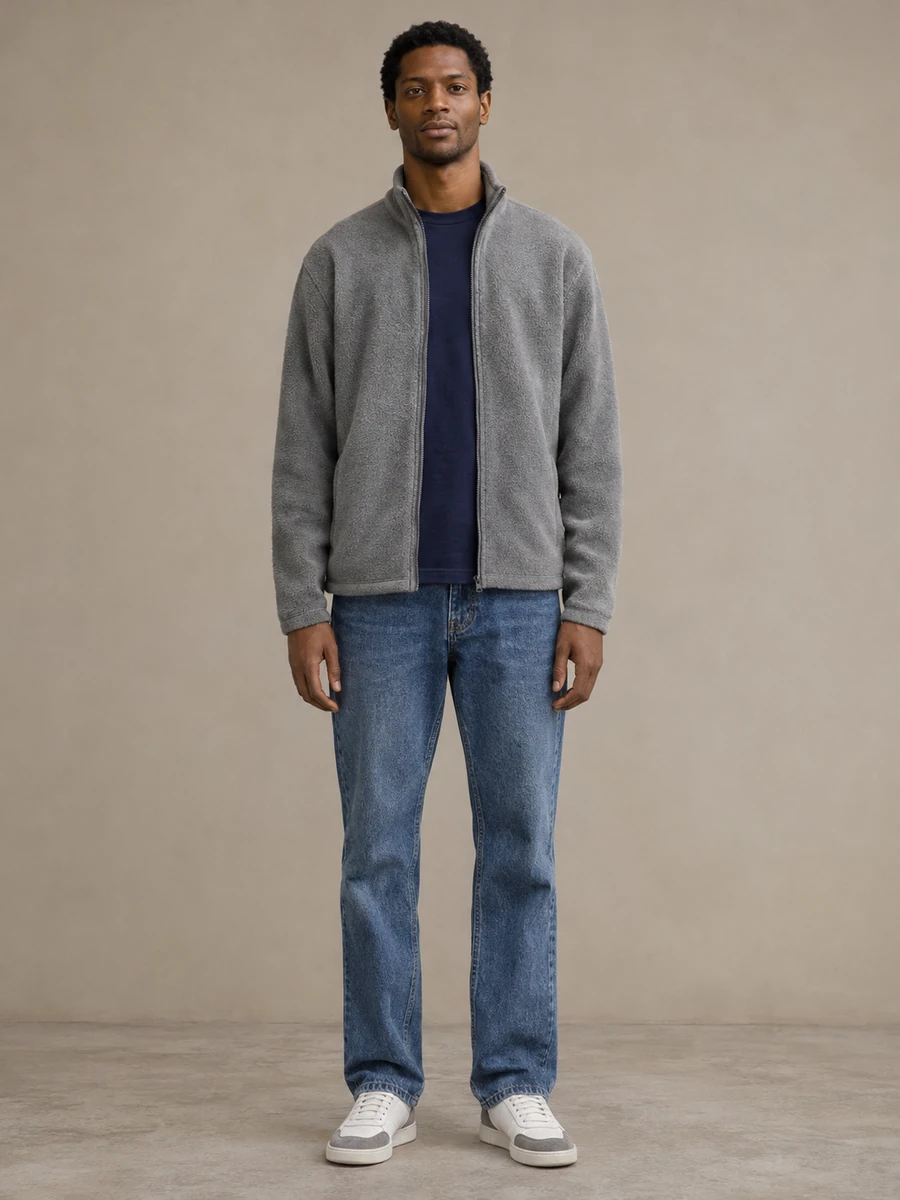
Start with a normal day, then choose the pieces
A useful normcore outfit can start with the clothes you reach for on an ordinary day. Put a plain tee or polo beside familiar trousers and one pair of everyday sneakers. Choose garments you actually want to wear for the setting. The exercise is to make their relationship clear, rather than to buy a more expensive version of every basic or remove every sign of use. A conventional-looking outfit can still have a deliberate shape.
The label has been used in fashion discussions about deliberately ordinary dressing. LookSprout uses it to organize examples, with room for personal interpretation. It is not a test of whether someone is fashionable enough to look unfashionable. Begin with your own preferences, and keep a record of the combination that works for your routine.
Choose the lower line before polishing the top
Try a straight jean, a relaxed chino or a simple sweatpant with the shoe you intend to wear. Look for the point where the leg meets the upper. A broad runner can remain visible under a straighter opening; a lower shoe may reveal more sock with the same hem. Neither requires an extreme stack of fabric. Check the back above the heel so a pleasing front view does not hide a dragging edge.
Keep the waistband where you normally wear it while judging the result. Pulling it up for one photograph changes the apparent leg length without solving the way the trousers sit. If your chosen pair needs an alteration, compare it with the actual shoes before committing. The pants-and-shoe tool gives you vocabulary for the relationship; it cannot measure a garment from a concept photograph.
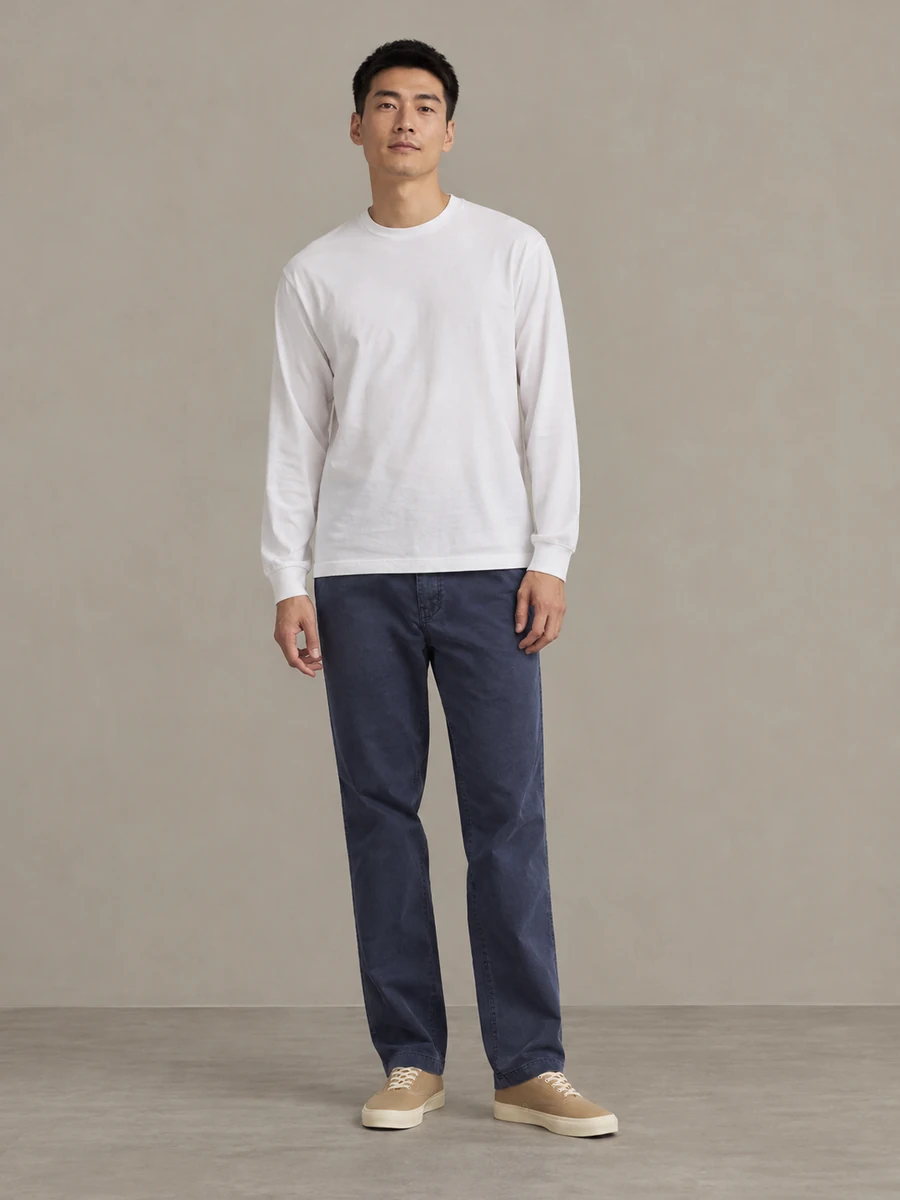
Compare two top lengths with everything else fixed
Put on a regular tee or a plain sweatshirt and note where its lower edge finishes against the trouser rise. Then compare a shorter or longer top while keeping the same trousers and shoes. The shorter edge exposes more of the lower shape. A longer body creates a softer continuous casual block. Judge the complete outline, including sleeve width and shoulder position, rather than treating a shorter hem as automatically better.
An open button-down or fleece introduces another boundary. Let the inner top remain visible without creating several almost identical hems that merge together. You can remove the extra layer when the plain base already says enough. Ordinary clothing is often most useful when it leaves you free to move and repeat the outfit without constant adjusting.
Keep the color decision small
A familiar palette makes comparison easier: grey with navy, white with denim, or a muted polo with khaki trousers. This is a starting point, not a ban on color. One small stripe or a practical colored outer layer can belong in a quiet outfit. Ask whether it becomes the first thing you notice and whether that is the effect you wanted.
Avoid replacing usable shoes just because their shade is not an exact match for the top. Compare light-to-dark contrast first. A light shoe beneath a dark leg makes a clear endpoint, while a darker shoe can let the trouser line feel more continuous. A shared small color is optional; an outfit does not need every detail coordinated.
Decide whether the outfit belongs closer to another direction
If you prefer a highly edited architectural outline, compare our minimalist looks. If you want a heavier use of outdoor-looking layers, compare gorpcore or heritage outdoor. If the everyday pieces are enough on their own, there is no need to add a trend marker. The categories help you find nearby ideas and do not impose a single correct description on a mixed outfit.
Save the actual garments separately from public inspiration references. A generic straight jean in a concept can explain a role; it does not establish the brand, fabric or exact fit of the pair you own. Keep the outfit note specific: which top length, which shoe and what happened at the hem. That is useful information when you repeat the look.
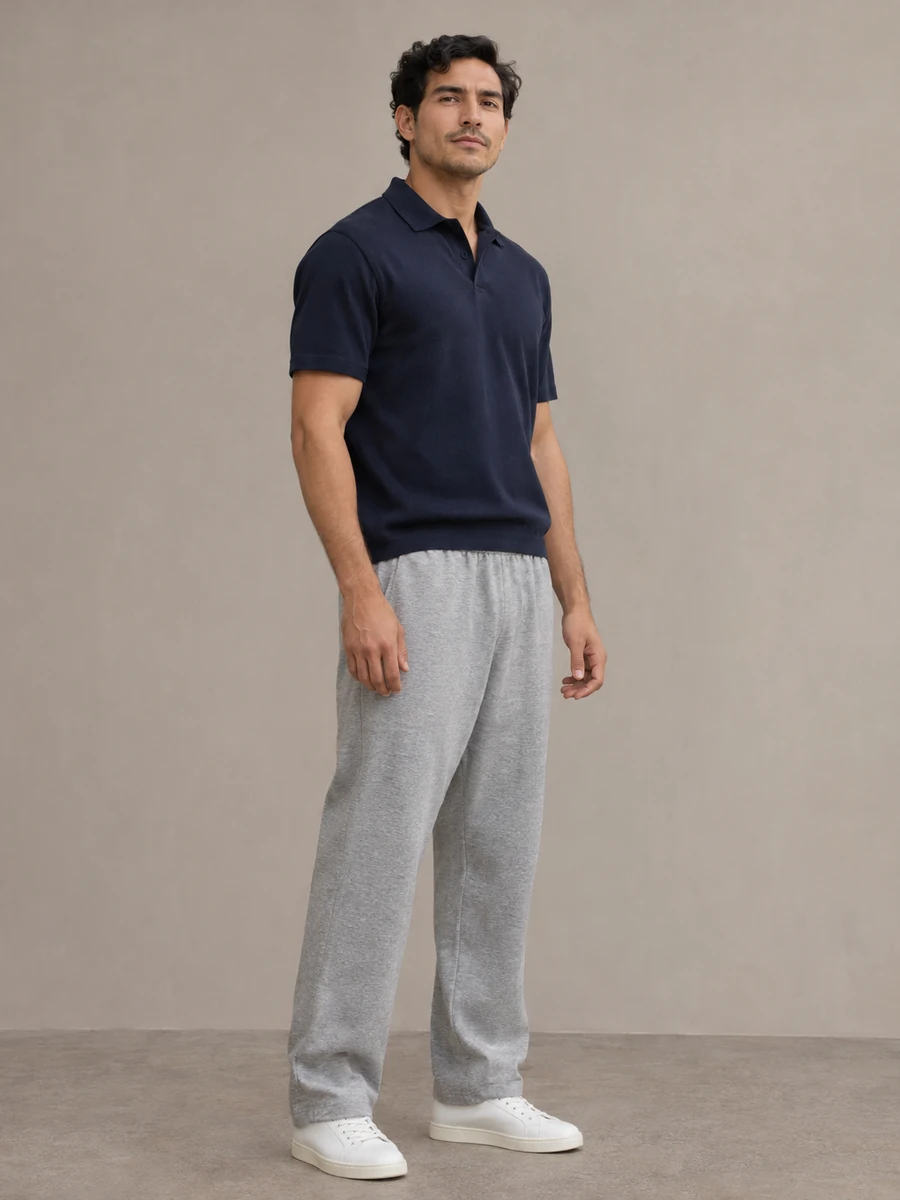
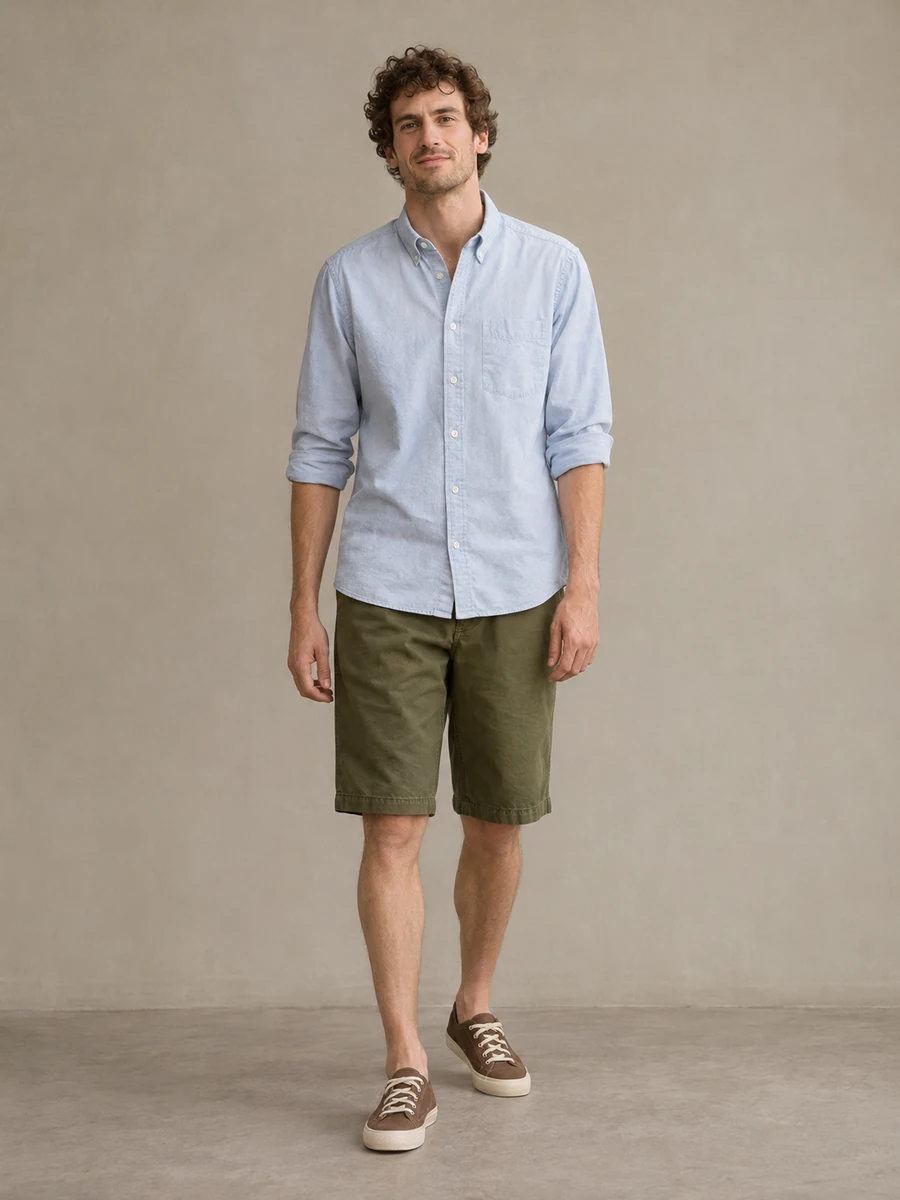
Repeat one version before expanding it
Wear the chosen combination through a normal day before adding more alternatives. Note whether the layer order remains usable when seated, whether a sleeve interferes with a cuff and whether the trouser hem settles after walking. These are personal observations to enter yourself, not claims supplied by the lookbook.
For the next version, change one main role: swap the sweatshirt for a polo, or the jean for a chino. Keep the anchor piece fixed in the builder and inspect the resulting composition before saving. Two clearly different usable outfits are more valuable than a long list of accessory permutations that you would never open or wear.
Sources and useful references
Explore more outfit ideas or compare the style files.