FO02
FormalOutfit concept
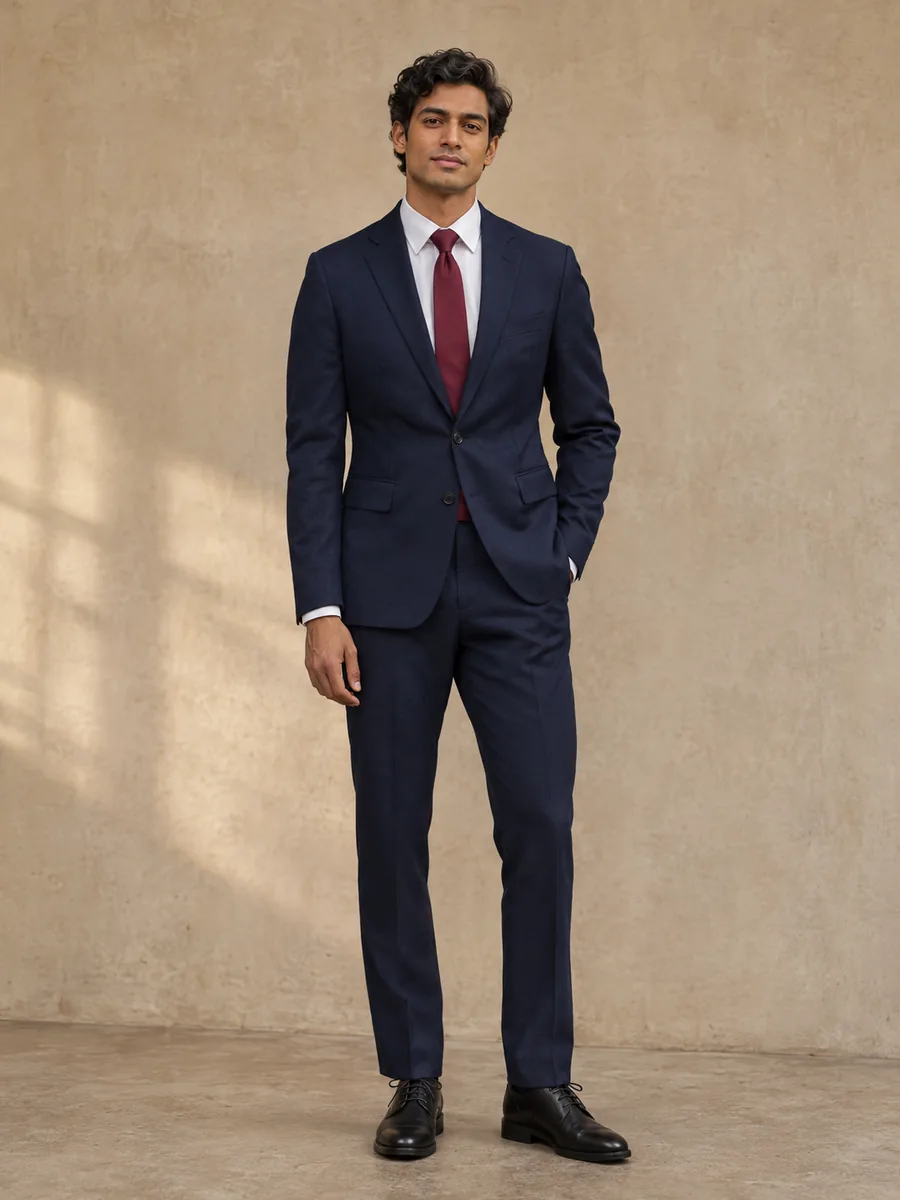
A matching navy frame lets the white shirt and burgundy tie define the center. The tie supplies one warm focal point without a pattern competing with the lapels. Black footwear keeps the lower line restrained. This illustrates a familiar suit relationship, while the requirements of the actual invitation determine whether this level of dress is appropriate. Use navy suit jacket to create a tailored-looking outside frame without requiring the inner pieces to become narrow. Use matching navy suit trousers to keep the lower shape clear so that the neckline, outer hem and footwear can each be read. Use white formal shirt to give the upper center a clear collar and placket while leaving the surrounding pieces relatively quiet. Use plain burgundy tie to supply one focal detail in the shirt center while the matching tailored pieces form the main frame. Use black plain-toe derbies to finish the tailored lower line without competing pattern or decorative construction.
Start with similar pieces from your own wardrobe.
Clean comfortable shoulder with a moderate hip-length body · navy
This piece creates a tailored-looking outside frame without requiring the inner pieces to become narrow.
Straight fall with a clean waistband and restrained break · navy
This piece keeps the lower shape clear so that the neckline, outer hem and footwear can each be read.
Regular body with a tidy collar and controlled hem · white
This piece gives the upper center a clear collar and placket while leaving the surrounding pieces relatively quiet.
Proportional blade with a tidy comfortable knot · burgundy
This piece supplies one focal detail in the shirt center while the matching tailored pieces form the main frame.
Low restrained formal-looking profile · black
This piece finishes the tailored lower line without competing pattern or decorative construction.
Use similar pieces from your wardrobe or keep this list for your next search.
Your choices are saved on this device.
The proportions
Start with a comfortable jacket shoulder and a button point that does not pull into an X of wrinkles. Keep enough collar room for a tidy tie knot. Suit trousers should fall from their intended rise with a modest break over the black shoes. Choose tie width in relation to the lapels and your preference rather than a universal rule. Check the complete combination while seated and moving normally, with the actual footwear you intend to use. A clear illustrated proportion is a starting point, not a substitute for comfort or real garment measurements.
Your wardrobe, your version
Keep exploring
Understand the pieces
The field notes · 4 min read
Compare navy, charcoal and lighter tailoring with an evening-oriented separation, keeping event instructions separate from concept imagery.
The field notes · 4 min read
Choose the amount of office structure, then compare shirts, knits, blazers and trousers without assuming one universal dress code.