Read the invitation before selecting a formula
A formal outfit starts with the event’s actual instructions. Formal, cocktail and black tie can imply different expectations, and the host may give further context. Resolve that before choosing a suit or separate jacket from a gallery. An expensive-looking image is not a more reliable answer to an unclear invitation.
These examples show color and silhouette rather than verified compliance. In particular, a plain black blazer and dark trousers are not automatically black tie. Clarify unclear wording with the organizer, then compare the relevant degree of tailoring instead of assuming every dressed outfit can substitute for any other because both appear polished.
| Concept option | What it shows | What it does not establish |
|---|---|---|
| Navy or charcoal suit | Coordinated jacket and trouser | A particular invitation’s compliance |
| Light textured suit | Pale palette and softer surface | Fiber content or seasonal suitability |
| Black evening separation | Black-and-white distribution | Automatic black-tie compliance |
Assess the jacket and trouser together
Inspect shoulder line, chest, sleeve room, waistband and trouser hem in the real clothes. Matching fabric does not guarantee that two garments work together on you. Look from side and back and sit down so normal comfort forms part of the choice rather than a practical problem discovered after the event begins.
A quiet shirt, tie and shoe allow the main lines to remain visible. If alterations are needed, use the intended footwear and normal waistband position when discussing them. A generic concept cannot provide your measurements or establish textile weight, condition, quality and construction from the way a surface looks on a screen.
Use navy as a coordinated reference
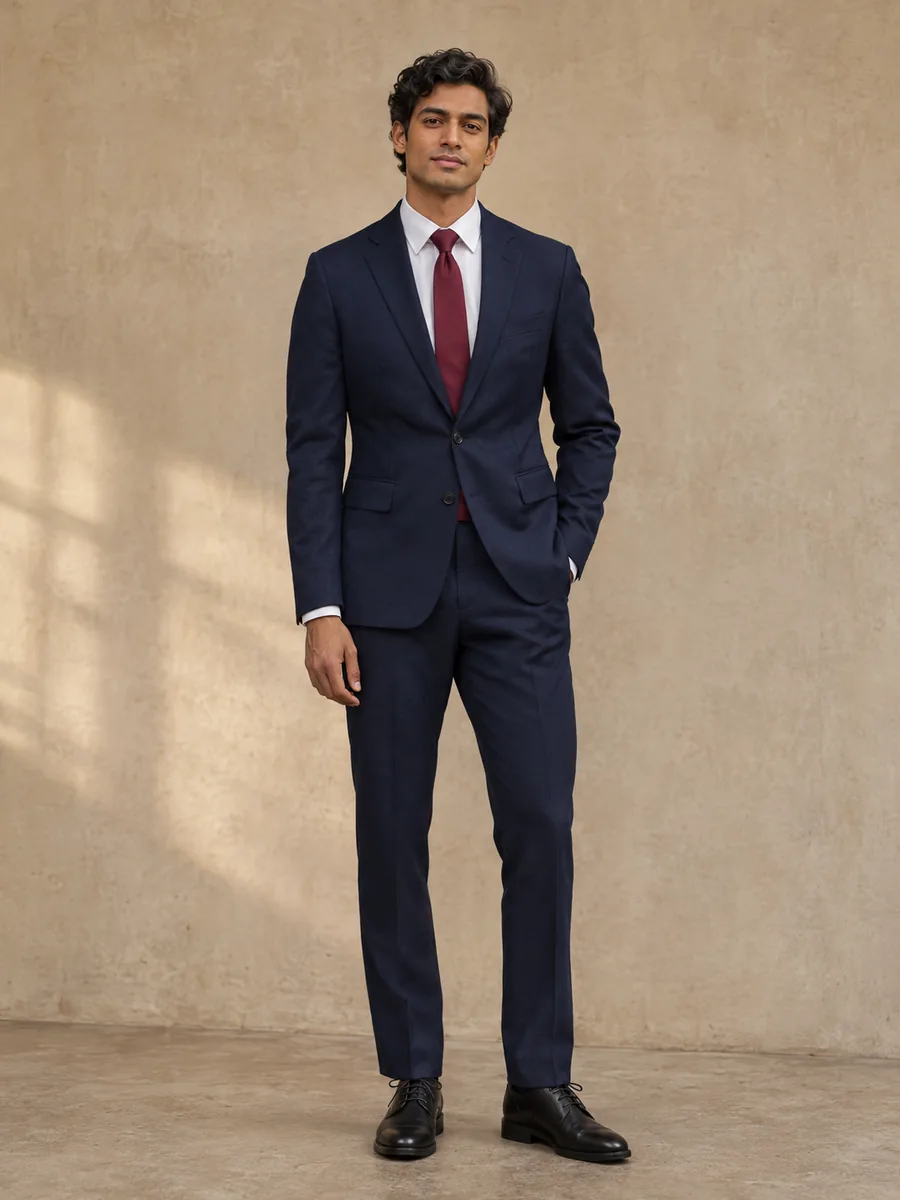
A navy two-piece suit, white shirt and plain burgundy tie create a clear structure. The bright shirt opens the center, the tie gives a small warmer detail and black derby-style shoes ground the lower line. Coordination comes primarily from the jacket and trouser relationship rather than an accumulation of decorative extras.
Check the actual shirt collar with tie and jacket, followed by sleeve clearance and trouser break. The tie should sit naturally rather than require continual rearrangement. This can be a useful formula after the setting is resolved, but its appropriateness still depends on real garment details and the event expectations rather than a gallery label.
Navy suit, white shirt and a burgundy tie
Compare charcoal with a pale-blue center
An anthracite suit beside a pale-blue shirt makes a cooler deeper arrangement than navy beside white. A navy tie stays restrained and black shoes give a quiet endpoint. Small differences matter when the construction remains consistent, so compare actual textiles in ordinary light instead of choosing only from their color names on a screen.
Choose pattern and texture deliberately. Plain supporting pieces leave the suit silhouette easier to inspect. If the shirt or jacket feels uncomfortable, solve that issue before buying another accessory. A polished palette cannot compensate for a sleeve that binds, a front that pulls or a trouser whose fit is only useful in one still pose.
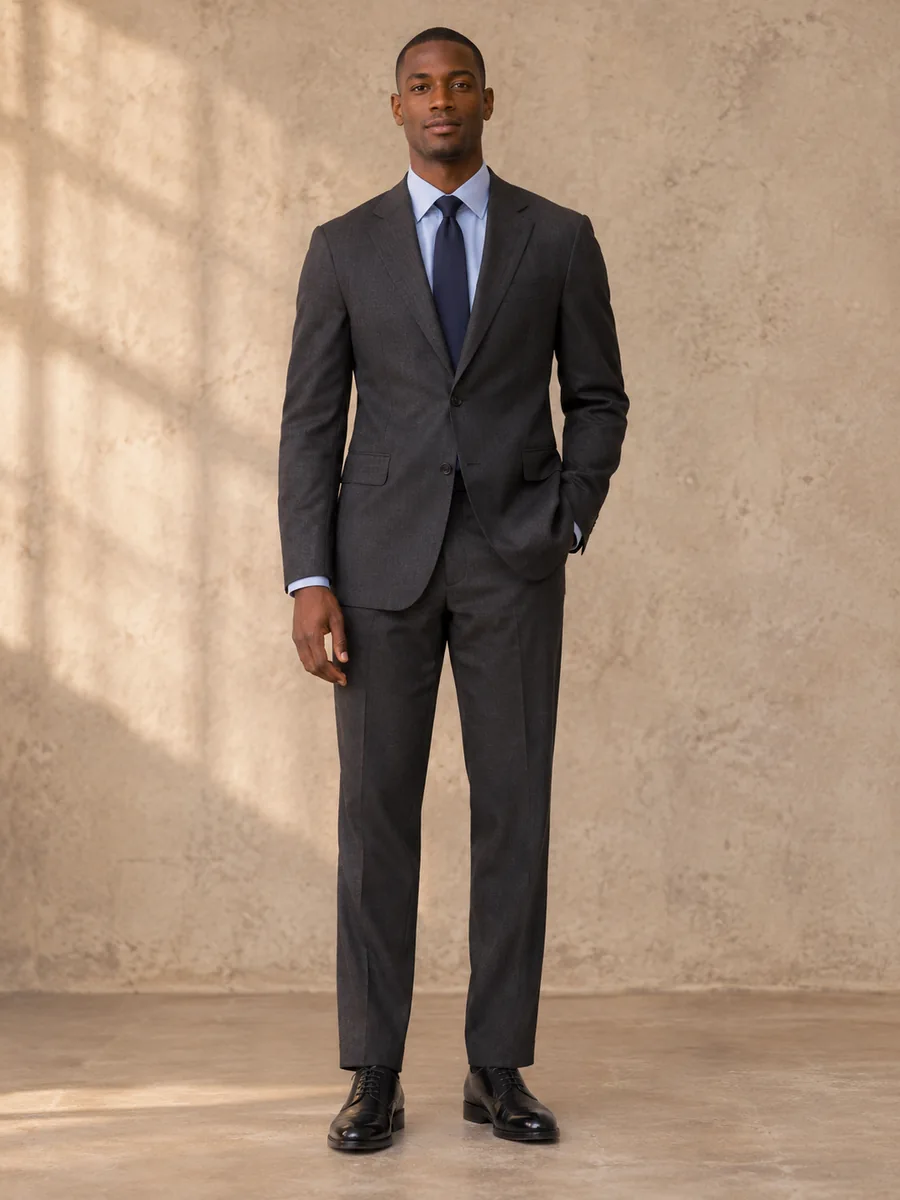
Charcoal suit with a pale blue shirt and navy tie
Treat light tailoring as a separate choice
A beige linen-textured suit, white shirt and brown loafers alter palette and surface while preserving coordination between jacket and trousers. It may suit a stated context that permits this direction. The illustration cannot verify fiber content, breathability or the suitability of an actual garment for a particular season, venue or formal expectation.
Check real material, structure and footwear against the invitation. A light suit is not merely a less serious dark suit, but its role still depends on the event. Set the hem above the actual loafers and inspect shirt coverage and collar clearance under the jacket. Keep those checks separate from the apparent texture in the image.
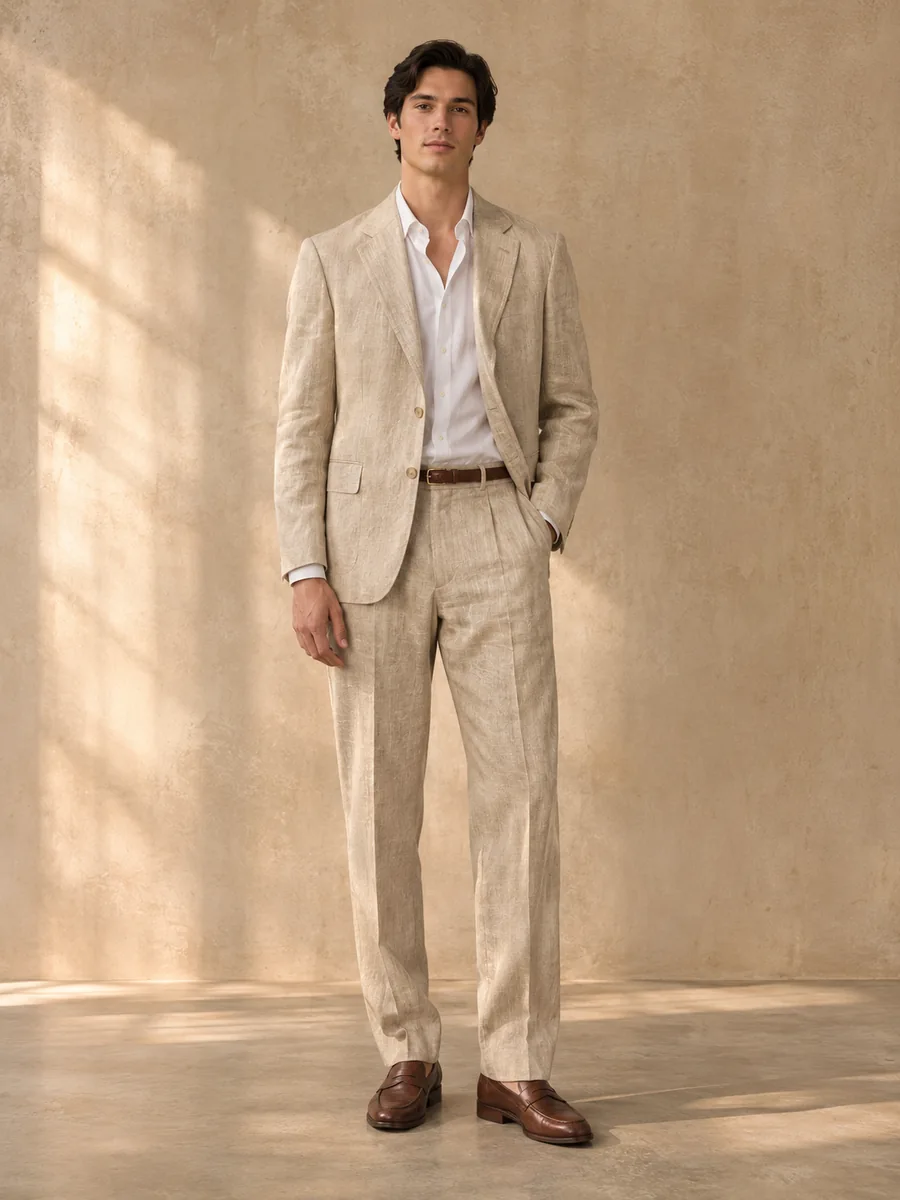
Light beige suit with white shirt and brown loafers
Describe the evening separation precisely
A sober black evening-oriented blazer with black trousers, white shirt and black shoes creates a strong contrast. This is an evening styling reference, not certification of a tuxedo or compliance with black tie. Material, construction and details relevant to a real dress code cannot be established through this concept image alone.
When the invitation requires specific formalwear, select real garments that meet it rather than treating the gallery as a replacement for the check. Once the appropriate pieces are known, the concept can help with black-and-white distribution and the relationship between jacket opening, shirt center and a clear lower line.
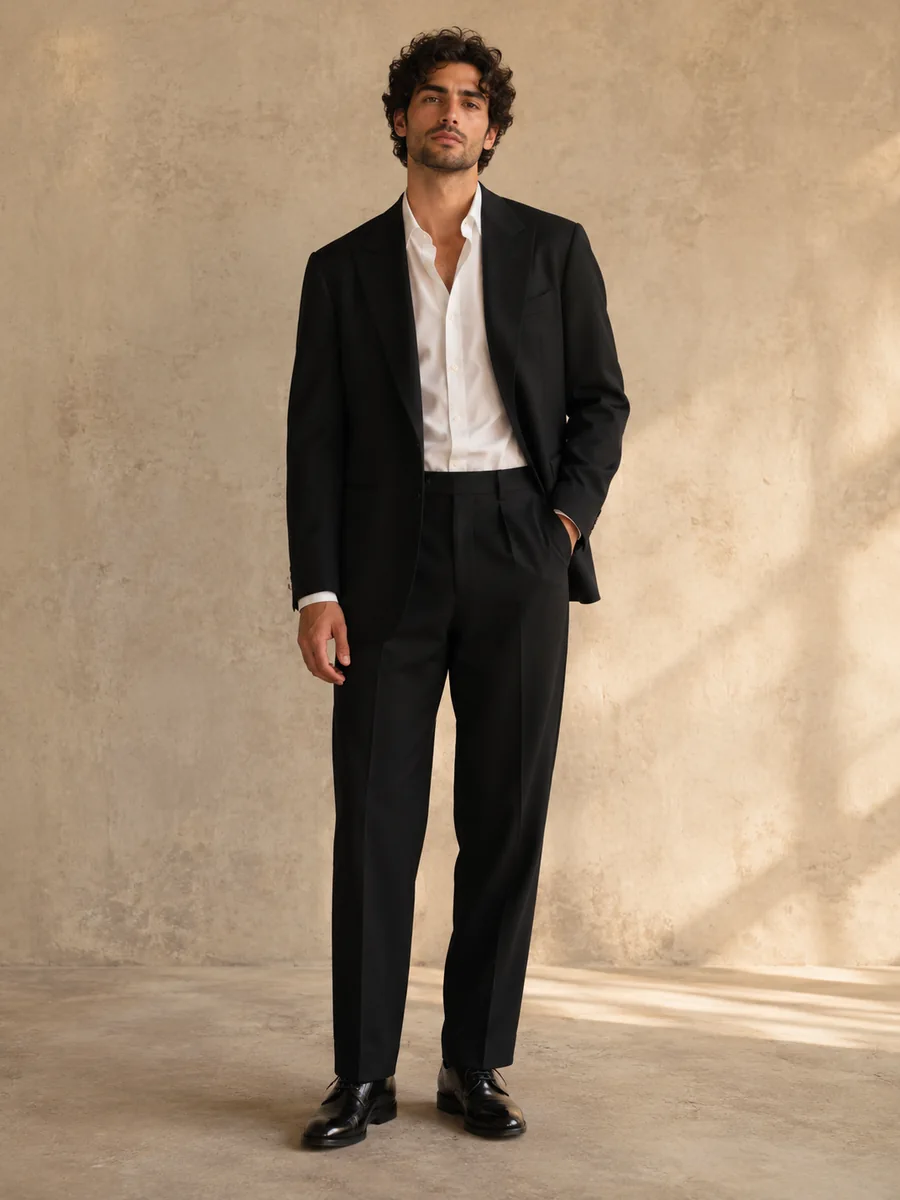
Black evening separates with a white shirt
Prepare the whole combination in advance
Try all the clothing and footwear together before the day instead of assessing each separately. Note anything requiring alteration, repair or pressing under its care instructions. The planner and packing list can keep the pieces of that real combination together without implying an itemized list proves quality, fit or suitability for the event.
Keep specific notes for the future: the collar that sat well, the shoe used for a hem adjustment or the host’s stated dress level. Those details are more useful than simply saving formal as a tag. Add another option when it solves a real context or fit need, not only to duplicate the same image in a different shade.
Explore more outfit ideas or compare the style files.