Resolve the setting before the clothes
Business casual is a context-dependent level of dress rather than one reliable uniform for every workplace. Start with the actual expectations of the office, meeting or event. If a jacket or specific type of footwear is needed, use that as a constraint instead of hoping a gallery example overrides it.
Once the setting is established, choose what supplies the main structure: collared shirt, soft blazer, finer knit or their combination. Utility-style workwear is another reference altogether. Cargo pockets and a canvas jacket do not become professionally appropriate simply because their aesthetic name includes the word work or their color happens to be restrained.
| Starting requirement | Formula to inspect | Decision still needed |
|---|---|---|
| Collared shirt | Blue shirt and charcoal pleats | Workplace rules and real fit |
| Soft jacket suitable | Polo under a brown blazer | Whether the neckline suits the setting |
| Layered journey | Rollneck inside a coat | Base outfit after coat removal |
Make the fit useful through the day
Try shirt and trousers while seated, reaching and walking. Inspect waistband, shoulder and sleeves instead of judging only a front-facing pose. Pleats can allow room without an exaggerated outline; a neat shirt does not have to be tight enough to pull. Choose the real fit rather than interpreting tidy imagery as proof of comfort.
Consider the base after a coat or blazer is removed. The shirt and trouser should still have a coherent relationship. A belt and shoe can connect their palette, but matching brown shades cannot solve a bunching shirt or hem that slips under the heel. Set the main lines before adding supporting detail.
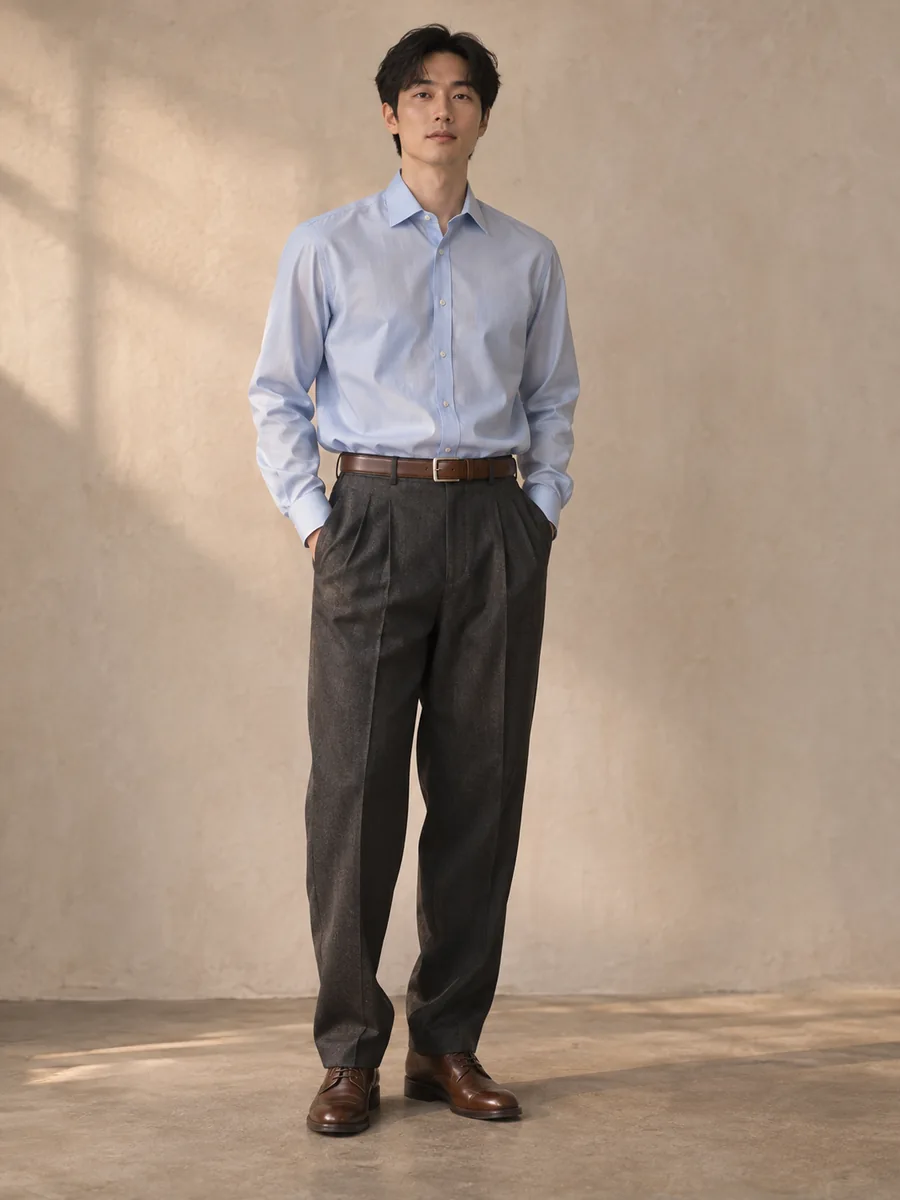
Start with a blue shirt and charcoal pleats
A pale-blue shirt above charcoal pleated trousers makes a restrained clear division. Brown derby-style shoes and a belt repeat a little warmth rather than introduce another large area of color. The shirt collar stays visible and the trouser has enough responsibility to look considered without a jacket supplying all the structure.
Use the actual hem and waistband position to decide whether a tuck suits your setting. Check front, back and seated movement before fixing that choice. This is a generic formula, not a product test: neither textile quality, personal size nor professional suitability of a specific garment can be established from an illustration.
Pale blue shirt with charcoal pleats and brown derbies
Change the center with a knit polo
A navy knit polo below a soft brown blazer replaces the usual shirt with a quieter collar and texture. Light-gray chinos separate the lower half and brown loafers soften the tailored frame. This can suit a context that permits it, but it is not interchangeable with every employer’s understanding of office dress.
Inspect the blazer over the actual knit through the upper arm and shoulder. A polo may settle differently from an Oxford, particularly at the collar. Keep the neckline stable and visible rather than flattened by the opening. Comfortable layering and clear lines are more useful than pursuing a tighter jacket fit just for appearance.
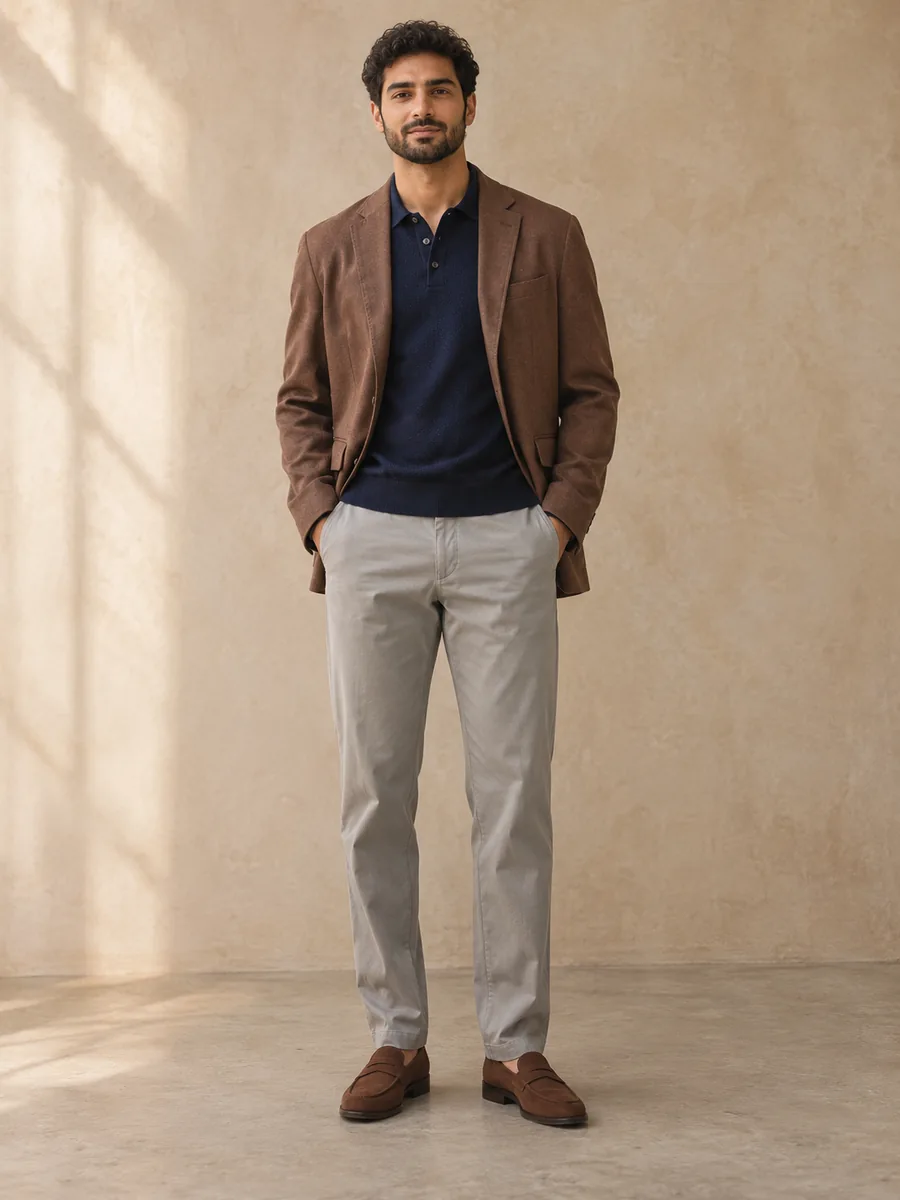
Navy knit polo with grey chinos and a brown blazer
Put a fine rollneck inside a longer frame
A fine gray rollneck above straight navy trousers creates a continuous neckline instead of a visible shirt collar. A charcoal coat supplies the longest outer line and quiet black shoes finish below. The base should function after the coat comes off, because outerwear may only be part of the journey to the workplace.
Choose actual materials and coverage for your conditions; a coat and knit in a concept do not establish insulation or a temperature range. Inspect collar clearance and sleeve space together. If the neckline becomes crowded, change the real layer arrangement before adding a scarf that introduces another source of bulk or hides the intended line.
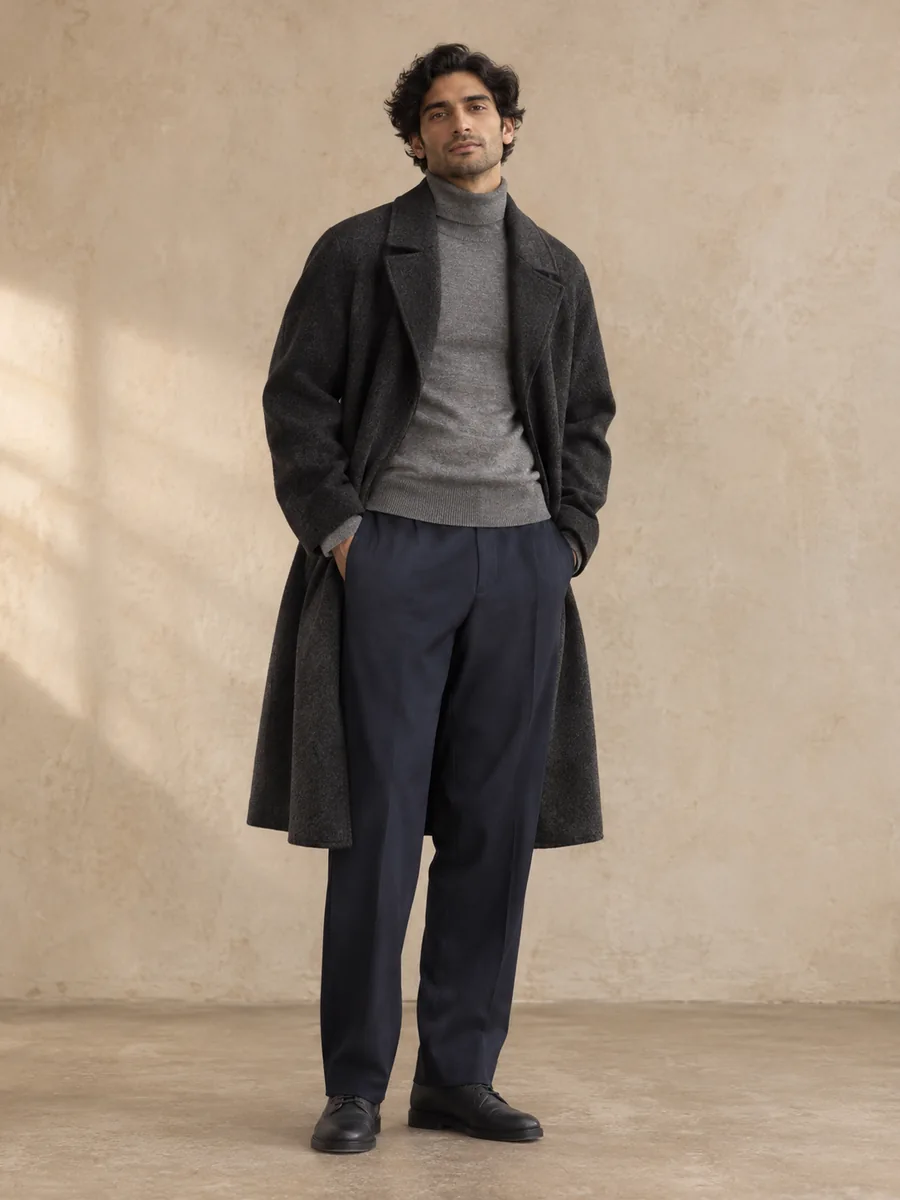
Grey fine-knit rollneck with navy trousers and charcoal coat
Lighten the lower half under navy
A white open-collar shirt, beige pleated trousers and navy deconstructed-looking jacket create a lighter center and bottom. Brown derby-style footwear links the warm lower palette to the ground. Compare it with the first formula: a jacket now supplies more upper structure while the shirt color makes its opening especially easy to see.
Set trouser length with the actual shoes and inspect the real shirt opening in the context where it will be worn. An open collar may suit one place and not another. The example explains how the colors and layers relate rather than giving blanket permission to relax any requirement that belongs to the occasion.
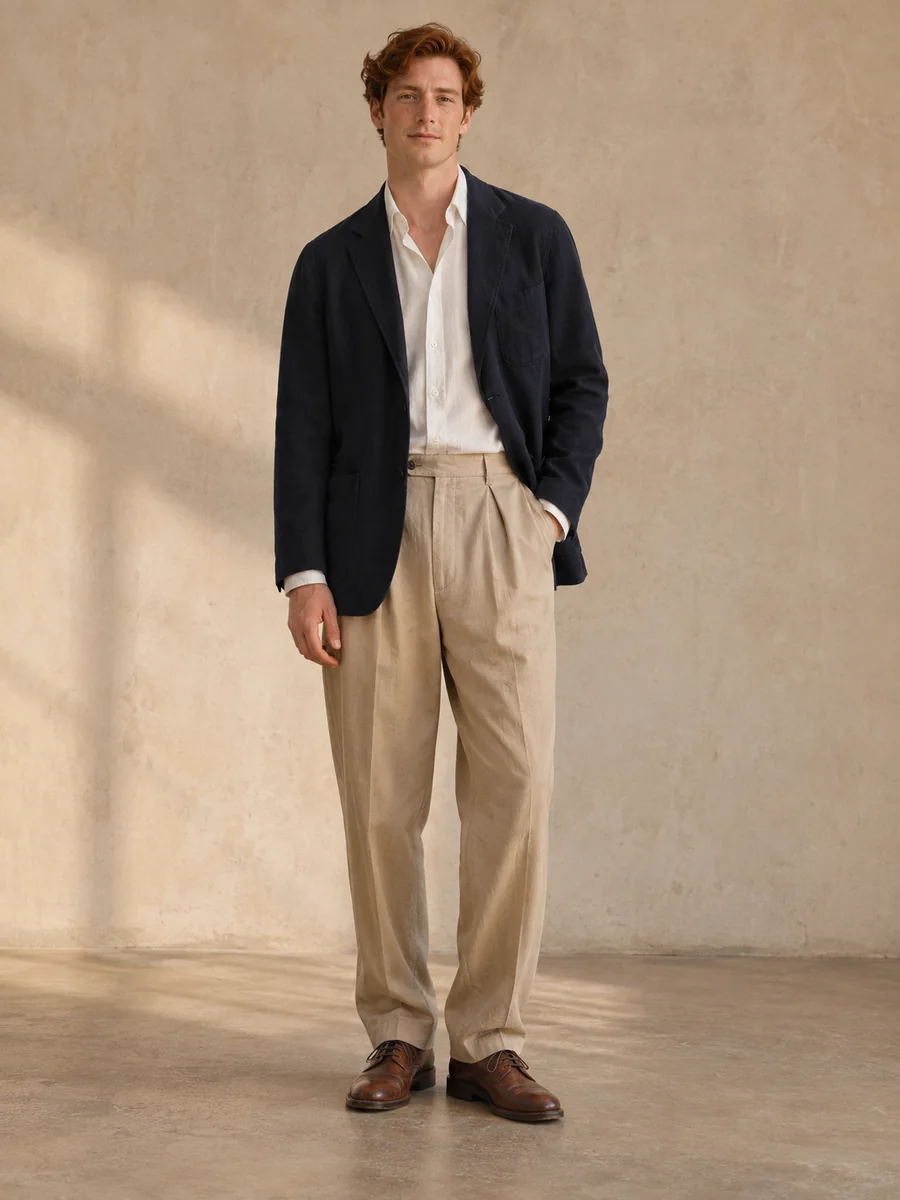
White shirt and beige pleats under a navy soft jacket
Save combinations by real setting
Record the actual pieces and note which formulas suit your workplace. The planner can hold a jacket-required version beside a quieter knit alternative for another day. Planning is distinct from wearing, so tomorrow’s selection must not increment an item’s use counter or imply that the outfit has already met the setting’s expectations.
Compare smart-casual and classic-inspired galleries for nearby choices, keeping the reason for each saved formula specific: clearer collar, softer jacket or better seated room. Those details make a repeatable rotation more useful than one business-casual tag whose meaning varies between workplaces, climates and individual plans.
Explore more outfit ideas or compare the style files.