Pick the construction that interests you
A wearable avant-garde-inspired outfit may start with asymmetry, a sculptural trouser or an unusually long outer frame. Decide which construction leads before adding other expressive garments. The combination should explain what that one choice changes instead of treating every unfamiliar shape as a piece that must appear together to satisfy the style name.
These concepts are original interpretations rather than copies of a named designer or evidence of innovation in a real product. Use them to compare proportion and movement. A plain familiar base can make an unfamiliar jacket easier to assess, while real comfort and coverage still depend on the actual garment rather than its photographed appearance.
Inspect the space between the forms
The gap above a boot beneath cropped trousers or the opening inside a long coat is part of the silhouette. Inspect those spaces from the side as well as the front. A still pose can disguise how a complex form behaves when seated, walking or using the clothing through the day.
Let one construction stay visible. A large scarf or bag might cover the asymmetric opening that attracted you, and a sculptural top can compete with a strong trouser. Simplify before adding more. A quiet color family may allow shape to lead without requiring every surface to attract the same amount of attention.
Use an asymmetric frame over a broad leg
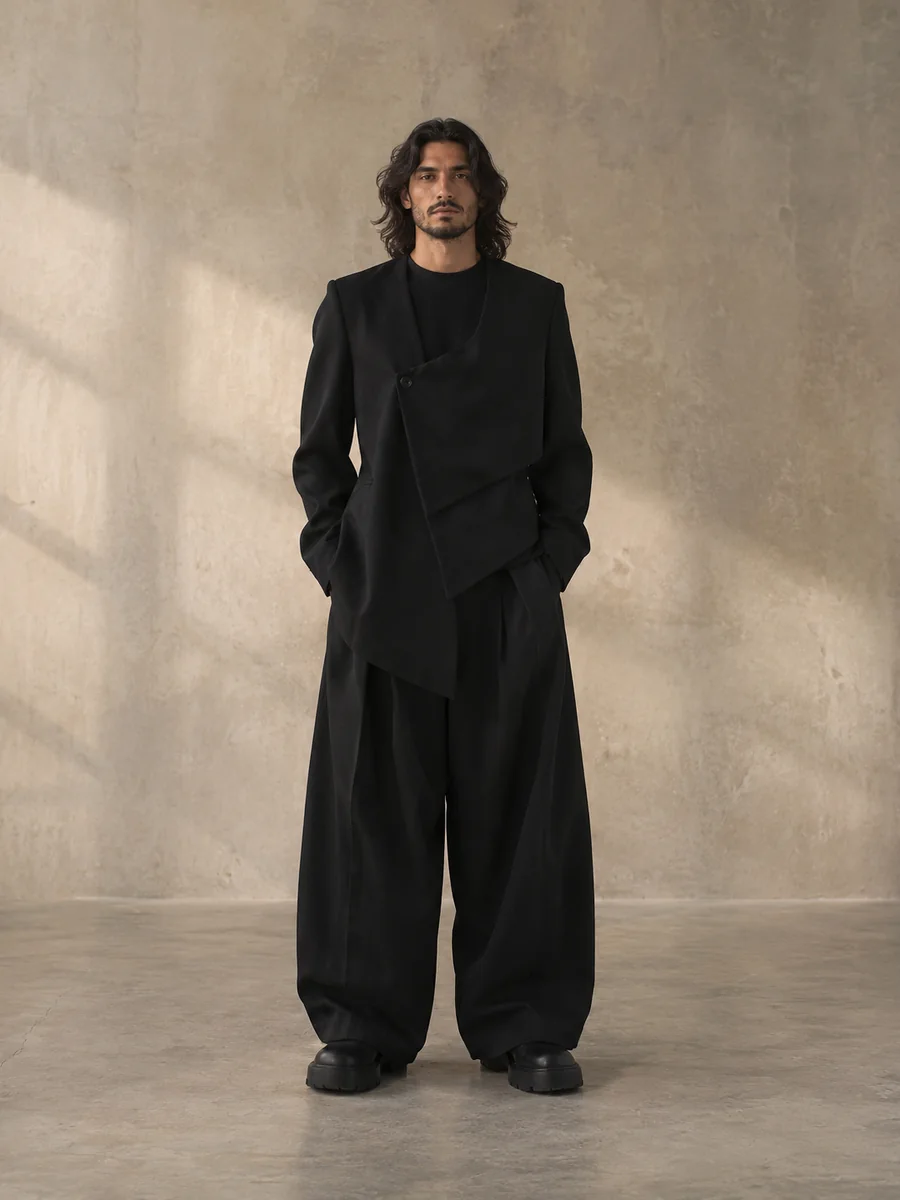
A black asymmetric jacket above a plain black top and very broad black trousers keeps the palette close. Substantial shoes ground the lower opening. Jacket construction and trouser volume are the two main decisions, so their lengths should give each form enough space instead of merging all the fabric around the waist.
Check the actual opening and how the jacket settles during movement. A generated form cannot establish closure, textile weight or real coverage. Set the trouser hem over your own footwear and leave it clear of the heel. More width does not require uncontrolled lower length to make an expressive silhouette recognizable.
Asymmetric black jacket with an expansive trouser line
Put a cropped leg inside a long frame
A long gray coat around a longer dark-gray tee creates layered vertical edges above broad cropped black trousers. Black boots make the lower spacing another clear decision. The contrast between long outer form and shorter bottom matters more than a decorative print or bright accent, even though each piece remains within a restrained palette.
Inspect the real amount of boot and leg revealed at the opening while standing and seated, choosing both consciously. Keep tee and coat endings clear rather than letting them gather into one band near the thigh. The outline should remain useful during movement, not only in the front-facing view shown by the concept.
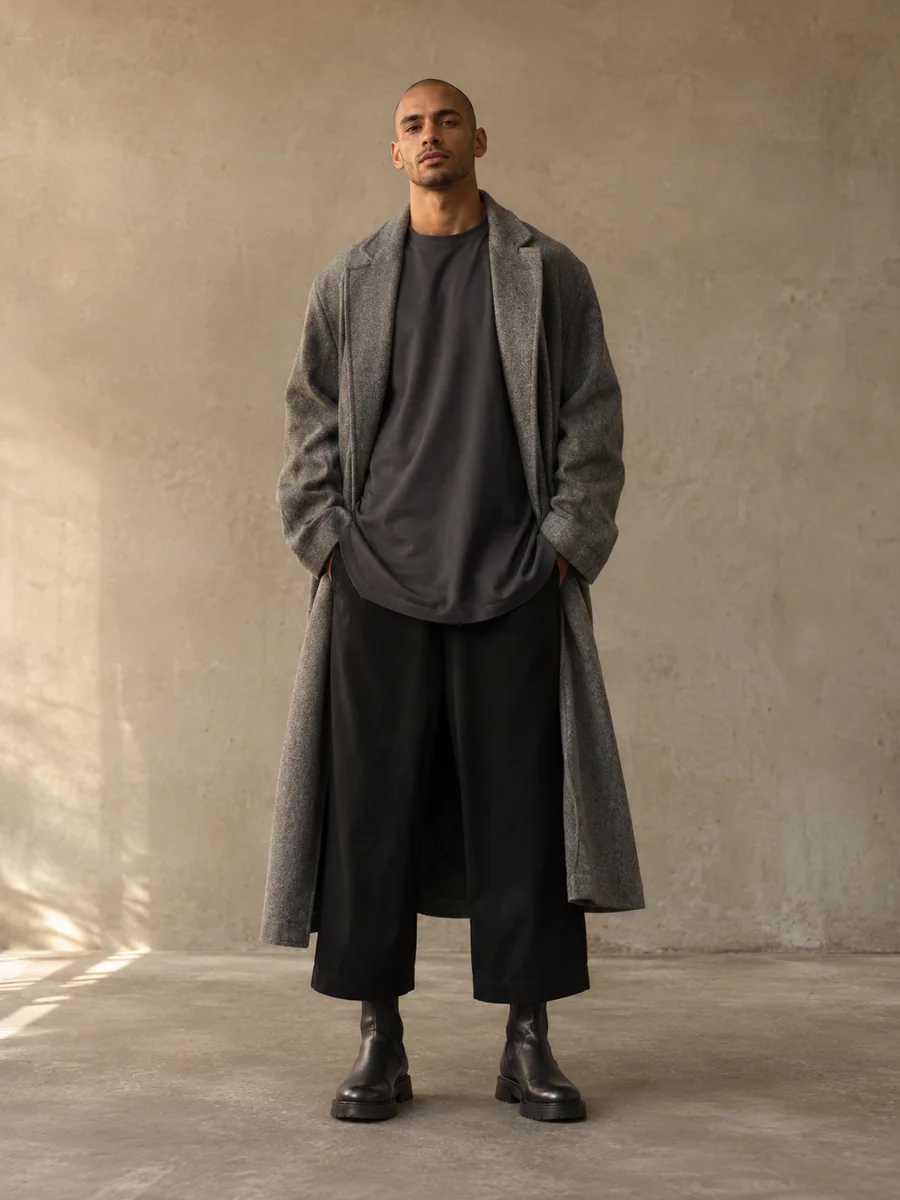
Long grey coat with cropped wide trousers
Move the light area into broad trousers
A black offset-looking overshirt above a black tee and wide ecru trousers reverses the usual darker bottom. Black derby-style footwear supplies a smaller endpoint below the pale volume. Lighter cloth makes the leg shape easier to see, while the black center gives the asymmetric upper construction a quieter surrounding area.
Check real shirt coverage, sleeve room and trouser waistband. The broader leg should fall naturally rather than opening under strain or collecting beneath the shoe. If the contrast feels strong, compare a quieter pale shade without changing every other dimension. Retaining the light distribution makes it easier to see what one variation actually does.
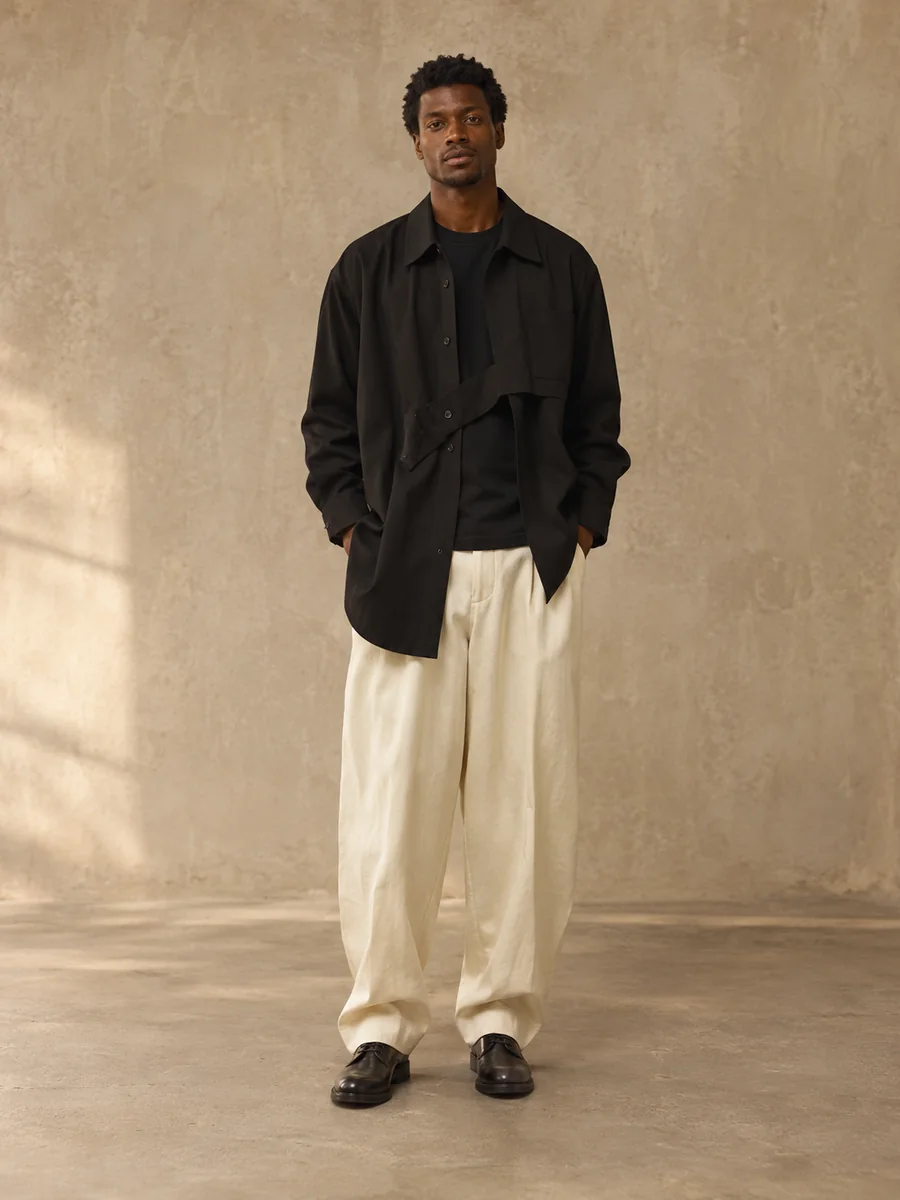
Offset black overshirt with wide ecru trousers
Let the knit supply irregular texture
A charcoal knit with an irregular-looking surface sits above sculptural gray trousers inside a short black jacket. Large black shoes keep the lower shape grounded. The grayscale palette allows construction and texture to be the expressive differences without introducing another unrelated accent that might obscure their relationship or compete with the jacket opening.
Try the real knit coverage and hem under the jacket and inspect how the trousers move. A concept does not explain how a complex garment is sewn or feels against the body. Keep the useful readable parts and simplify a competing layer when necessary, rather than forcing an uncomfortable arrangement just because the image looks dramatic.
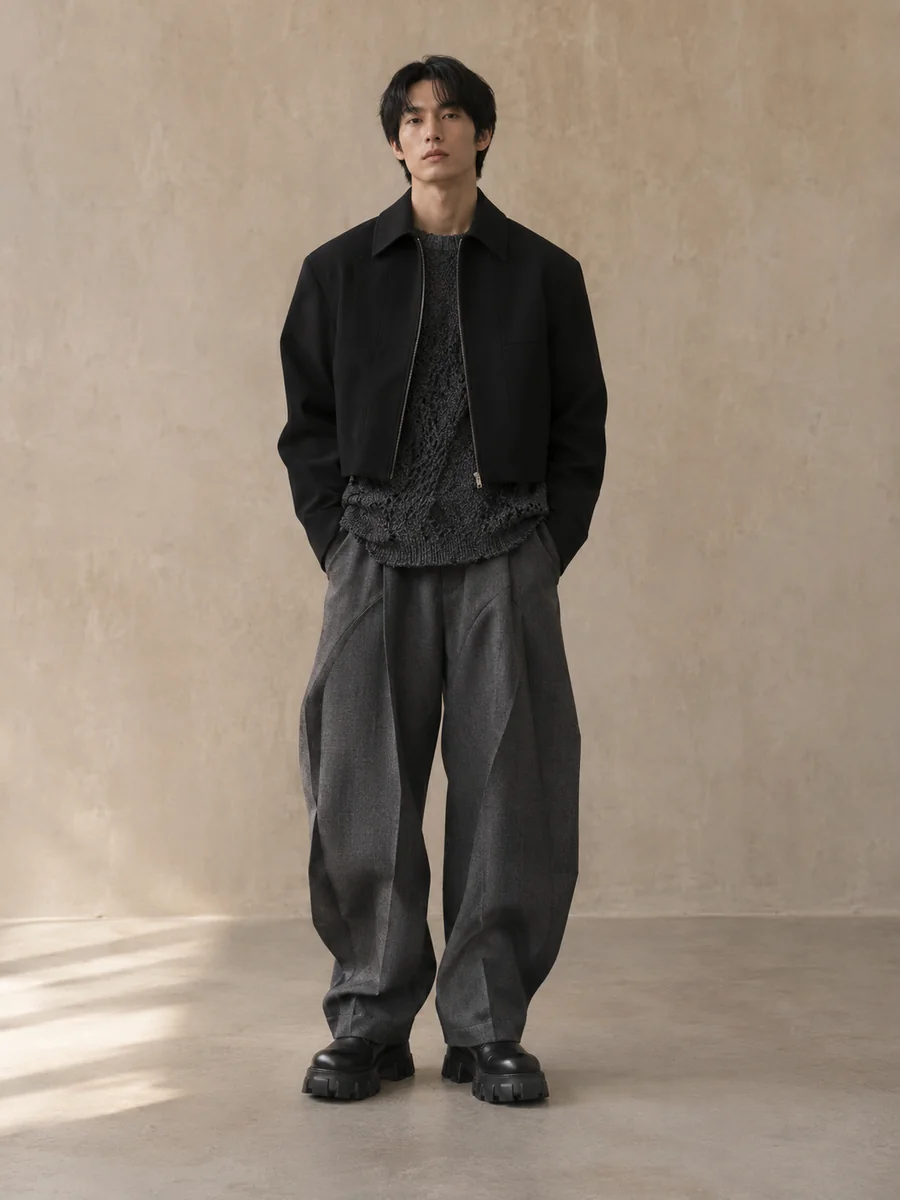
Irregular charcoal knit with sculptural grey trousers
Keep one useful experiment at a time
Compare techwear and opium-inspired examples to decide whether asymmetry, exaggerated volume, longer frames or substantial shoes are what you enjoy. A shared dark palette does not make their construction choices equivalent. Plain pieces can support an expressive outfit by providing the background that lets an unusual garment’s actual form remain visible.
Use the finder to keep a selected silhouette stable while comparing alternatives, and the palette tool to inspect light placement. Note the real adjustment that helped. An experimental wardrobe becomes more repeatable through those observations than by collecting dramatic screenshots whose garments have never been checked for movement, coverage or compatibility with your own clothes.
Explore more outfit ideas or compare the style files.