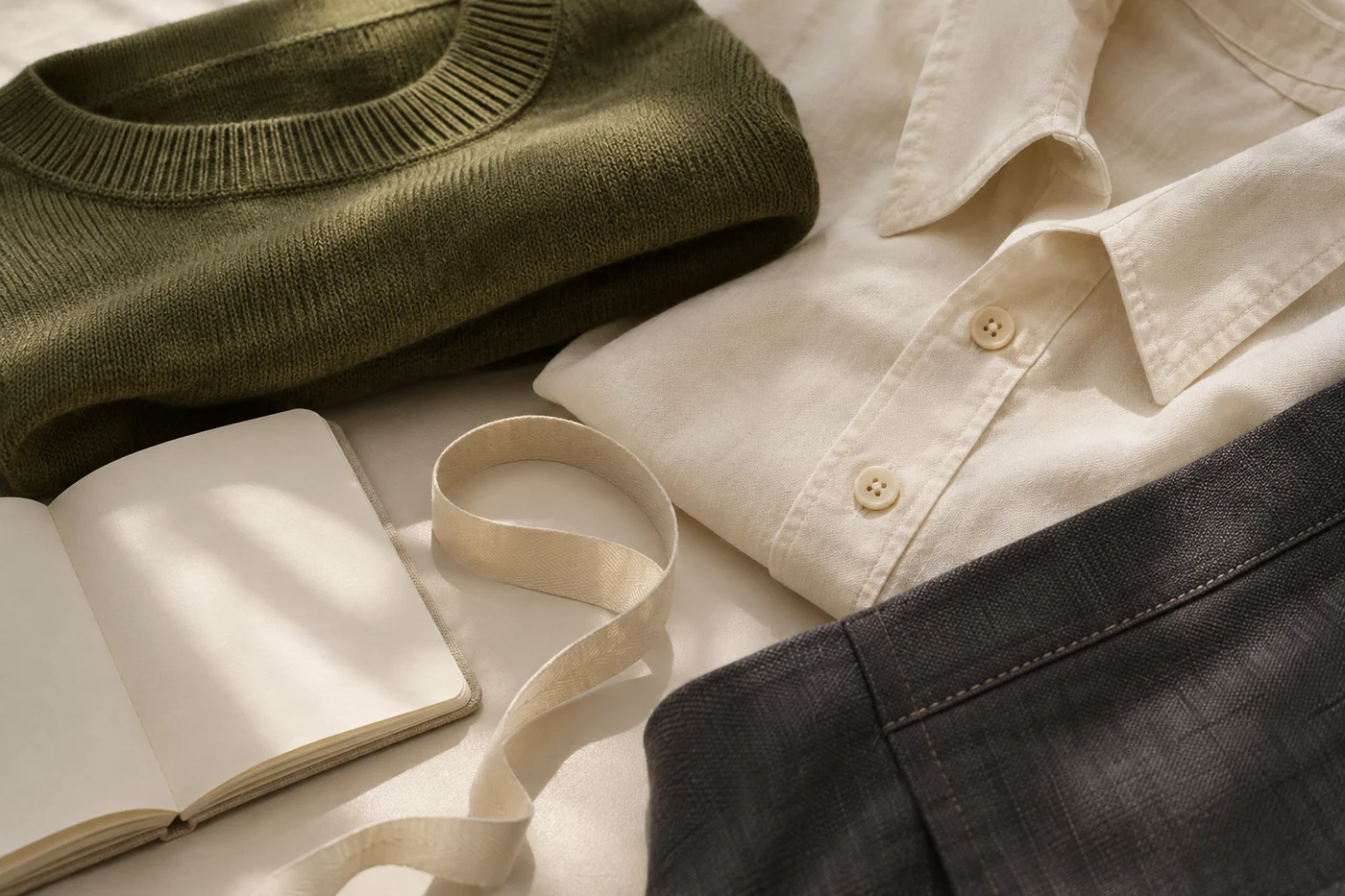
A sweater that disappears into storage with a loose button or an unresolved hole is harder to use when you next need it. Good knitwear care combines a suitable storage method with a small record of what needs attention. Neither part needs to become an elaborate wardrobe project.
Start with the garment’s care label and its actual condition. Woolmark’s advice is specifically about wool; other fibres and constructions may need different handling. The repair record, however, can use the same clear questions for every knit: what is wrong, what has been assessed and is it ready to wear?
Separate storage from drying
Woolmark recommends gently folding knitted wool garments for drawer storage, while using suitable hangers for woven wool garments. Its drying advice also favours flat drying for wool knitwear unless the care claim allows another process. A damp sweater on a hanger is not simply a storage decision: moisture adds weight while the garment dries.
Before putting a knit away, check that it is fully dry according to its instructions. Fold it without forcing a sharp crease through a bulky decoration or fastening. Leave enough space to retrieve it without dragging a button across another garment. A drawer you can see into is more useful than a densely packed stack that hides every repair waiting underneath.
Clean before long storage, using the actual label
Woolmark’s long-term storage guidance says wool garments should be clean before packing because food stains and body oils can attract moths. It recommends appropriate protective storage and keeping repellents away from direct garment contact. Follow the product instructions rather than improvising a chemical treatment inside a closed box.
This does not create a universal wash schedule. A particular cardigan may permit a home process, require professional care or need advice about fragile trims. Read its instruction and inspect it first. Record when it was cleaned and by which permitted method so that a vague clean status does not become a claim about an unknown treatment.
Describe the problem without diagnosing from a photo
Give each issue a location and an observation: small opening near left cuff; button loose at the top; seam separating under right arm. Photograph the area with enough surrounding fabric to show scale and construction. Avoid naming the cause unless it is known. A hole could have several histories, and a picture does not establish which one applies.
Keep cosmetic changes distinct from structural issues. Pilling, an open seam and a broken fastening ask different repair questions. If the knit is delicate or the stitches are unclear, a repair specialist can examine it. A saved image helps that conversation, but it cannot confirm whether an invisible repair or an exact colour match will be possible.
Use statuses that describe actual progress
A simple sequence is enough: reported, awaiting assessment, approved for repair, in repair, returned and checked. Add ready to wear only after you have the garment and have inspected the relevant area. A booking confirmation is evidence of an appointment, not evidence of a completed repair.
Patagonia’s repair information illustrates why assessment matters: it evaluates individual garments and explains that matching materials may not be available. That is a brand service with its own scope, not a promise for every knit. For your own record, write who will assess the piece, the agreed work and any appearance change you are willing to accept.
Keep a small, useful repair history
For a fictional navy cardigan, a useful entry might read: lower button loose; photo saved; local repairer will secure it; date agreed; work not yet completed. When it returns, add the actual completion date and your check. If another problem is found, open a separate issue rather than silently expanding the original task.
Keep the original item identity throughout. A repaired sweater remains the same physical garment in your wardrobe and planning records. Save a later image if it helps recognise a visible mend, while keeping the earlier image as history. Do not create a new owned item just to make the repair appear in a different list.
Plan around availability
If the knit is away for repair, exclude it from the outfit you plan for tomorrow. Pick a real substitute and inspect the change in length, neckline and layer space. The replacement may serve the same role without being visually identical. This is a practical reason to keep repair status separate from a general favourite or owned label.
Before the next season, review stored knits as a small batch. Check labels, condition and pending repairs, then return completed pieces to use. The goal is a wardrobe whose availability is believable: the sweaters you can see and select should correspond to the garments you can actually reach for.
Put the idea to work
Your wardrobe. Your version.
Sources and scope.
What this article can establish
- Woolmark recommendations concern wool. Follow the label and applicable instructions for other knit constructions.