A composition label identifies the fibres stated for a garment or its separately described components. It is useful evidence, but it is not a complete account of feel, warmth, stretch, longevity or quality. Read it alongside construction, finishing and the care instructions for the exact item.
Cotton, linen, wool and synthetic fibres can be made into many different fabrics. Avoid using the fibre name as a substitute for the garment you are assessing. A practical comparison starts with what you need the clothing to do, then asks which information supports that decision and what remains unknown.
Separate the fibre from the fabric and the garment
Fibre is the material ingredient; yarn and fabric construction describe later stages; the finished garment adds cut, seams, trims and sometimes linings or coatings. CottonWorks’ material library includes both cotton knits and cotton wovens, demonstrating why the same main fibre name can appear in visibly different constructions.
Record the full stated composition for the selected variant. Keep shell, lining and other separately listed components distinct. A jacket described as wool-rich may still have another lining or trim material. Do not assume that one headline percentage describes every part of the item.
Use cotton and linen names for origin, then look further
Cotton is a plant fibre associated with the cotton seed, while linen is made from flax fibre. The Alliance for European Flax-Linen and Hemp describes flax fibre extraction from the stem and later processing into textile material. Those origins distinguish the ingredients without determining every finished fabric’s behaviour.
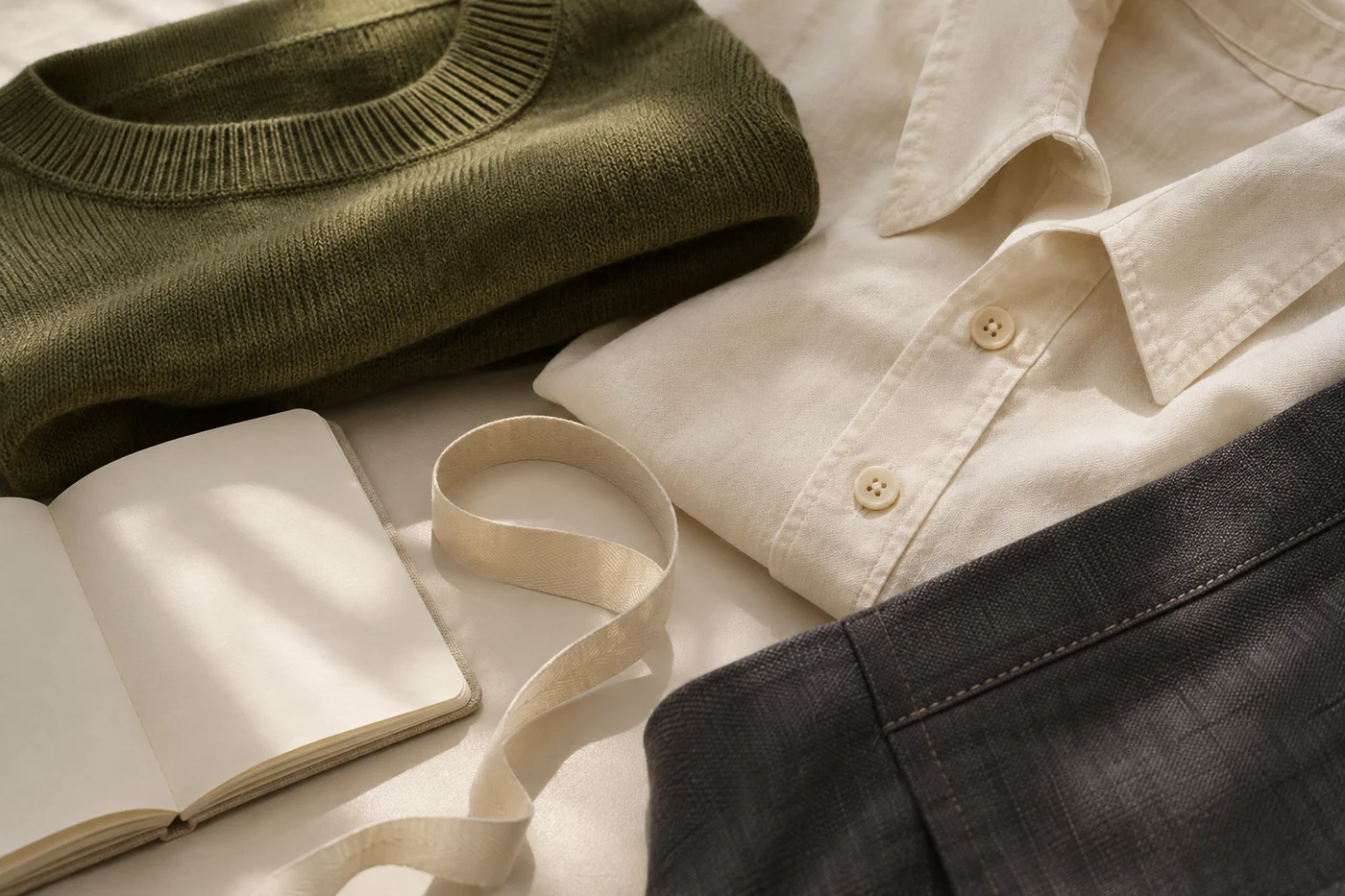
Compare the actual cloth description. A cotton jersey tee and a cotton woven shirt are different constructions. A linen-containing shirt can also differ from another through yarn, weave, density, finish and cut. If the product gives no fabric weight or construction detail, keep it missing rather than estimating it from a softly lit photograph.
Read wool with its product context
The International Wool Textile Organisation describes wool as a sheep-grown fibre with keratin at its core and notes variation in texture and other fibre characteristics. A wool percentage therefore does not tell you that every garment feels the same against the skin or has the same weight and structure.
If the manufacturer specifies a fibre type, fabric weight or treatment relevant to your decision, retain that detail with the exact product. Do not turn a general fibre description into a temperature rating for a particular coat or sweater. Try your own garment against the intended underlayer and follow its care label.
Keep synthetic and regenerated fibres distinct
Textile sources distinguish synthetic fibres such as polyester and nylon from regenerated cellulose fibres such as viscose, modal and lyocell. Lenzing describes its regenerated-cellulose production as using cellulose that is processed into fibres. Manufactured is therefore a broader idea than a single synthetic fibre category.
Preserve the specific name on the label instead of treating everything that is not cotton, linen or wool as the same material. Synthetic fibres and blends can serve different intended uses. Composition alone does not establish waterproofing, drying time, odor behaviour or comfort for the actual garment.
Read a blend as ingredients, not a guaranteed result
A hypothetical label of 70% cotton and 30% polyester tells you the stated fibre proportions, not whether the cloth is knitted or woven or how it has been finished. A small amount of elastane is another ingredient to record. The LYCRA Company explains that spandex and elastane name the same synthetic elastic fibre class, while LYCRA is a brand name.
That does not let you calculate an exact stretch percentage or recovery performance from the label. Check product information and the actual garment. A blend can be chosen for several reasons; avoid assuming the maker’s reason or treating every added fibre as an automatic improvement or downgrade.
Make the comparison useful for your wardrobe
Write the intended job first: a top under a jacket, a skirt for sitting at work, or an outer layer for a documented exposure. Compare composition, construction, available dimensions and care for that job. Keep visible texture observations separate from confirmed fibre facts.
Use garment comparison to inspect its listed references. Save the exact candidate and source in your wishlist, keeping extra evidence in a private note. Once you own the item, record how it behaves in your use without presenting that personal observation as a universal property of the fibre. A useful material decision combines evidence and preference. It does not need an absolute ranking of natural versus synthetic or a claim that one percentage guarantees quality.
Put the idea to work
Your wardrobe. Your version.
Sources and scope.
- CottonWorks: Cotton Fiber
- Alliance for European Flax-Linen and Hemp: Flax Growing and Expertise
- International Wool Textile Organisation: About Wool
- Lenzing: Fiber Production Technologies
- Canadian Conservation Institute: Caring for Textiles and Costumes
- The LYCRA Company: Quality FAQs
- CottonWorks: Material Library
What this article can establish
- Fibre origins and categories do not establish the full garment’s performance or environmental impact. CottonWorks and LYCRA facts were checked in indexed official text; direct retrieval returned access restrictions. Directly accessible textile sources support the principal fibre-category distinctions.