Borrow a clothing shape rather than an affiliation
Military-inspired styling here uses selected construction references such as field jackets, fatigue trousers and cropped blousons. Choose the shape you enjoy and place ordinary pieces around it. Insignia, flags, rank markings and claims of service are unnecessary to make a utility-shaped garment work as part of an everyday outfit.
The concepts establish no protective performance or suitability for hazardous work. An olive jacket or robust-looking boot remains a visual reference until real product properties are checked. Separate those practical needs while comparing pocket placement, outer length, leg volume and the amount of quiet color needed to explain the main construction.
Avoid equally busy surfaces everywhere
A field jacket and cargo trouser can both carry large pockets. Let one area lead and use a plain tee or quieter lower shape as a pause. More compartments do not automatically improve coherence, while a bag may introduce another diagonal across a torso already divided by visible seams and closures.
Two olive garments need a difference in shade, surface or length if they are to read separately. Navy, beige and gray offer quieter supporting options instead of repeating green throughout. Inspect actual clothing in ordinary light, since similar color names cannot prove the same relationship seen on a generated screen image.
Separate two olive tones with ecru
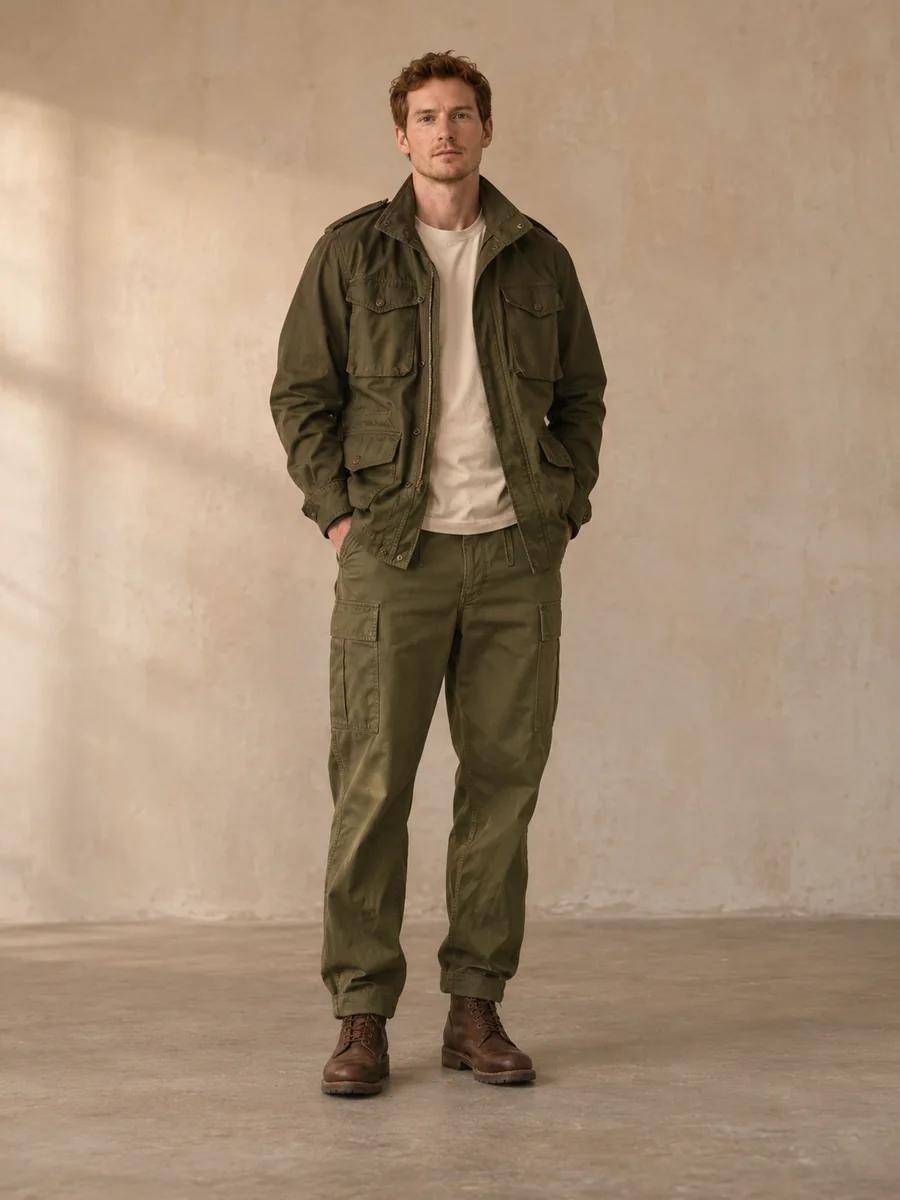
An olive field jacket and fatigue trousers in another olive shade make a close utility palette. An ecru tee opens the center and brown boots provide a warmer foot. That lighter pause helps the two larger olive garments retain separate roles instead of becoming a matching-looking block whose construction is hard to read.
Check outer hem against the pockets and waistband, then set lower length over your own boots. The opening should clear the real shaft without fabric slipping under the heel. A concept cannot verify textile weight or protection, so select garments for actual conditions and borrow the illustration’s arrangement rather than its implied physical performance.
Olive field jacket with a two-tone fatigue base
Quiet the palette with navy and beige
A cropped navy blouson around a gray sweatshirt changes the upper shape while straight beige trousers make the lower half lighter. Black ankle boots ground the outline. The reference is more restrained than an olive field jacket with fatigue pants, showing that construction can matter even when not every garment shares a military-associated color.
Try the real sweatshirt below the shorter outer layer. Some gray edging may be deliberate, but heavy gathering can hide the compact frame. Keep the trouser clear over the boots and compare the base without the jacket so it remains useful after that removable layer is taken off during the day.
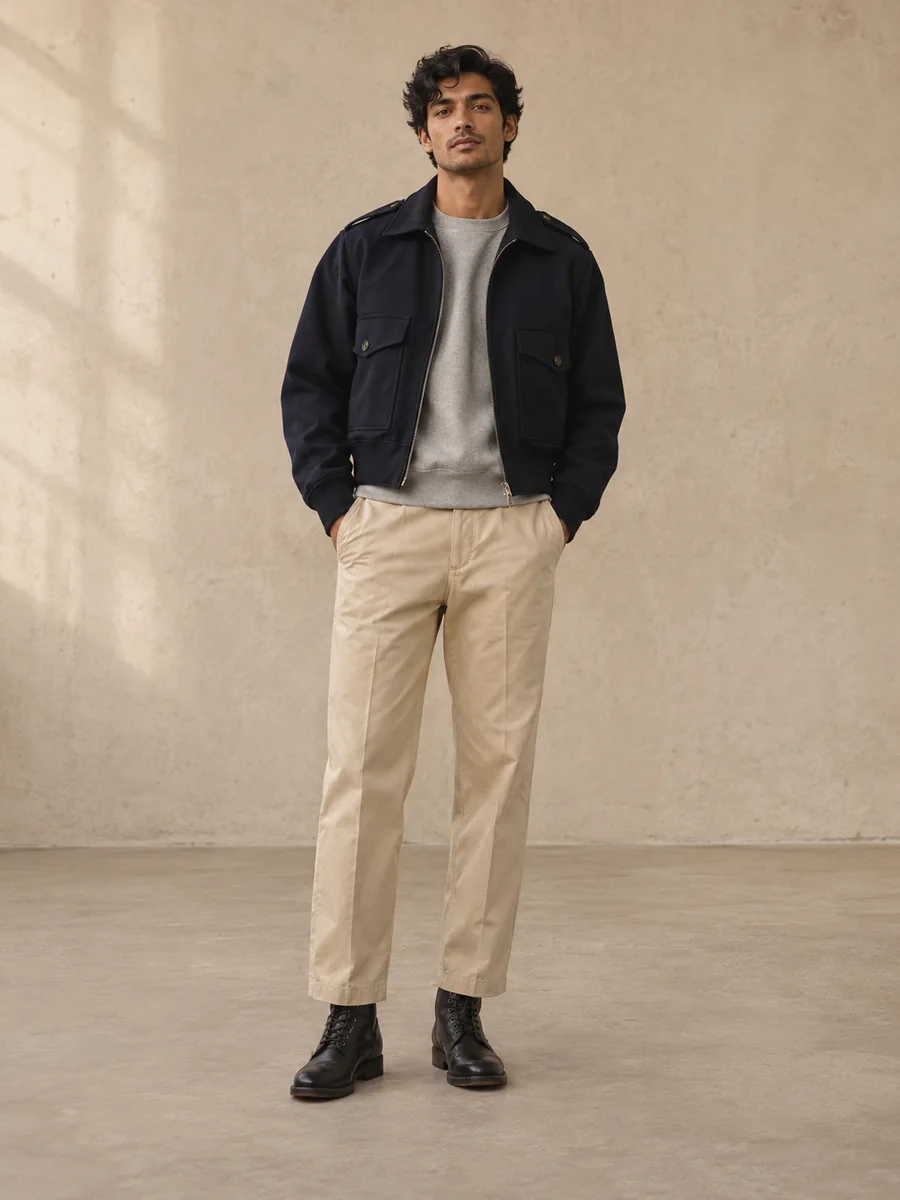
Navy blouson with grey sweatshirt and beige trousers
Frame white with a khaki overshirt
A khaki overshirt around a white tee gives navy cargo trousers a clear lighter center. Ecru sneakers soften the endpoint beside the boot formulas. Lower pockets supply the main detail while the comparatively simple upper arrangement keeps the whole combination from becoming several competing versions of utility hardware and exaggerated storage shapes.
Inspect actual overshirt length against the trouser rise and thigh pockets. If it conceals too much of the lower construction, compare a shorter ending or clearer front opening. Set the hem with the sneakers you own instead of treating cargo as one universally useful fit that never needs a separate proportion check.
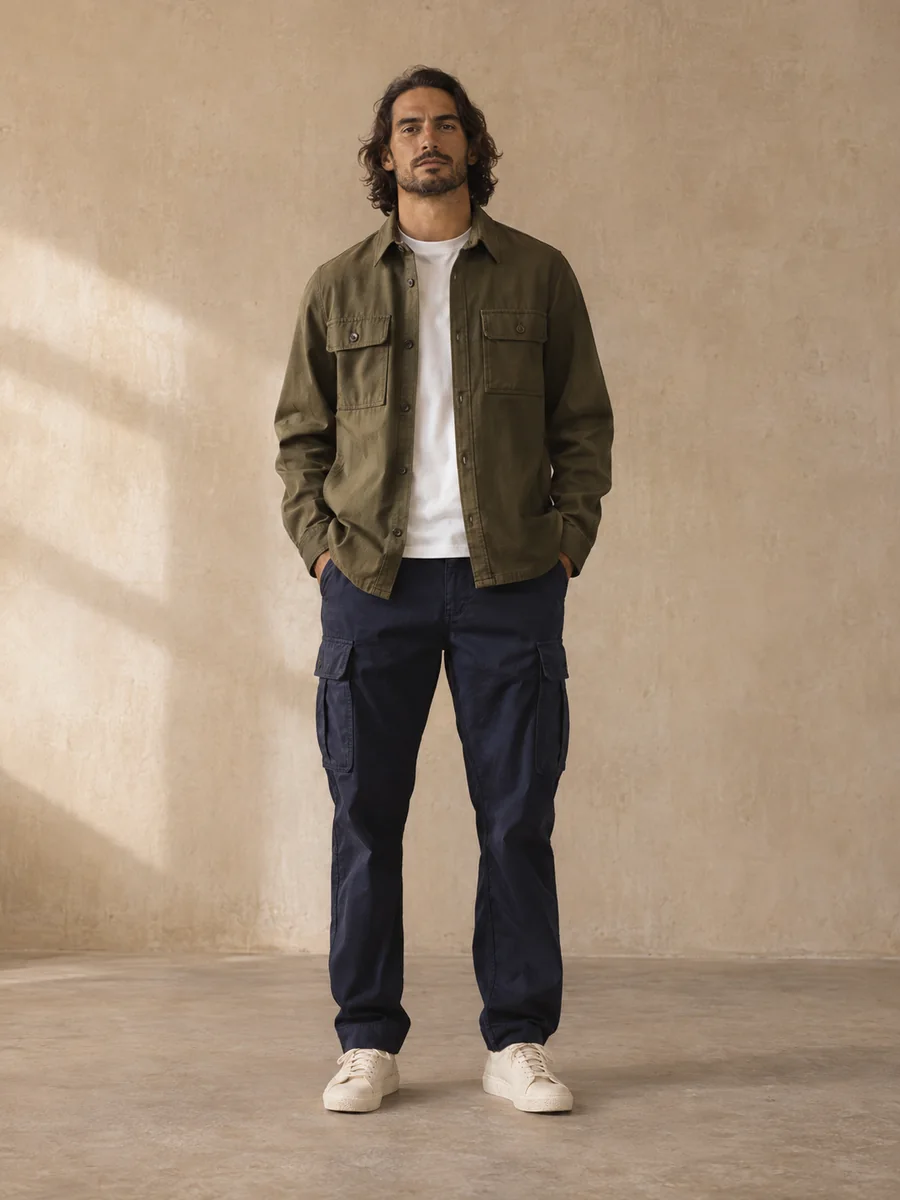
Khaki overshirt with navy cargos and ecru sneakers
Compare a longer olive frame with gray
A dark-olive sober coat around a light-gray knit gives a longer vertical outline than the field jacket or cropped blouson. Broad charcoal trousers and black boots keep the bottom quiet. The lighter center and deeper outer frame reveal layer order without needing another print or a symbol attached to the clothing.
Test coat and knit together through shoulders and sleeves, then inspect how much lower width remains visible. Choose actual materials for the conditions rather than assuming a long coat is warm enough. Keep trouser cloth clear at the heel so an outer-length choice does not conceal an impractical amount of fabric around the boot.
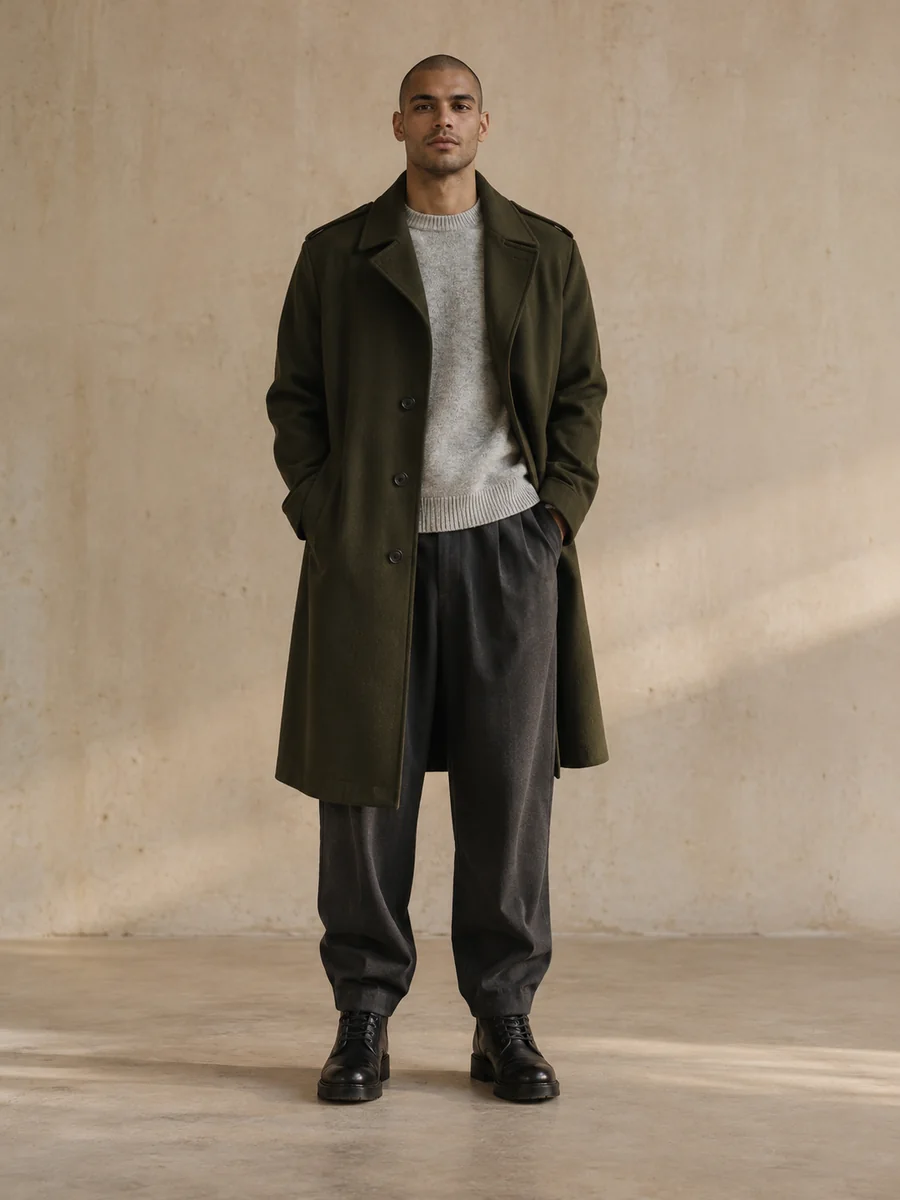
Dark olive coat with a pale grey knit
Build a rotation around shared basics
A plain tee, gray sweatshirt and quieter trouser can support several utility-inspired arrangements. The capsule builder should show real supported combinations and recalculate after an item is removed. An impressive theoretical total is less useful than a smaller set whose pocket volume, layer order and hems have actually been considered.
Compare workwear and gorpcore to identify whether you prefer canvas-like work shapes, outdoor surfaces or the fatigue-and-field-jacket vocabulary here. Overlap is useful without requiring separate wardrobes. Save the adjustments that work with your actual clothing, then change one reference at a time rather than adding affiliation symbols or unsupported performance claims to explain the outfit.
Explore more outfit ideas or compare the style files.