Choose the trousers and hem as a pair
Loafers work with many casual and more dressed-up outfits when the trouser hem lets their low shape remain visible. Start with the shoe you own, then compare straight denim, a softly wide trouser or a cleaner pleated pair. The width and length need to work together; a broad leg does not automatically require a heavy shoe.
Try the complete outfit standing and walking. A hem that looks neat from the front can gather behind the heel or catch beneath it. Decide whether you want a small break or a more direct drop, and assess that choice with the actual loafers rather than a different pair of shoes.
Look at the shoe rather than the category name
Loafers vary in toe shape, sole profile, upper detail and overall visual weight. A broad rounded shoe can finish wide denim differently from a narrow, low-profile version. Compare the shoe with the opening of the trousers. It should feel like an intentional endpoint, even if most of the upper is partly covered.
Comfort and security depend on the actual fit. Walk in the pair and check how the heel and forefoot feel; styling cannot correct a shoe that is uncomfortable or unstable for you. Do not assume a particular material, lining or sole from an image. Product details need to be checked on the actual pair when shopping.
Use dark straight denim as an easy starting point
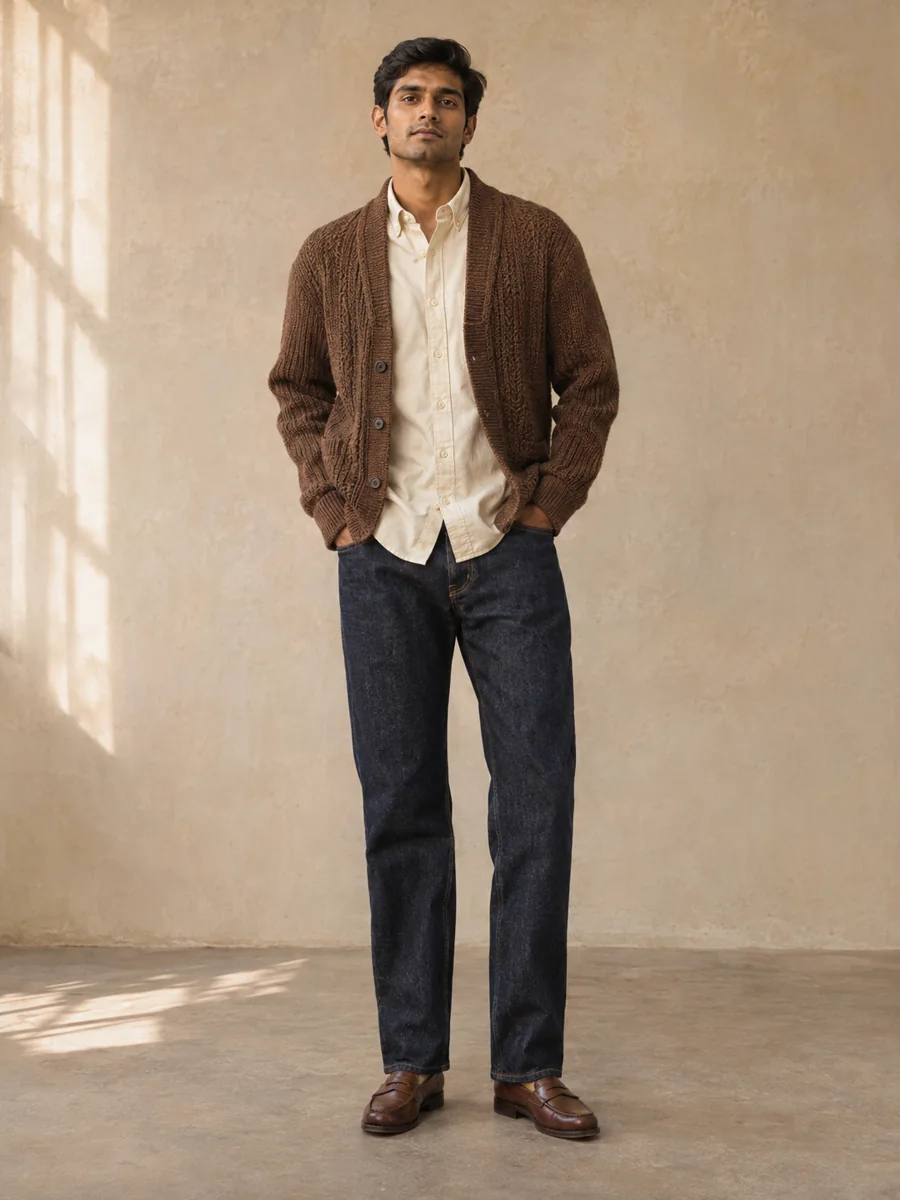
A brown textured cardigan, cream Oxford, dark jeans and loafers makes a useful everyday formula. The dark denim gives the low shoe a clear frame. Keep the jeans long enough to look deliberate but controlled enough that the hem does not pile across the shoe or slip underneath the heel.
The shirt and cardigan introduce structure and texture above without requiring formal trousers. A relaxed tuck can clarify the waistband when the shirt is long. This combination can suit an informal dinner or a casual workplace that permits it, but its appropriateness still depends on the setting. Loafers alone do not determine the dress code.
Brown cardigan with a cream Oxford and dark jeans
Keep pleated trousers clear at the foot
A brown bomber, grey crewneck, charcoal pleated trousers and black loafers creates contrast between a casual jacket and a more composed lower half. Allow the pleats room to fall. If the trousers are broad, judge the amount of break carefully so the shoe does not disappear beneath a dense fold.
A charcoal blazer, ecru rollneck and brown corduroy trousers offers a softer alternative. Here the loafers connect with textured, quieter layers. These examples use different upper shapes, yet both depend on a readable trouser line. If the bottom feels heavy, adjust the length before assuming you need to replace the shoe with a bulkier one.
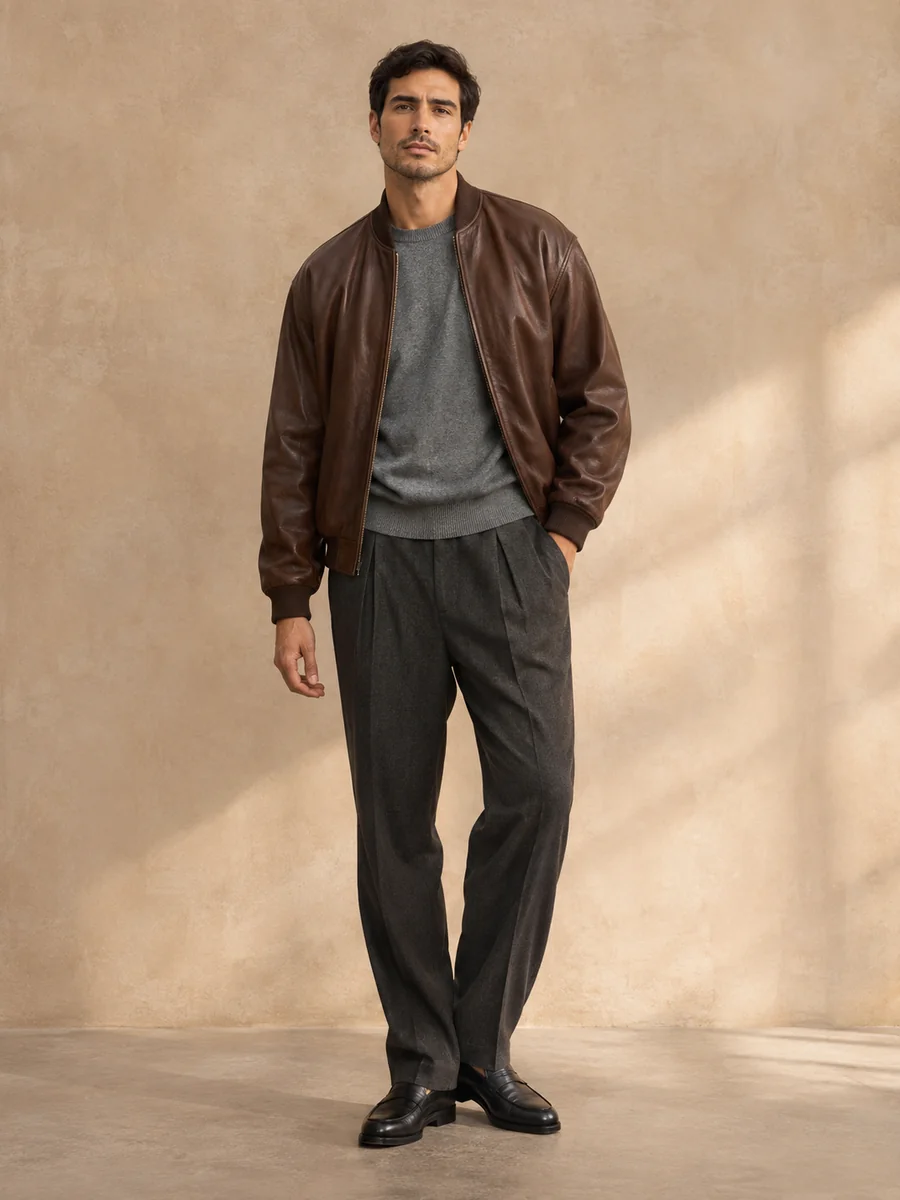
Brown bomber with charcoal pleated trousers
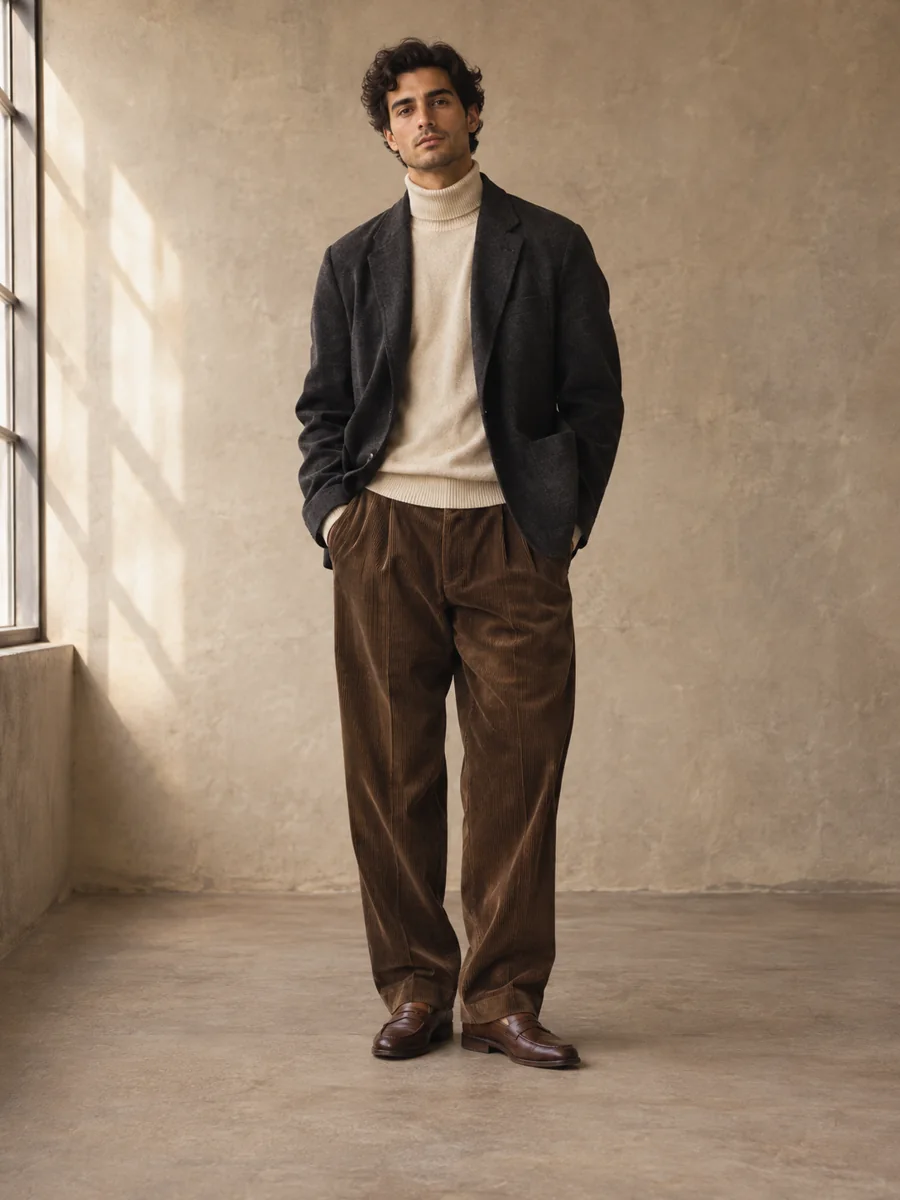
Charcoal blazer with an ecru rollneck and brown cords
Use pale trousers with a darker upper frame
A faded navy work jacket, pale pink Oxford, cream trousers and loafers gives the shoe a relatively light background. That can make its outline more visible than it would be beneath dark denim. Keep the trouser opening clean and assess the whole outfit rather than focusing only on how much ankle appears.
For a softer dressed-up variation, use a chocolate blazer, dusty pink shirt and fluid ecru trousers. The same low shoe idea can finish both, but the drape and formality differ. Choose the actual pair according to the trouser shape and occasion, not because one colour of loafer is supposedly mandatory with cream trousers.
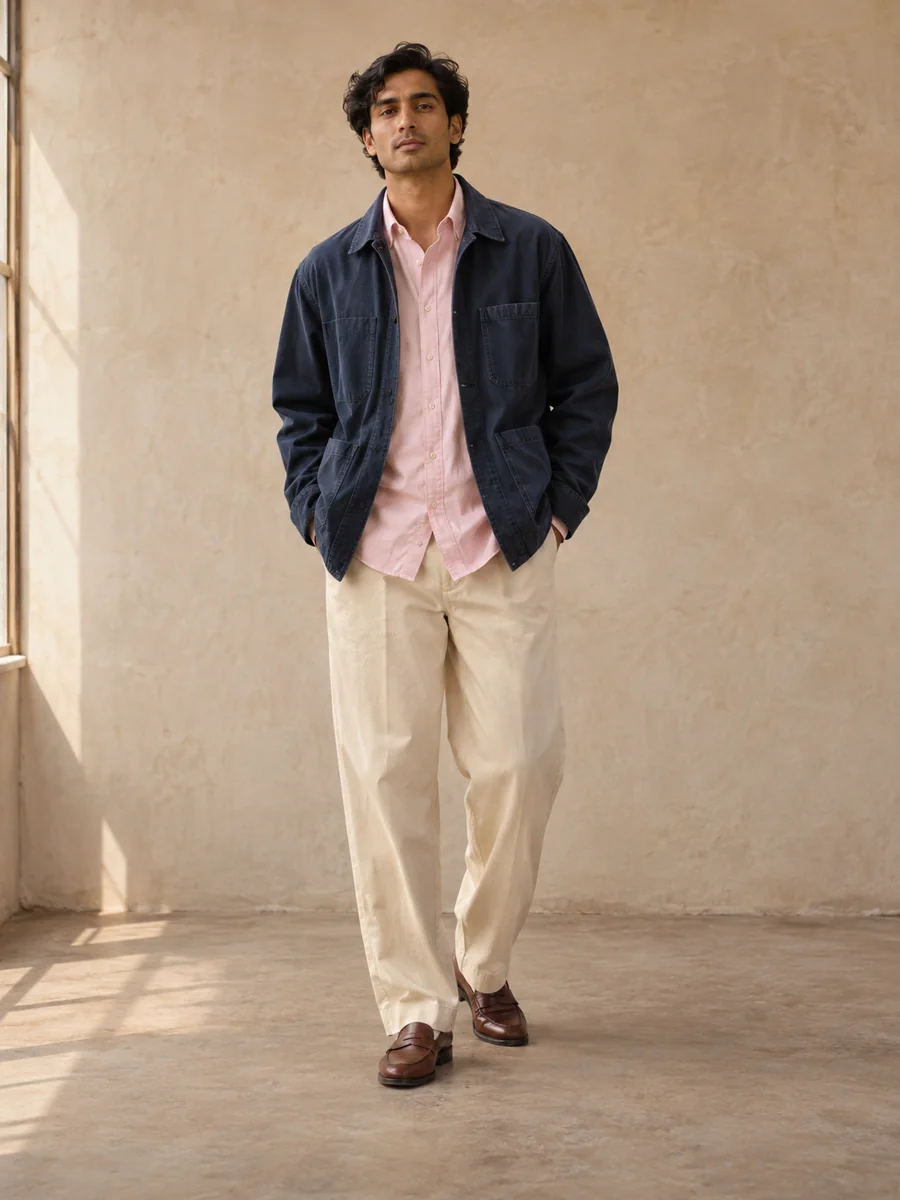
Faded navy work jacket with a pink Oxford
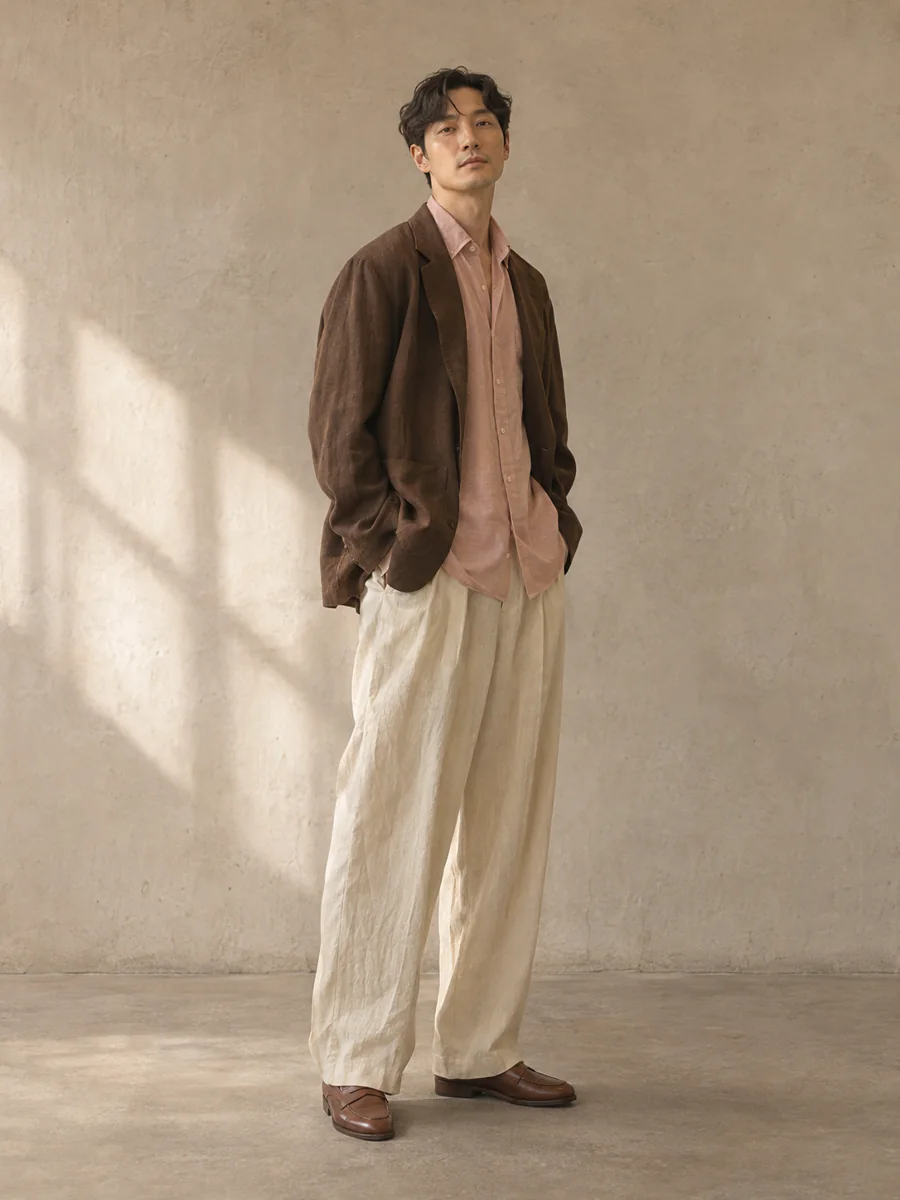
Chocolate blazer with a dusty pink shirt
Make a deliberate choice about socks
Socks can extend the trouser colour, connect to a knit or create a small contrast at the ankle. Begin with a quiet colour if you want attention on the clothing. If a contrasting sock is part of the idea, check how much appears while seated as well as standing; the visible area changes with movement.
There is no need to expose the ankle to make loafers look intentional. Choose what is comfortable for you and compatible with the actual shoe. If you prefer a concealed sock arrangement, assess it with the pair in question rather than assuming every low sock stays put. Keep footwear comfort separate from the appearance of a still photograph.
Choose the setting and surface realistically
A loafer outfit can be casual, composed or relatively dressed up, but it is not automatically appropriate for every invitation. Read the event information. A plain dark loafer with pleated trousers may suit one dinner while another asks for something more formal. When unsure, clarify the host’s expectations rather than trying to solve the ambiguity through accessories.
For outdoor conditions, verify the actual shoe construction and choose footwear suited to the surface and weather. These styling examples make no claim about winter traction or water resistance. Finish by checking hem condition and garment care information. A well-chosen length and a comfortable shoe are more useful than copying a photograph’s ankle exposure exactly.
Explore more outfit ideas or compare the style files.