Let the pockets carry the utility detail
Style a field jacket by treating its pockets and front closure as the main visual feature. Add a quieter knit or tee, then trousers with enough room to sit naturally beneath the jacket. You do not need matching utility details everywhere. Plain denim, pleated trousers and restrained shoes can all make the jacket easier to wear.
Begin by emptying the pockets and checking the outline open and closed. A jacket that looks balanced empty may change when loaded with a phone, keys and wallet. Place daily essentials where they feel comfortable and check the drape again. The garment should suit your routine as well as the outfit photograph.
Choose the layer around the jacket interior
Room for layers depends on the actual armholes, sleeves and lining. Try the intended knit beneath the jacket and bend your elbows, reach forward and sit down. If the upper back strains, using a thinner underlayer can be more helpful than unfastening the front and ignoring the restriction.
The collar deserves its own check. A crew neck leaves a simple space beneath the jacket neckline. A rollneck fills that space and makes the top half visually denser. A hood adds another shape behind the neck. Pick one of these effects intentionally, then adjust the jacket collar so the layers do not compete for the same small area.
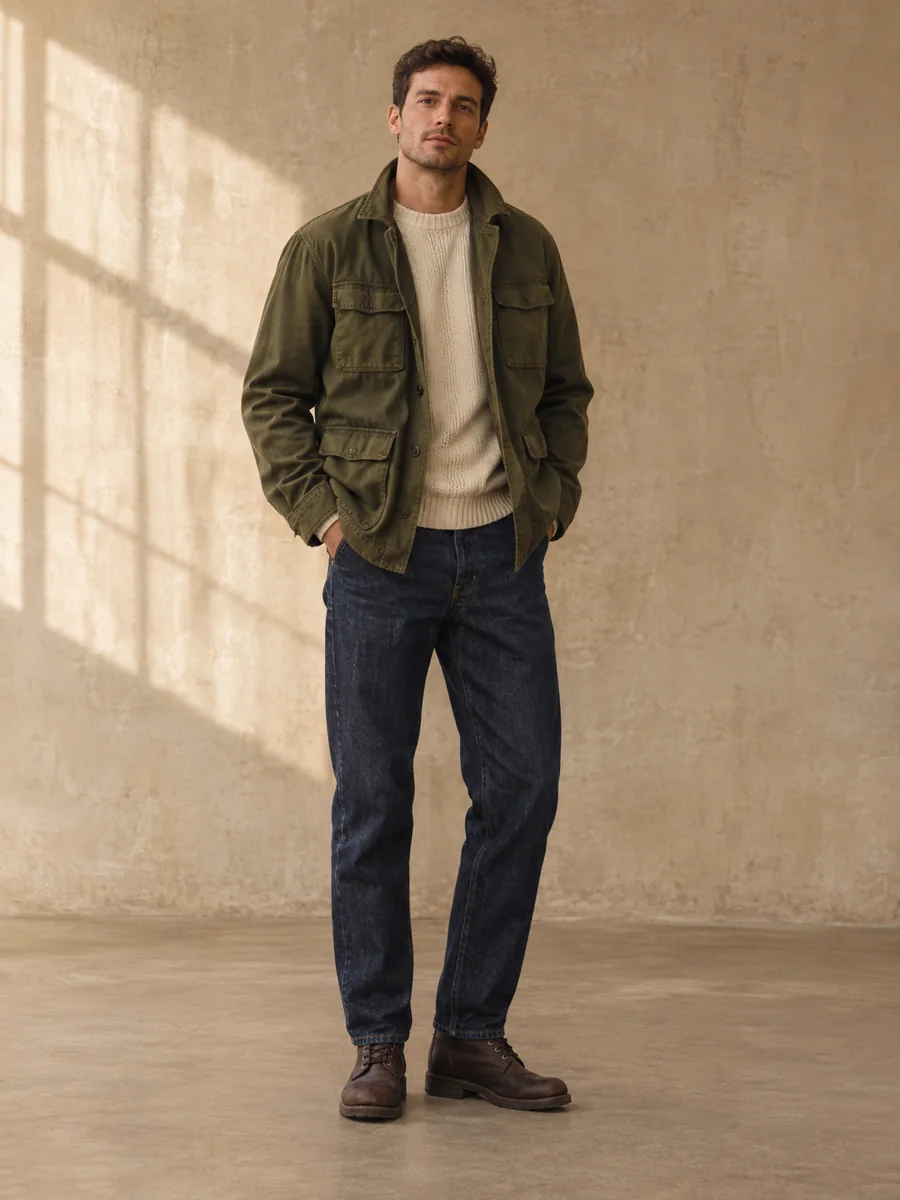
Olive jacket, ecru knit and dark jeans
An olive field jacket with an ecru knit, dark jeans and understated boots is a direct starting point. The pale knit illuminates the centre of the outfit while the dark denim gives the pockets a quiet background. It is useful when you want the jacket to be recognisable without extending the utility theme into every piece.
Look at the jacket hem against the top of the jeans. A longer body can overlap the waistband comfortably, but the knit should not create an accidental third band far below it. If both layers are long, a small tuck or a shorter knit can restore separation without making the jacket artificially cropped.
Olive field jacket with an ecru knit
Black utility jacket and stone cargos
A black field jacket, light grey hoodie and stone cargo pants use contrast to distinguish the layers. The cargos already add pockets at the thigh, so choose restrained footwear and keep added straps or large accessories to a minimum. The lighter trousers prevent the dark jacket from becoming one uninterrupted heavy block.
Judge the cargo pocket in profile, not only from the front. A wide jacket and projecting thigh pockets can create more volume than expected. That can be an intentional silhouette, but leave the hoodie hem controlled and the ankle area uncomplicated. A cleaner boundary at the top or bottom helps the generous middle read clearly.
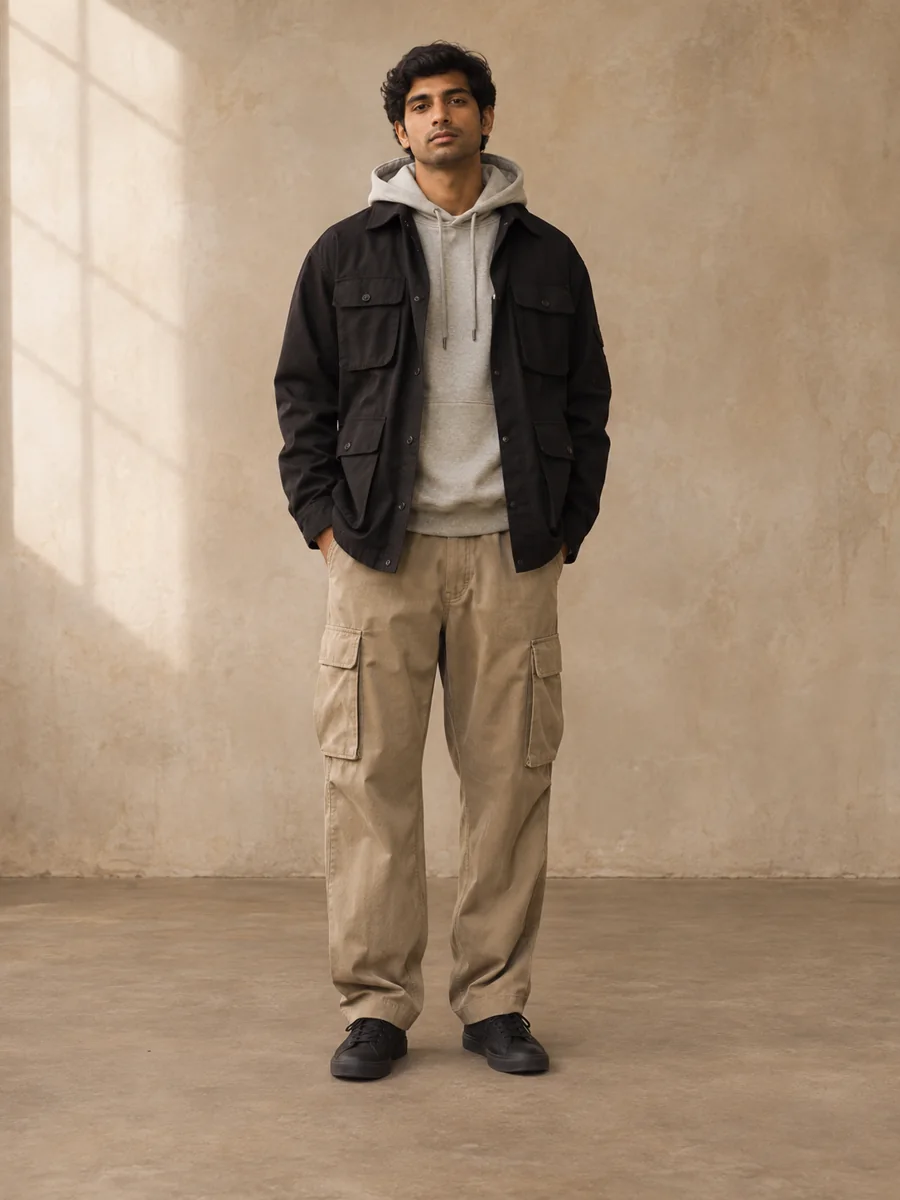
Black field jacket with stone cargos
Brown field jacket with pleated trousers
Pair a brown field jacket with a charcoal rollneck, grey pleated trousers and boots when you want a more composed version. The pleats introduce a different kind of construction from the jacket pockets. Let the trousers hang from a stable waistband rather than tightening them until the pleats pull open.
A darker underlayer gives the brown jacket a clear outline. Keep the boot visible enough to finish the trouser leg, and assess the hem while walking. This combination can fit a relaxed dinner or a casual workplace with an appropriate dress code. The jacket does not automatically make it suitable for an event that specifically requests tailoring.
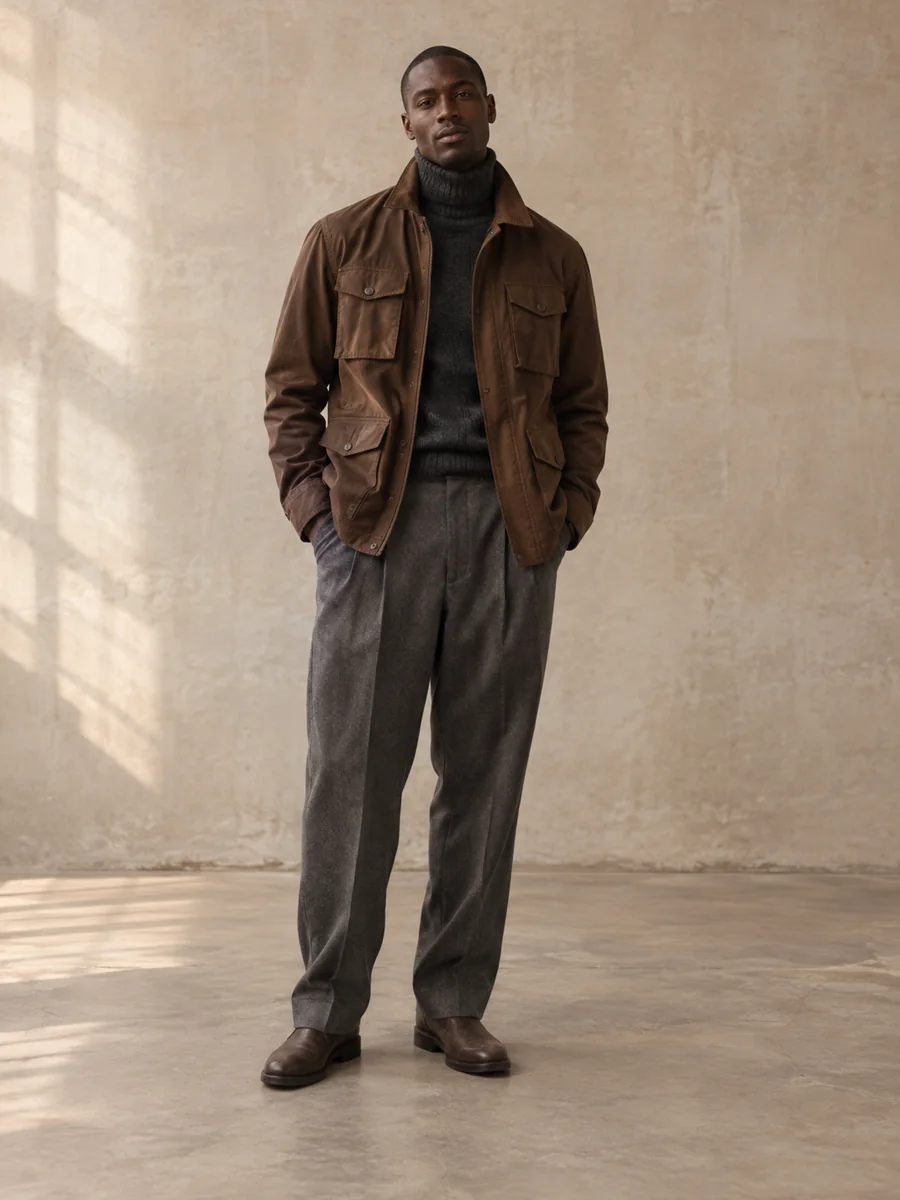
Brown field jacket with a charcoal rollneck
Use a scarf to connect, not multiply, colours
The olive jacket, navy knit, cream-and-navy scarf and beige cargos formula brings the emphasis toward the face. Repeating navy in the scarf connects the accessory to an existing layer. Cream adds a lighter area without requiring a bright colour elsewhere. A simple derby avoids another athletic or utility detail.
Arrange the scarf before fastening the jacket. If it pushes the collar outward or covers the entire upper front, reduce the wrap or try a less bulky scarf. The aim is a visible neckline and enough freedom to turn your head comfortably. The outfit example illustrates arrangement, not a guarantee of protection in a particular temperature.
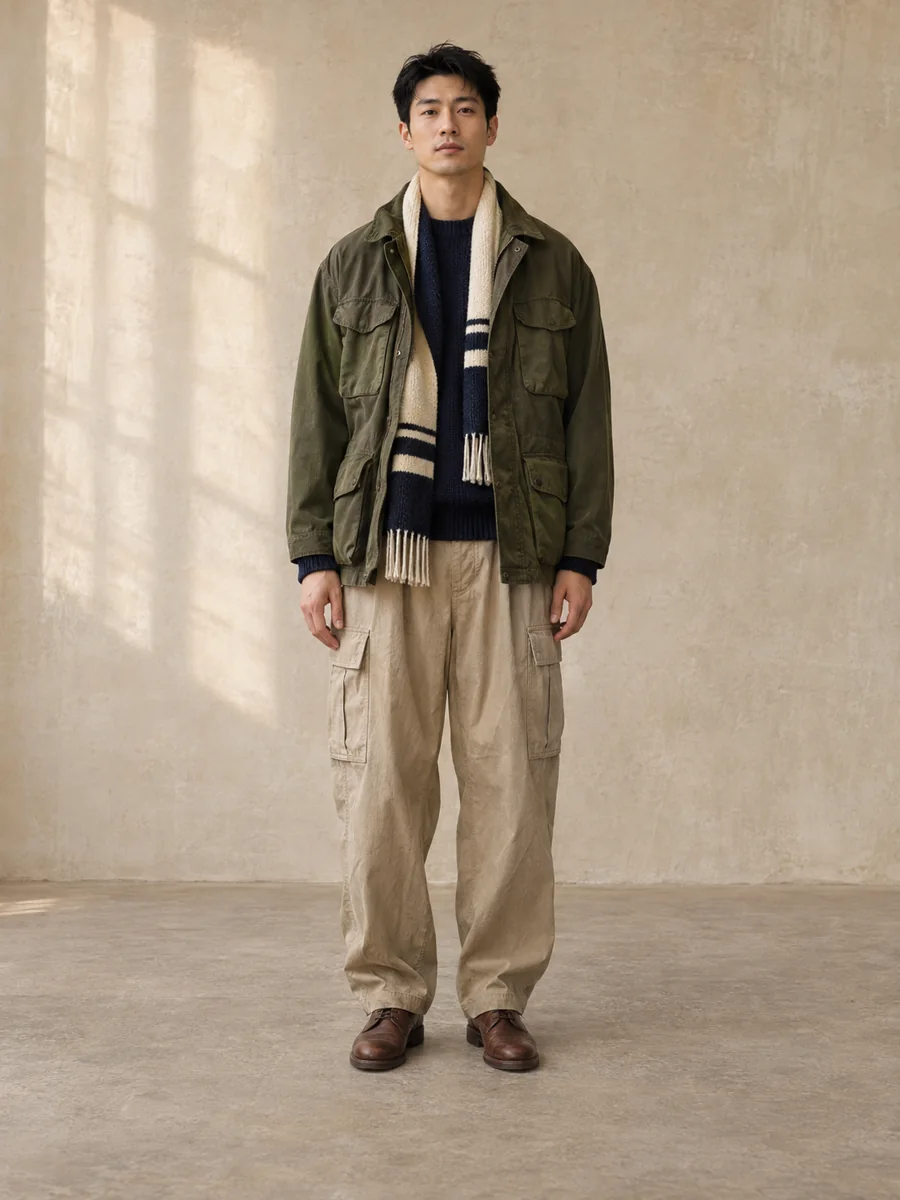
Olive field jacket, scarf and beige cargos
Make the final decision in the real setting
There is no need to make a field jacket look pristine or deliberately distressed. Choose the condition and finish you enjoy, then maintain the garment according to its own care information. Do not assume every utility-looking jacket has the same fabric treatment, lining or weather performance.
Before leaving, check how the jacket works with your bag and whether the pockets remain accessible. For a more restrained result, remove a cap, patterned scarf or extra accessory before changing the core outfit. For a more casual result, switch the pleated trousers to denim. Keeping the jacket constant makes those changes easier to judge and repeat.
Explore more outfit ideas or compare the style files.