Treat the jacket as the frame
Build a chore jacket outfit by choosing a clear trouser shape first, then a simple layer beneath the jacket. Its patch pockets and straight body already provide detail. You can use that practical outline with jeans, canvas trousers or a cleaner shirt without turning every other piece into workwear.
Start with the jacket open and the sleeves down. Look at where its hem meets the hips and whether the pockets sit flat. A longer jacket usually benefits from a visible, uncomplicated trouser leg. A shorter one can handle wider denim. These are useful starting points, rather than rules about who can wear a particular cut.
Compare fabric and cut before colour
A firm canvas jacket holds an outline of its own; a softer denim version follows the layers beneath it more closely. Neither fabric tells you exactly how a particular garment will behave. Weight, lining, seams and cut all matter. Examine the actual jacket rather than expecting the fabric name to solve the outfit.
Try crossing your arms and reaching forward over the intended underlayer. If the shoulder seams pull or the pockets flare when buttoned, reduce the bulk beneath or try a roomier cut. Going up in size may also add unwanted length, so compare the whole garment instead of assuming a larger size fixes every issue.
| Starting point | Visual effect | Useful partner |
|---|---|---|
| Firm canvas, straight body | Defined, practical outline | Plain tee and straight denim |
| Soft denim, relaxed body | Less rigid layering | Henley and fatigue pants |
| Roomier coat length | More coverage through the hip | Quiet base and visible trouser line |
Formula one: sand canvas and dark indigo
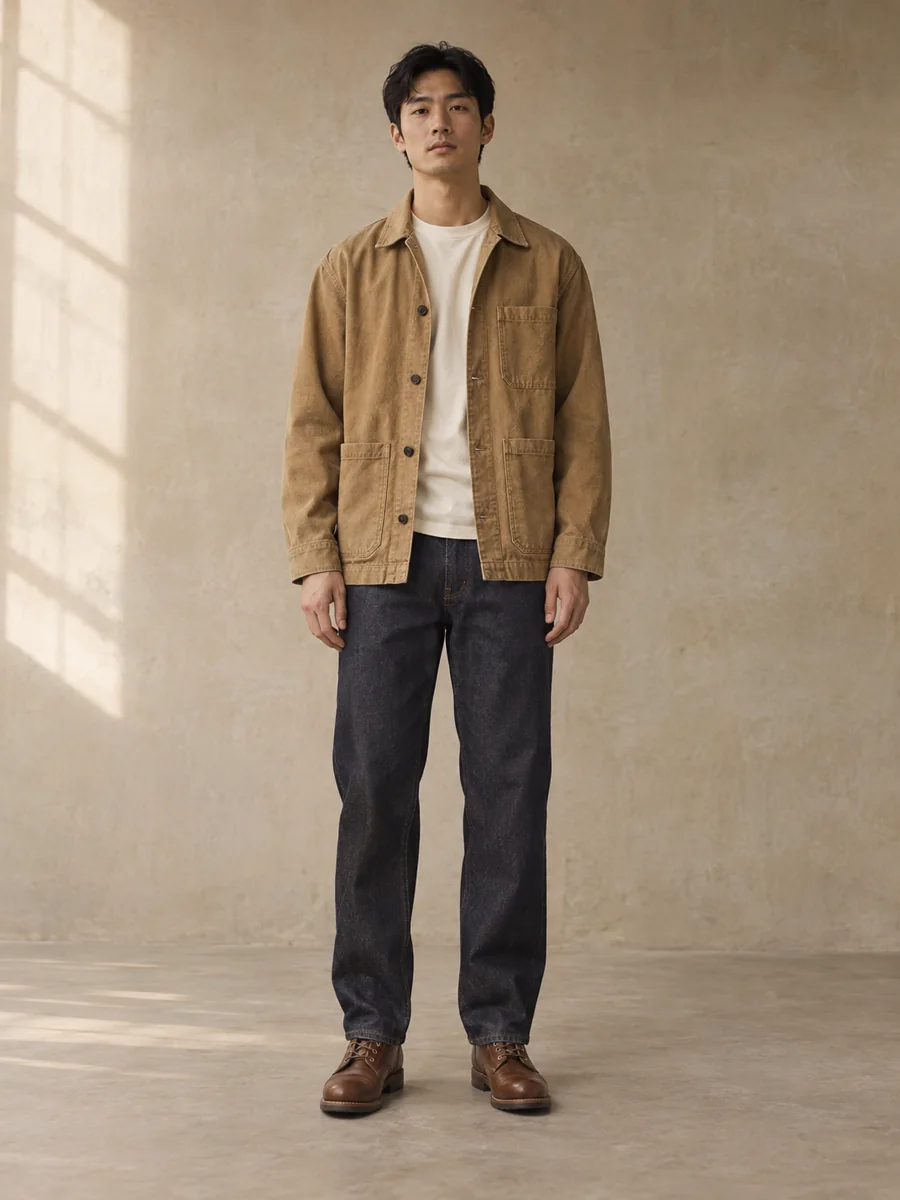
A sand chore jacket over an ecru tee, straight indigo jeans and brown boots gives each piece a distinct role. The jacket supplies the lighter block, the jeans provide a clean vertical line, and the boots finish it with a visible shape. Keep the tee print-free if you want the pocket construction to remain central.
Check the meeting point between denim and boot. A modest fold can be deliberate; a thick stack of fabric can make the otherwise tidy outfit feel congested. Choose the hem with those boots on. You can repeat a brown tone in a belt, but matching every leather-looking surface precisely is unnecessary.
Tan chore jacket with straight indigo jeans
Formula two: a hoodie and cream carpenter pants
A navy work jacket, grey hoodie and cream carpenter pants create a more relaxed version. The lighter trousers separate the lower half from the dark jacket, while the hoodie softens its straight outline. Retro sneakers keep the combination casual without adding another large pocket or strap.
Give the hood somewhere to sit. Pull it clear of the jacket collar, then check the back view so the collar does not bunch beneath it. If the chest looks crowded, choose a thinner hoodie or a plain sweatshirt. The useful contrast is between the work jacket and a relaxed layer, not the largest amount of fabric you can fit inside.
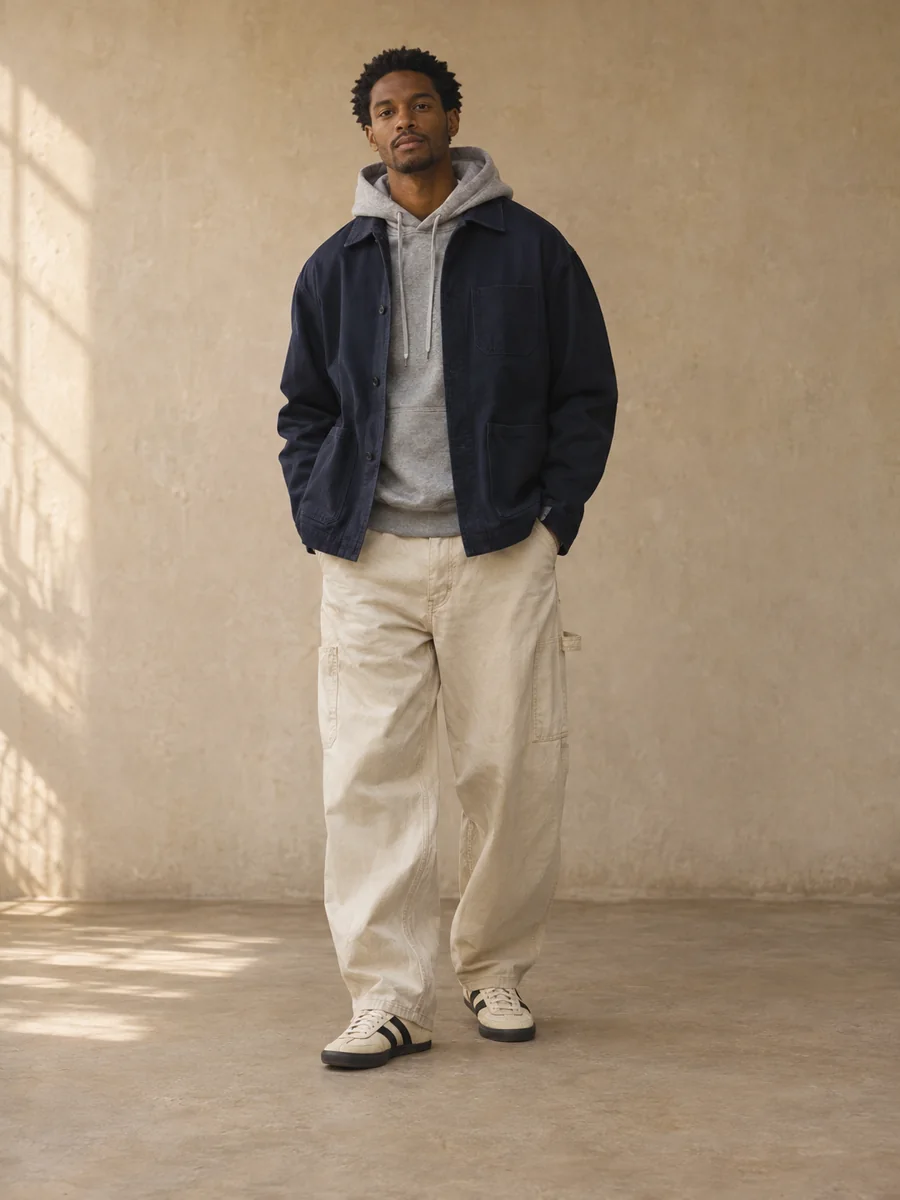
Navy chore coat with cream carpenter pants
Formula three: use an Oxford to sharpen the base
A brown canvas jacket over a pale blue Oxford, wide denim and low shoes sits between casual workwear and a more considered everyday outfit. The shirt collar adds a cleaner boundary near the face. Keep it relaxed enough that it does not appear trapped by the jacket neckline.
Decide whether the shirt works untucked by looking at its actual tail. A long curved hem may interrupt a short jacket; a tuck or a straighter shirt hem can simplify that relationship. Wide denim still belongs here, provided the waistband sits securely and the hem does not collect heavily over the shoes. The shirt adds clarity without requiring narrow trousers.
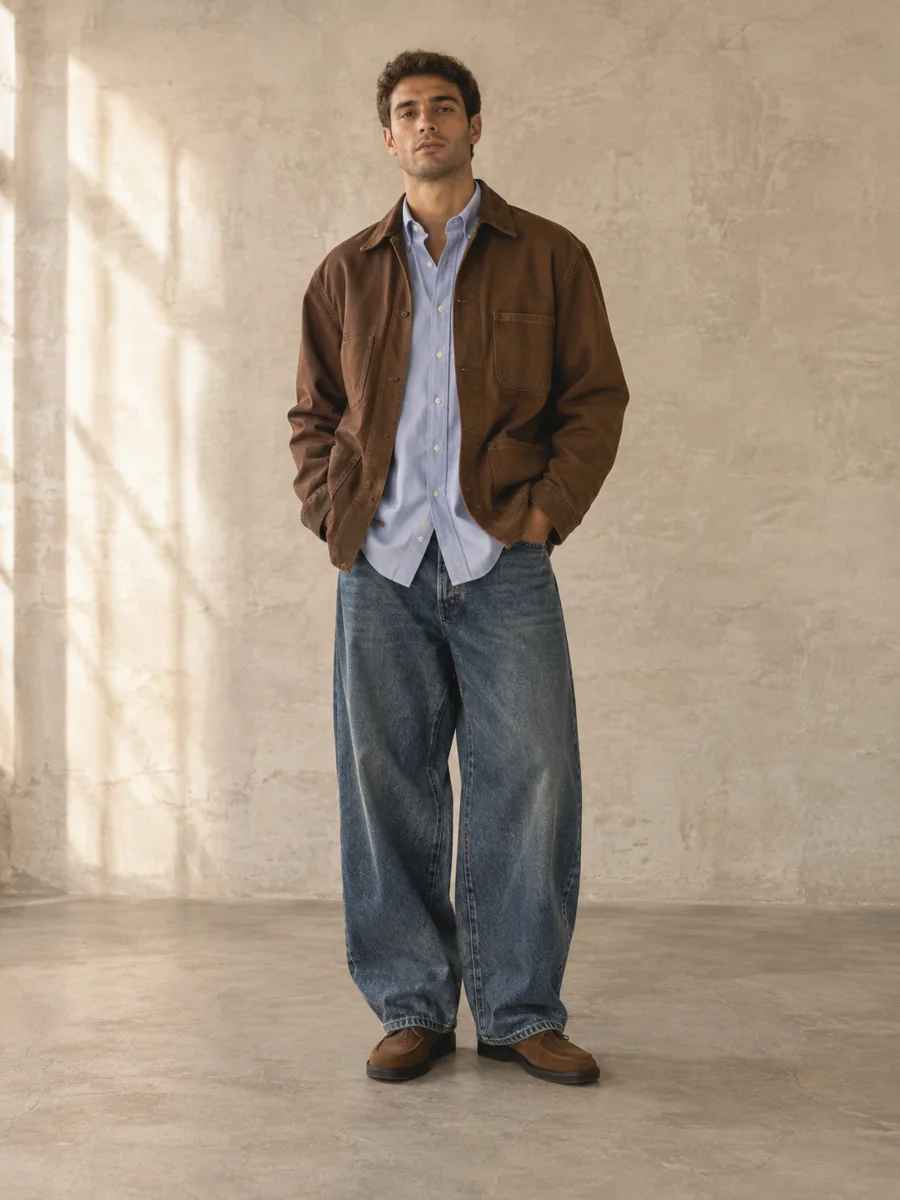
Brown canvas jacket with a blue Oxford
Formula four: denim above olive fatigue pants
A denim chore jacket, cream henley and olive fatigue pants separate the upper and lower halves through colour and texture. Fatigue pockets can add a utilitarian reference without the side volume of a cargo pocket. Brown derbies give the combination a different finish from another sneaker outfit.
Keep the henley placket simple and check its length beneath the jacket. Leaving both layers partly open can work, but multiple loose edges may become distracting. Button whichever layer makes the front cleaner. This is a good formula when you want workwear detail spread across the outfit rather than concentrated in one oversized jacket.
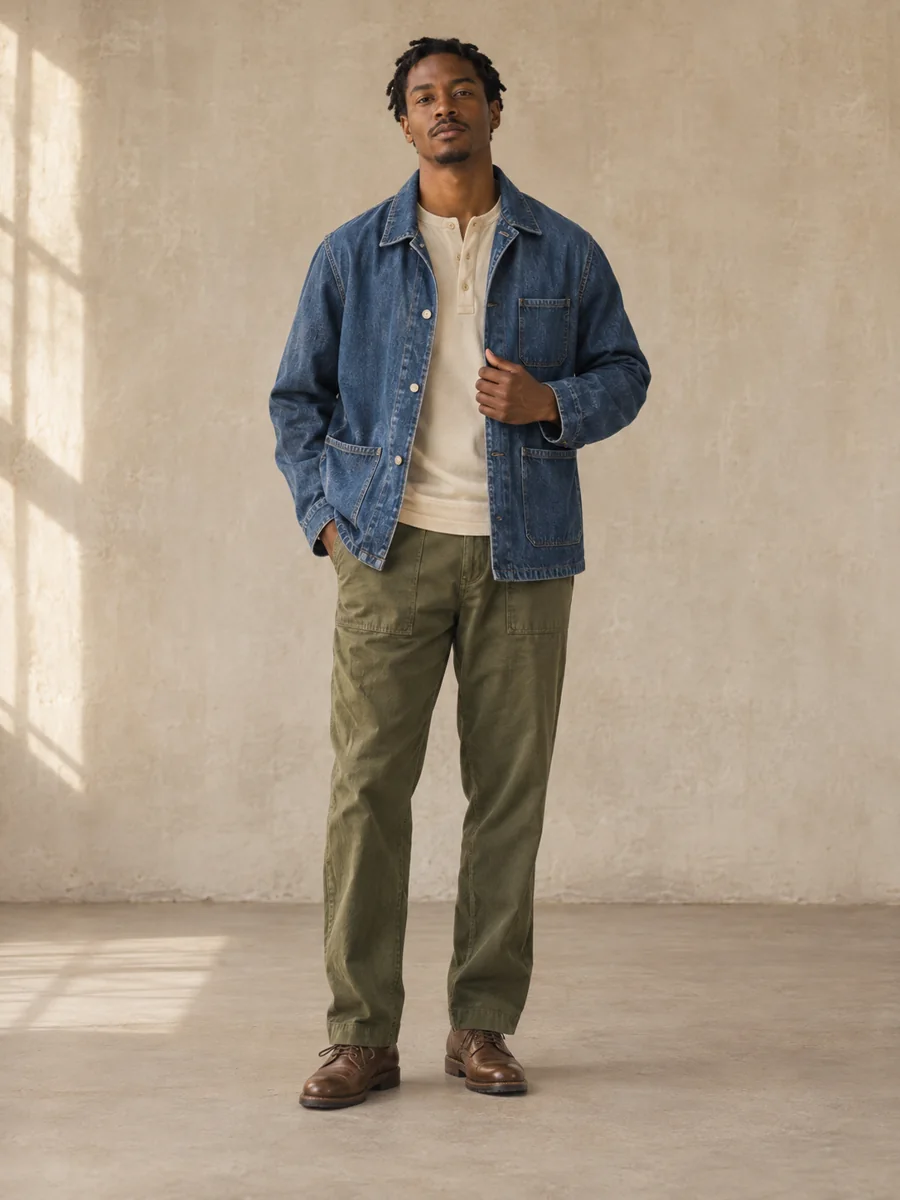
Denim chore jacket with olive fatigue pants
Remove one detail before buying another
Put the final outfit on with your usual bag. Its strap may cross a chest pocket or pull the jacket out of shape, which is easy to miss in a mirror without it. Check seated comfort, sleeve movement and access to pockets you actually use. Decorative storage is not useful if you cannot reach it comfortably.
If the outfit feels busy, simplify the tee, shoes or accessories before replacing the jacket. If it feels flat, open the front to reveal a contrasting layer. A chore jacket can support many looks, but repeating its pockets, heavy texture and muted colour in every piece usually makes the result harder to read.
Explore more outfit ideas or compare the style files.