Start with conditions, then choose the shape
Layering streetwear for winter starts with the conditions you will be in, how long you will be outside and how active you will be. A winter looking outfit is not evidence that it provides enough protection. The compositions here illustrate proportions; the warmth and weather resistance of actual garments need separate checking.
Build a base that is comfortable against the skin, a middle layer that fits beneath the outer layer and an outer layer suitable for your conditions. Leave enough movement through the shoulders, elbows and hips. A bulky silhouette should still let you sit, walk and reach normally.
Give the outer layer enough room
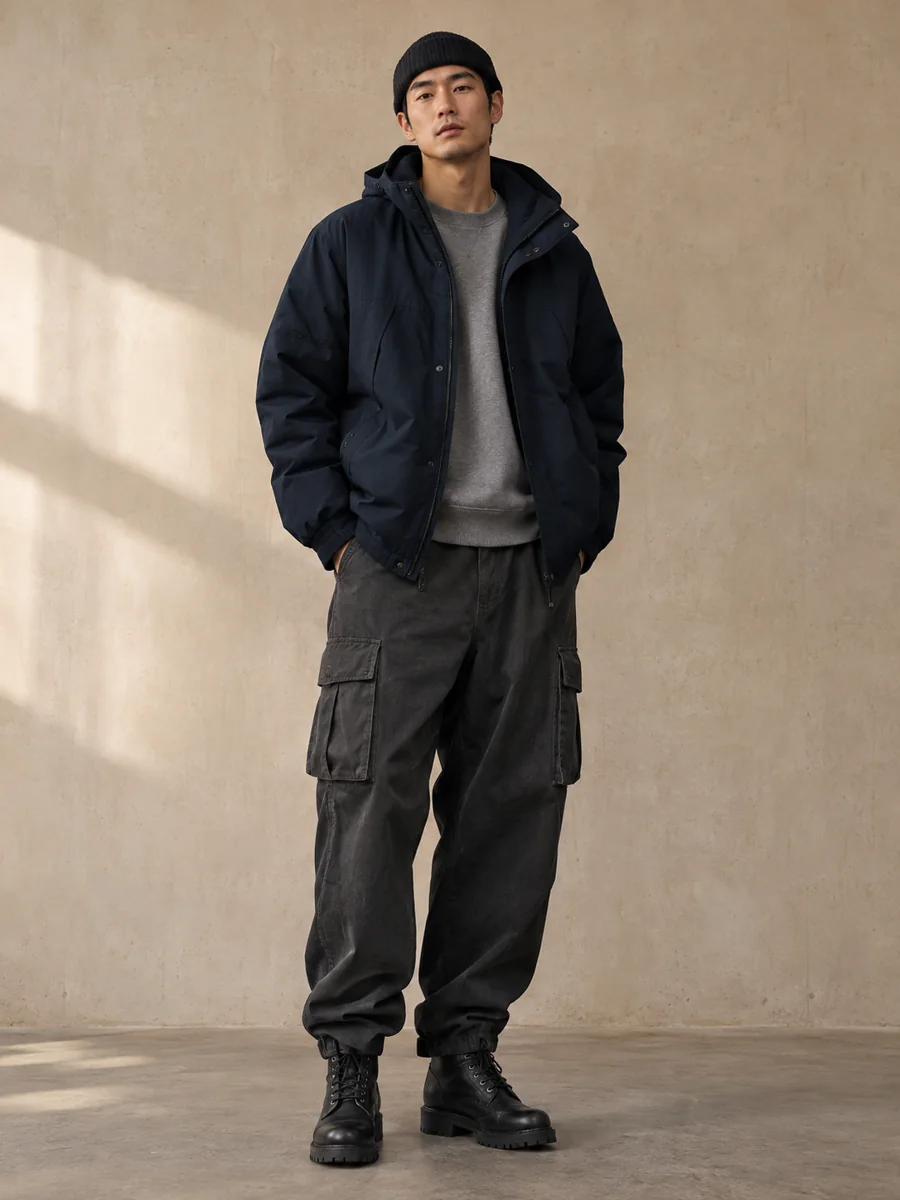
An insulated jacket and cargos can create a balanced casual silhouette when the jacket accommodates the layers underneath. Try it fully closed with the combination you plan to wear. If the sleeves pull or the middle layer bunches into the armpits, the proportions need revisiting.
Keep the trouser opening and footwear visible rather than allowing extra fabric to collect on a wet surface. A roomy cargo can still have a practical hem length. Choose the actual shoes or boots for footing, moisture and comfort; a photograph cannot confirm these qualities.
Insulated jacket, cargos and boots
Balance a puffer with wide jeans
A puffer and wide jeans put volume above and below the waist. You can keep that shape readable by limiting extra length in the layers beneath the jacket. A hoodie that extends far below a shorter puffer creates another horizontal boundary, which may be a deliberate choice or an unwanted distraction.
Try a base layer that stays inside the jeans and a middle layer that finishes close to the jacket hem. Compare the outfit zipped and open. If you expect to wear the jacket closed most of the day, judge that version first rather than styling only for the open-jacket photograph.
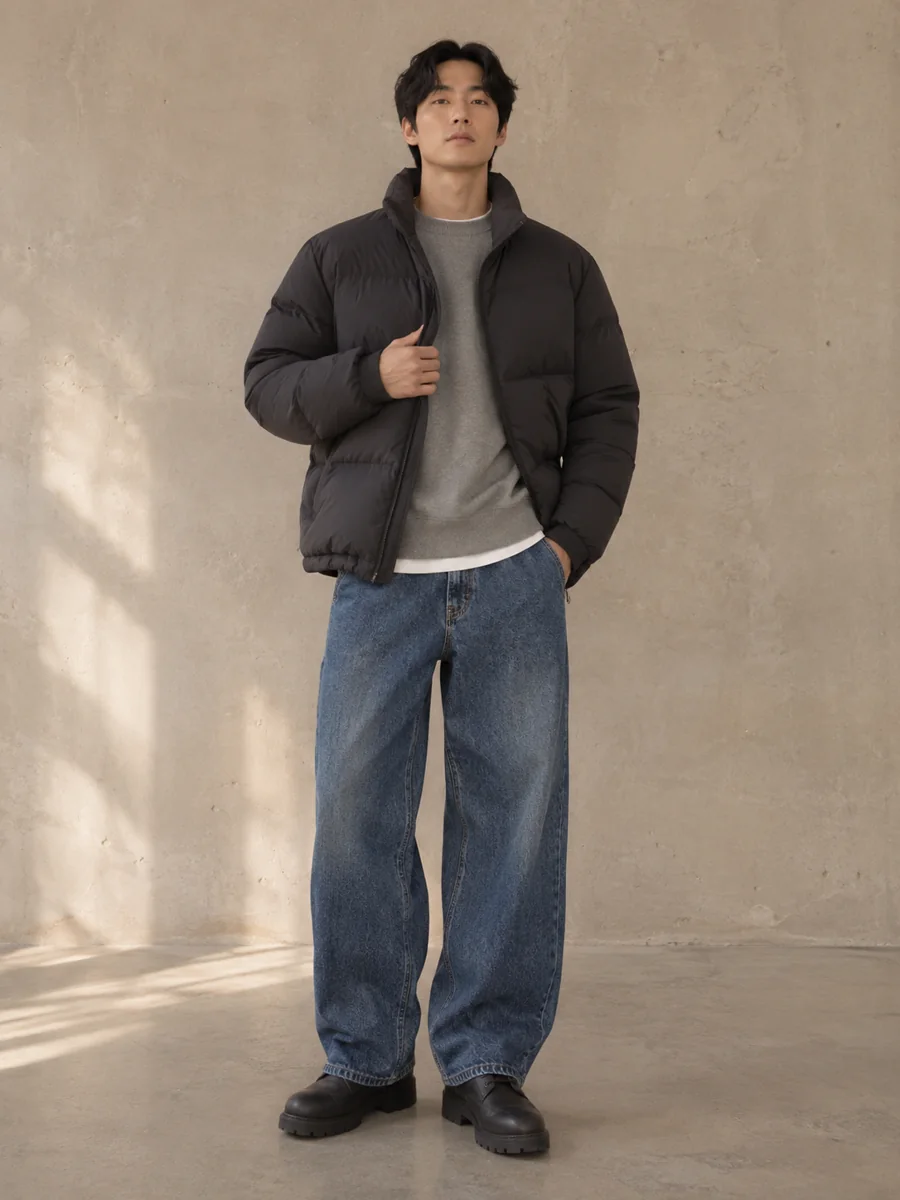
Puffer, wide denim and boots
Use texture without adding unnecessary bulk
A work jacket, dark denim and boots can provide a more structured layered direction. Whether a particular jacket is suitable outdoors depends on its construction and your conditions, so treat the formula as a shape to adapt. A thin textured layer may create visual interest without several thick garments stacked underneath.
Use colour to separate adjacent layers. Brown over a dark top and black denim creates a clear break while keeping the palette limited. If every layer is dark, vary the surface: matte canvas, smoother knit and faded denim can remain visually distinct.
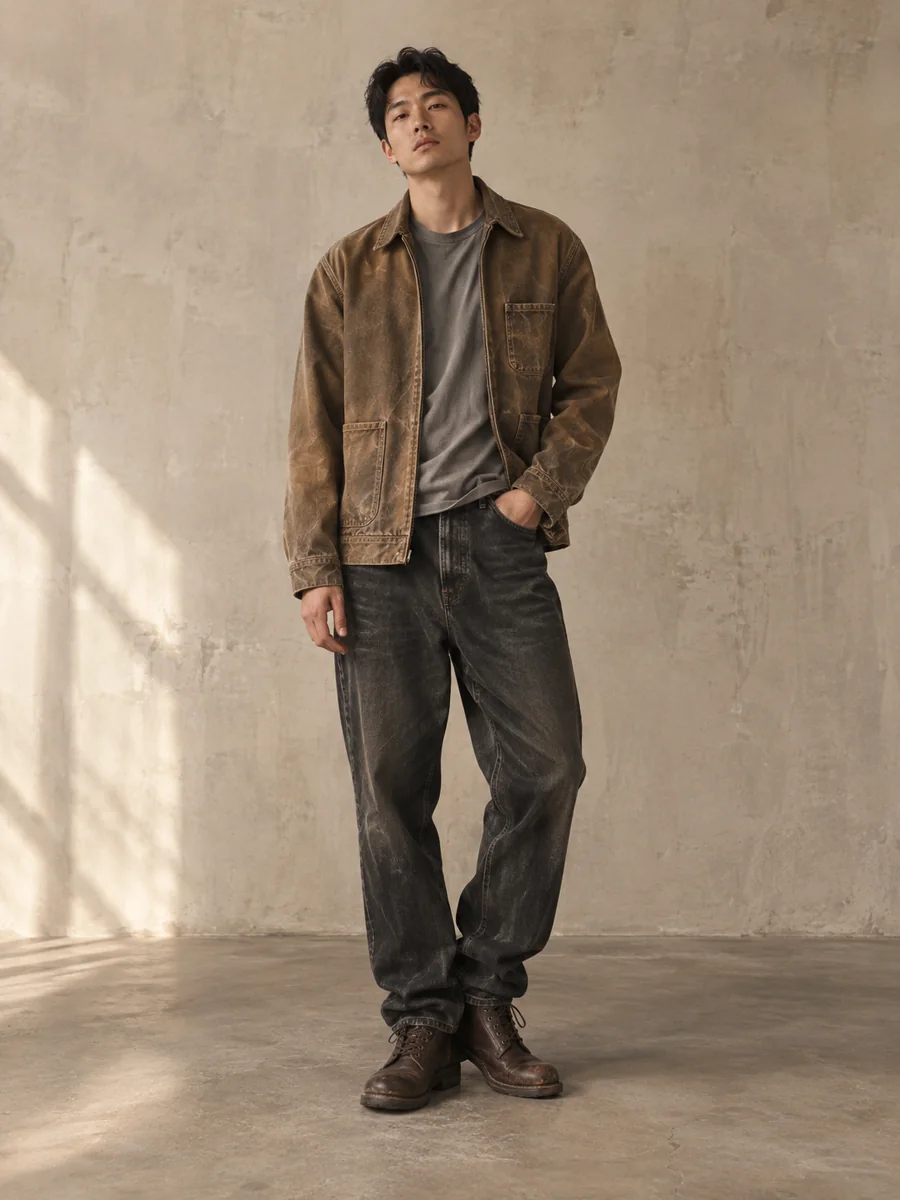
Brown work jacket, black denim
Plan for the transition indoors
An outfit should still make sense after the outer layer comes off. A grey sweatshirt with dark denim is a useful standalone base. Keep its proportions comfortable and complete before adding a winter jacket, scarf or bag. That makes the composition easier to use across a normal day.
Moisture and changing activity matter too. Follow the care and use instructions for your actual garments and adjust layers when you become too warm. A neat colour palette is helpful, but it cannot compensate for clothing that feels damp, restrictive or unsuitable for the weather.
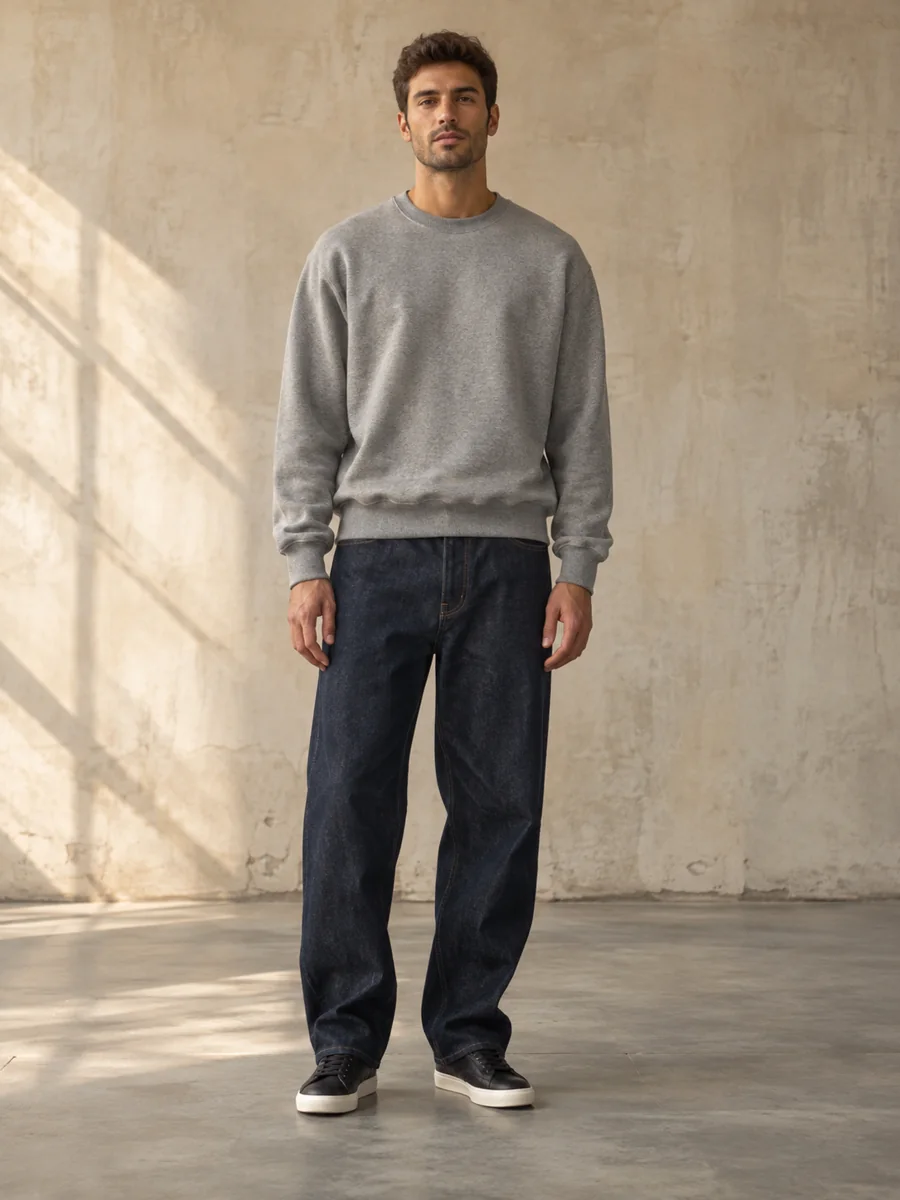
Grey crewneck, dark denim
Plan what happens when the outer layer comes off
An outfit should remain usable when you arrive indoors and remove the coat or insulated jacket. Build the base first, checking its neckline, trouser waist and sleeve arrangement without the outer layer. Then add the pieces needed for the journey. If the indoor space is warm, a combination that relies on keeping every layer on may be awkward even when its outdoor silhouette looks good.
The long navy coat, grey knit and broad charcoal trousers example uses a quiet base beneath one clear outer line. It belongs to a different style direction, but the layering method transfers: the clothes underneath still form a complete outfit. You can apply that idea to a hoodie and cargo base without copying the coat itself. Consider where the removed layers and bag will go, particularly if you commute or spend time in several places. Choose garment performance for the real conditions separately, and try the full combination seated as well as standing so the practical transitions are part of the plan.
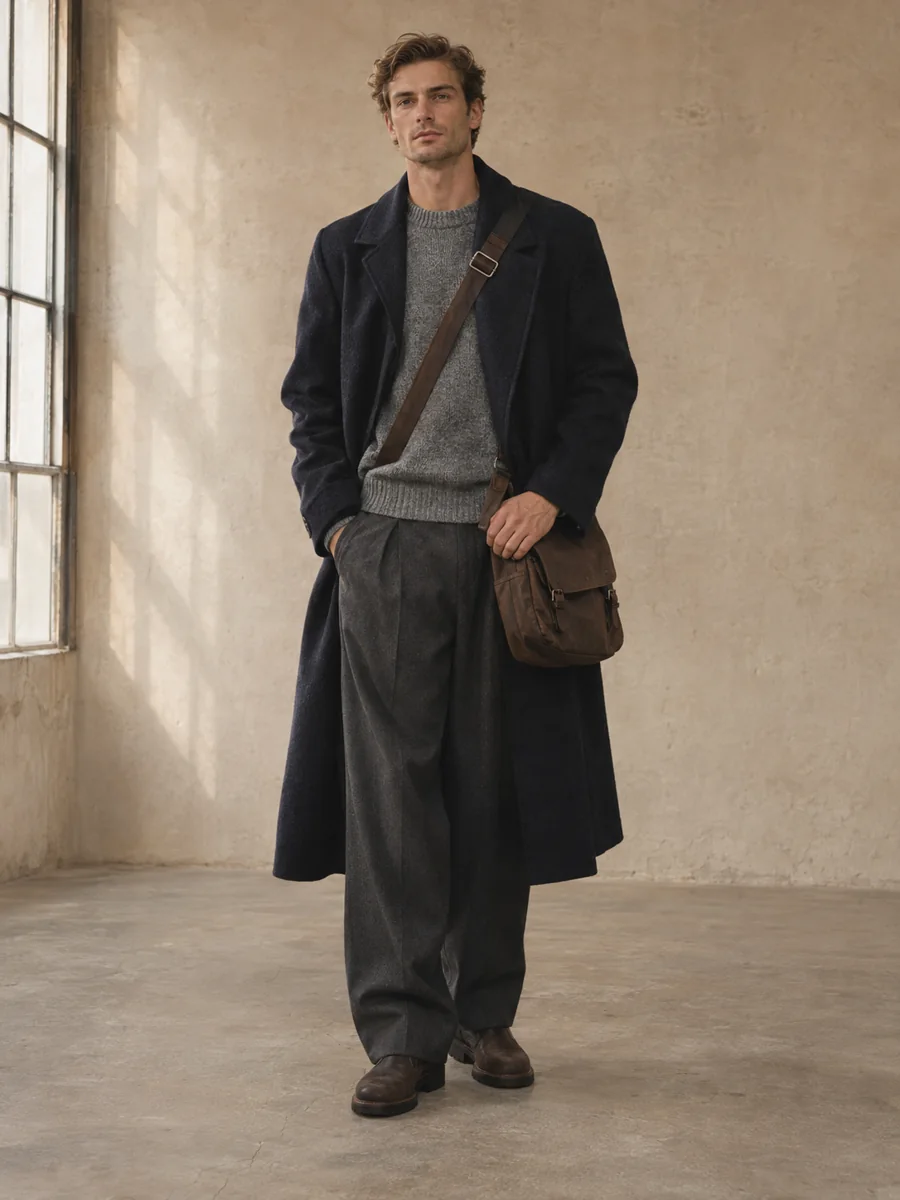
Long navy coat with wide charcoal trousers
Check the details while moving
Put the full combination on with the bag you usually carry. Raise your arms, sit down, bend at the knees and walk a little. Check whether the bag pushes the jacket open, whether cuffs interfere with gloves and whether trouser hems catch under the heel. Those details affect how usable the outfit feels.
If you need to change one thing, start with the point of restriction or exposure. You can preserve the overall style while choosing a different outer layer or a more practical trouser length. The strongest winter rotation is built around your real conditions, with the visual details added to a functional foundation.
- Check the forecast and the time you expect to spend outside.
- Assess the actual garments, not only their appearance.
- Keep room for movement and the layers you will really wear.
- Recheck hems when changing from sneakers to boots.
Explore more outfit ideas or compare the style files.