Plan outfits before making a list of clothes
A small streetwear wardrobe works when most pieces have more than one useful partner. Start with the outfits you actually need in a normal week, then build a short list of clothes that can repeat across them. The aim is an adaptable rotation, not an exact number everyone must own.
Look at your routine first. Walking, commuting, standing at work and going out casually may call for different shoes or outer layers. Keep the combinations realistic for those days. You can carry the same colour palette and proportions across them without wearing the identical outfit every time.
Choose two lower halves that behave differently
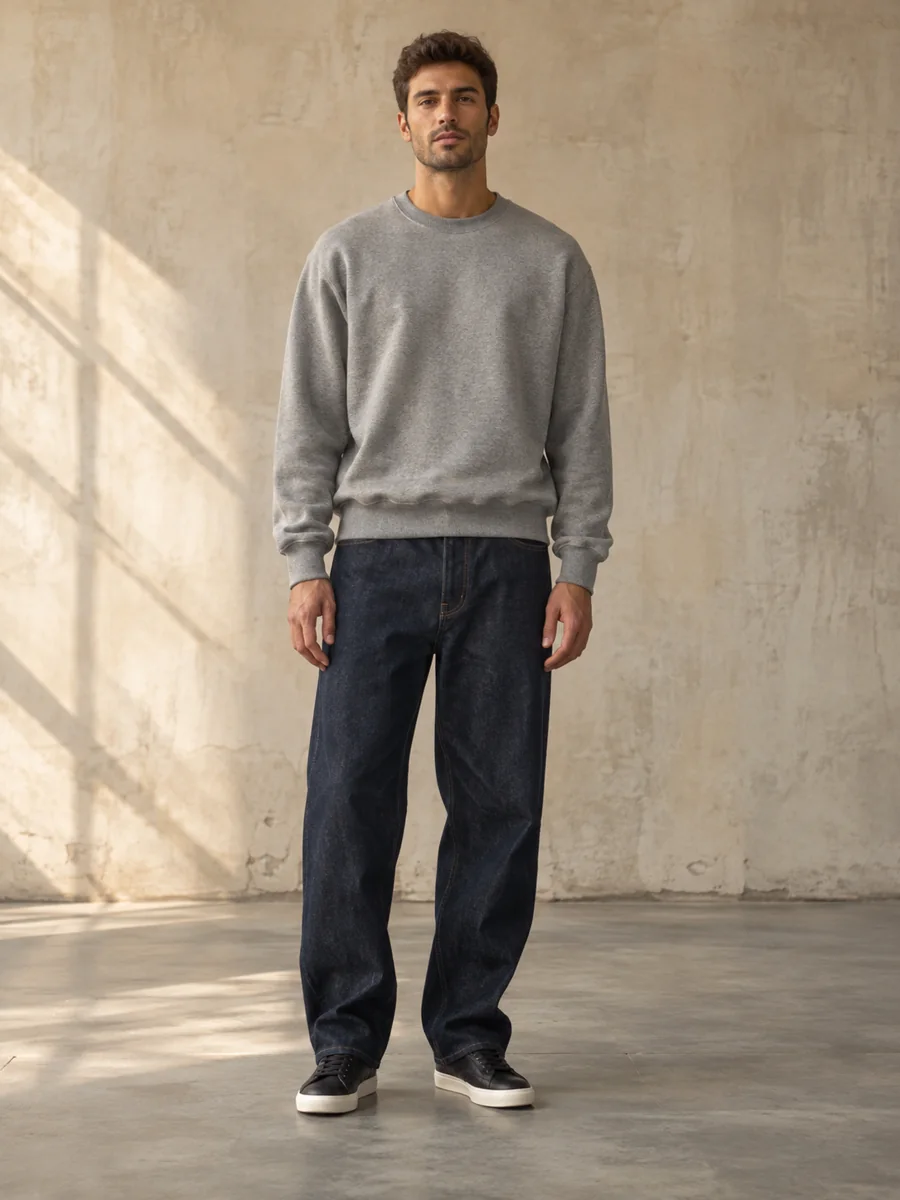
One pair of dark relaxed jeans and one pair of cargos create a practical contrast in texture and shape. Pick colours that connect with tops you already own. Dark denim can feel restrained, while beige or olive cargos make the same hoodie look more visibly casual.
Try each lower half with your existing footwear before adding more tops. Check that the hems suit the shoes you actually use. If one trouser only works with a shoe you do not own, account for that extra commitment before treating it as a simple addition.
Grey crewneck, dark denim
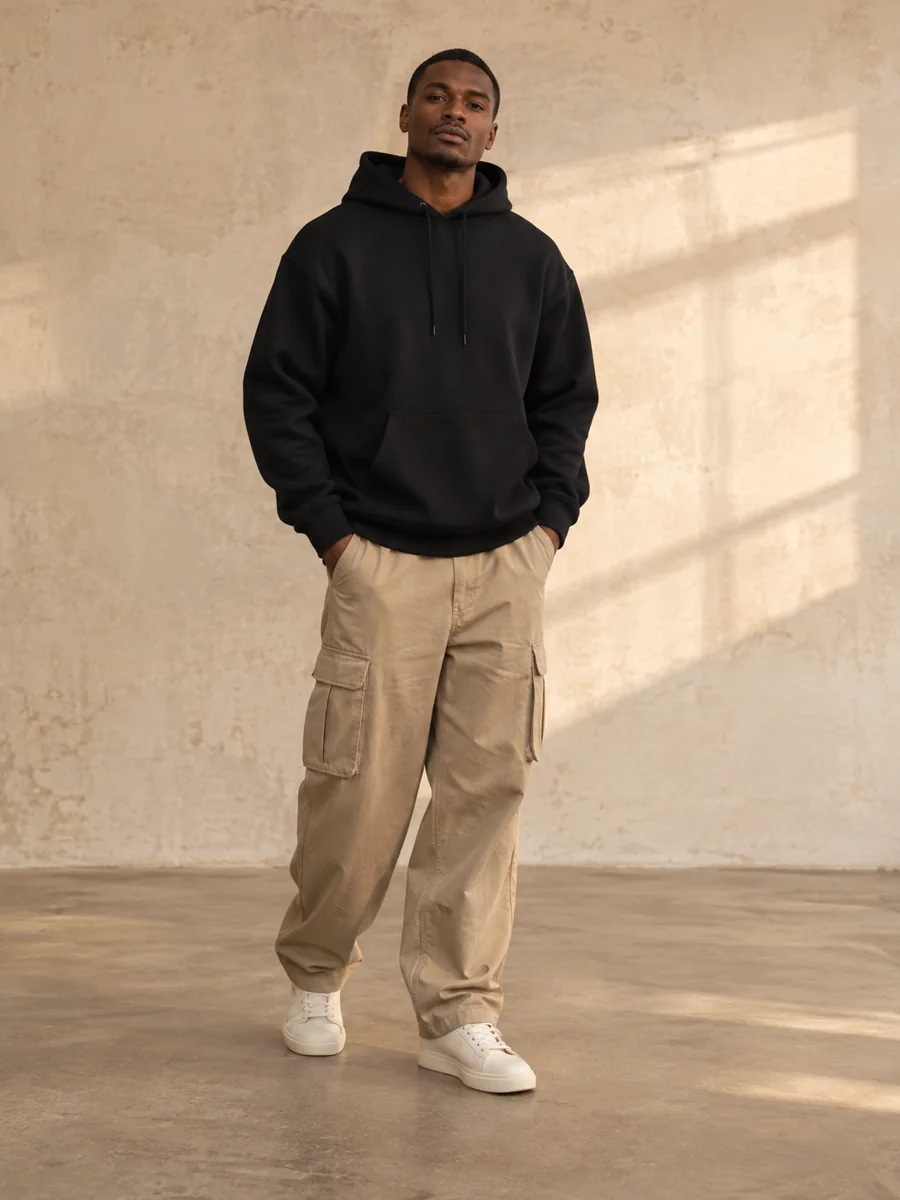
Black hoodie, beige cargos
Use a few tops with compatible proportions
A plain tee, a sweatshirt and a hoodie can cover several combinations when their lengths work with both lower halves. They do not all need to be black or white. Grey, navy and muted earth tones can sit together if you keep the number of competing colours manageable.
Choose a silhouette you enjoy repeating. A boxy tee with wide trousers is different from a long fitted tee with tapered pants. There is no need to own both directions immediately. A small wardrobe becomes easier to combine when the shapes have a relationship rather than being collected independently.
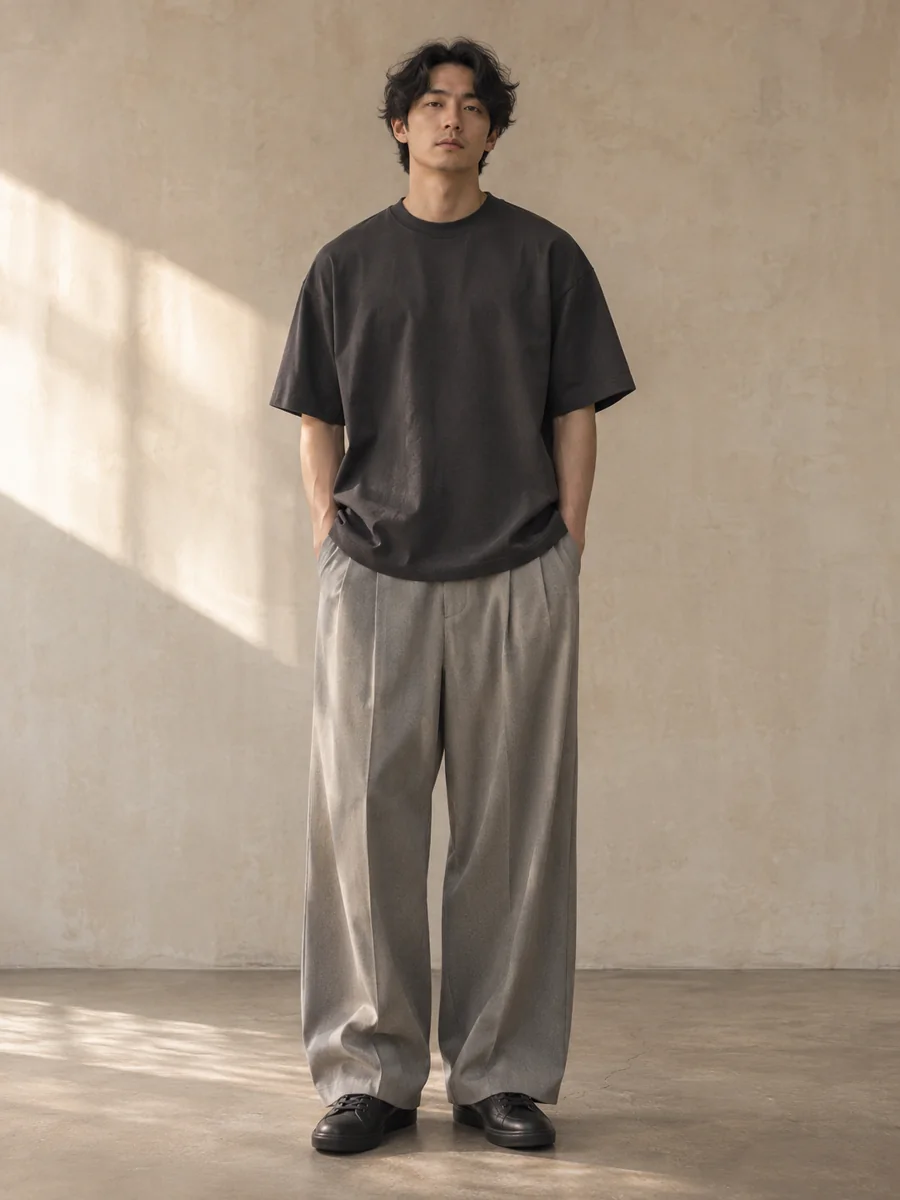
Boxy tee, wide-leg trousers
Add a layer that works open and closed
An overshirt can make a tee and trousers feel more complete, but it should also work as a garment in its own right. Try it buttoned and open with your intended base layers. Notice whether its chest and sleeves have room without becoming too bulky under another jacket.
A navy overshirt with cream pants shows a clear colour relationship. The same overshirt could sit over a plain tee with dark denim for a quieter version. Keep the rest of the outfit simple while you establish which combinations feel natural.
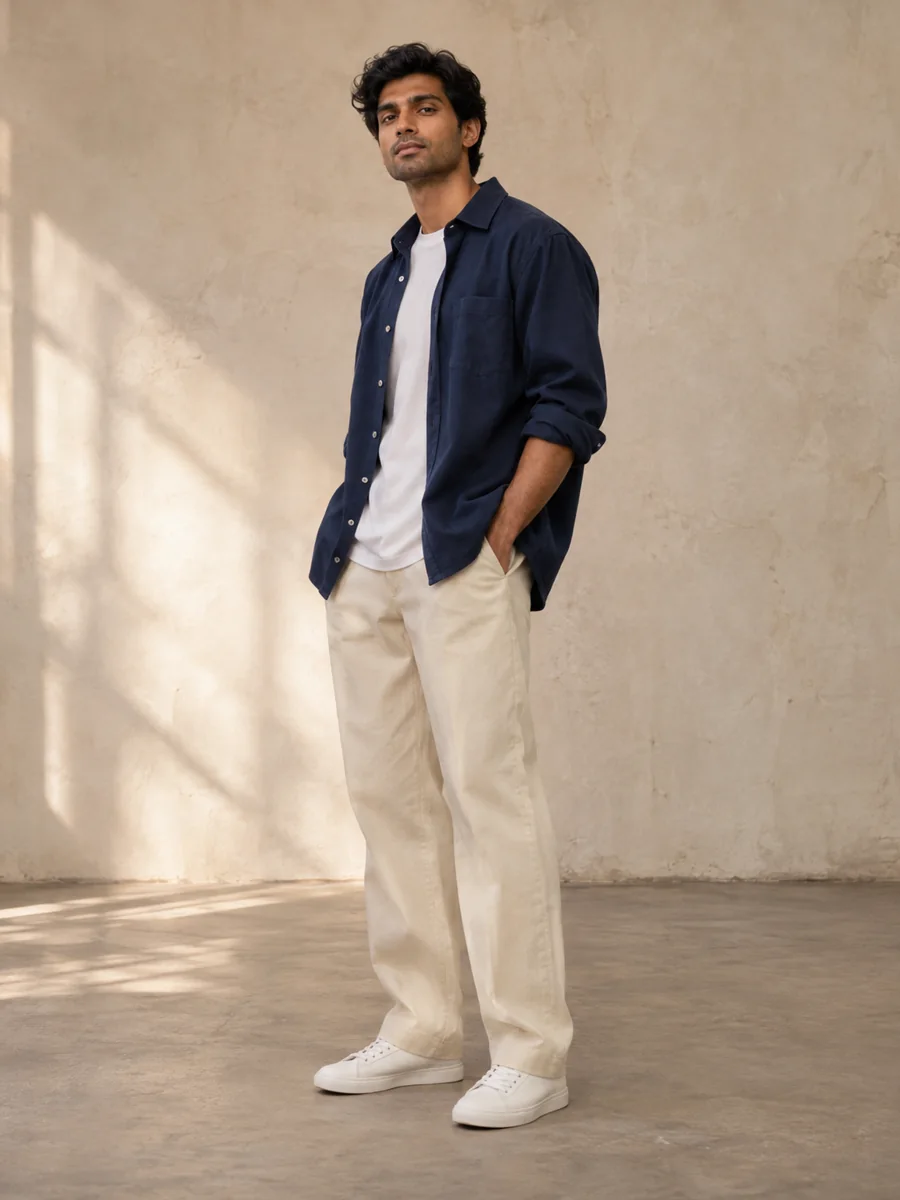
Navy overshirt, cream trousers
Make a small combination matrix
Write your pieces along the top of a page and the outfits down the side. For example, compare the same white tee with olive cargos, dark denim and your chosen overshirt. Mark which combinations work with shoes you already own. A blank space is a useful clue, not an instruction to buy immediately.
Photograph the combinations you like in similar lighting. Check the whole outline before focusing on accessories. You may discover that one shorter tee unlocks several outfits, while another statement jacket adds only one. That is useful information when deciding what to find next.
- Dark jeans + grey sweatshirt + everyday sneakers.
- Beige cargos + black hoodie + the same sneakers.
- Olive cargos + white tee + an optional overshirt.
- Cream trousers + navy overshirt + a plain base layer.
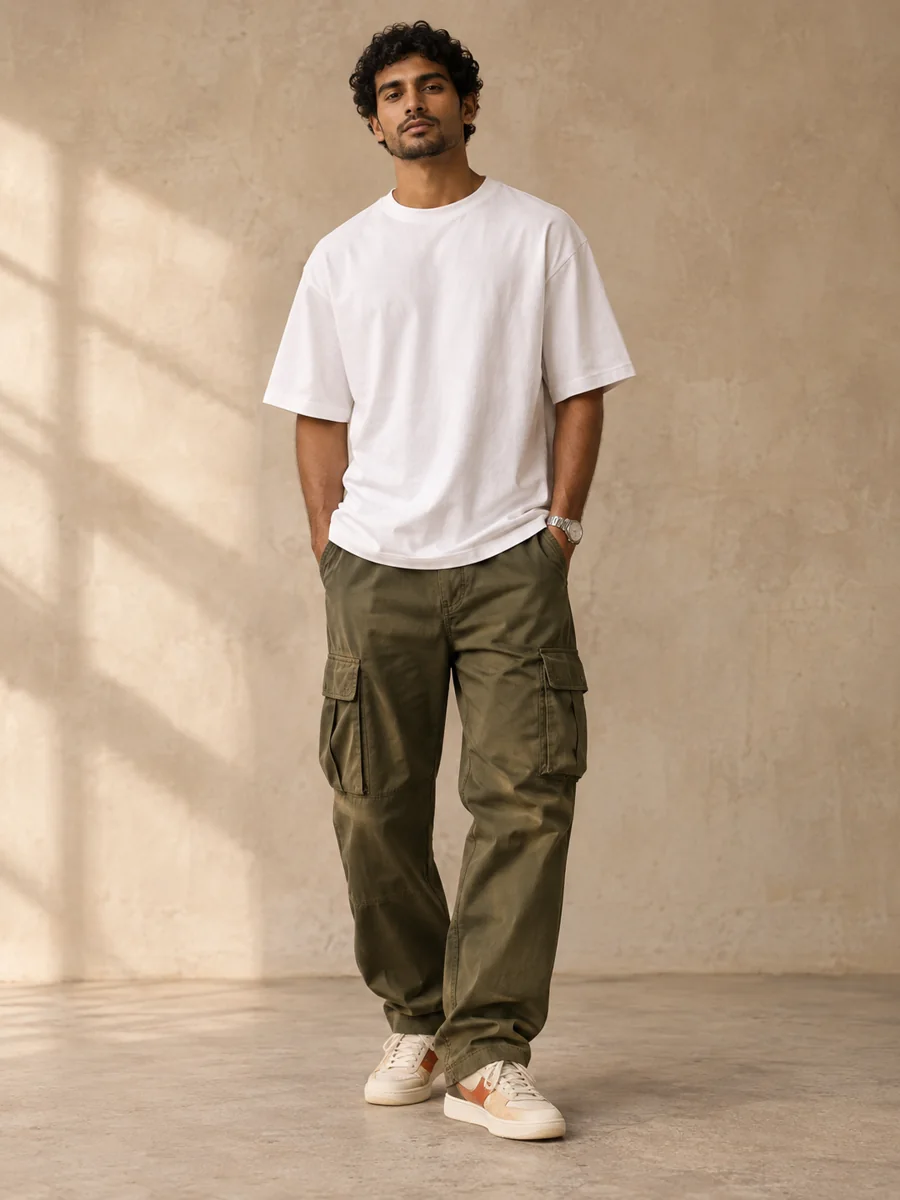
White tee, olive cargos, one accent
Add one patterned top only after the plain bases work
A burgundy-and-navy rugby with cream trousers gives a small wardrobe another upper shape without requiring a different style of lower half. The collar and stripes create variation that another plain sweatshirt may not. Before adding it, try the trousers you already own with a quiet tee or knit so you know the base is comfortable and useful independently.
Then ask whether the patterned top works with more than one existing trouser and at least one outer layer. The answer does not need to be every piece in the wardrobe. A specific role can be worthwhile, but it should be clear. If a bold stripe only works in one tightly coordinated outfit that you rarely wear, a quieter version may offer more use. Keep the same logic for bags and shoes: choose additions that solve a repeated need, not just items that look attractive alone. A small wardrobe improves when you can explain where a piece belongs and reach for it without rebuilding the entire combination around it.
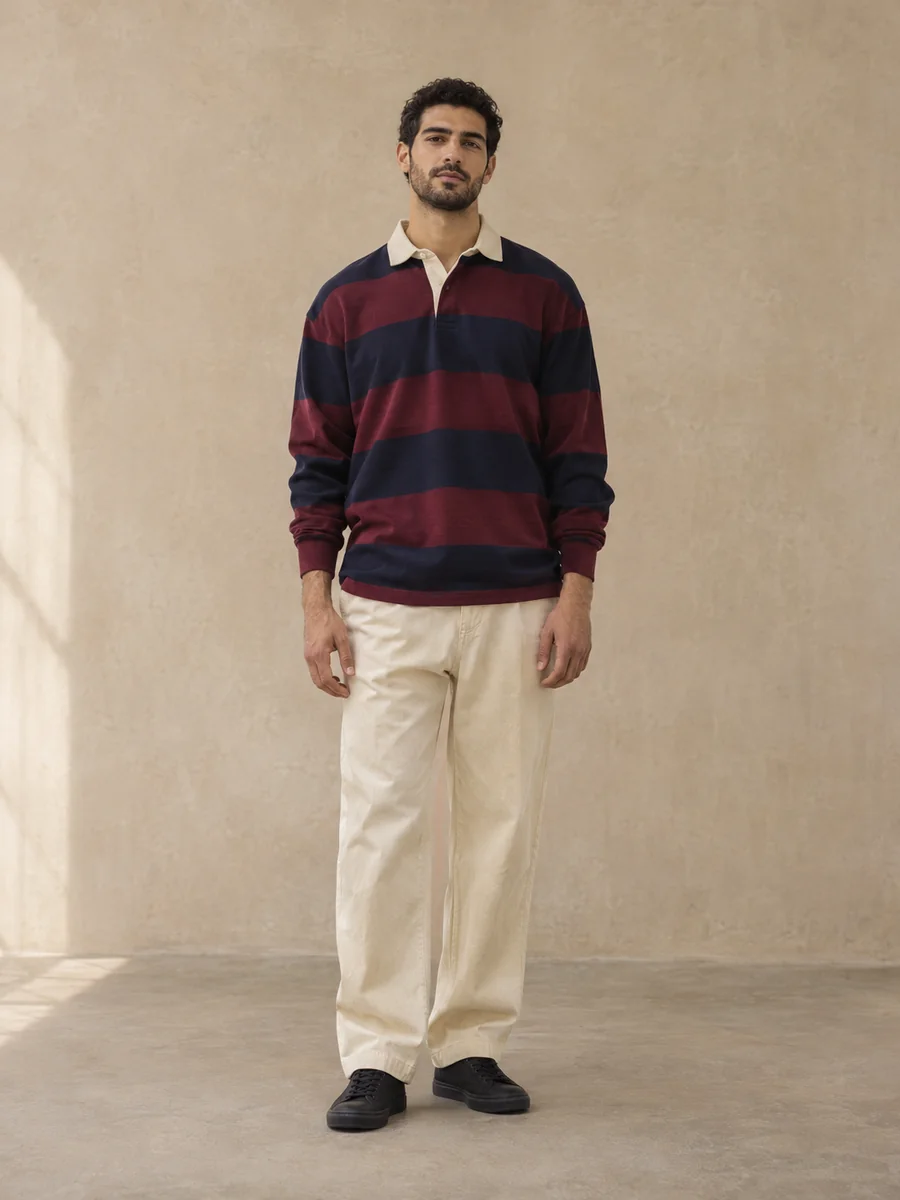
Burgundy and navy rugby with cream trousers
Let wear and maintenance guide additions
Keep a short note of what you repeatedly reach for and what stays unused. A piece that needs constant adjustment, difficult care or another purchase may deserve less space in the rotation. Follow each garment’s care instructions and make room for washing rather than assuming every item can be worn continuously.
Add one item when you can name the combinations it improves. Replace or repair a worn essential when that helps the wardrobe function. A useful small collection grows through repeated outfits and practical needs, with enough variation to keep getting dressed enjoyable.
Explore more outfit ideas or compare the style files.