Use the labels as directions
Y2K, grunge and streetwear overlap in relaxed jeans, hoodies and casual shoes. The useful difference is how those pieces are combined. In the looks on this site, Y2K leans into playful proportions and distinctive details, grunge into worn textures and layered contrast, and streetwear into deliberate casual silhouettes.
These are practical editing choices rather than rigid definitions. You can borrow from more than one direction. Start by identifying what attracts you in a look: the width of the jeans, a short jacket, faded fabric, a particular shoe or the contrast between layers.
Y2K: shape and a visible detail
A Y2K leaning outfit can begin with broad denim and a shorter upper layer. The difference in length makes the proportions visible immediately. A washed hoodie, track jacket or layered tee changes the mood without requiring a whole wardrobe of statement garments.
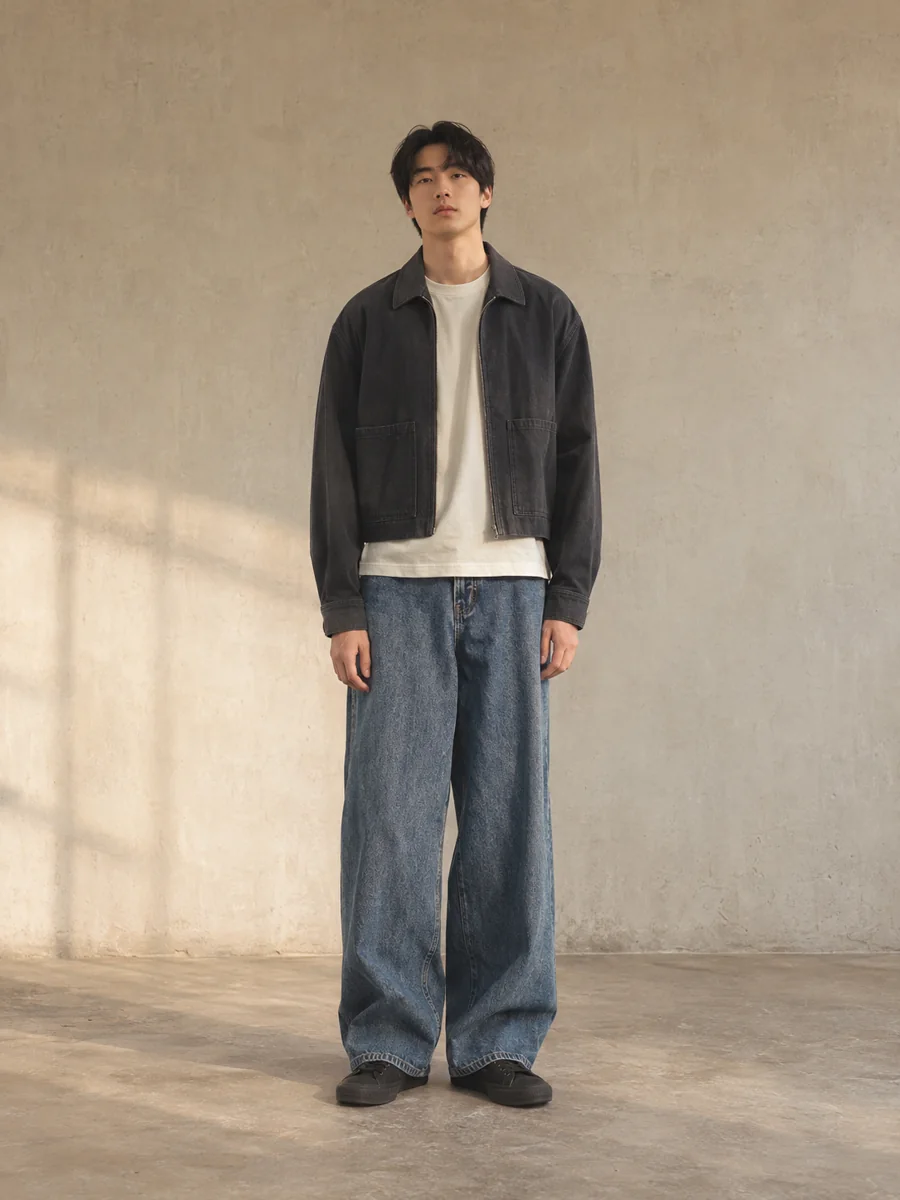
In the cropped jacket and wide denim composition, the jacket establishes the shape while the jeans carry most of the volume. A restrained accessory can add another reference. You can also make the outfit quieter by choosing plain fabrics and keeping the contrast in the cut rather than in large graphics.
Short jacket, wide-leg denim
Grunge: texture and imperfect edges
For the grunge compositions here, texture is a useful starting point. Think washed tees, open flannel, uneven knit surfaces, dark denim and substantial boots. The pieces can feel worn and relaxed while still having intentional lengths and enough room to move comfortably.
The flannel, faded tee and relaxed jeans example uses the open shirt as a frame. The tee stays simple so that the checks and faded denim do not compete with another dominant pattern. You can make the same formula softer with a cardigan or more structured with a work jacket.
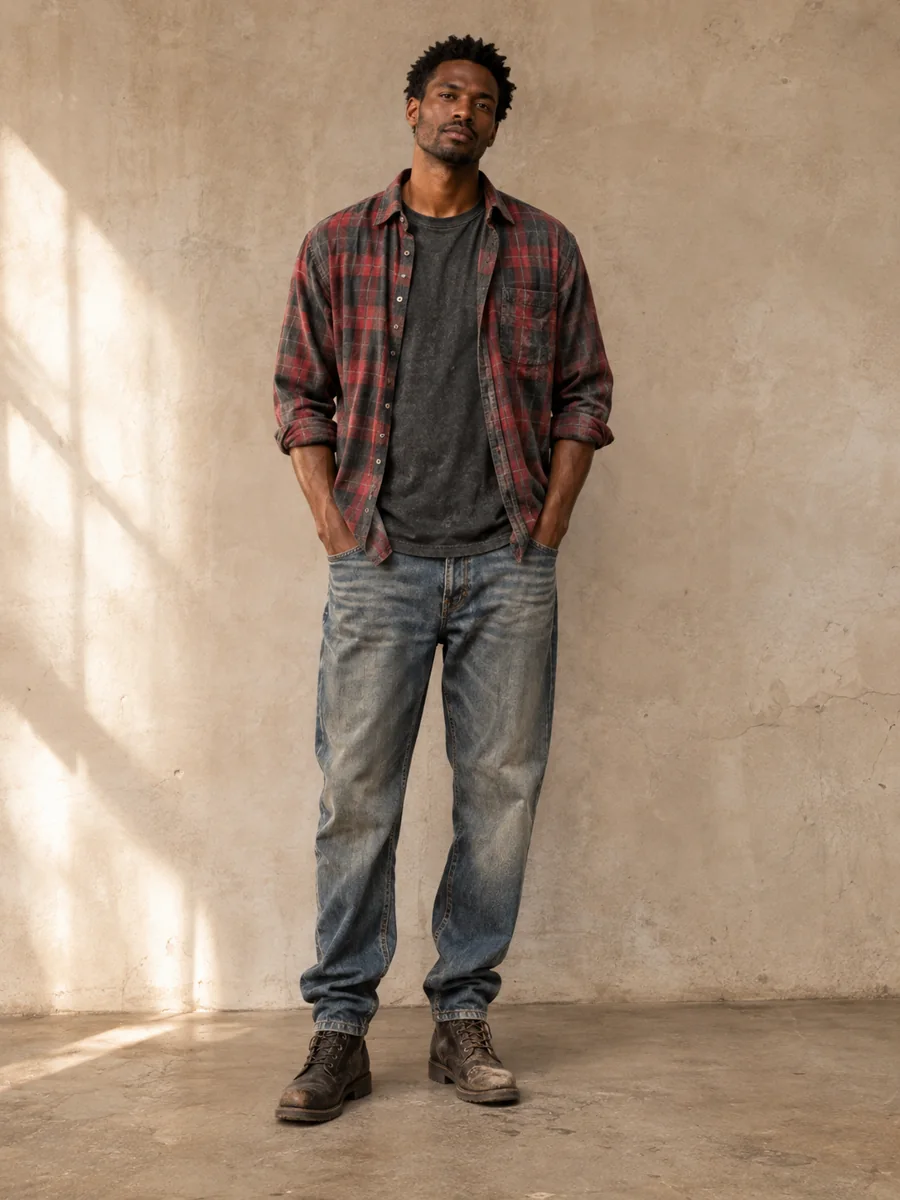
Open flannel, washed tee and denim
Streetwear: edited casual proportions
The streetwear examples use everyday garments with a clear relationship between their shapes. A boxy tee, relaxed trousers and restrained sneakers can be enough. The focus is on where the top ends, how the pants fall and whether the footwear gives the lower half a defined finish.
The navy overshirt and cream pants composition makes colour contrast do much of the work. Its cleaner surfaces create a different mood from heavily faded layers, even though both outfits may use a loose cut. You can add a hoodie or cap without needing to make every element a statement.
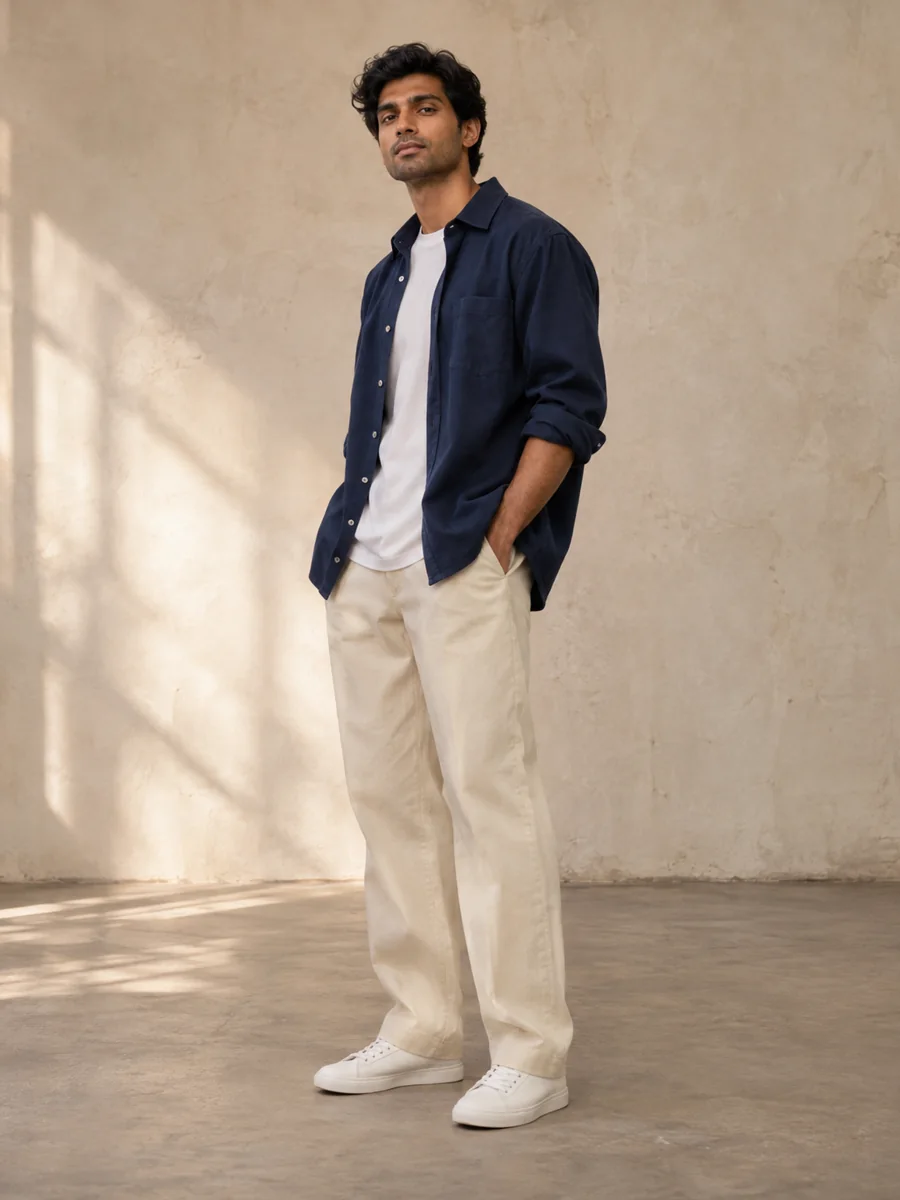
Navy overshirt, cream trousers
Compare two all-black looks
An all-black outfit shows why labels cannot be decided by colour alone. The layered grunge composition relies on changes in texture, worn finishes and staggered lengths. Its darker shades remain distinct because the surfaces reflect light differently.
The monochrome streetwear composition is more restrained in texture and places more emphasis on a broad, clean outline. Compare the tops, hems and shoe shapes rather than looking only for the colour black. A single pair of jeans can move between these directions when you change its surrounding pieces.
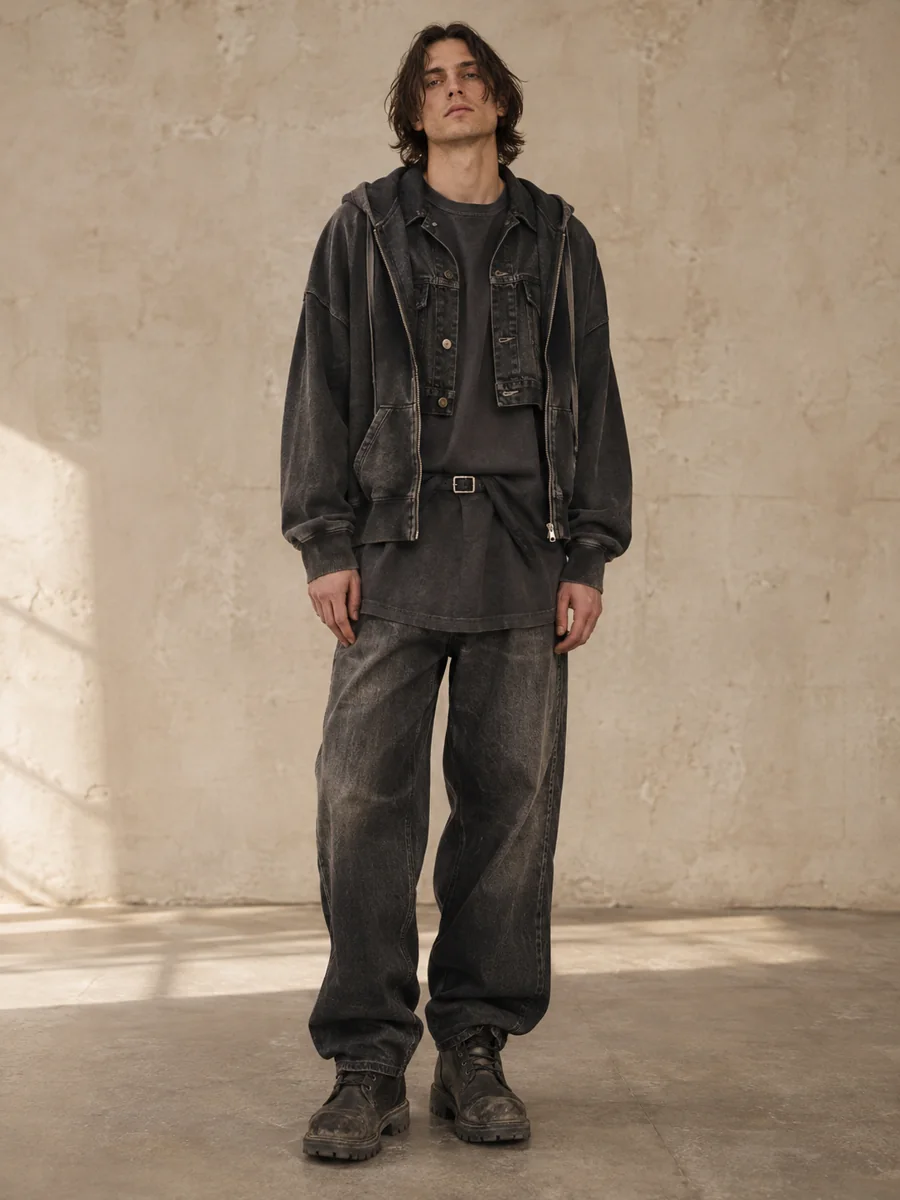
All-black layers, textured and loose
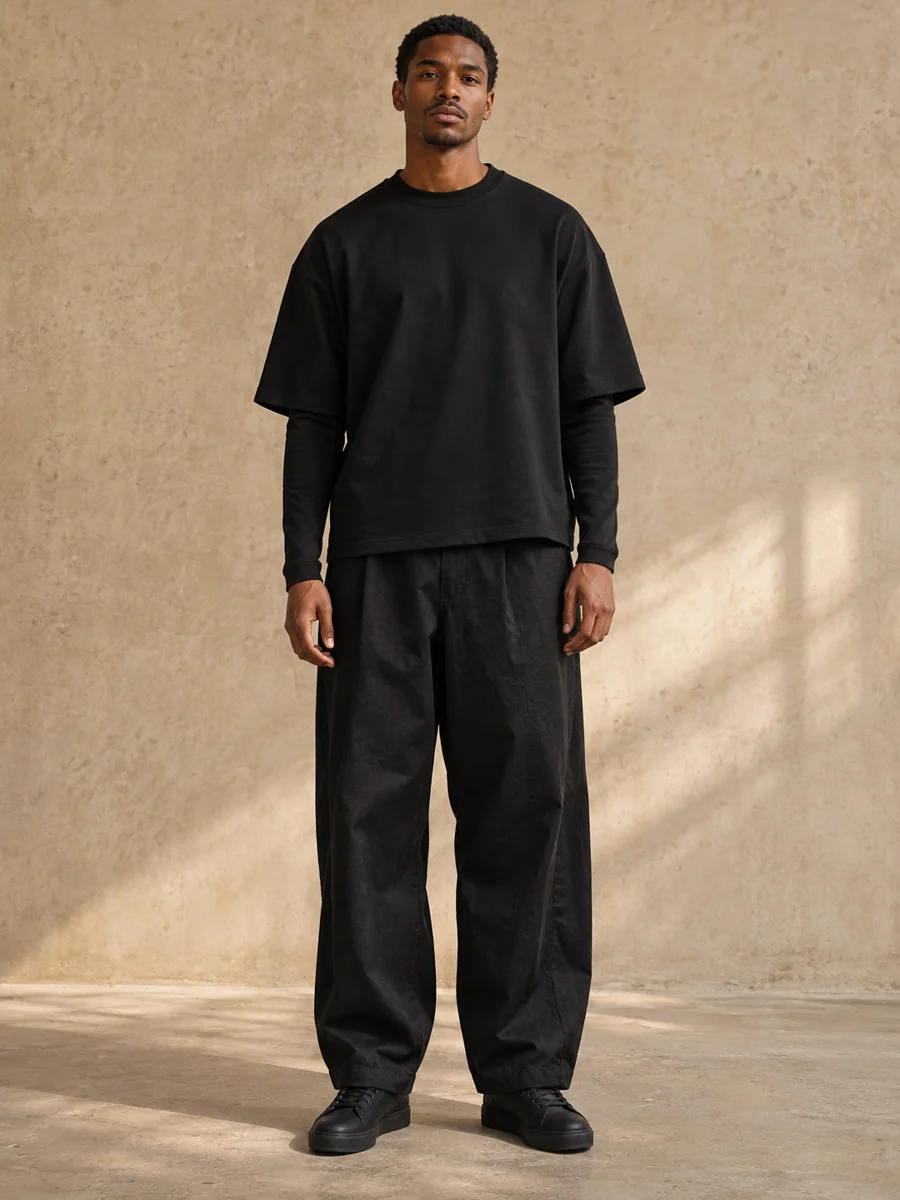
Clean black streetwear layers
Use the comparison as a starting point, not a boundary
This comparison concentrates on three overlapping directions in our wider wardrobe of workwear, poetcore and smart casual ideas. A garment can move between them. A striped rugby shirt with cream trousers, for example, can sit within a streetwear outfit without needing baggy denim or several obvious accessories. Its collar, colour blocks and trouser shape determine how it feels more directly than a category name does.
When comparing looks, identify one feature you would like to borrow: a shorter jacket, a washed surface, a broad trouser or a quiet tonal base. Add that feature to a combination you already enjoy before changing everything else. You may prefer the overlap rather than a more concentrated version of any one style. That is a useful result, especially when building a wardrobe with a limited number of pieces. Keep the labels as navigation for finding examples, and judge the actual outfit through fit, proportion, texture and the situations where you expect to wear it.
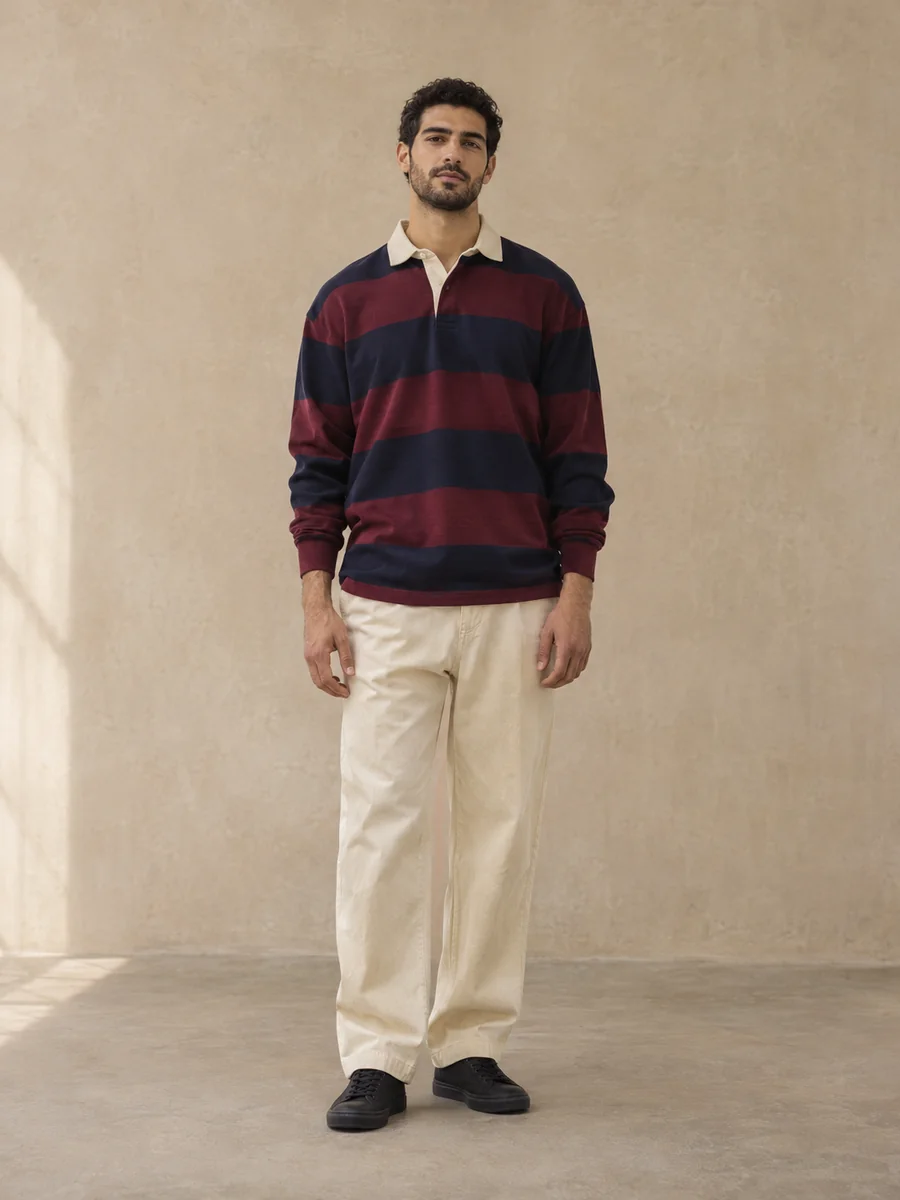
Burgundy and navy rugby with cream trousers
Choose one anchor and build outward
Pick the most specific piece you actually want to wear. It might be baggy denim for a Y2K direction, a striped knit for grunge or a structured overshirt for streetwear. Pair it with the plainest compatible pieces already in your wardrobe, then add one detail that reinforces the mood.
If a look feels like a costume, reduce the number of strong references at once. Keep the shape you like and simplify the rest. You do not need to settle on one label before getting dressed; a useful outfit is one you can adapt, repeat and feel comfortable moving in.
- For a quieter result, keep the shape and reduce graphics or accessories.
- For more expression, add one texture, colour or distinctive layer.
- When mixing styles, repeat a colour or material to connect the pieces.
Explore more outfit ideas or compare the style files.