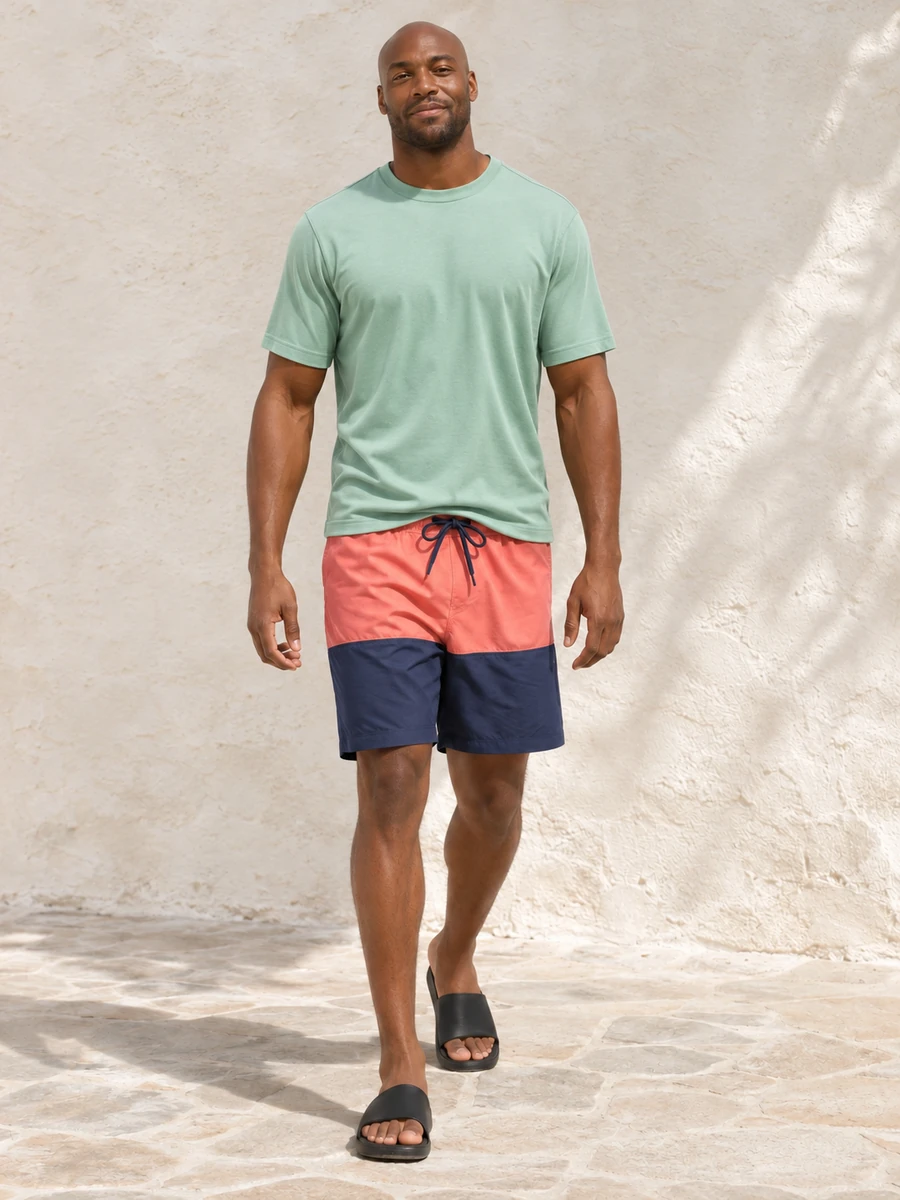
Start with off-water casual clothing
Choose a tee, a casual shirt or a familiar removable layer that you enjoy wearing away from the water. Put it beside roomy shorts or relaxed trousers and begin with their lengths. Surfer-inspired dressing can have a calm everyday outline without a tropical print or a matching set. It is more useful to decide how the clothes sit together than to search for a list of objects that will prove the style.
Museum collections document boardshorts and their place between sport and fashion, while Hawaiian beach-fashion collections provide a broader leisurewear context. Those references are varied. Our contemporary concepts explore casual relationships rather than claiming to represent every surf community or to provide clothing for actual surfing.
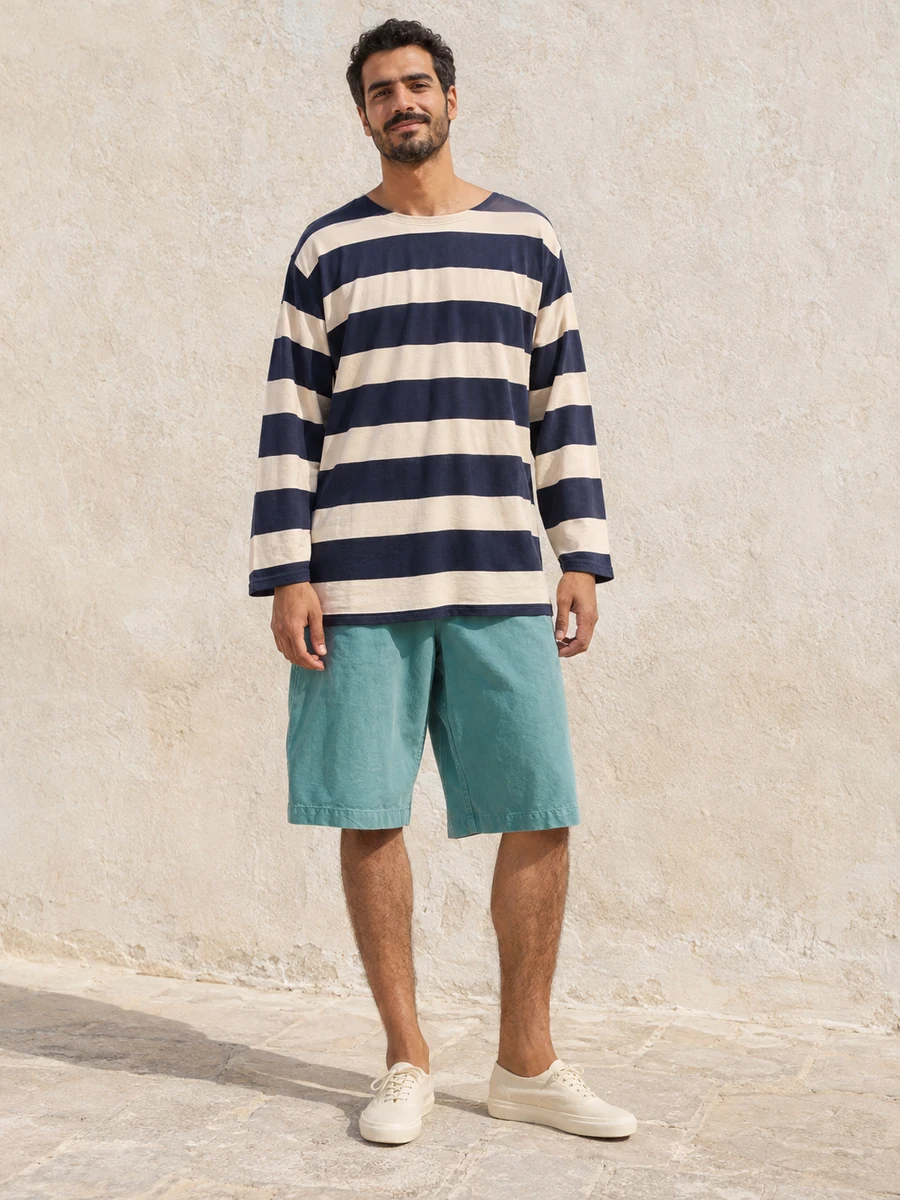
Compare one upper block with a framed center
With one pair of your shorts fixed, compare a simple upper block with an arrangement that has an open layer around a visible center. Decide how much of the short should remain visible below the top. A different neckline, sleeve or outer edge can change the outline without requiring another pair of shorts. The catalogue compositions are separate recipes, not controlled before-and-after photographs of the same physical garments.
Inspect the sleeves as well as the lower edge. A broad sleeve can repeat the short’s volume, while a narrower one leaves more attention below. You can keep both halves roomy if the result is intentional. Check whether the shirt moves freely over the shorts when you sit, rather than judging only a standing arrangement with your hands in the pockets.
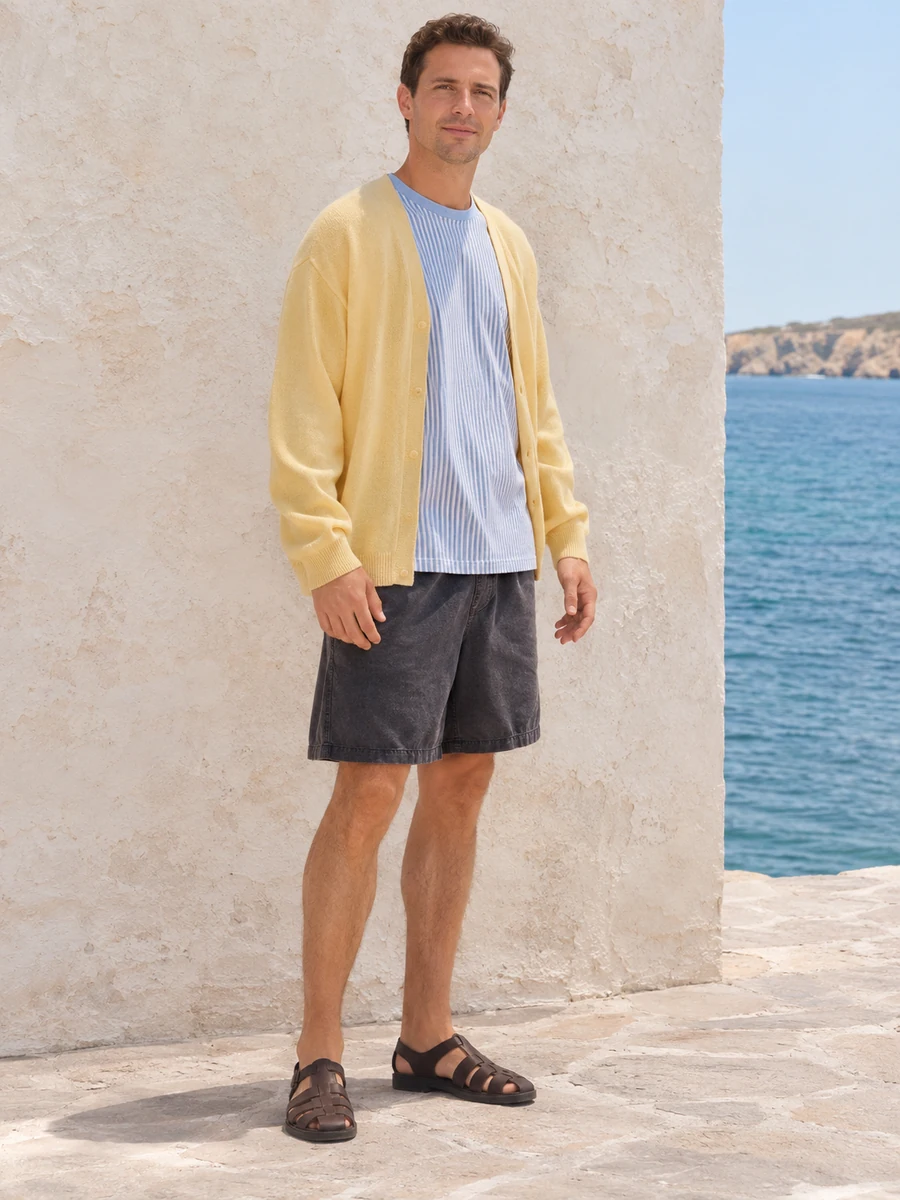
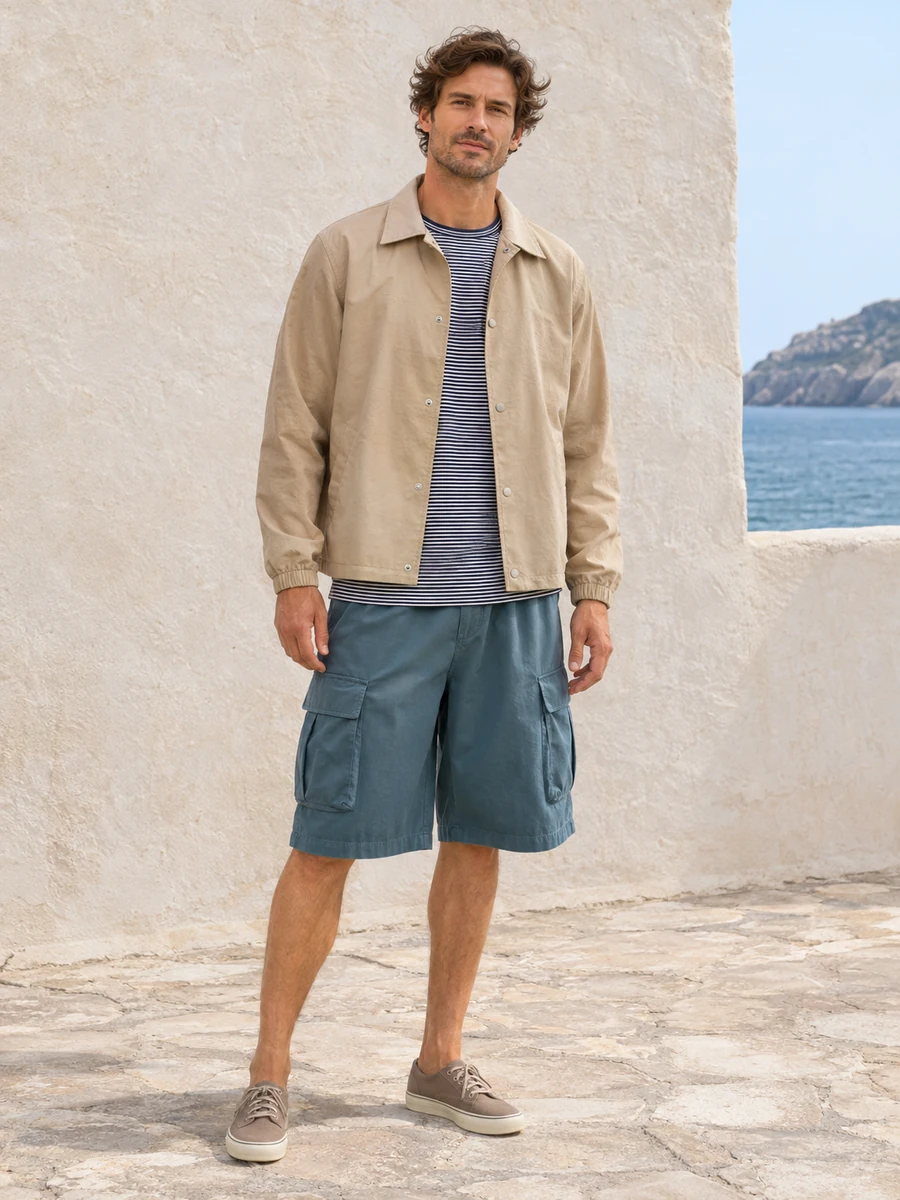
Let a long trouser change the whole lower line
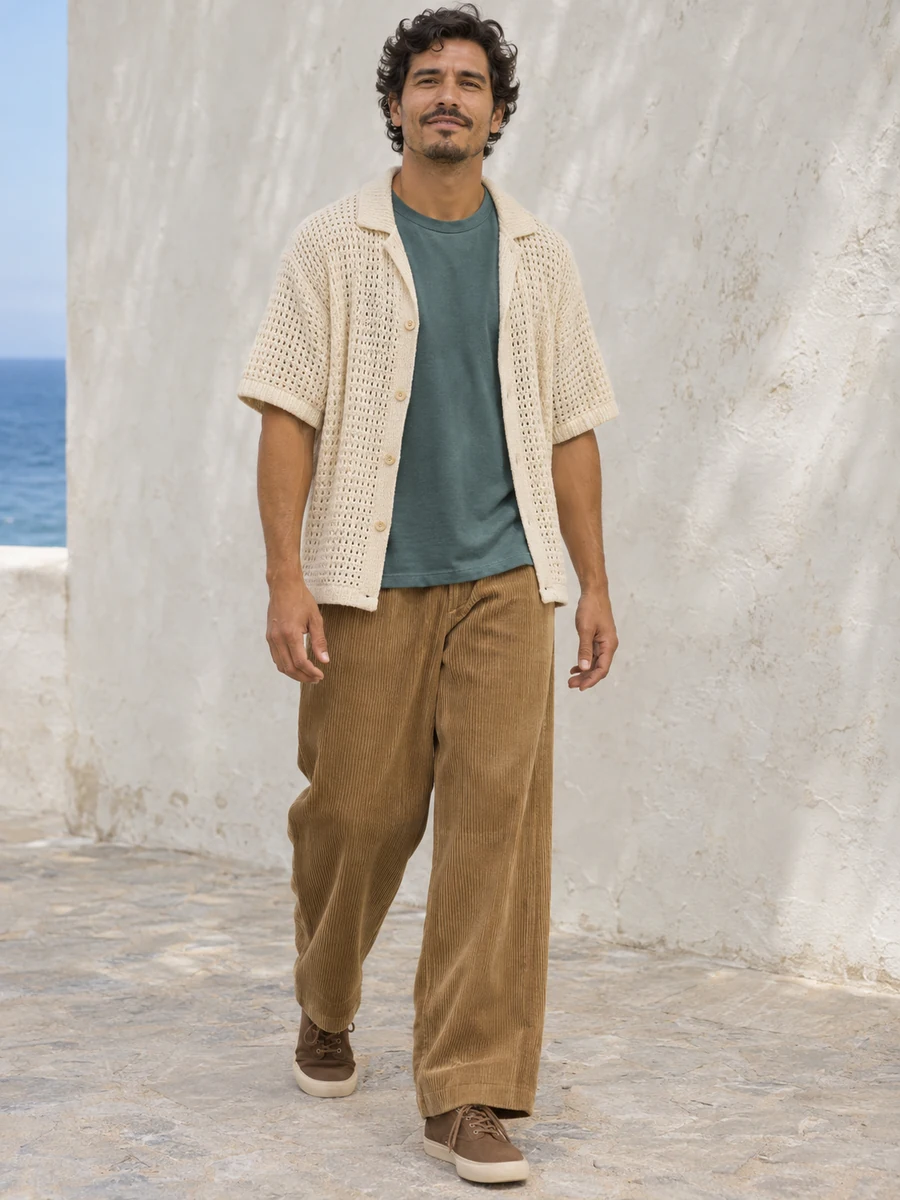
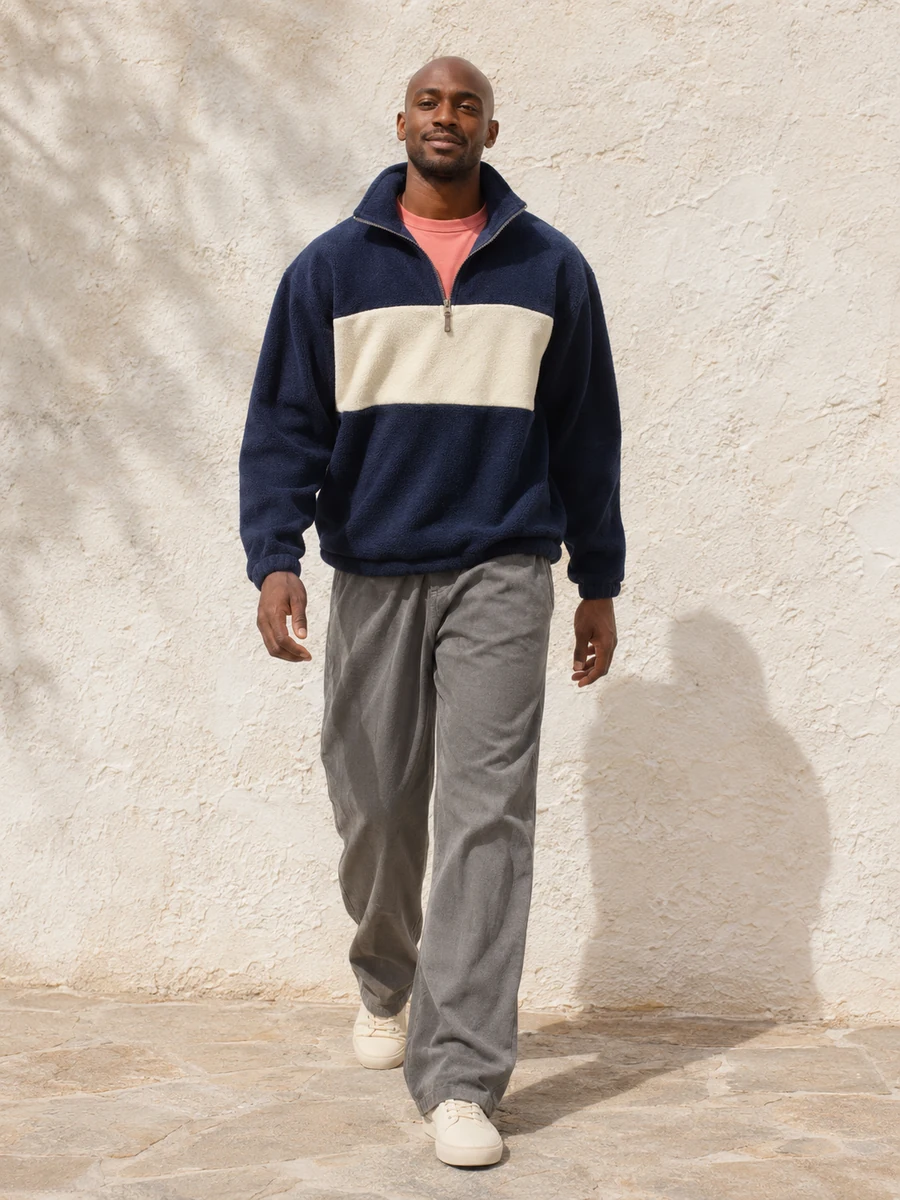
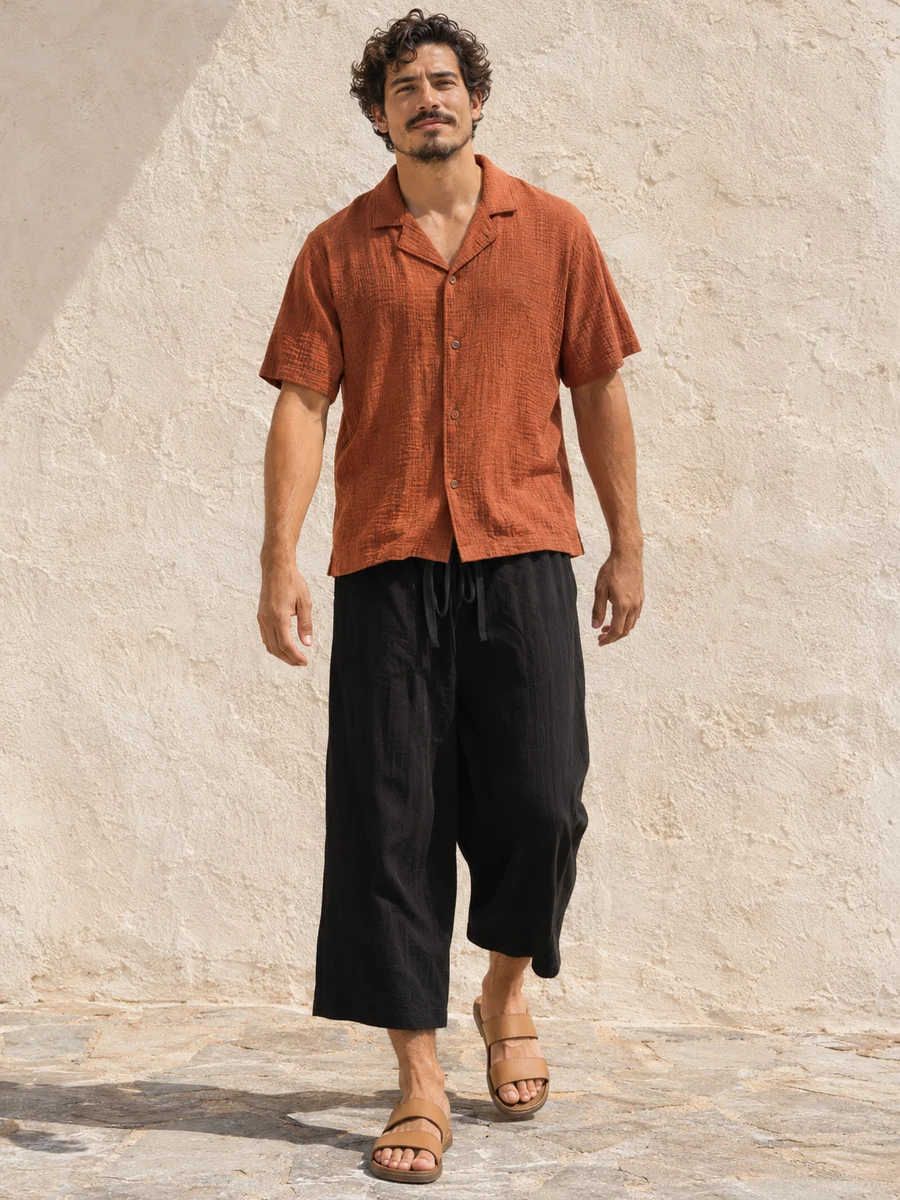
A long relaxed trouser gives the same casual upper half a different setting. Compare the uninterrupted leg with the shorter block of a wide short. The change affects the outfit’s overall rhythm even if the colors stay similar. A tee can remain simple, or an open shirt can make the upper frame more visible. Choose the lower shape first, then decide whether another layer adds anything useful.
At the shoe, compare a clearer hem with a modest fold. A lower-profile shoe exposes a different amount of upper from a fuller one, and a trouser can catch rather than hang freely. Look at the side and back before deciding it needs shortening. Your actual garment and shoes supply the information; the concept image is a reference for what to inspect.
Use stripes, checks and prints for different effects
A stripe can make the direction of an open shirt easy to follow. A check divides the upper area into smaller blocks. A large print can become the focal point even when the garment shape is ordinary. Compare each with a plainer lower half before adding another pattern. You are deciding how much visual activity you want around the torso, not following a rule that surfer-inspired clothing must be loud.
If you want a calmer result, keep the pattern but reduce the contrast around it: a quieter tee, a simpler shoe or a more continuous lower color may be enough. If the outfit feels too restrained, make one large area more distinct. There is no need to add a cap, necklace and sunglasses simply because the rest of the clothing is casual.
Separate a casual style from a holiday dress code
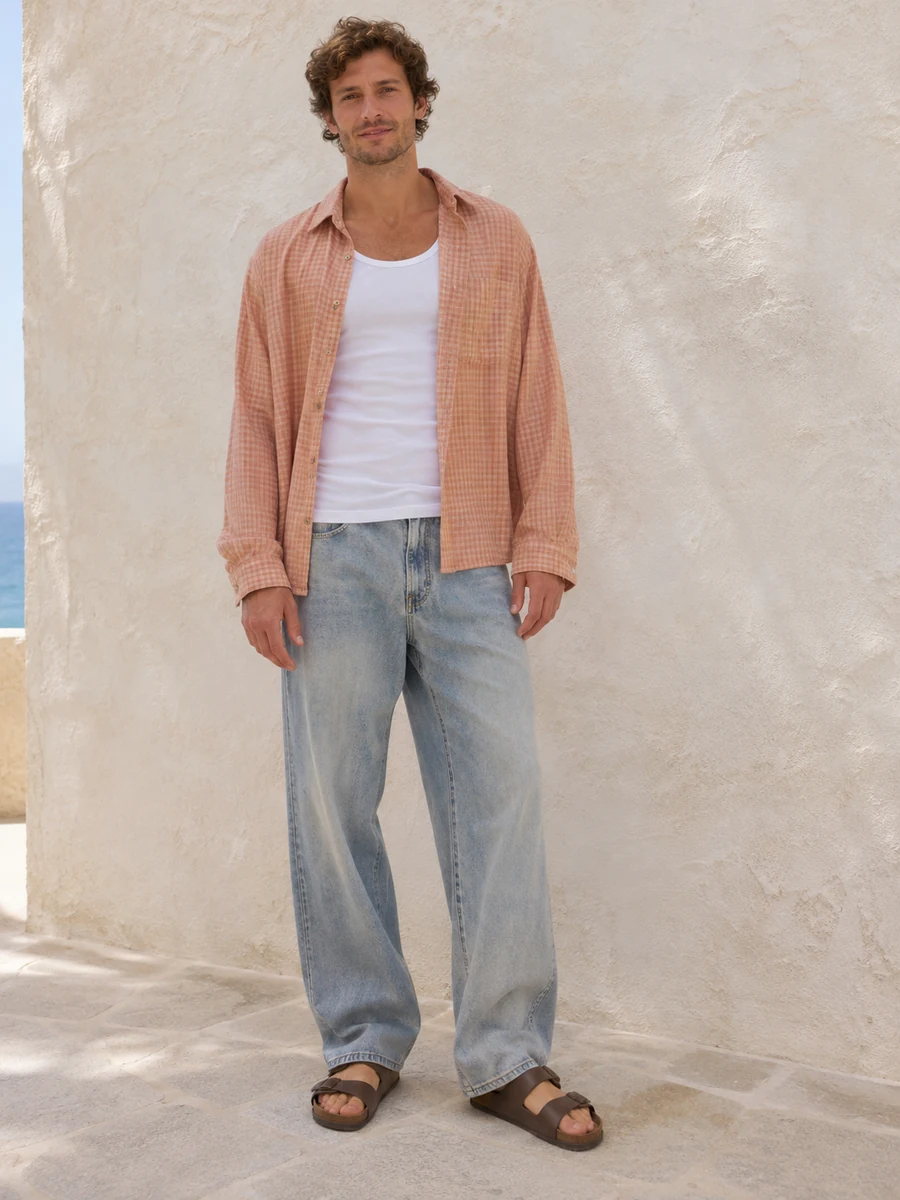
Resortwear is a neighboring direction that can include neater dinner outfits and a planned holiday wardrobe. Surfer-inspired ideas here stay closer to off-water casual clothing and easy layers. A camp-collar shirt can appear in both. Compare the full composition and the place you want to wear it, rather than treating the garment name as an automatic category.
For a removable layer, test the base on its own and the complete look with the layer closed. Check the real material and conditions if you need protection or a particular drying behavior. A boardshort-like shape in a generated concept does not establish a usable water garment, and a light-looking shirt is not a certified sun-protection layer.
Make a small repeatable wardrobe exercise
Keep one tee or casual shirt fixed and compare three lower arrangements you can actually make: a familiar short, a different short silhouette and a long relaxed leg. If your wardrobe supports only two, keep those two. Record what is shared and what changes. A public generic tee does not prove one physical shirt appears in several concept photographs.
Save your own item in the builder when that identity matters. Let a public reference remain a reference, and leave missing pieces visible instead of treating a wishlist as ownership. Add a short note about the useful length relationship, then plan the version that suits your day. Repeating an arrangement that works is a stronger starting point than collecting dozens of almost identical accessory variations.
Sources and useful references
Explore more outfit ideas or compare the style files.