Start with a calm relationship
This Scandinavian-inspired approach uses softer contrast, visible texture and generous everyday pieces. Choose one roomy garment and decide how the surrounding lengths keep it readable. The label refers to selected fashion ideas, not a uniform for a region or a list of colors that belong exclusively to one population or identity.
A pale knit, wide trouser and ordinary sneaker may be enough when their proportions are deliberate. If the result feels unclear, inspect upper hem and trouser break before adding another layer. Wider clothing need not be equally long everywhere, and the actual garment should remain comfortable through normal movement.
Use lightness and texture separately
Pale blue beside ecru makes a different contrast from brown beside gray, even when both feel restrained. Choose the color relationship, then identify which garment has the strongest surface. A textured cardigan may need a simpler shirt underneath so its knit and opening remain the important details rather than competing with another pattern.
Compare real pieces in the light where you dress. A concept cannot verify fabric weight or undertones. If two areas sit too close, change the neckline or one shade before adding an accent that turns the quiet palette into another visual idea. Keep a clear reason for each small adjustment.
Frame ecru denim with pale blue
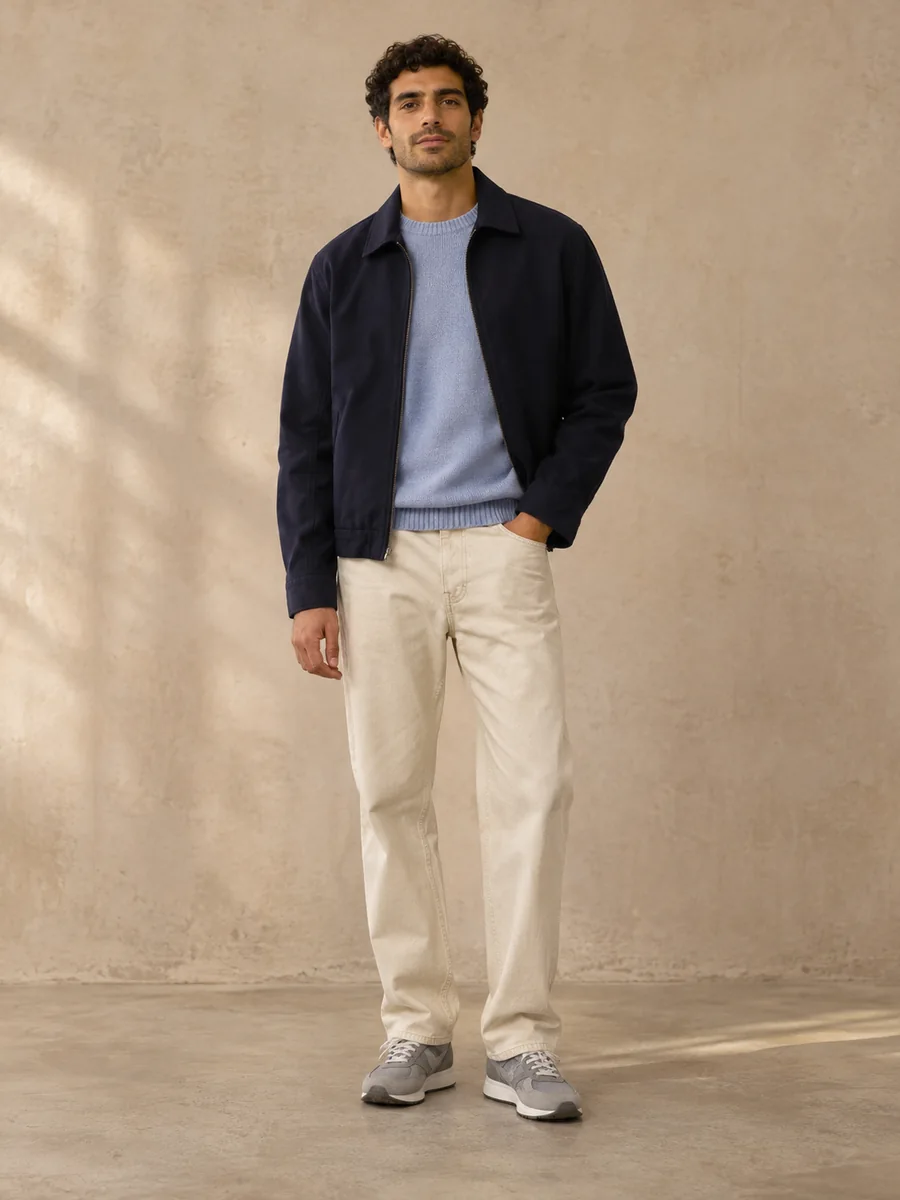
A pale-blue sweater above straight ecru jeans gives the upper and lower halves a gentle division. A short navy jacket provides a darker frame and gray sneakers keep the endpoint understated. The jacket length matters because it determines how much of the pale lower line remains visible between the torso and shoe.
Inspect the sweater hem with and without the jacket. A long exposed strip may be useful, but it can also create another unclear band at the hip. Set the actual trouser length over your sneakers and compare one shorter base layer before replacing an otherwise useful pair of jeans or shoe.
Pale blue knit with ecru jeans and a navy jacket
Let a cardigan carry the texture
A brown textured cardigan around a cream tee sits above broad gray trousers and rounded black shoes. The warm surface supplies a focal point without a strong print. Leaving the opening clear allows the lighter center to separate the layers and makes the relationship between knit and trouser easier to read.
Check actual sleeve room over the tee and where the cardigan settles near the waistband. A longer knit creates a different outline from a shorter one even when the colors stay unchanged. Compare that upper length before deciding the whole silhouette depends on changing the trouser width or introducing another accessory.
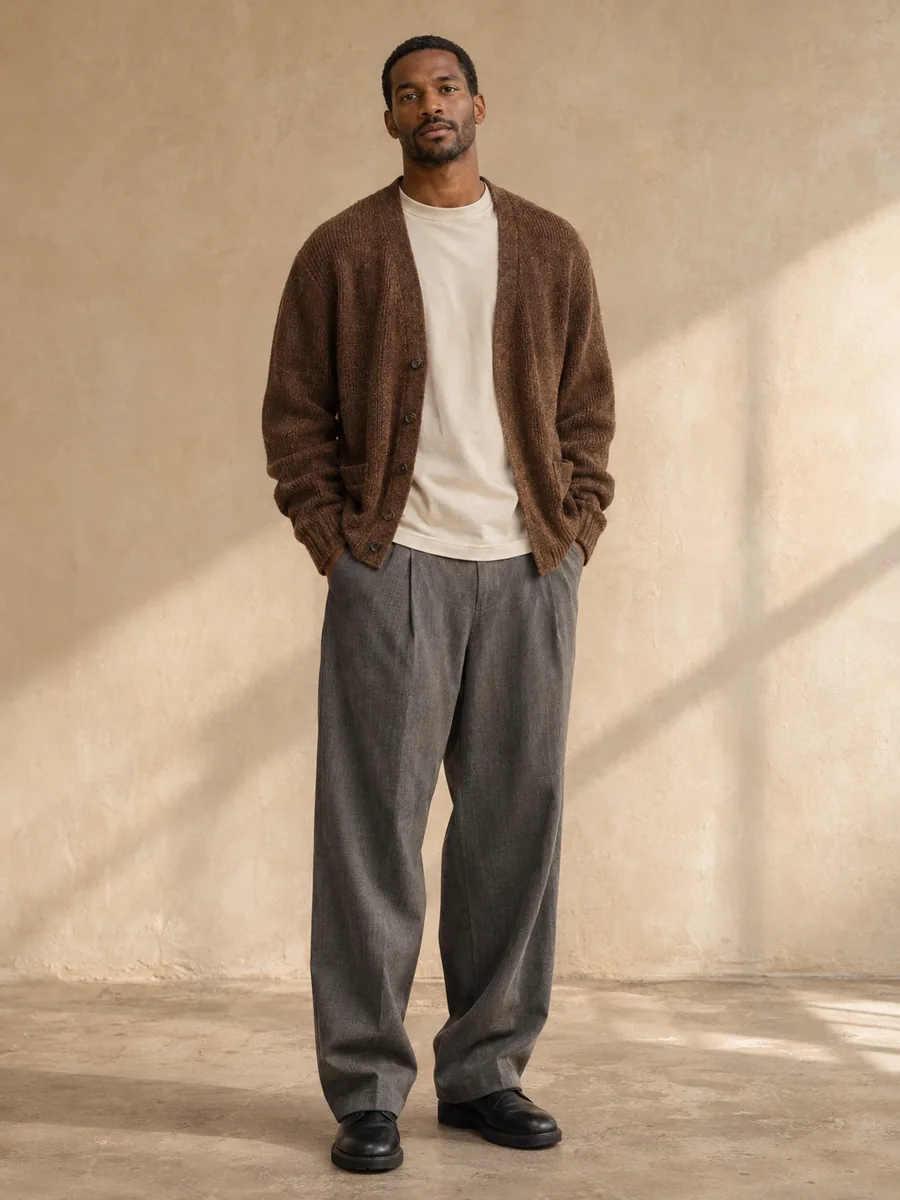
Brown textured cardigan with cream tee and grey trousers
Test a generous shirt above broad shorts
An ample blue-and-white striped shirt over wide navy shorts moves the pattern onto the torso and leaves more leg exposed. Ecru sneakers and a beige tote add quieter surfaces. The short length changes the whole balance, even though the individual clothes remain ordinary and could be reused in other outfits.
Inspect the short hem, sock and shoe together. Wear the shirt open over a simple base or choose another arrangement whose ending stays obvious. A large upper garment is not a reason to conceal every boundary; a useful relaxed outfit still gives the eye clear places to pause around the waistband and lower leg.
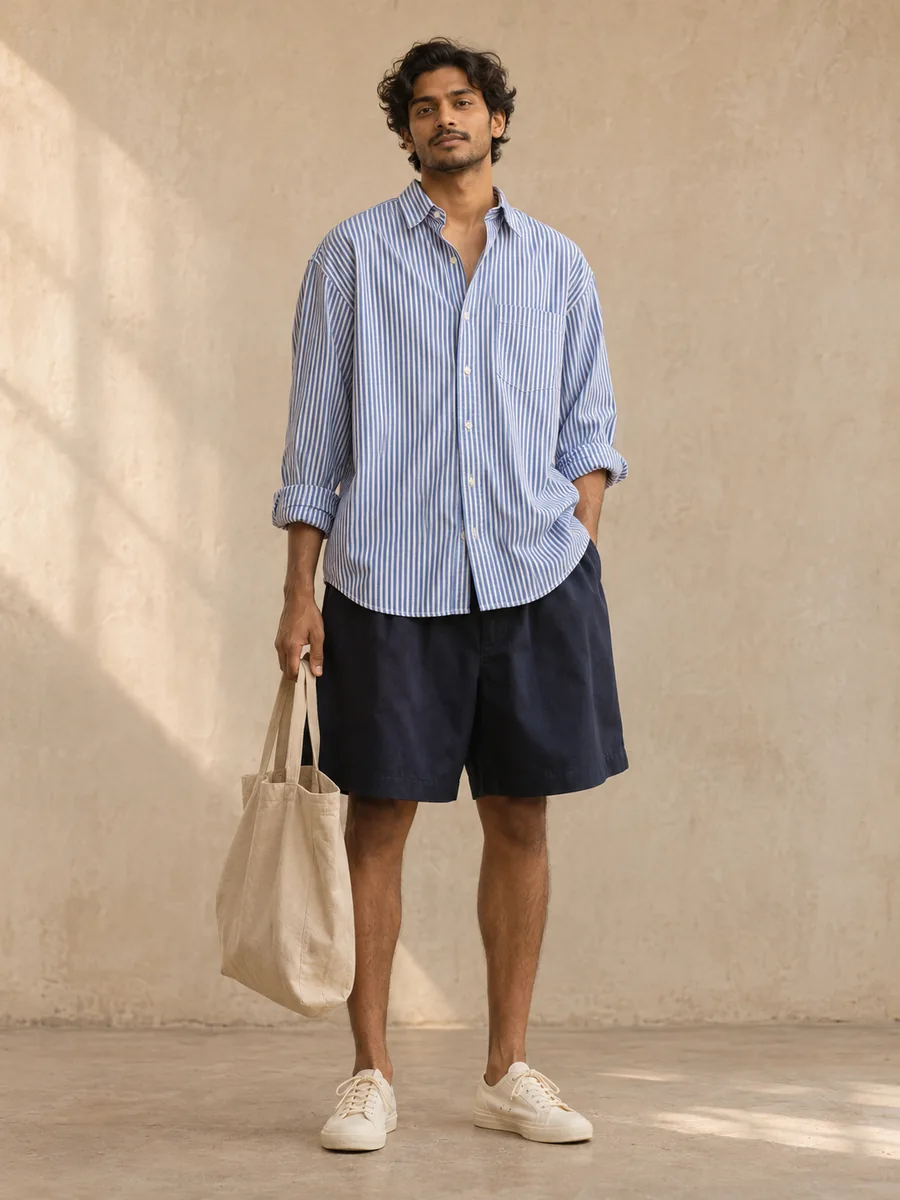
Blue striped shirt, navy shorts and an ecru sneaker base
Use a longer navy frame around muted green
A cream high-neck knit, green-gray trousers and brown boots form a muted base inside a navy overcoat. The coat brings the longest line and the knit brightens the neckline. The combination uses several quiet shades without becoming a matching set or depending entirely on black to make the silhouette feel coherent.
Check collar clearance and sleeve space with the real knit underneath. Choose actual materials for the conditions, since the illustration provides no warmth rating. Inspect the trouser around the boot shaft and heel while moving; a darker outer frame cannot solve a lower hem that catches or drags behind the shoe.
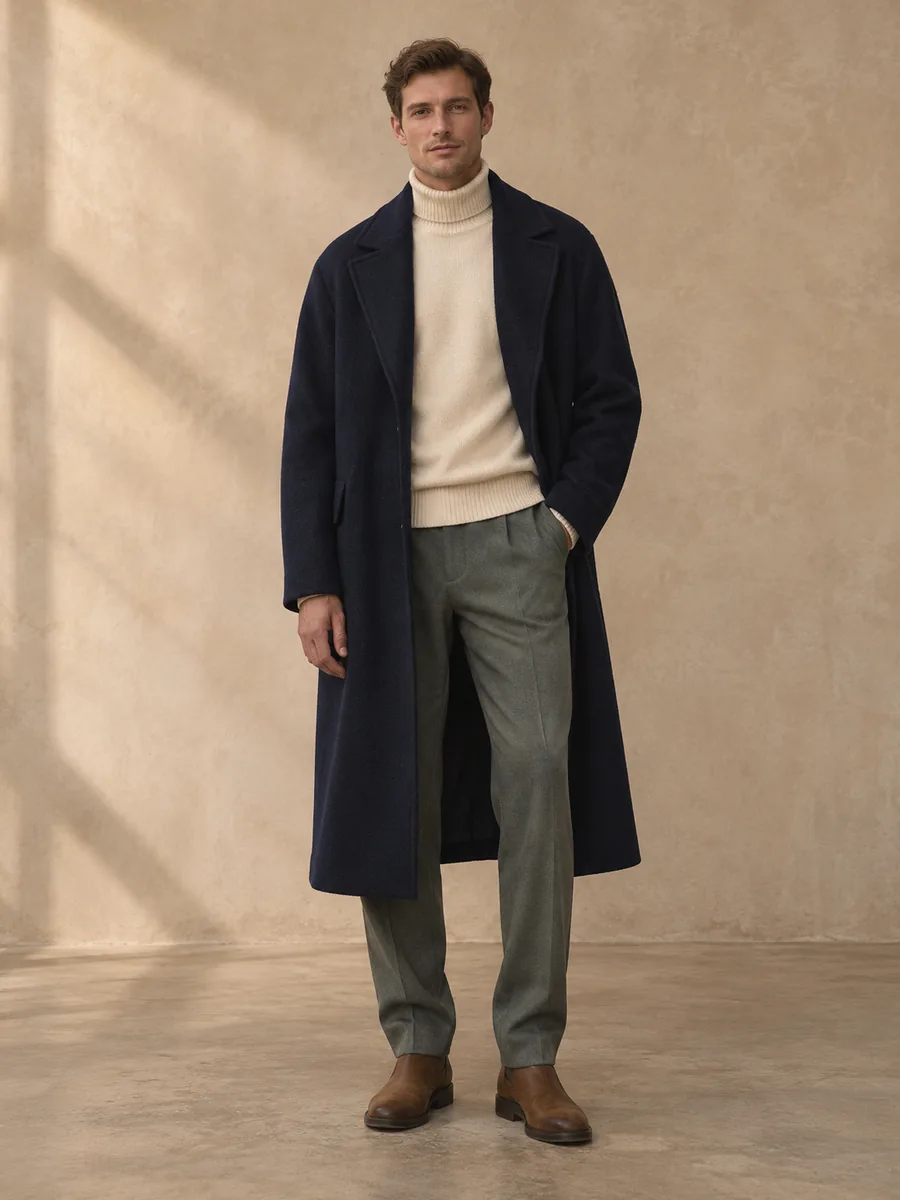
Cream mockneck, grey-green trousers and a navy overcoat
Change one dimension at a time
Decide whether the useful element is palette, texture or volume. Keep the other dimensions relatively stable while trying a variation: pale blue and ecru can remain while a jacket changes length, or gray trousers can stay while a smoother knit replaces the textured cardigan. That makes the effect of each choice easier to assess.
The finder and palette tool narrow examples rather than judge taste. Record the garments you really own and the adjustments that work with them. A calm combination becomes repeatable through those practical notes, without requiring an entire illustrated wardrobe or asking a wearer to adopt a regional label as a personal identity.
Explore more outfit ideas or compare the style files.