Choose a detail that changes an ordinary base
Romantic menswear in this edit uses softer fabric movement, a noticeable collar or one delicate-looking detail. Start with one of those choices. A draped shirt with plain trousers can express the idea without adding lace, a bow, a brooch and several rings at once.
Drape describes how fabric hangs and moves. It is not the same as a large size. A roomy stiff shirt can hold away from the body, while a lighter-looking shirt may fall into softer folds. Compare the actual garment rather than relying on its size label.
Give a softer shirt room to fall
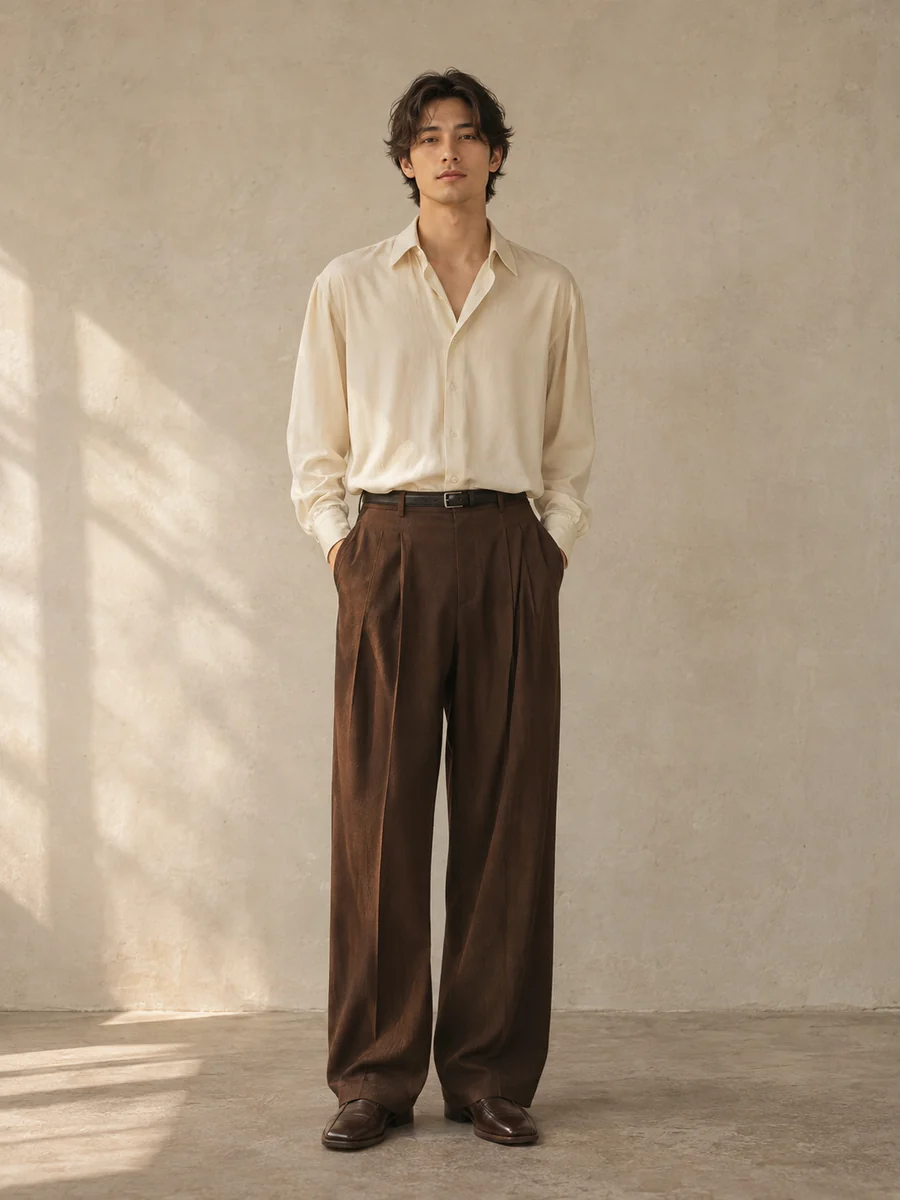
Cream draped shirt with chocolate pleats uses a cream draped shirt with chocolate pleated trousers. The plain lower half lets the folds around the collar and sleeves remain visible. Arrange the shirt at the waist in the way you intend to wear it, then check whether the front and back fall comfortably.
Try the shirt tucked and untucked with the same trousers. A tuck makes the waistband more visible; leaving it out extends the shirt line. There is no need to force either version if it pulls across the buttons or requires constant rearranging.
Cream draped shirt with chocolate pleats
Use a blazer to contain one small detail
Charcoal blazer, soft collar and a lapel pin combines a charcoal blazer, white soft-collar shirt and a lapel pin. The blazer gives the collar and pin a relatively quiet surrounding area. This is a different starting point from using several patterned or highly textured garments together.
Check the pin placement against the actual garment construction. A thin fabric or loose knit may need a different fastening approach. The separate brooch guide explains how to inspect the backing and fabric before making a hole.
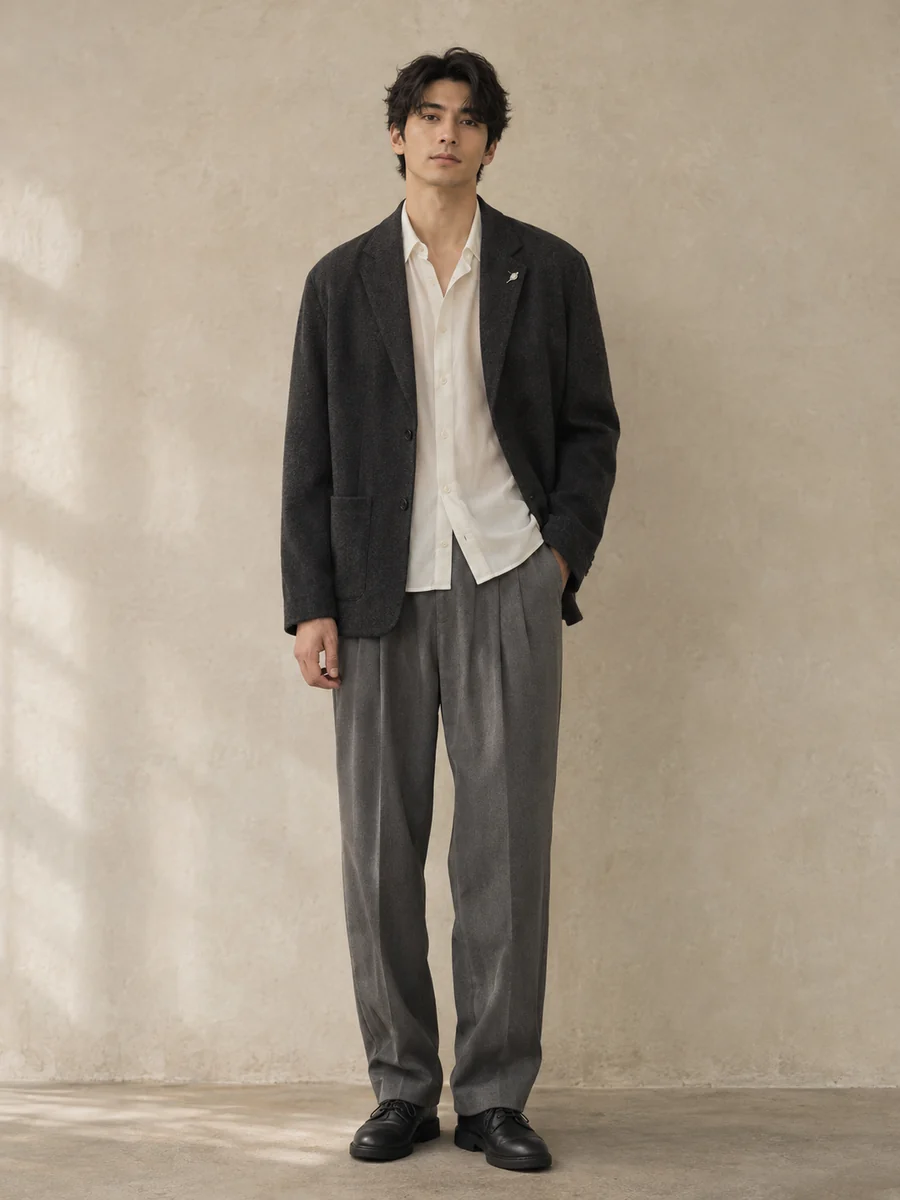
Charcoal blazer, soft collar and a lapel pin
Keep the shoe and trouser relationship readable
Fluid-looking trousers can collect at the shoe just as heavier denim can. Test the hem while walking, especially if the opening is wide or the shoes are low. A soft fold can be part of the intended line; fabric sliding under the heel is a different issue.
A plain loafer or boot can finish the outfit quietly. Choose the real pair for comfort and the occasion, then decide whether its shape supports the trouser opening. The concept image does not certify how a specific fabric or shoe performs.
Use a familiar shirt-and-blazer outfit as the control
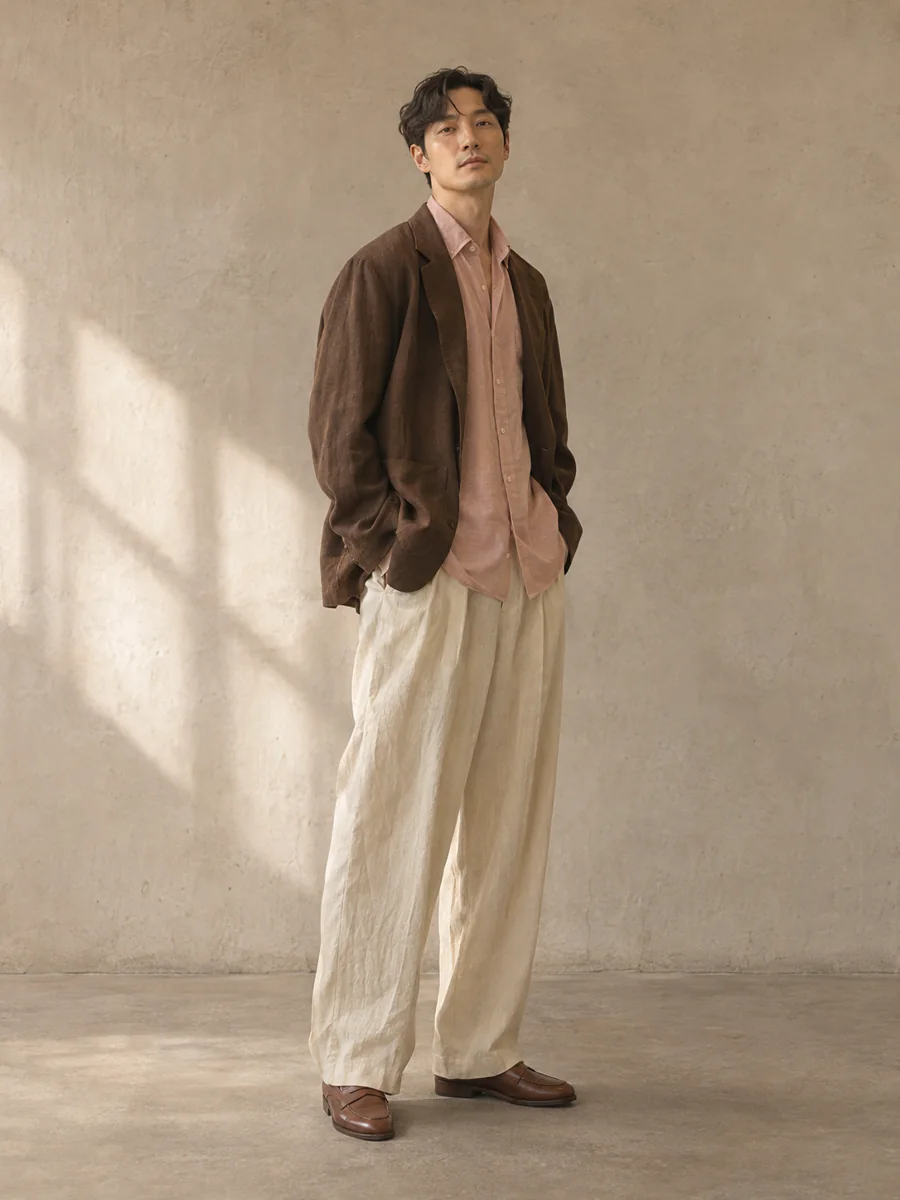
Chocolate blazer with a dusty pink shirt combines a chocolate blazer, dusty pink shirt, ecru trousers and brown loafers. The shirt color provides a clear center without requiring a dramatic collar or a pinned detail. Compare it with Charcoal blazer, soft collar and a lapel pin to ask whether you want the color relationship, the softer neckline or the accessory to lead the outfit.
For a controlled test, wear a shirt and trousers you already like. Add the blazer, then compare the same arrangement with one chosen detail. That might be a different collar shape, a loosely arranged scarf or a pin that is suitable for the fabric. Change only one of those so the result stays understandable. A new detail does not need a second accent simply to make it appear deliberate.
Check the whole outfit seated as well as standing. A shirt that drapes attractively while untucked may gather differently beneath a closed jacket; an accessory may move when the fabric folds. Keep the version that remains comfortable without repeated adjustment. Record the neckline and waist arrangement in your note so you can recreate the useful relationship with other clothes.
Separate this direction from a literary mood
Poetcore may share blazers, soft shirts and textured knitwear. This guide puts the emphasis on a visible neckline, a fluid line and a carefully placed accessory, rather than on a collection of literary references. You can borrow a single detail without adopting a label.
Save the combination and name what you want to repeat: perhaps a cream collar under charcoal, or a soft shirt above pleats. That gives you a practical starting point for the next outfit instead of a requirement to buy an entire themed wardrobe.
Let a narrow collar detail do one job
Ivory collar detail with navy trousers places a narrow lace-trimmed-looking collar above navy trousers. The detail occupies a small area, so the plain lower half gives it space. It is an illustrative shirt, not a verified lace composition or a named product. A plain soft collar is an equally useful alternative if you prefer less decoration.
Try the neckline without the scarf first. Then add the scarf loosely enough to see whether it frames the chosen edge or hides it. Keep the version in which the detail you care about remains visible during ordinary movement. A close view should explain the trim; the full silhouette should explain its relationship to the trousers. Neither needs a second decorative garment to justify the first.
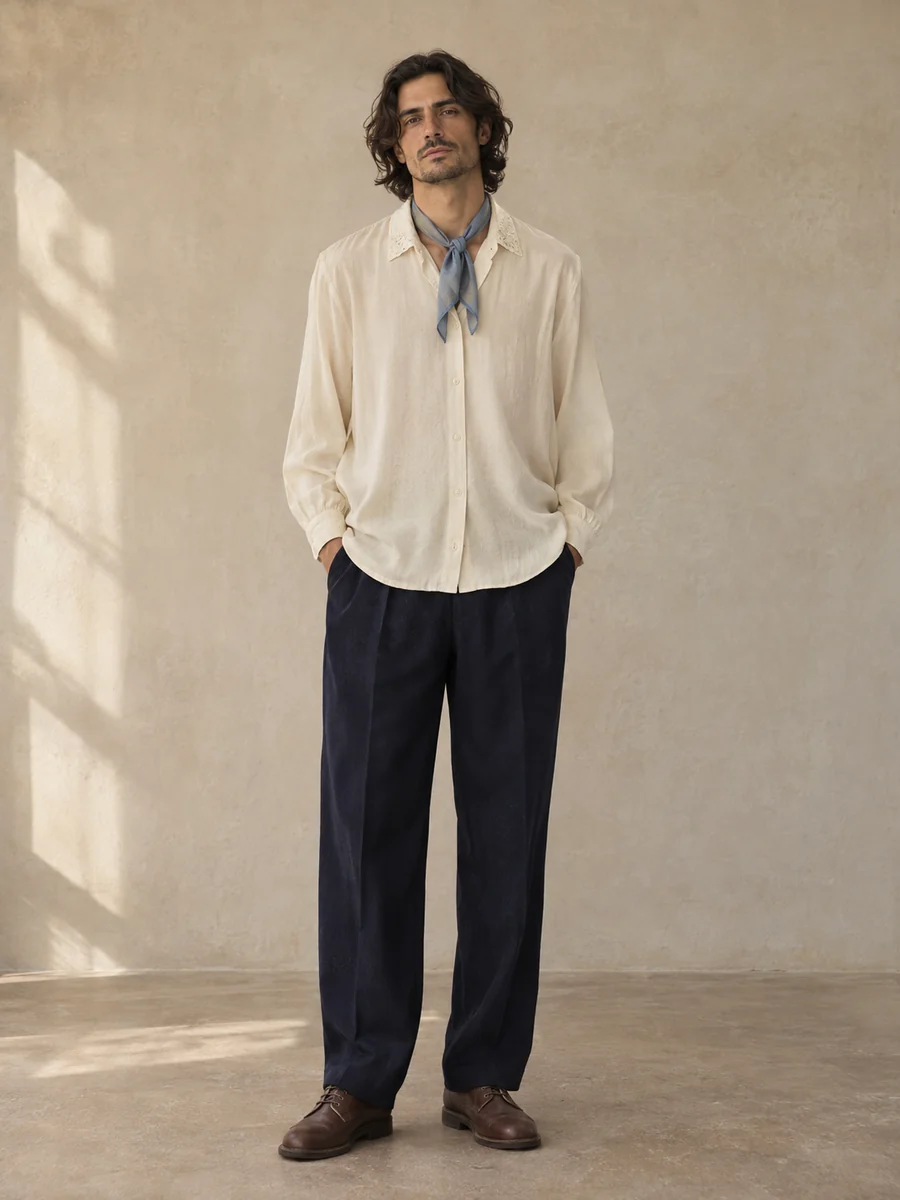
Ivory collar detail with navy trousers
Explore more outfit ideas or compare the style files.