Choose a single reference you want to keep
A bowling-style shirt, a short jacket, a higher trouser rise or a pronounced denim turn-up can each give an outfit a rockabilly reference. Begin with the feature you actually enjoy wearing. Put it beside a quiet top or bottom from your existing wardrobe, then decide whether the reference remains clear enough. A full matching period outfit is one possible direction, not the starting requirement.
Rockabilly draws on a specific cultural and vintage context, while the contemporary outfits here are original reinterpretations. They are not verified reproductions of historical garments. The images illustrate generic shapes, so a panelled shirt in the lookbook does not establish a particular maker, decade, textile or retail model.
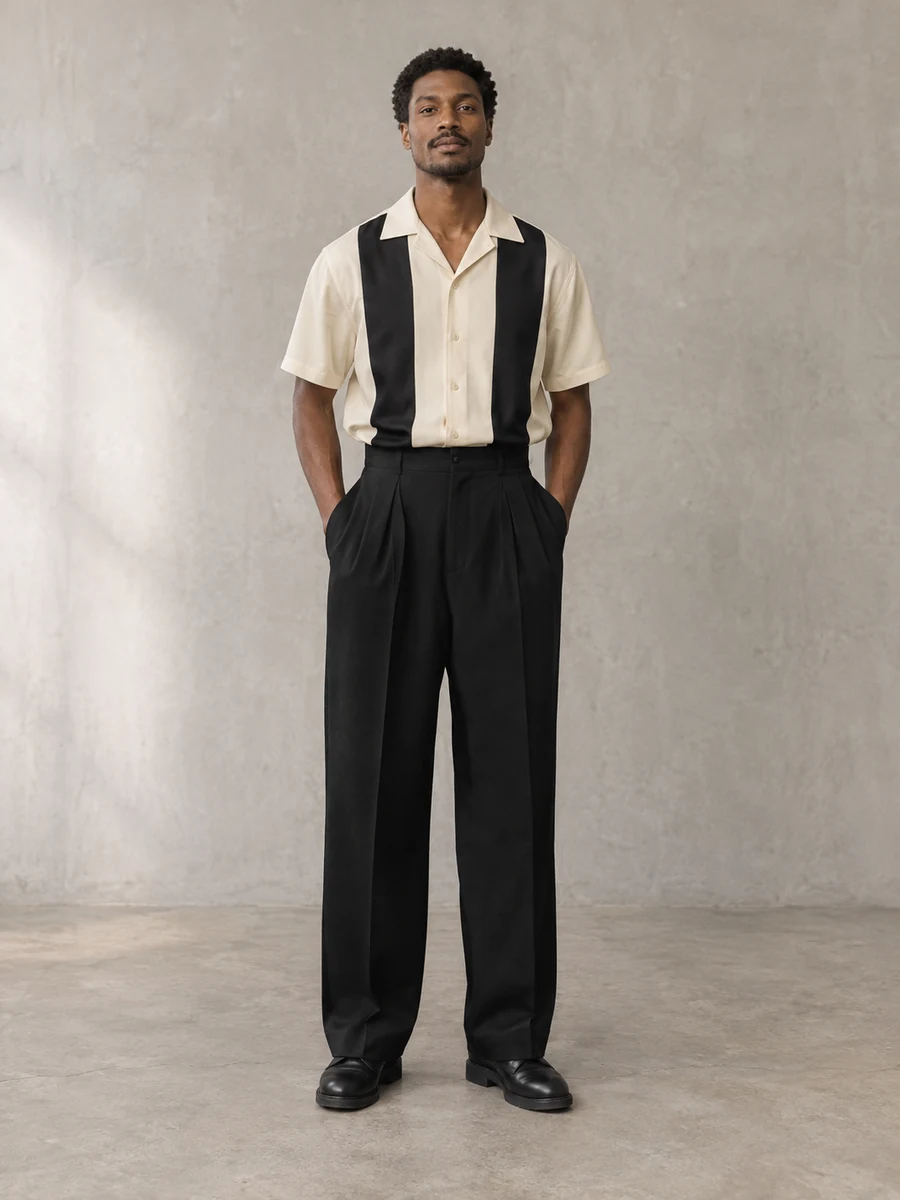
Let a panel shirt decide the width above the waist
A short straight-hemmed shirt creates a compact upper rectangle. Compare its lower edge against the trouser rise: ending near the waistband makes the lower half prominent, while a longer shirt can cover the waist and soften that relationship. Follow the construction and your own preference when deciding whether to tuck. Do not force a thick straight hem into a shape it cannot hold comfortably.
Keep the lower piece simple while you judge the shirt’s panels. A dark straight jean leaves the contrast visible; a fuller plain trouser gives the shirt a less literal contemporary setting. Changing the trousers is a larger compositional change than swapping a belt, so inspect that change before counting another accessory variation as a separate outfit.
Use a short jacket to frame an ordinary top
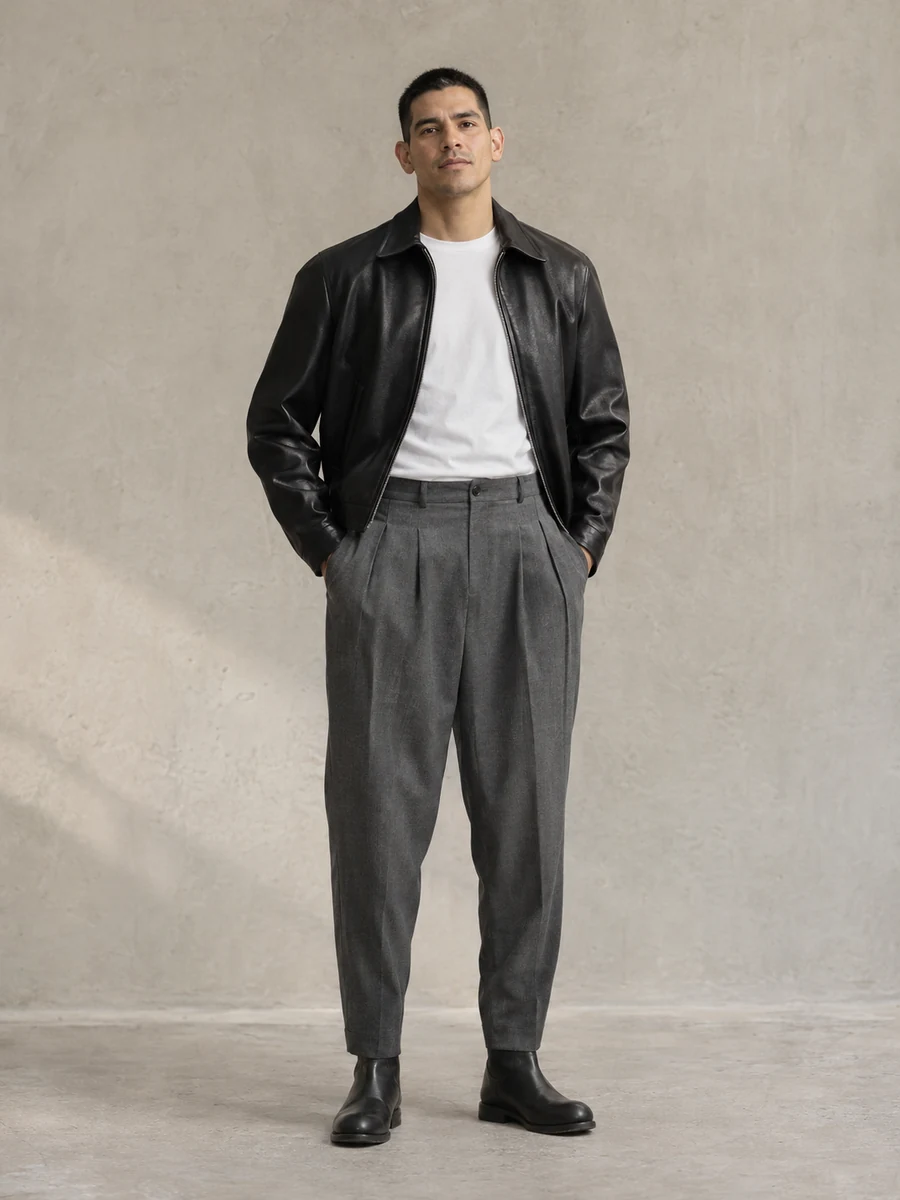
A compact jacket over a plain tee offers a quieter reference than a strongly patterned shirt. Check the amount of tee showing below the jacket and whether the sleeves can sit naturally. A higher trouser rise can meet that shorter upper boundary without making a cropped top necessary. Start with your actual waistband position, rather than lifting the trousers temporarily for the picture.
The jacket does not have to be leather. A plain short outer layer can test the length relationship before you consider another purchase. A biker-inspired look may emphasize asymmetric closure and the jacket itself; a rockabilly-inspired version can give the waist, cuff and rounded shoe equal attention. These categories overlap, and the useful comparison is visible in the clothes.
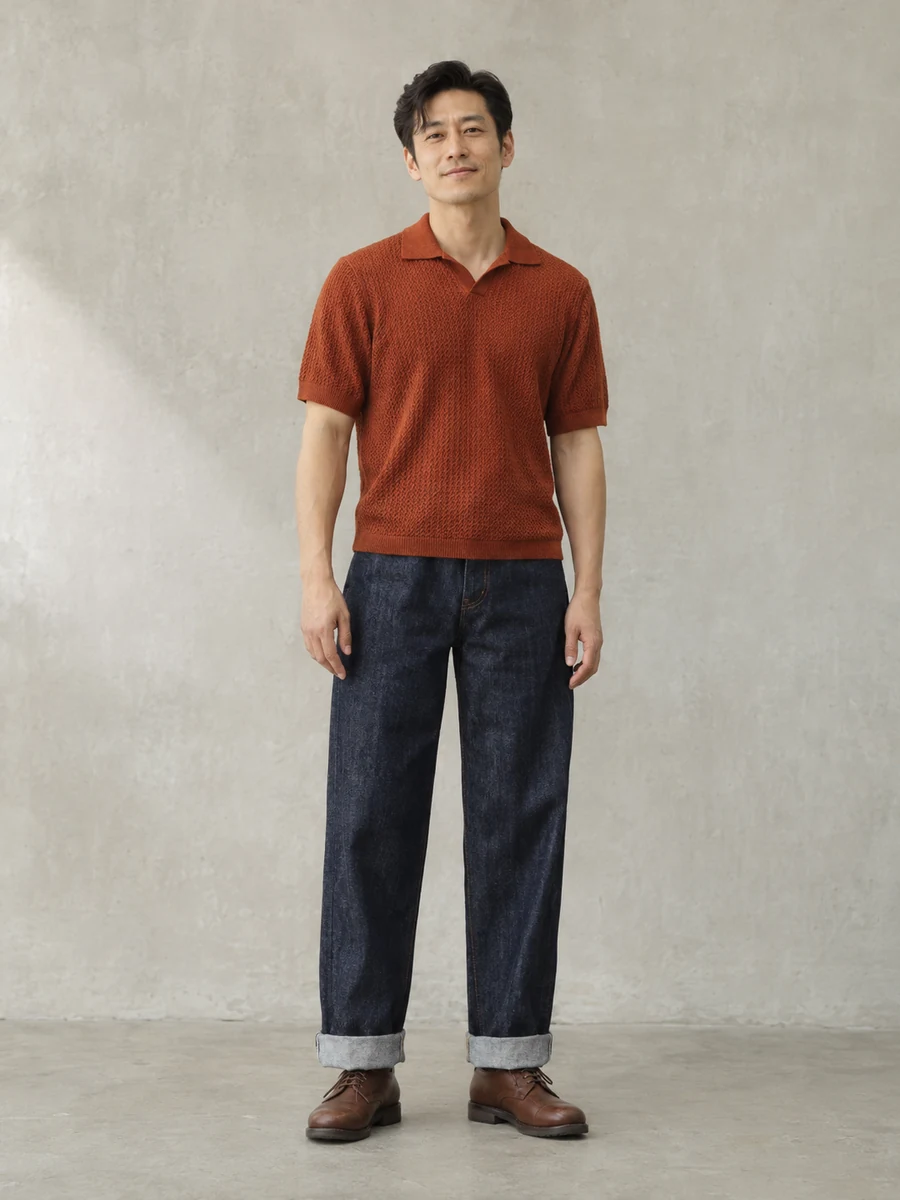
Compare the cuff against the shoe, not by itself
A turn-up adds a contrasting band and shortens the visible leg. Try the cuff with the chosen shoes before deciding it is the right width or height. A substantial rounded shoe makes that band feel different from a lower canvas sneaker. Check the hem from the side and back so it clears the heel when you move.
If you do not want the cuff to become a focal point, use a cleaner hem or a smaller turn-up that the garment can support. Thick denim may resist repeated folding, while a soft trouser may not hold the same edge. Follow your actual garment’s construction and care information. A generated reference cannot establish how either fabric will behave.
Make three genuinely different directions
For a shirt-led version, keep the panelled top visible and use a restrained dark lower half. For a jacket-led version, use a plain center and a clear waist. For a quieter evening version, compare a tucked knit or simple shirt with a higher-rise trouser and closed shoe. These directions change the core arrangement rather than merely the jewelry or hair.
Keep one item locked when you use the builder. If you are starting with your own jeans, the tool should retain that identity while the upper pieces change. Public generic trousers remain reference roles until you provide an owned item. A possible new purchase is a gap to investigate, not something already present in your wardrobe.
Keep the strongest version wearable for your setting
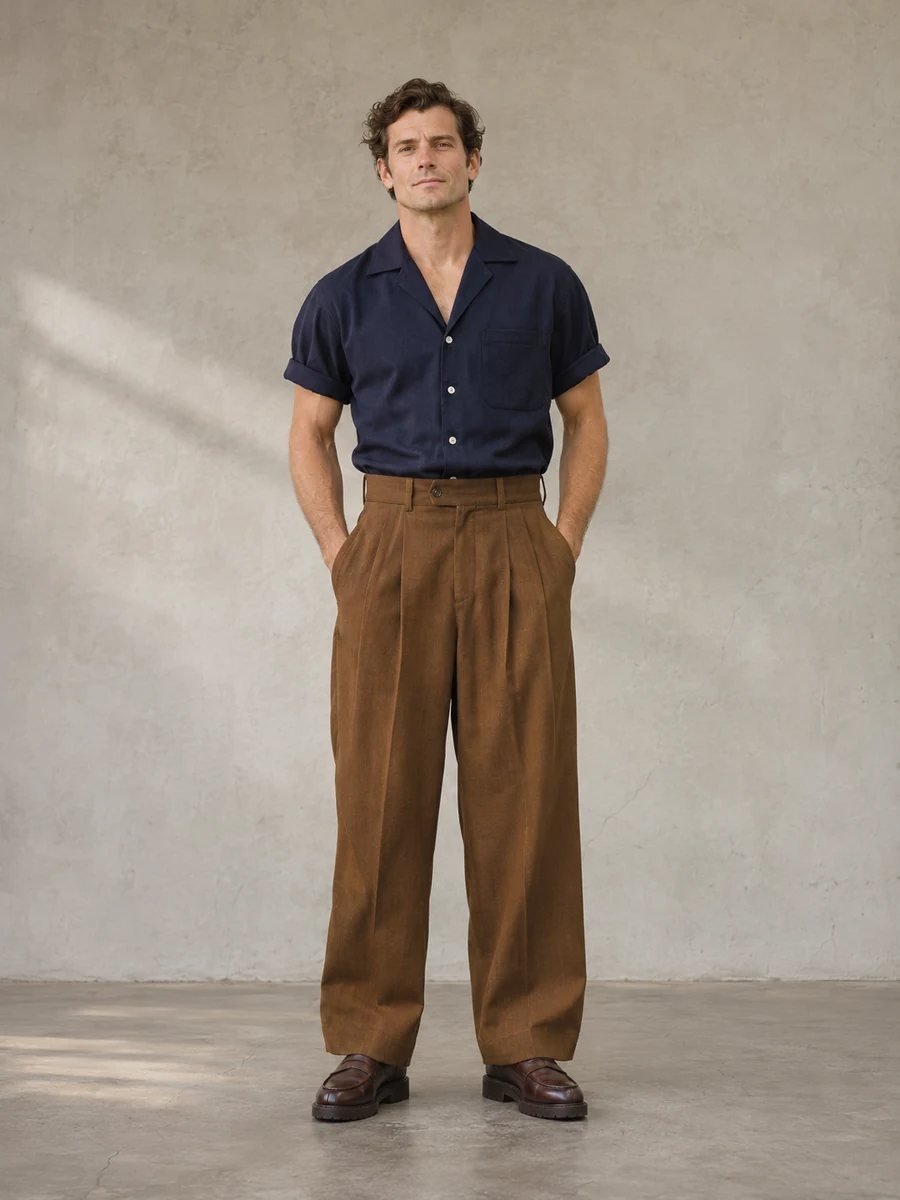
Use the venue and your normal day to set the level of expression. A gig, a casual lunch and a workplace can support different amounts of reference. Try sitting, lifting your arms and walking in the chosen combination before saving it as a ready outfit. Record the result yourself; the lookbook has not wear-tested your clothes.
If the outfit already has a bold shirt, clear cuff and substantial shoe, pause before adding another strong detail. If you want more expression, make a specific choice and compare the whole silhouette again. A useful outfit note explains which reference leads and how the other pieces support it, so you can repeat the idea with fewer decisions next time.
Sources and useful references
Explore more outfit ideas or compare the style files.