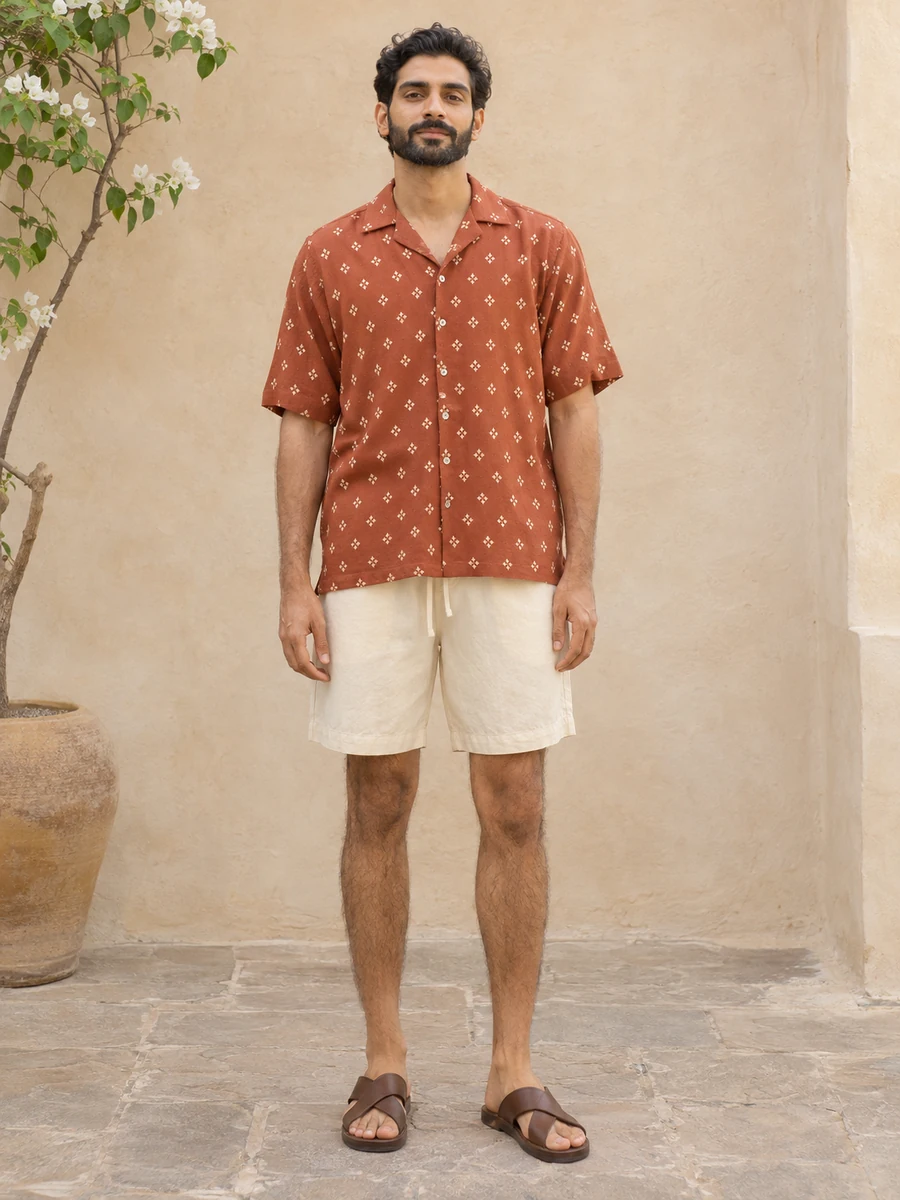
Plan for the actual places you will wear the clothes
Start with the settings on your trip: an informal breakfast, time by water, a town visit, a restaurant or an evening outdoors. Read any venue dress code before treating a reference outfit as suitable. Resortwear can include shorts, open collars, long trousers and light jackets, but those pieces are not interchangeable in every context. The first useful decision is the task the outfit needs to serve.
Check the real conditions and your own garment information. A light-looking shirt in a concept image does not prove cooling, sun protection or quick drying. A sandal that suits a photograph does not establish suitability for a long walk or a specific surface. Use the lookbook to compare silhouettes, then make the practical choice from information about the actual item.
Build a day outfit around the shirt and short lengths
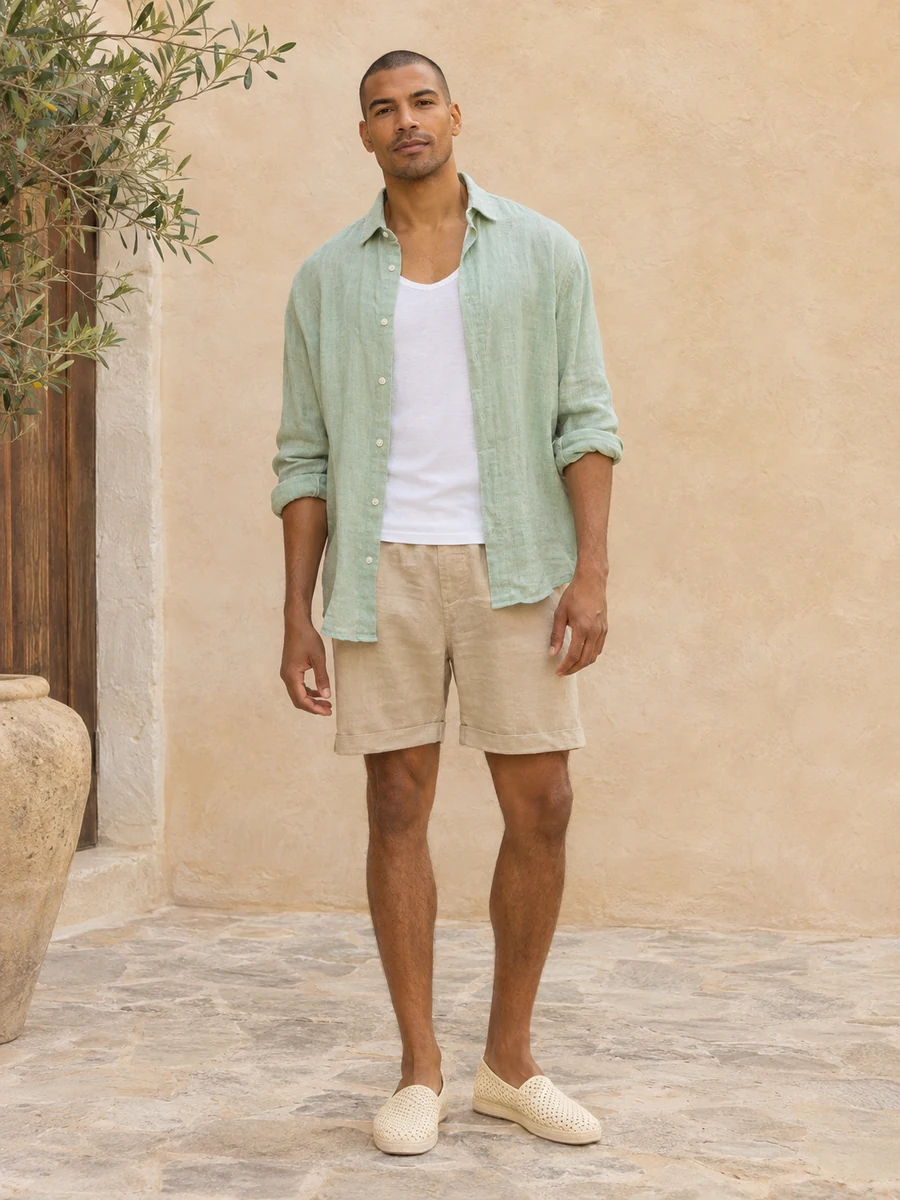
A shorter camp-collar shirt over a roomy short exposes more of the lower shape. A longer open shirt creates two vertical edges around a tee and changes the balance even when the shorts stay the same. Compare both with the waistband where you normally wear it. Keep the sleeve width in the comparison, because the upper rectangle includes the arms as well as the body.
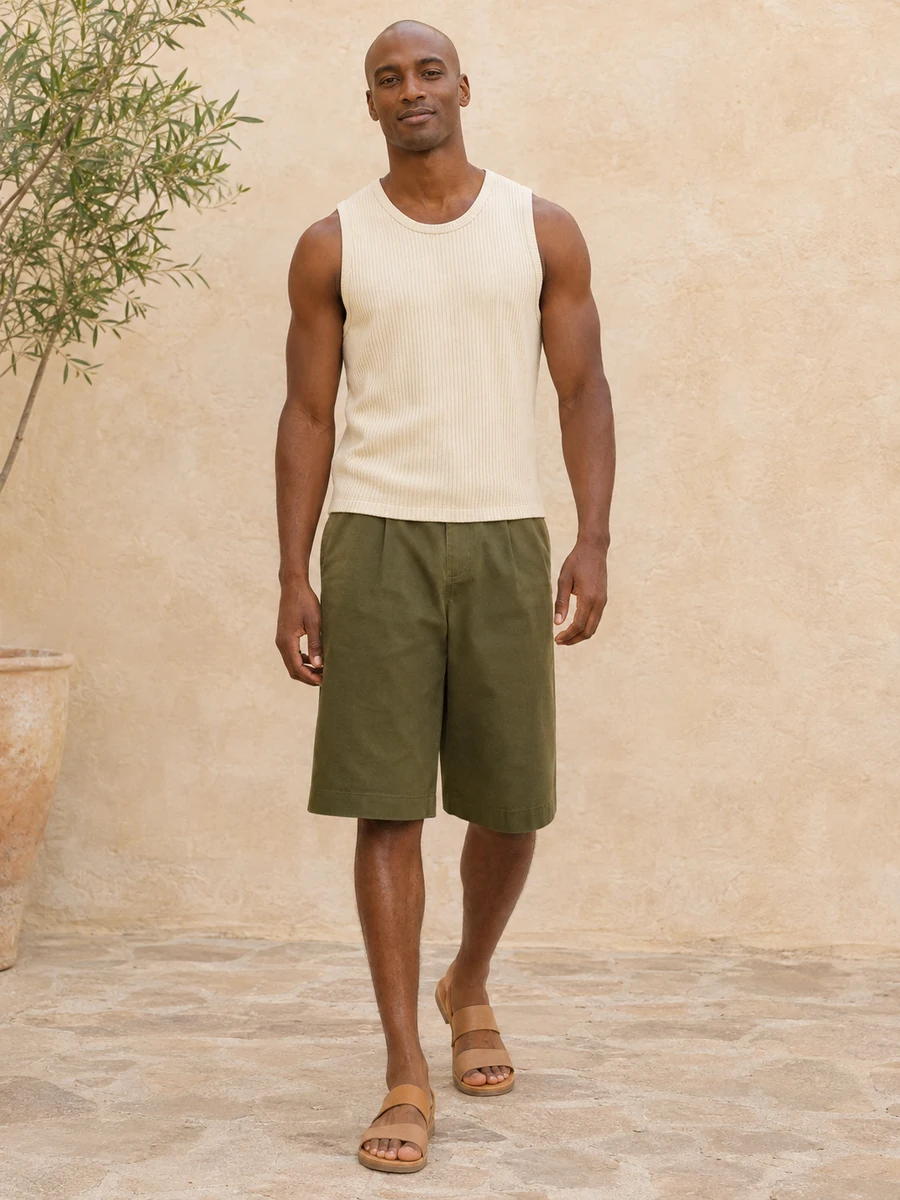
For a quieter version, use one main color area with a plain lower piece. For more expression, let the shirt pattern lead and reduce other competing details. You can also make the short volume the statement while keeping the shirt simple. These are distinct visual choices; none depends on buying a matching set or copying every accessory in the reference.
Switch to long trousers for a different evening outline
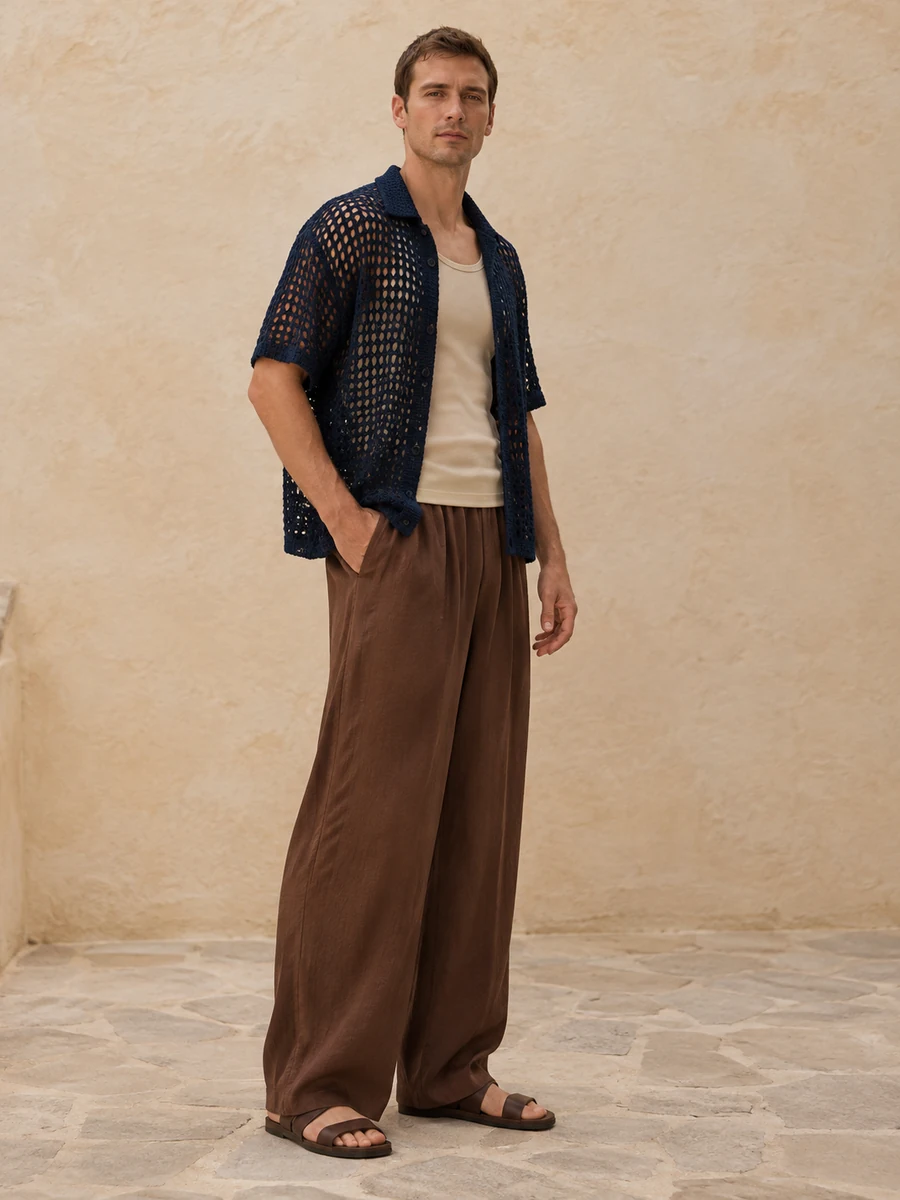
Long relaxed trousers change more than the formality of the day outfit. They create a continuous line below the shirt and make the hem-to-shoe relationship more visible. Compare a tucked shirt with an untucked short body while the trousers and shoes stay fixed. A tucked top exposes the rise; an open short layer frames it. Choose the arrangement that remains usable when you sit and move.
A low closed shoe, loafer or restrained sneaker can produce different endings beneath the same trouser. Check the venue’s rules and your real footwear rather than assuming one option is always correct. Recheck the trouser back above the heel after changing shoes. The same inseam can settle differently against another upper and sole shape.
Choose a layer that works over more than one base
Set out the two bases you want a light jacket or overshirt to serve. Try it over both and compare sleeve room, collar clearance and competing hem lengths. The useful shared layer is one that you can actually put on and remove without rebuilding the outfit. A theoretical match based only on color is not enough when the sleeves or shoulders fight each other.
A plain layer can let a patterned shirt remain the focus. A more prominent layer can instead frame a quiet tee and trousers. Keep the material and care information with the actual garment record. A generated jacket has no verified wind or water protection, and a visually similar retail product should remain an alternative until its exact identity is established.
Make the packing list from outfits you can inspect
Save the complete day and evening combinations, then look at the items shared between them. A capsule count should refer to actual combinations you can open, not every theoretical permutation of belt, sunglasses and shoe. If one outfit needs an item you do not own, keep that as a visible gap or wishlist reference instead of silently adding it to your possessions.
Choose your intended number of repeats yourself. The tool cannot infer laundry access, activity intensity or personal clothing needs from an outfit photograph. Record practical notes privately, and check each saved combination before turning it into a plan. A smaller set of usable arrangements is easier to evaluate than a large number that hides missing items.
Record one proportion and one practical check for each look
For the proportion note, describe what you can actually compare: the shirt ends above the widest part of the short, the long trouser leaves a small fold above the shoe, or the open overshirt frames a plain center. Avoid measurements copied from an unfamiliar model. A consistent mirror view of your own clothes can help you judge the relationship.
For the practical check, use information you know: the venue permits the shoe, the layer fits over the shirt, or the saved item is available for that day. Leave unknown values blank. When your choices are clear, put the complete outfit in the planner and use the packing list as a checkable record, rather than a promise that one illustrated wardrobe will suit every trip.
Sources and useful references
Explore more outfit ideas or compare the style files.