Identify where you want the exaggeration
Opium fashion-inspired styling here uses broad black denim, substantial shoes and contrasts in upper volume. A large hoodie above a wide leg spreads size differently from a fitted top above a flare. Choose that relationship before adding another piece. The shared dark palette does not make these silhouettes interchangeable or mean every garment must be equally oversized.
The name is a fashion reference, not a substance description or a requirement to copy a celebrity. Keep one part of the outfit familiar so that you can judge the effect of a larger or closer neighboring shape. A personal interpretation can come from a proportion rather than a recreated public figure’s complete appearance.
Keep volume separate from excess length
A broad leg needs room through the thigh and opening, but additional inseam can collect below the heel without improving the intended shape. Large footwear makes a visible endpoint; it does not solve dragging cloth. Test real jeans and shoes in motion and from the side before choosing the amount of break.
Oversized upper clothing is not simply the longest available top. Shoulder, sleeve and body width can change independently. A clearer hem may support the lower volume, while several competing long edges hide it. Decide which dimension you want to emphasize and let the others explain that choice rather than exaggerate everything automatically.
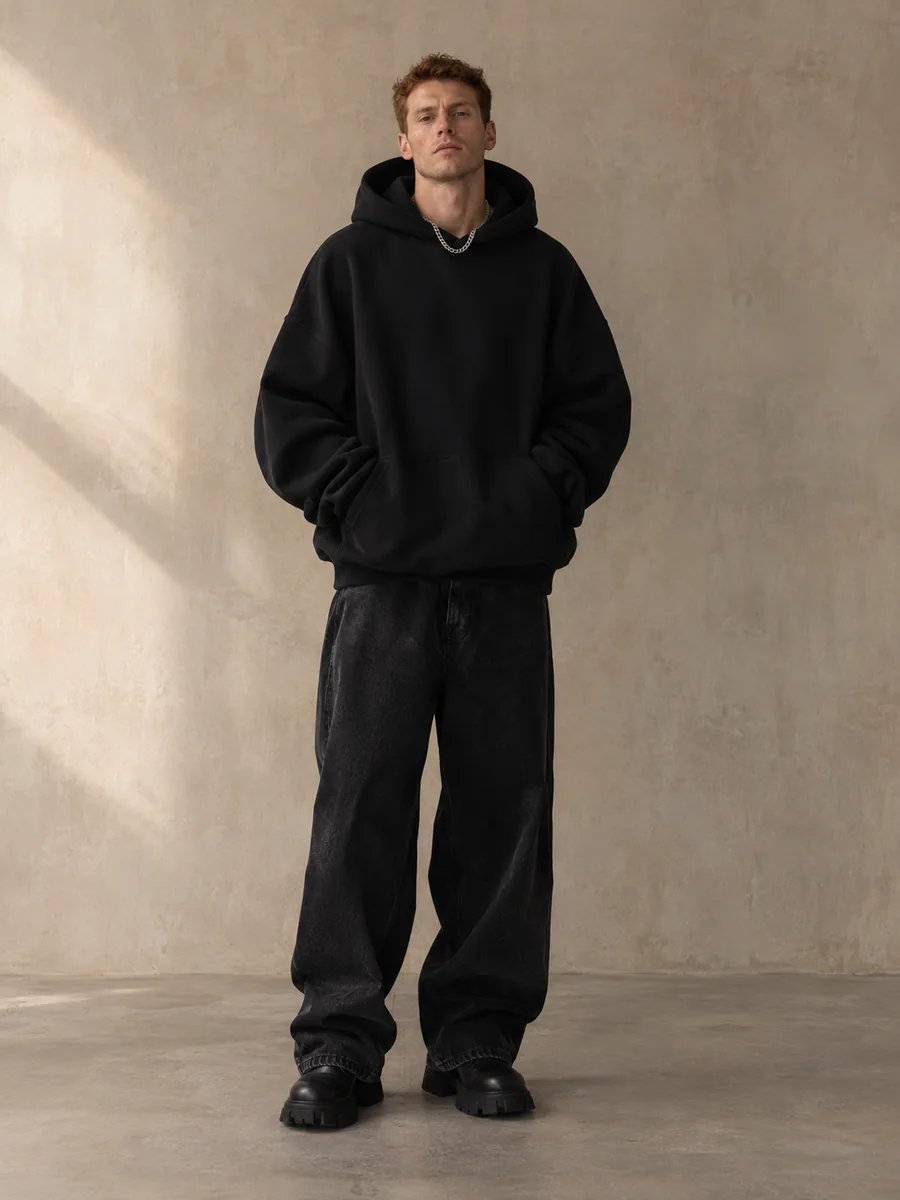
Spread volume through a hoodie and denim
A voluminous black hoodie above broad black jeans makes a deliberately large overall outline. Substantial black shoes ground the opening and a short silver-tone chain can add one small sharper surface at the neck. Shape carries the main responsibility because the colors stay close and the upper area has no large graphic print.
Inspect the hoodie’s natural ending and collar space in your real clothes. Keep the chain optional if it crowds the opening. Walk in jeans and intended shoes, then adjust any hem that catches rather than keeping an awkward length to imitate a still photograph. The desired width should remain practical through movement.
Oversized black hoodie with a wide denim base
Contrast a compact jacket with a longer tee
A short black leather-looking blouson around a longer plain black tee exposes two upper endings. Loose black jeans and thick-soled boots keep a substantial lower outline. Compared with the hoodie, the jacket creates a clearer torso frame while the tee softens its boundary above the waistband.
Choose the exposed tee length deliberately. If it gathers over the pockets or hides more rise than you want, change that relationship before adding another layer. Generated material appearance does not establish quality or construction of a real jacket, so use the image for shape and assess the actual garment separately.
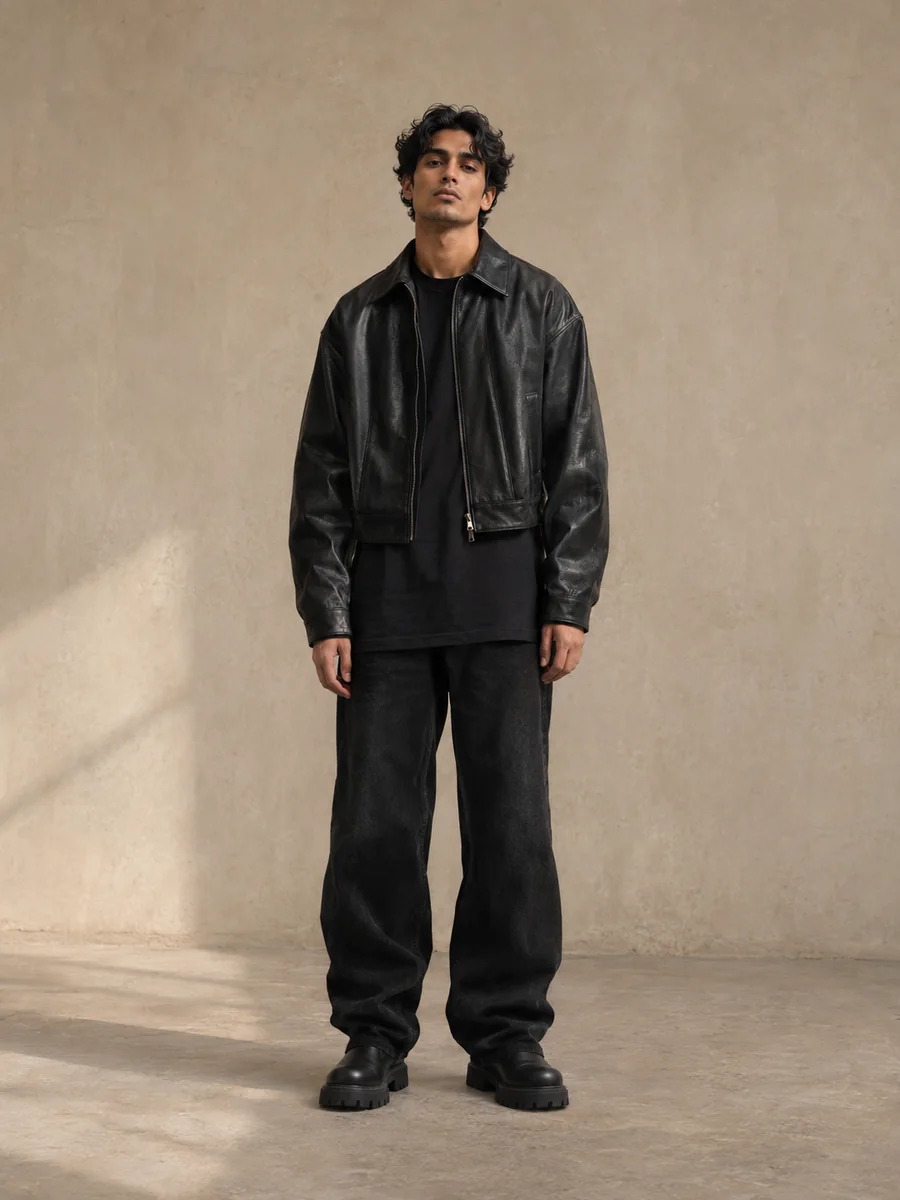
Cropped black leather-look jacket with a long tee
Move the emphasis into a flare
A closer black top above flared black trousers concentrates the expansion below the waist. A short jacket repeats a compact upper boundary and robust black boots meet the wider opening. The palette stays similar to the larger hoodie formula, making the changed distribution of volume especially useful to compare.
Inspect the real trouser through seat and knee as well as the flare. A fitted upper choice should still permit ordinary movement. Use the intended boots to choose lower length because shaft and heel affect how the opening settles. The contrast would be lost if every supporting garment were also made equally large.
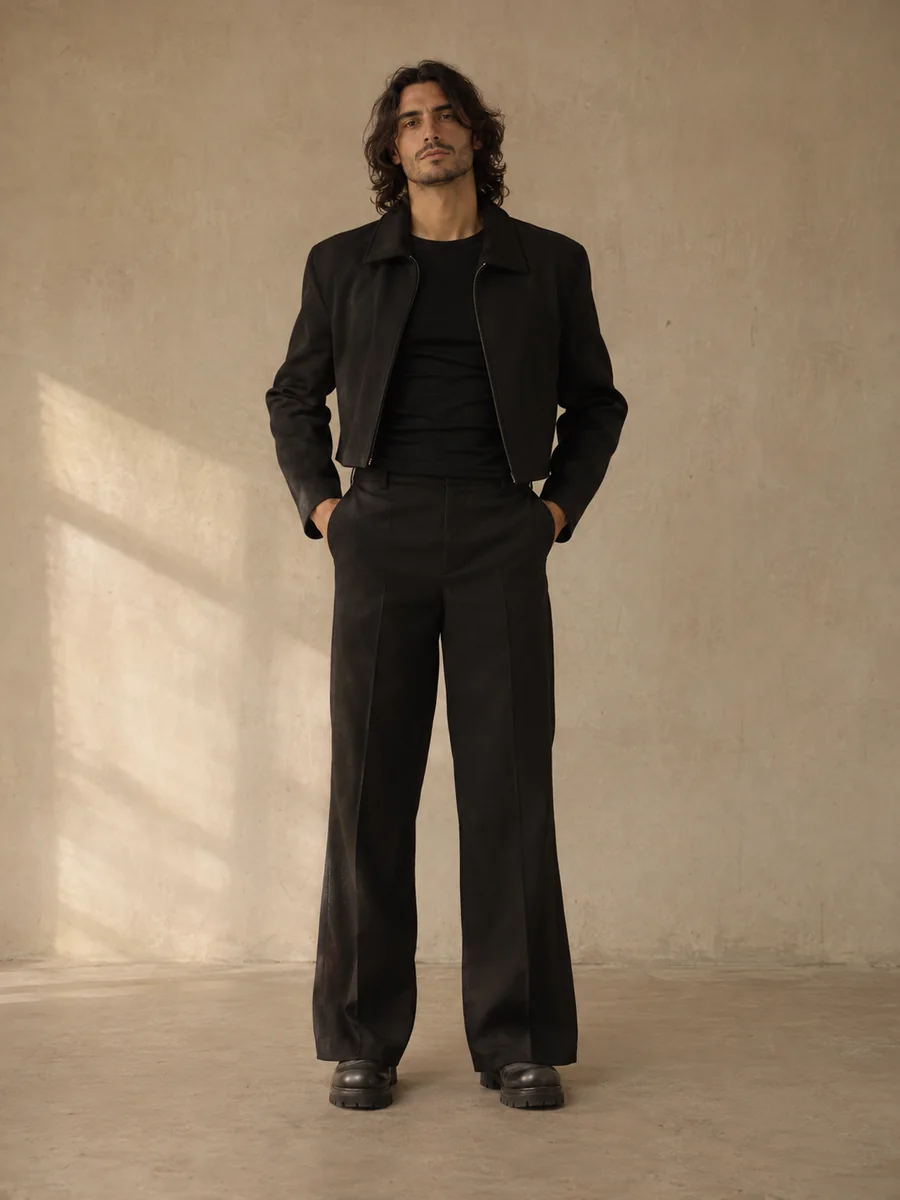
Fitted black top with flared trousers
Use irregular knitwear as the upper surface
A deconstructed-looking black knit above broad black denim introduces texture without another outer jacket doing all the work. Large shoes support the lower opening and a plain beanie remains another quiet surface. The main upper detail is the knit construction rather than a visible shirt collar or a bright central strip.
Test real knit coverage, sleeve movement and hem. An irregular illustrated surface cannot establish how a garment behaves or feels. Keep the beanie optional and compare the outline without it when the head and torso become visually heavy. Let one part supply texture while the denim retains the broader lower shape.
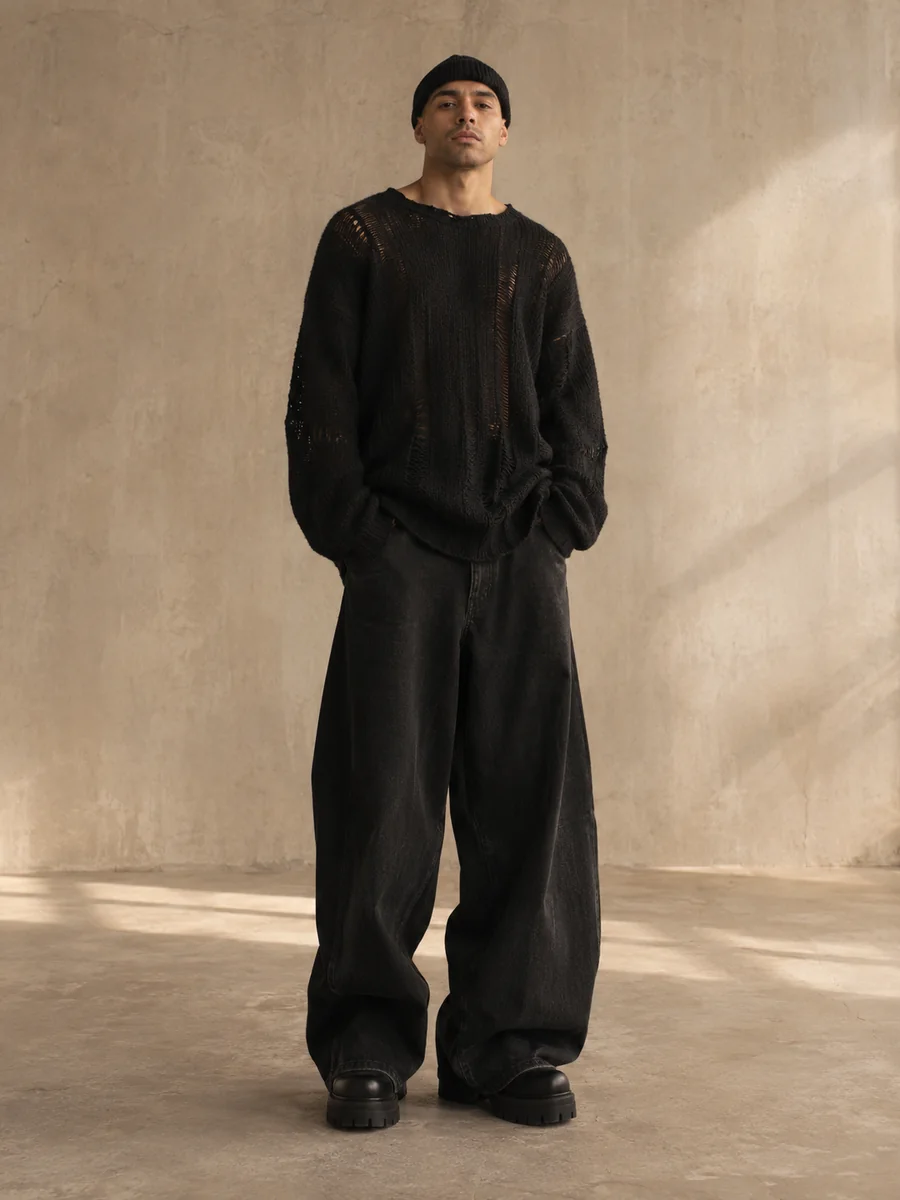
Deconstructed black knit over large denim
Compare dark references through their structure
Goth may foreground long fluid frames, grunge washed casual texture, and avant-garde outfits asymmetry or sculptural construction. The same jacket or boot can support several directions. Compare actual arrangements rather than relying on color alone, and keep the part you want to borrow more specific than a general dark-fashion label.
The quiz and finder can identify neighboring examples and preserve a preferred item or silhouette. Their scores are editorial browsing aids, not personal judgments. Save the formula you can adapt with real clothing, then change one volume relationship at a time so the next decision is based on something you have actually learned about the fit.
Explore more outfit ideas or compare the style files.