Choose the length relationship before the label
This Korean-inspired edit concentrates on selected contemporary proportions: a gray coat around a dark base, short cardigan above broad trousers and boxier shirt around a plain tee. The label describes fashion references rather than a national uniform or a prediction about a wearer’s identity, personal background or the way everyone in a population dresses.
Start with the outline you enjoy. Long outer edges and a compact knit put the same lower volume in different proportions. Keep one garment familiar so the result of that change stays clear instead of replacing everything at once and then trying to discover which new part caused the improvement.
Treat length, width and color separately
A shorter knit reveals more rise, a long coat frames the body vertically and a boxy shirt changes upper width as well as its ending. Compare one dimension at a time when possible. A pale top above black trousers makes the boundary more obvious than two dark garments with a similar surface.
Check actual sleeve room and where every hem settles during ordinary movement. A layer arranged for a photograph may not stay there through a day. When the upper area feels crowded, remove one competing edge or adjust a length before assuming all of the garments must be made closer to the body.
Use a gray long frame around black
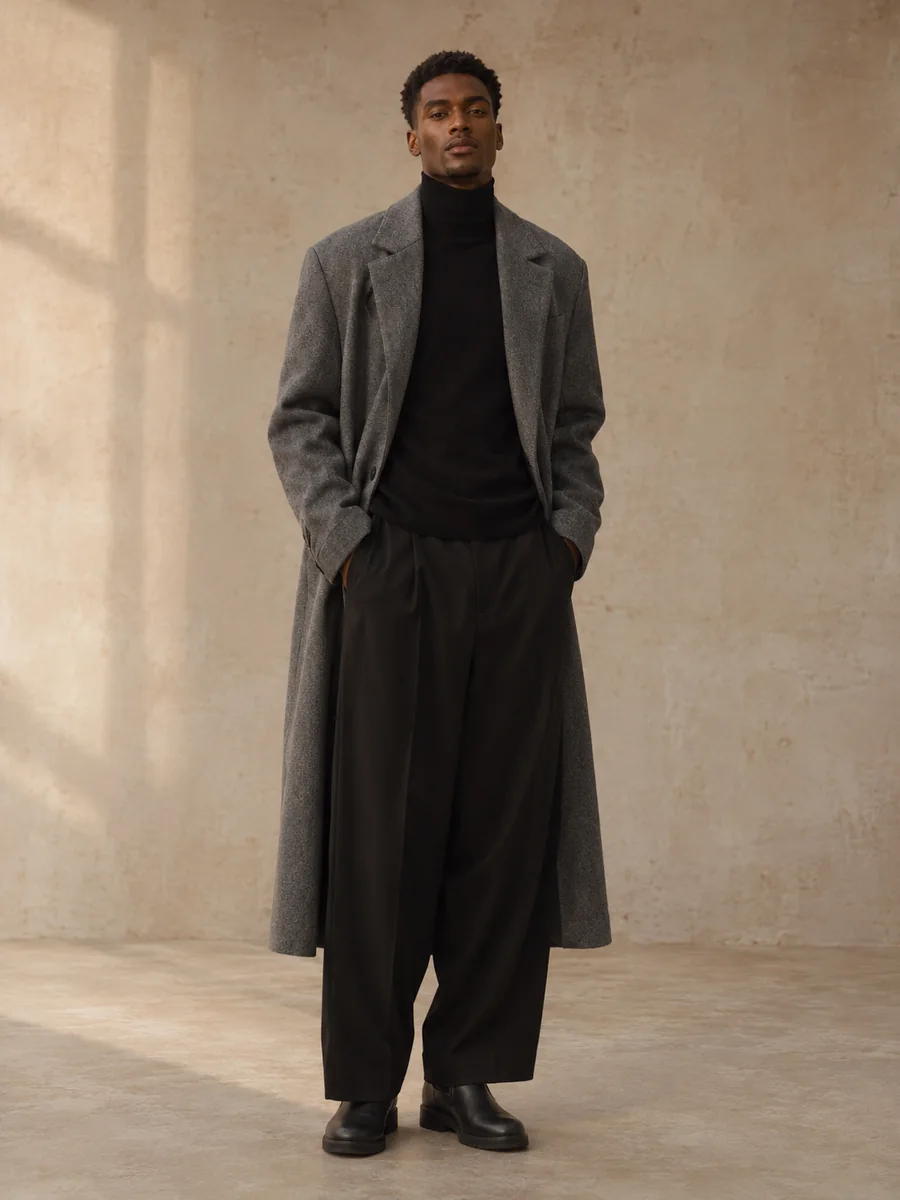
A long gray coat above a black rollneck and broad black trousers creates a clear outer boundary without a bright central shirt. Quiet black ankle boots continue the lower line. The outer length changes how much trouser width remains visible from the side, making it a substantial proportion choice rather than simply another color.
Try the actual coat over the real knit through chest and sleeves. The illustration cannot establish insulation or a temperature range. Set the hem around your intended boots and inspect shaft and heel clearance, keeping the continuous dark base deliberate rather than allowing it to hide cloth catching or dragging near the ground.
Long grey coat over a wide black base
Let a short cardigan expose the lower line
A short beige cardigan around a white tee makes a light-to-dark boundary above wide black trousers. Black loafers extend the lower palette with a low opening. More rise and upper leg remain visible than in the coat example, so the relationship between knit hem and waistband becomes the central structural decision.
Check the tee strip beneath the cardigan. A small edge may help, while a much longer base can change the compact upper frame. Compare both with real clothing instead of forcing a crop that only works in a pose. Inspect the loafer and trouser opening while walking and seated because a low shoe changes the break.
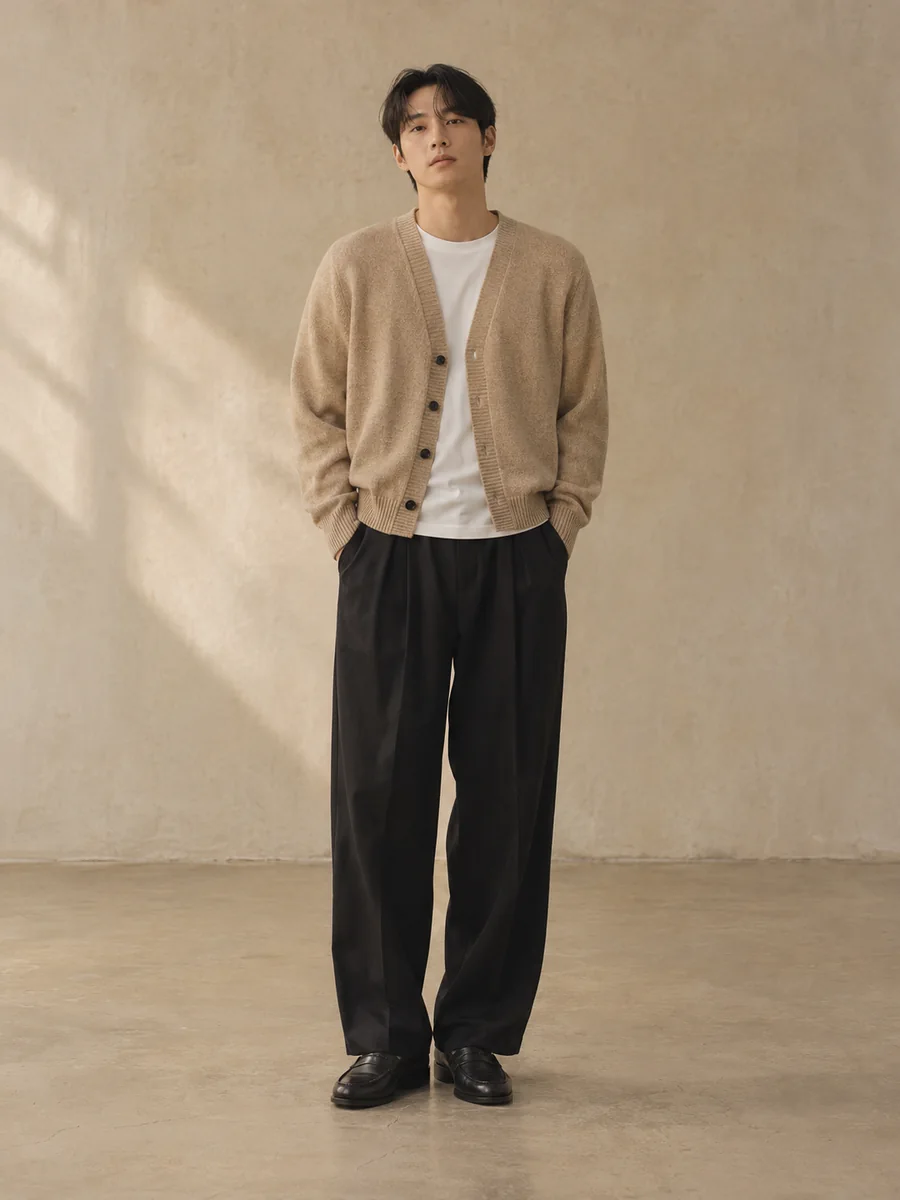
Short beige cardigan with wide black trousers
Keep a boxy blue shirt clear over gray
A boxy pale-blue shirt around an ecru tee provides a lighter upper option. Straight gray denim keeps the lower shape less broad than the black-trouser formulas, while white sneakers echo the brighter center below. The front opening and upper hem provide distinction without requiring another patterned surface or a separate statement accessory.
Try the real shirt open at the width you prefer and compare its ending to the tee. If they form an unclear band, change one length before adding detail. Gray denim is a distinct palette choice, so a finder should not call it an exact match when the selected requirement is strictly black clothing.
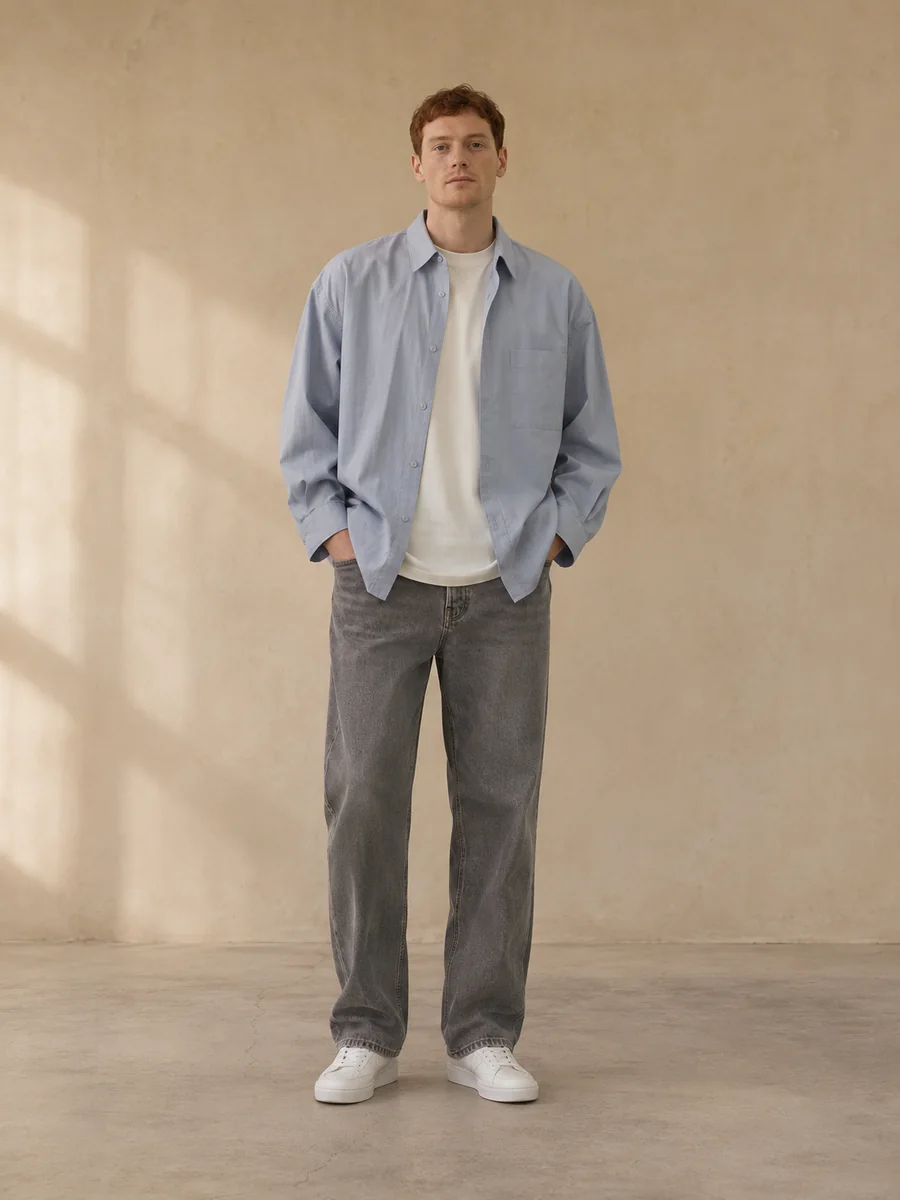
Boxy pale blue shirt with straight grey denim
Warm a compact jacket above pleats
A short brown blouson around a fine cream knit creates a warmer frame above charcoal pleated trousers. Black shoes quiet the foot. The compact upper length and roomier leg do most of the work, while the knit lightens the middle with a softer neckline than an Oxford collar would create.
Check jacket room over the actual knit in shoulders and sleeves; a fine-looking texture cannot verify weight or comfort. Set the waistband and hem deliberately, then compare how much cream stays visible when the jacket is open and closed. That makes the color contrast part of a stable arrangement rather than a momentary styling trick.
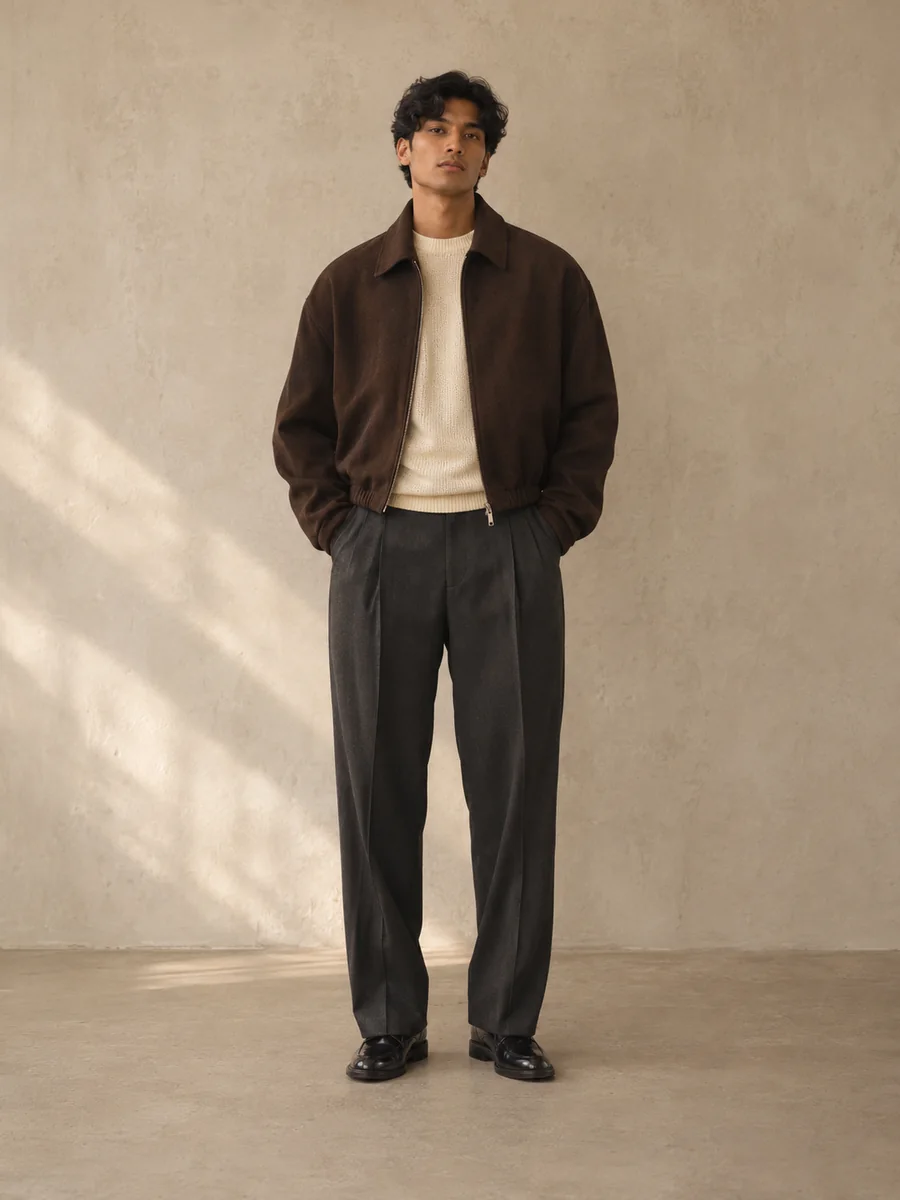
Short brown blouson with cream knit and charcoal pleats
Compare neighbors without flattening their differences
Minimalist outfits may remove more construction detail, while city boy-inspired formulas often keep shirts and layers more generous throughout. They can share useful clothes without becoming identical. The differences lie in selected proportions and supporting pieces, not in assuming nationality decides how a wearer should dress or which garment is appropriate for them.
The quiz is a browsing aid and the finder can retain a piece or silhouette you prefer. Results should explain the match and show approximations. Save the formula that works with your real garments, then make small length changes so the next choice comes from a practical observation rather than another label or near-identical purchase.
Explore more outfit ideas or compare the style files.