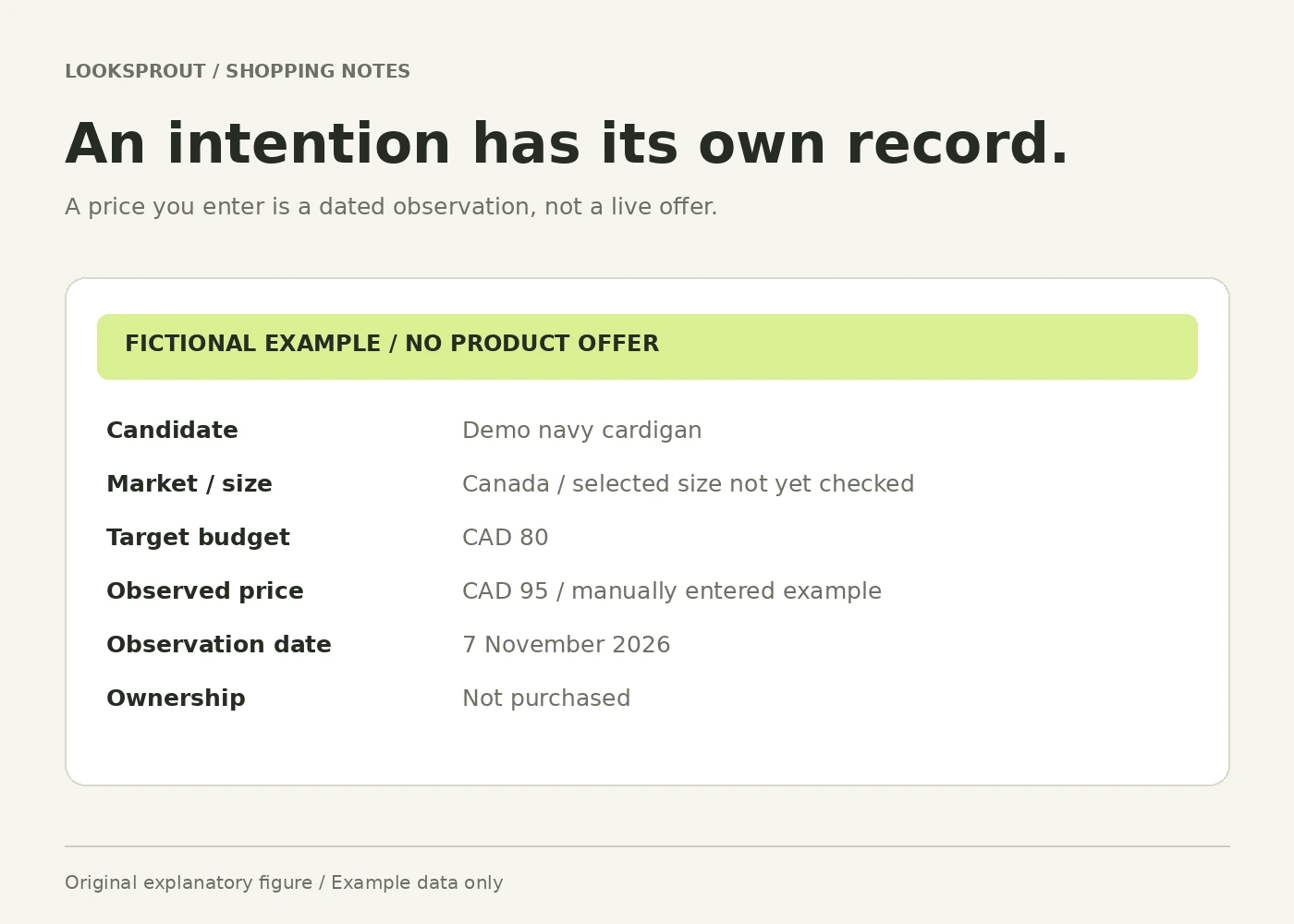
A useful wishlist should still make sense when you open it a month later. It needs to explain which item you meant, what you hoped it would do and what you actually observed. A product name and a number alone cannot tell you whether the number was a budget, a past offer or a total you could pay.
Keep intention, evidence and purchase status separate. You can want a cardigan, set a CAD80 target and record a CAD95 merchant observation without owning it or having a current offer. That simple distinction makes the list easier to trust and easier to edit.
Describe the candidate precisely enough to recognise it
Save the maker, model or article code when available, the intended colour and the relevant size system. Keep the source URL and market with the record. If you are investigating a broad role rather than an exact item, say so: short dark cardigan is a search brief, while a named model in a selected colour is a candidate.
An inspiration photograph can help describe shape without establishing a product identity. Record the feature you want to borrow, such as a high neckline or a shorter body. Avoid assigning a brand or material from appearance alone. The wishlist can preserve an uncertain lead while clearly marking which details still need verification.
Put your target in its own field
A target is the amount you would be willing to spend under stated conditions. Give it a currency and decide whether it refers to the item alone or the complete known cost. A CAD80 item-only target asks a different question from a CAD80 delivered budget. Neither is evidence that a seller has made an offer.
You can change the target when your priorities change. Keep a short reason if it helps: the item now replaces a worn piece, or the planned event has passed. Do not edit a merchant observation to make it look as though the offer matched your new budget. Your preferences and the seller’s prices have different histories.
Add observations as dated events
When you check a merchant, save the selected size, colour, condition, amount, currency and date. Note the known delivery cost and any unresolved charges. The FTC’s comparison-shopping advice recommends recording model and variant details and checking total costs. Those checks make a note useful beyond the moment it was saved.
For a fictional cardigan, the record could say: target CAD80 delivered; observed CAD95 item-only on the stated date; delivery not checked; intended size not confirmed. The conclusion is incomplete, not overpriced or available. A later observation can resolve those questions while leaving the earlier note intact.
Keep the reason beside a complete outfit
Write the role in one sentence, then try the candidate with pieces you actually own. If you want a layer for two office outfits, save those two boards. Check the necklines, body lengths and outer-layer space rather than treating a shared colour as proof of compatibility. The candidate should remain visibly separate from owned items.
If an outfit depends on another purchase, record that dependency. A wishlist can become expensive through chains of apparently small additions: the top needs different trousers, those need different shoes, and the original role remains unresolved. A complete board makes those dependencies easier to see than a list of attractive isolated products.
Set a review reason that can change the decision
Useful review points include receiving a missing measurement, completing a repair, returning from a trip or checking a seasonal need. A date can also prompt you to reconsider whether the activity still matters. The review is an opportunity to change the decision, not an obligation to find a reason to keep the candidate.
At review, compare the original role with the current wardrobe. Has an owned item started doing the job? Did the planned event change? Is the candidate still the right length, size or market? A lower price does not answer those questions. Removing an item can be a successful outcome of maintaining the list.
Move a purchase only after it becomes a real possession
A checkout confirmation and an arrived garment describe different stages. When you receive a purchase, confirm the actual variant, size and condition, then add or link the physical item to your wardrobe. Record the actual amount paid separately from the old target and advertised amount. Preserve the original candidate history if you want to understand the decision later.
The wishlist is a manual record you maintain. A saved review date does not by itself create a background stock check or a notification. Before buying, revisit the current selection and terms. The point of the list is to help you remember accurately and choose deliberately, not to make a past observation look current.
Put the idea to work