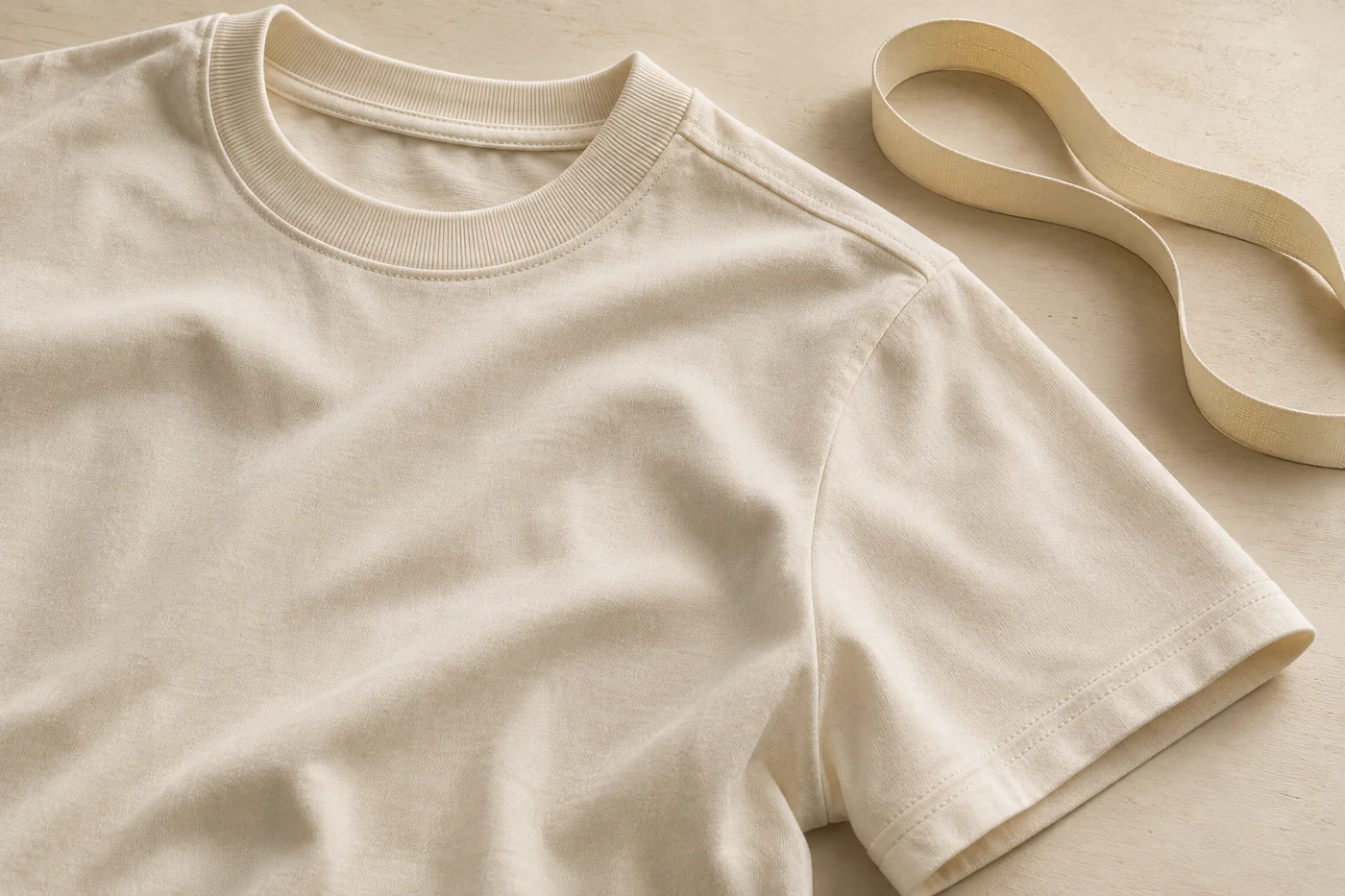
Before buying a T-shirt online, check which garment the page describes and how its measurements are taken. A familiar letter size, a model photograph and a cotton percentage answer different questions. Put those details together before deciding whether the tee serves the role you need.
Start with a T-shirt you already like for that role. A close underlayer, a short boxy tee and a longer loose tee need different comparisons. The checklist below helps you record what is known, identify the important missing information and avoid turning a styling image into a fit guarantee.
Verify the exact tee and color variant
Write down the product name, style code if supplied, selected color, size range and market. Check that the composition and photographs belong to that variant. Some product pages contain several cuts or fabric versions under similar names, so a search result title alone is a weak basis for comparison.
Look at front, back and detail photographs when available. Check the neckline, sleeve shape, hem and any print placement. A styled image can show an intended outfit, while a clearer product view may reveal the garment’s construction. Neither view proves that the color will look identical under your lighting.
Decide what you want the cut to do
Name the role: worn under a shirt, worn alone with wide trousers, tucked into a skirt or layered over another top. Then identify the dimensions that matter to that role. Body length, width, shoulder arrangement and sleeve opening can matter differently even when two tees have the same size label.
Terms such as relaxed, oversized and slim belong to the brand’s description of that product. They do not supply a universal amount of room. A dropped shoulder also changes where the sleeve begins, so a shorter shoulder-to-cuff number does not necessarily create a shorter overall arm line.
Read the measurement labels before comparing numbers
Check whether the chart describes the body or the finished garment. UNIQLO’s guidance explicitly distinguishes those quantities and directs shoppers to product-specific charts. Use the seller’s diagram to identify where width and length begin and end; two fields both called sleeve length can use different paths.
Compare your reference tee using the same method. As a hypothetical example, a 54 cm flat width and a 56 cm flat width differ by 2 cm across the garment. That does not mean the larger tee fits every body 2 cm better, or that a full body circumference should be entered as a flat width.
Read composition without turning it into a quality score
Record the exact percentages shown for the selected variant, including any separately listed panels or trims. A fibre label identifies ingredients; it does not fully describe yarn, construction, finishing, opacity or how the tee feels against your skin. Leave those properties unconfirmed unless the product provides evidence.
If a fabric weight is stated, preserve its unit and product context. If it is missing, do not estimate it from a photograph or from another colorway. A heavier-looking tee may suit the outline you want, but the image alone cannot establish weight, longevity or a universal quality ranking.
Check the care and buying conditions
Read the care instructions before committing to the rotation you imagine. Can you follow them with your normal laundry setup? A second tee has limited practical value if its care makes it unavailable when needed. Do not borrow the instructions from another product simply because the fibre percentages look similar.
Check delivery, returns, final-sale restrictions and the selected size’s availability directly with the seller. Record any price with currency, market, date and variant. A headline starting price may not be the price of the size and color you intend to buy. Unknown charges should stay unknown in your comparison.
Make a short decision record
Save the exact link, market and size in your wishlist. Keep the intended role and measurement reasoning in a private moodboard note with that link. Use the garment measurement tool for dimensions taken in the same way. Keep a missing shoulder width or unclear sleeve origin visible rather than filling it from a model’s pose.
Try the candidate’s role with clothes you own in the outfit builder. If it would only duplicate a tee that already makes those outfits comfortably, reconsider the need. If it solves a specific issue, such as a different length with your skirt, keep that reason attached to the candidate and verify it when the garment arrives.
Put the idea to work