Begin with a generous everyday piece
This city boy-inspired approach uses roomy shirts, broader trousers and familiar outer layers arranged through deliberate length. Pick one garment you already enjoy wearing generously, then decide where its neighbors should end. The reference describes selected styling ideas, not a claim about what everyone in Japan wears or a rule for personal identity.
An Oxford, broad chino or utility jacket can be the starting point without making every piece the largest available size. Compare upper width and lower shape together. A relaxed outline still needs visible boundaries, and the real garments should remain comfortable when seated, walking and going through the ordinary movements of your day.
Connect width through the layer endings
An open shirt above a tee creates two front edges, while a cardigan makes a softer frame. A long outer jacket hides more rise and a short one reveals more leg. Choose the relationship before adding a cap or bag whose shape may obscure the lines you originally wanted to compare.
Keep colors quiet enough to judge the lengths. Blue, beige, olive, navy and white make useful differences without a loud print. If the silhouette feels undefined, move one hem or remove one competing layer instead of narrowing all the trousers automatically. Length and width are separate dimensions that can be adjusted with familiar clothing.
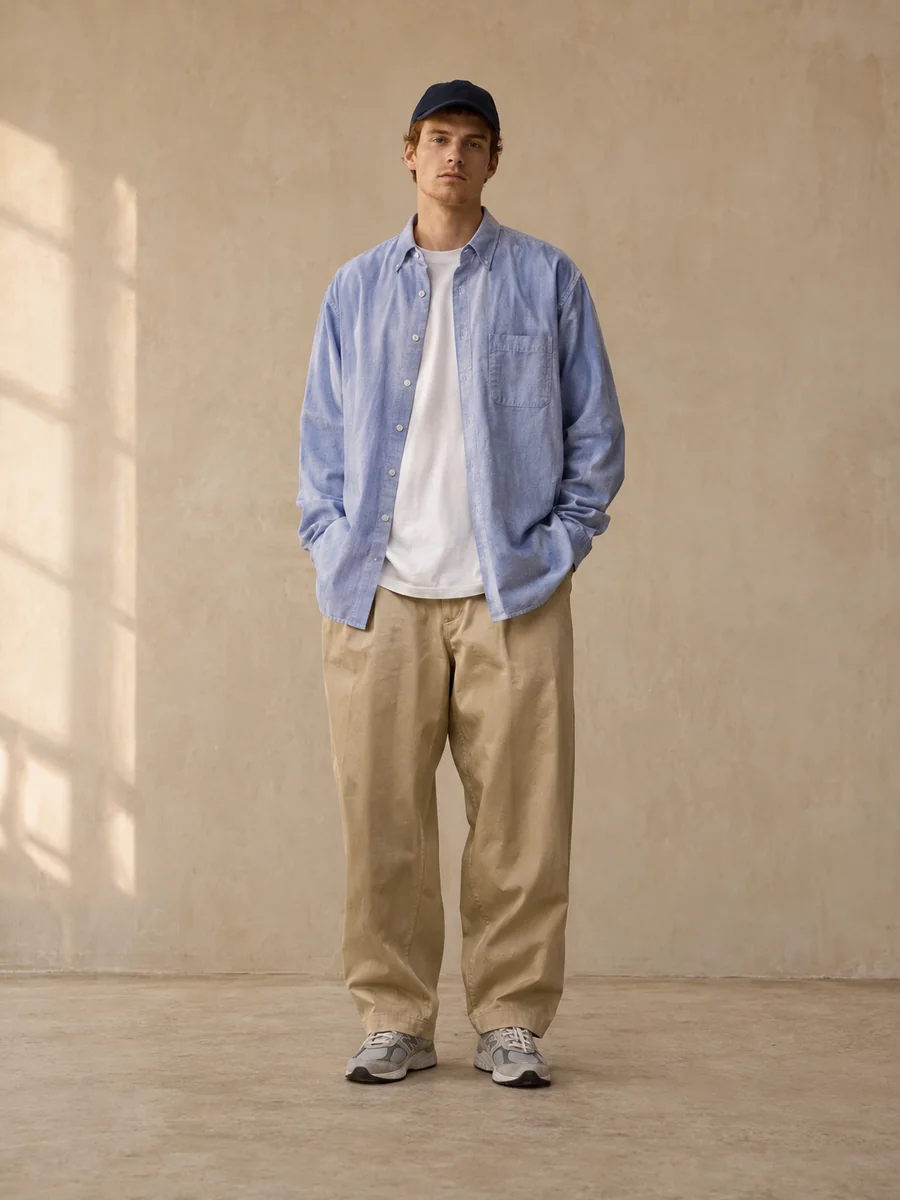
Let a blue Oxford frame a plain tee
A generous blue Oxford around a white tee gives broad beige chinos a clear upper frame. Gray sneakers quiet the endpoint and a plain navy cap repeats a darker related shade. Shirt room and trouser fall create the effect rather than a brand mark or an unusually large set of decorative accessories.
Inspect the real tee and shirt hems when worn open. They need not end at the same point. Set the chinos above your actual sneakers and check the back clearance as well as the front. That lets the wider leg remain deliberate without using cloth underneath the heel as the only signal of a relaxed proportion.
Roomy blue Oxford with wide beige chinos
Pair a navy overshirt with olive shorts
A roomy navy overshirt around a striped tee changes the upper detail while broad olive shorts expose more leg. Quiet brown low shoes give a different endpoint from a substantial sneaker. The short’s knee-level coverage makes sock, shoe and exposed lower leg more important than they are under full-length trousers.
Assess width and length independently because a longer short does not automatically allow room through the thigh. Leave enough of the shirt opening clear for the stripe to read without another print competing. Use actual garments to judge the full outline rather than copying a single measurement or the pose from the illustration.
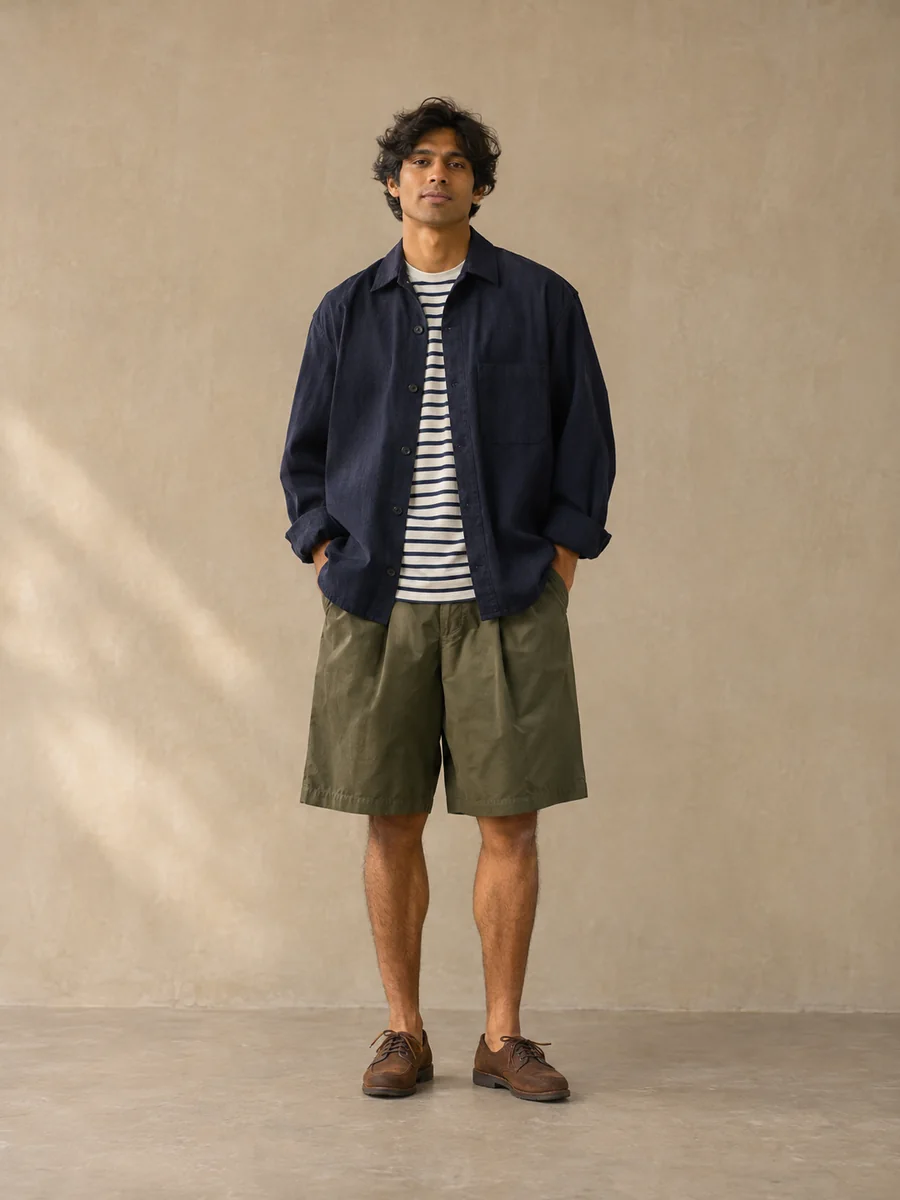
Navy overshirt with wide olive shorts
Use a cardigan above broad indigo denim
A generous forest-green cardigan around a white Oxford gives broad indigo jeans a softer upper surface. Ecru sneakers brighten the lower edge and echo a little of the shirt. Collar and knit opening establish the layer order without requiring several accessories around the neck, head or waistband to make the reference apparent.
Check the actual cardigan sleeves over the shirt so that both move comfortably. A larger knit cannot solve a shirt that gathers at the shoulder. Inspect both hems over the denim, then compare the amount of break above the real shoe before deciding whether the useful adjustment belongs at the top or bottom.
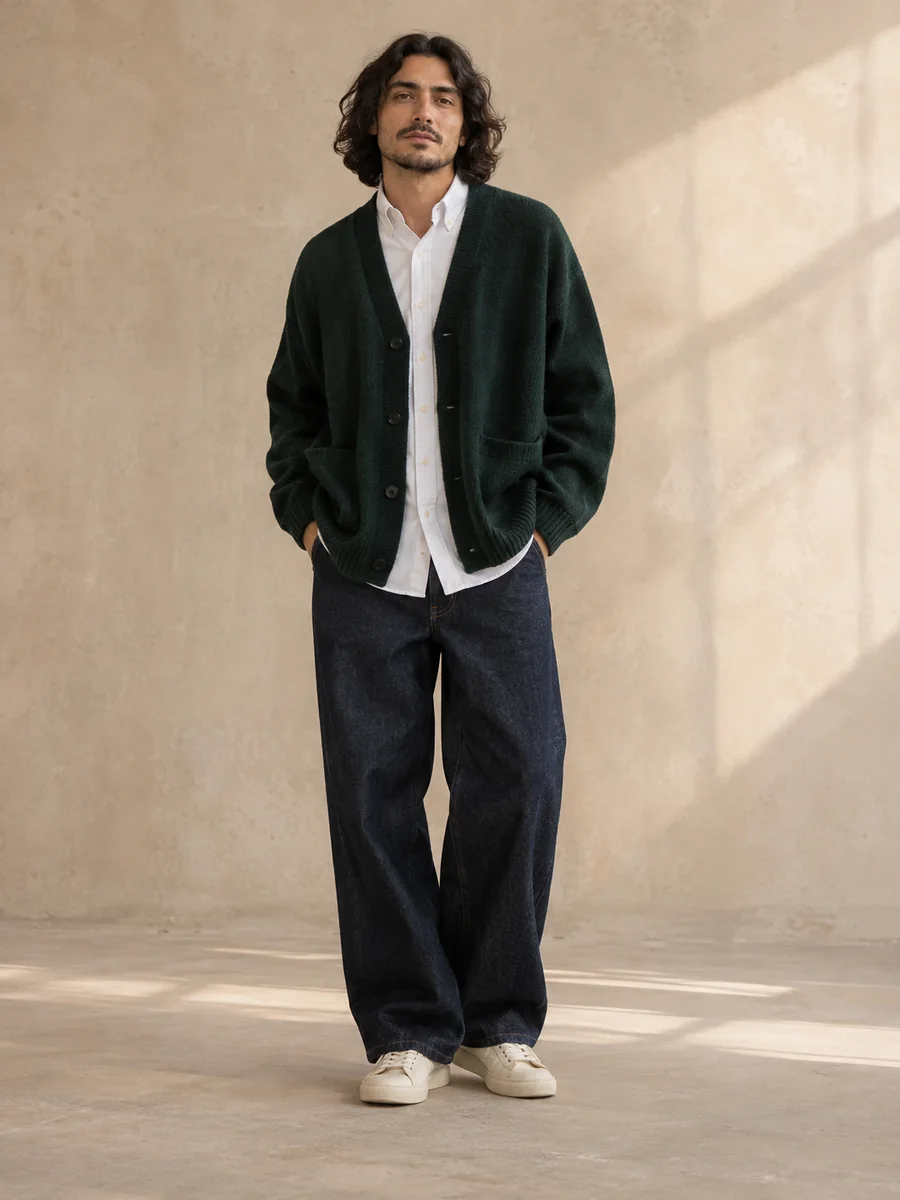
Deep green cardigan over an Oxford and wide denim
Give a hoodie a utility-jacket frame
A light-brown utility jacket over a gray hoodie makes the outer arrangement more generous. Broad navy trousers and rounded black shoes quiet the lower half so jacket length and hood become the clearer changes. Workwear shares some of these pieces, but the choice of layering and volume gives this formula its own relationship.
Try the actual jacket over its base through ordinary movement and let the hood sit naturally at the collar. Choose real materials for practical conditions rather than reading warmth into a concept. Keep enough lower leg visible to understand its width, then set the hem around your shoes so the layers stay connected and useful.
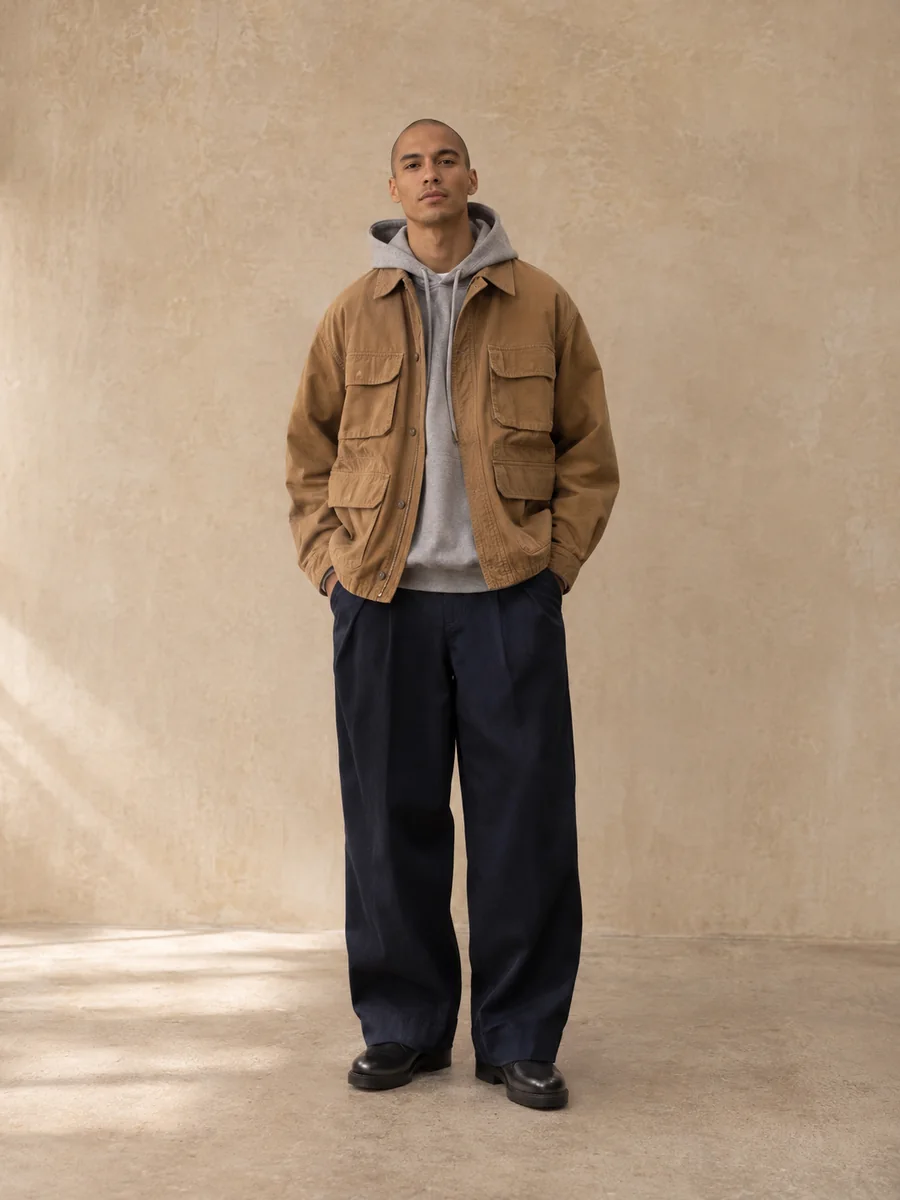
Light brown utility jacket with a grey hoodie
Reuse ordinary clothing across neighboring directions
An Oxford, gray hoodie and broad trouser can support several arrangements when their actual proportions cooperate. A capsule should show those supported combinations rather than multiply every category. Save contrasting upper frames so you can compare what a shirt, cardigan and jacket each change while the lower half stays relatively stable.
Scandinavian-inspired, workwear and contemporary Korean-inspired galleries provide nearby alternatives. Their overlap does not assign an ordinary garment exclusively to a country. Keep notes about the width and length that worked with your real clothing, then use those decisions for another formula instead of treating a generated concept as an exact merchant kit.
Explore more outfit ideas or compare the style files.