Start with the contrast you actually like
For this edit, indie sleaze means a deliberately less uniform mix of casual layers and rock-referenced details. It can be as simple as a worn-looking tee beneath a smoother jacket, or an open shirt around a dark base. The label overlaps with grunge and biker dressing, so compare the clothes rather than trying to separate every influence.
Choose one contrast first: smooth against washed, a longer shirt beneath a shorter jacket, or a patterned top with plain denim. Adding distressing to every item makes the individual surfaces harder to read.
Keep the denim shape familiar
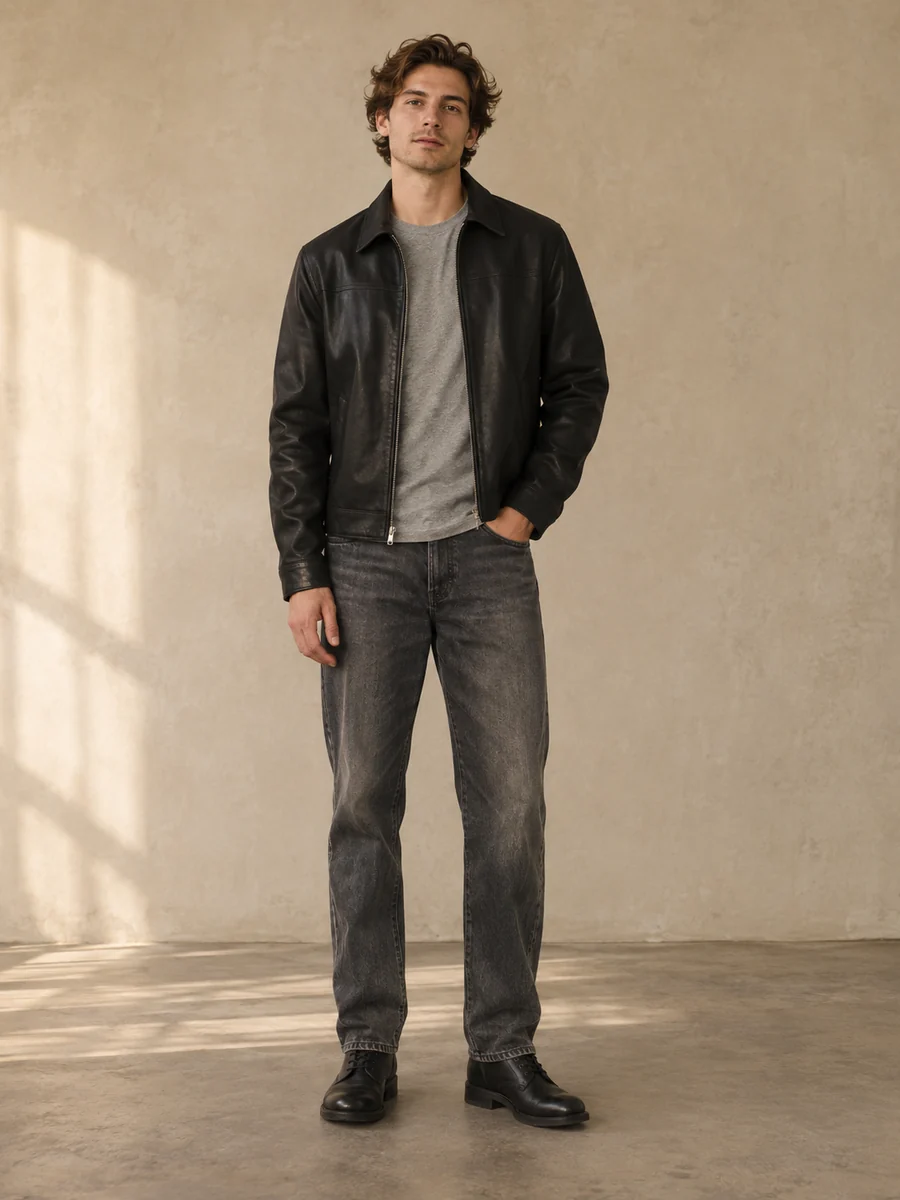
Black short jacket and faded straight denim combines a black leather-looking jacket, grey tee and faded straight denim. The jacket edge frames the softer-looking center. The straight leg makes it easier to judge where the tee and jacket end without several large volumes competing at once.
Wear the jeans at their normal position and check whether the tee hem needs adjusting. A short visible strip and a long hanging panel create different proportions. Keep the version that remains comfortable when you sit and move, rather than a fold that only works while standing still.
Black short jacket and faded straight denim
Let an open shirt change the frame
Burgundy open shirt over a dark tee uses a burgundy open shirt, black tee and charcoal jeans. It replaces the structured jacket with a softer pair of vertical edges. The shirt adds a color area without requiring another print or graphic in the center.
Roll or leave the sleeves deliberately, then compare the shirt fastened. A shirt that only works open can still be useful, but knowing that limitation helps you choose another layer when plans or conditions change.
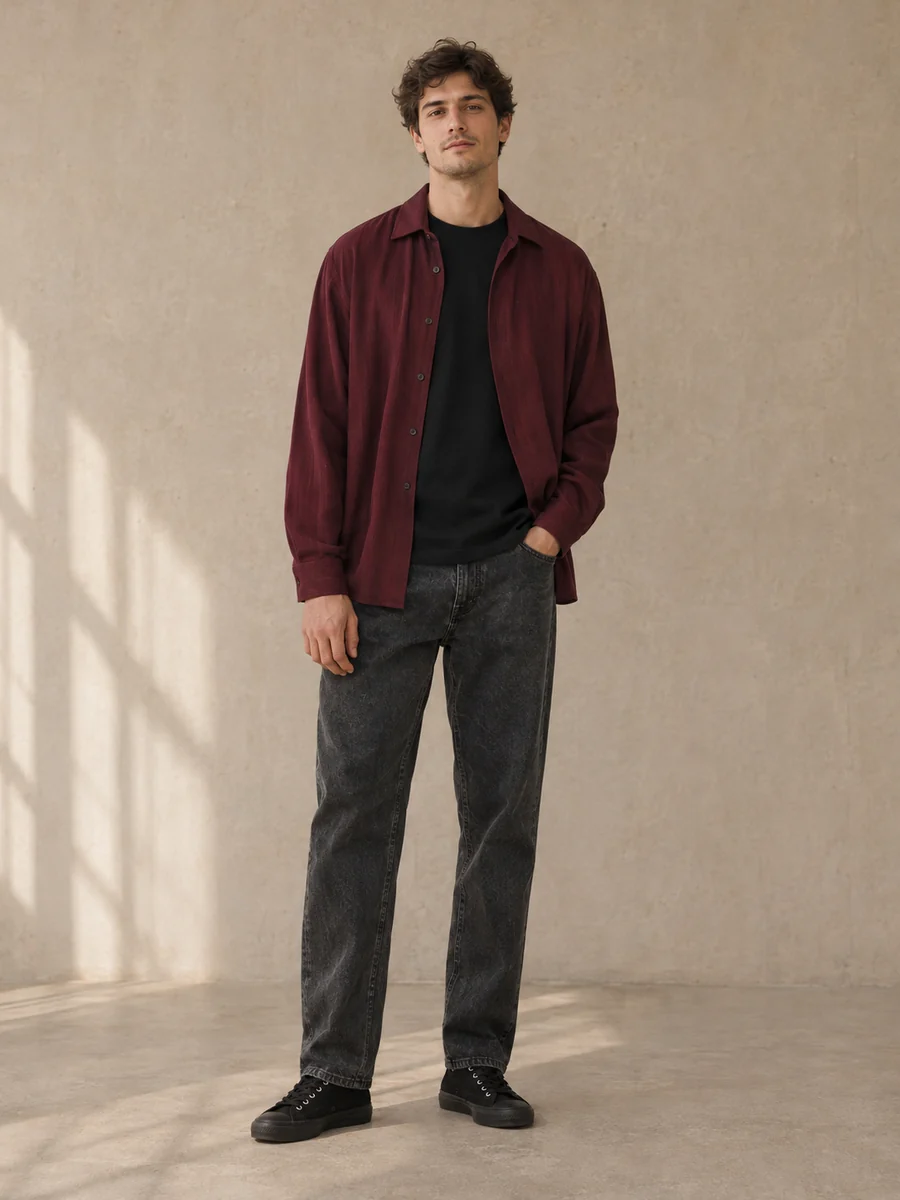
Burgundy open shirt over a dark tee
Use accessories to finish a chosen outline
A belt, small chain or scarf can provide one more detail after the jacket, top and denim are settled. Place the accessory near the area you want to make more visible. There is no need to reproduce a celebrity’s complete set of objects to communicate the reference.
Compare the outfit with and without that detail from the same distance. If it disappears beneath a collar or makes several competing hems feel busier, try a different placement or leave it out.
Try a softer frame before adding more distressed detail
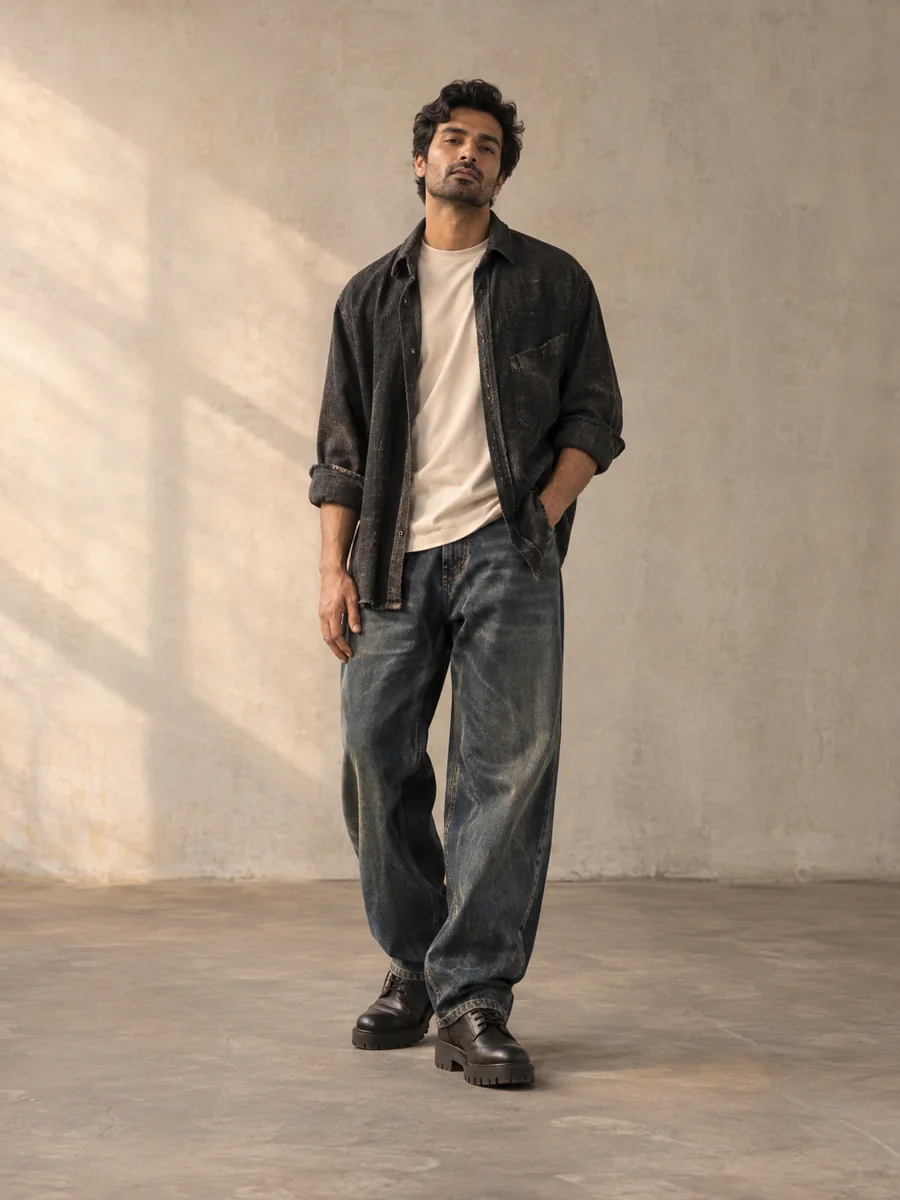
Dark overshirt, cream tee and denim uses a charcoal overshirt around an ecru tee and loose faded denim. It is a useful contrast with the stronger jacket frame in Black short jacket and faded straight denim. Both may contain washed-looking surfaces, but an open overshirt can create a softer outline and another amount of visible base layer. This helps separate a preference for the layering from a preference for one material.
Use a plain tee, your usual jeans and the same shoes, then compare an overshirt with a shorter jacket. Keep the tee arrangement stable. If the longer open shirt gives the shape you enjoy, you do not need to buy a more distressed or embellished jacket to make the outfit expressive. If the short jacket works better, note the boundary it creates rather than assuming every similar black jacket will do the same.
Next check the outfit with the ordinary bag and outerwear you carry. A strap or extra collar can cover a detail that looked central without them. Keep the version that still feels complete in that arrangement, and leave room to remove an accessory when the layers already provide enough contrast.
Distinguish the direction through construction
The grunge gallery puts more emphasis on washed surfaces and textured layers; the biker gallery concentrates on stronger outer-jacket shapes. Here the useful experiment is how a softer shirt, plain tee and rock-referenced jacket are mixed within one ordinary combination.
Keep the formula grounded in clothes you will use again. Record the outer layer, tee length and denim cut that worked together, then vary one piece. A saved combination is more useful than a shopping list of vaguely similar black garments.
Explore more outfit ideas or compare the style files.