Fit the scarf into the space your collar leaves
Style a scarf by first checking the space between your neck, underlayer and outerwear collar. Choose a placement that leaves you comfortable turning your head and does not force the coat front out of shape. Then connect the scarf colour to one part of the outfit. You do not need a complicated knot for it to look deliberate.
Scarf length, width, thickness and texture all affect the result. The same arrangement can look light with one scarf and crowded with another. Treat the placements below as options to try with your actual garment, rather than fixed recipes that guarantee the same silhouette or protection in every climate.
Start with an open drape
Place the scarf behind the neck with its ends resting down the front. This is a useful way to see its full pattern and judge how much contrast it adds. Arrange the ends inside or outside an open coat according to which keeps the front clearer. They need not be precisely equal, but avoid a difference that looks accidental to you.
Walk and sit before settling on this option. Long ends can interfere with a bag strap or hang where they get in your way. Do not choose a dramatic length only for a standing photograph. If the scarf constantly slips, another placement or a different scarf may be more practical.
Use a loose wrap when the front needs less length
A loose turn around the neck brings some of the scarf length upward and reduces the hanging ends. Keep enough space to move and breathe comfortably. If the wrap crowds a rollneck or a high jacket collar, reduce the amount of fabric there rather than tightening everything into a compact knot.
A folded pass-through arrangement is another option when the scarf length and thickness allow it. Its front can become bulky, so check it beneath the closed coat before choosing it. The point of either arrangement is to manage the scarf’s shape, not to achieve a particular knot at the expense of the rest of the outfit.
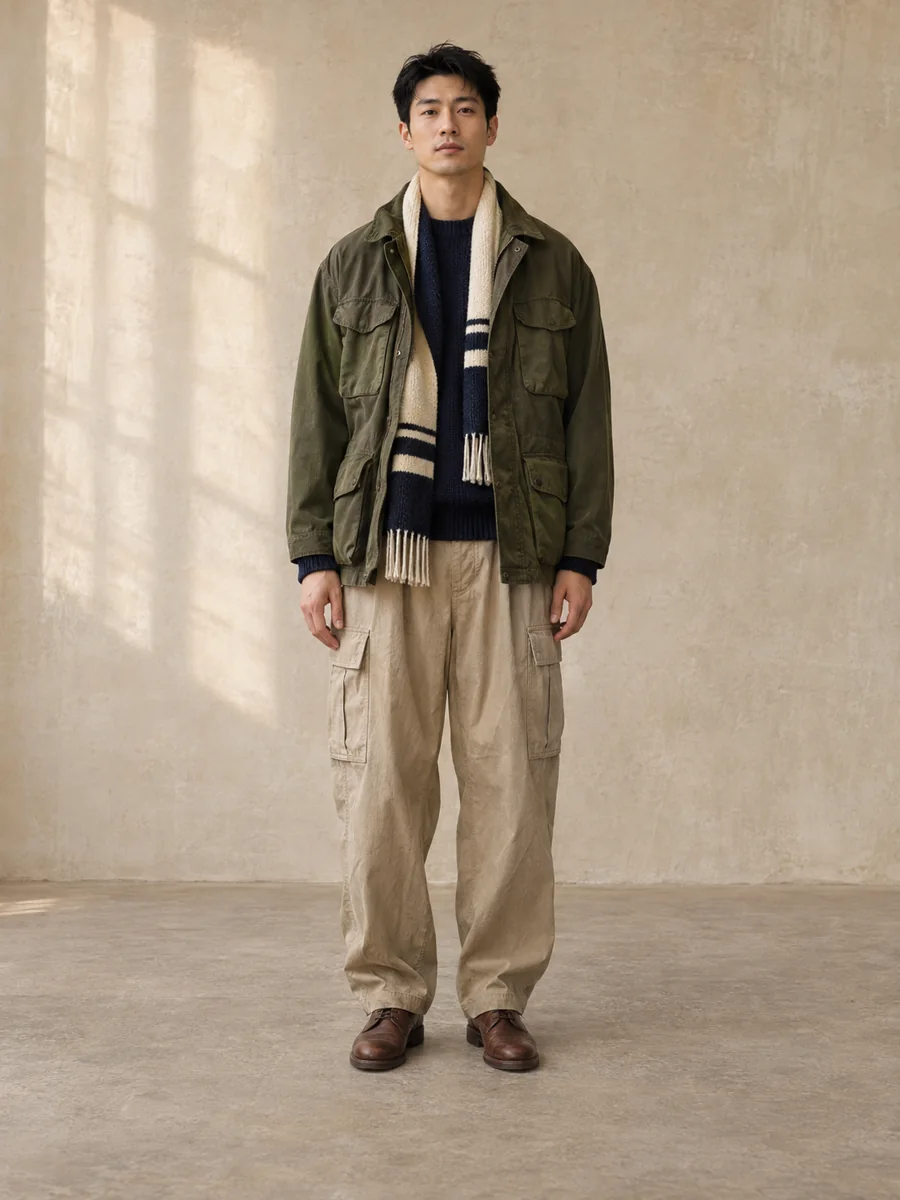
Cream and navy with an olive field jacket
An olive field jacket over a navy knit, with a cream-and-navy scarf, beige cargos and derbies uses repetition to connect the accessory. Navy appears in the base and scarf, while cream introduces a lighter area near the face. The jacket pockets remain visible instead of being covered by several competing accessories.
Arrange the scarf before adjusting the jacket collar. If the collar flares outward, try less fabric at the front or an open drape. The cargos already bring utility detail below, so the scarf can remain the only patterned element above. This formula is particularly useful for seeing how one accessory can join colours that are already present.
Olive field jacket, scarf and beige cargos
Burgundy as one accent within a dark coat outfit
A charcoal overcoat, black knit, relaxed blue denim and derbies gives a burgundy scarf a clear role. The colour appears near the face rather than being repeated throughout the outfit. The denim provides texture below, so the scarf does not need a complicated pattern to make the whole look interesting.
Try the scarf ends against both the coat and the knit. Their background changes how much burgundy is visible. An open coat reveals a longer vertical colour area; a closed front concentrates it at the neck. Choose the effect you prefer, then check it after putting on your bag. A strap can shift the placement more than expected.
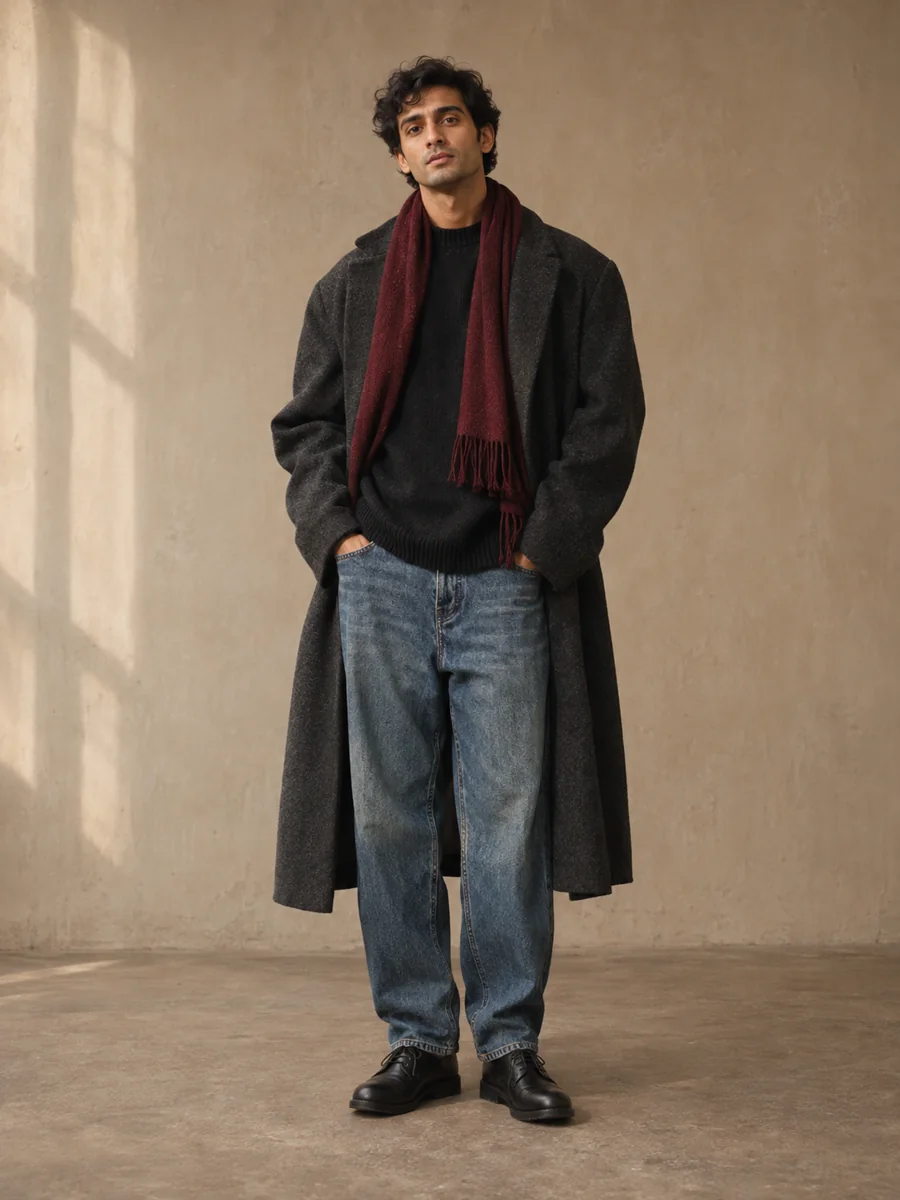
Charcoal overcoat with a burgundy scarf and denim
Add a scarf to an already complete coat silhouette
The navy overcoat, grey knit and wide charcoal trousers example offers a quiet base for an optional scarf. A grey or muted tonal scarf would keep attention on the long coat line; a restrained contrast would move it toward the face. The pictured base does not need an accessory to become a complete outfit.
A camel coat over a navy rollneck and brown trousers leaves a different amount of room at the neck. The rollneck already fills the centre, so a thick scarf may create more volume than you want. Try an open drape before wrapping. These examples show how collar and underlayer change the decision even when both outer layers are overcoats.
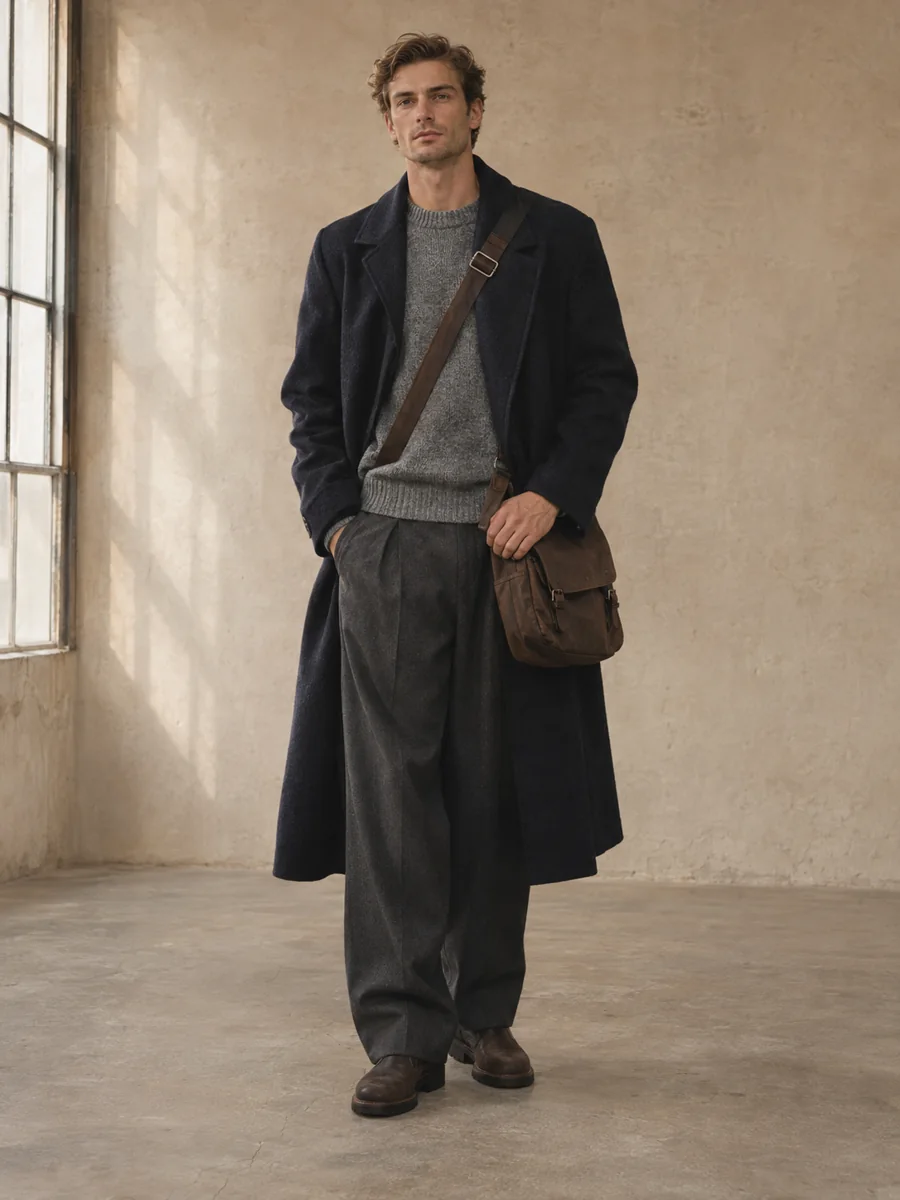
Long navy coat with wide charcoal trousers
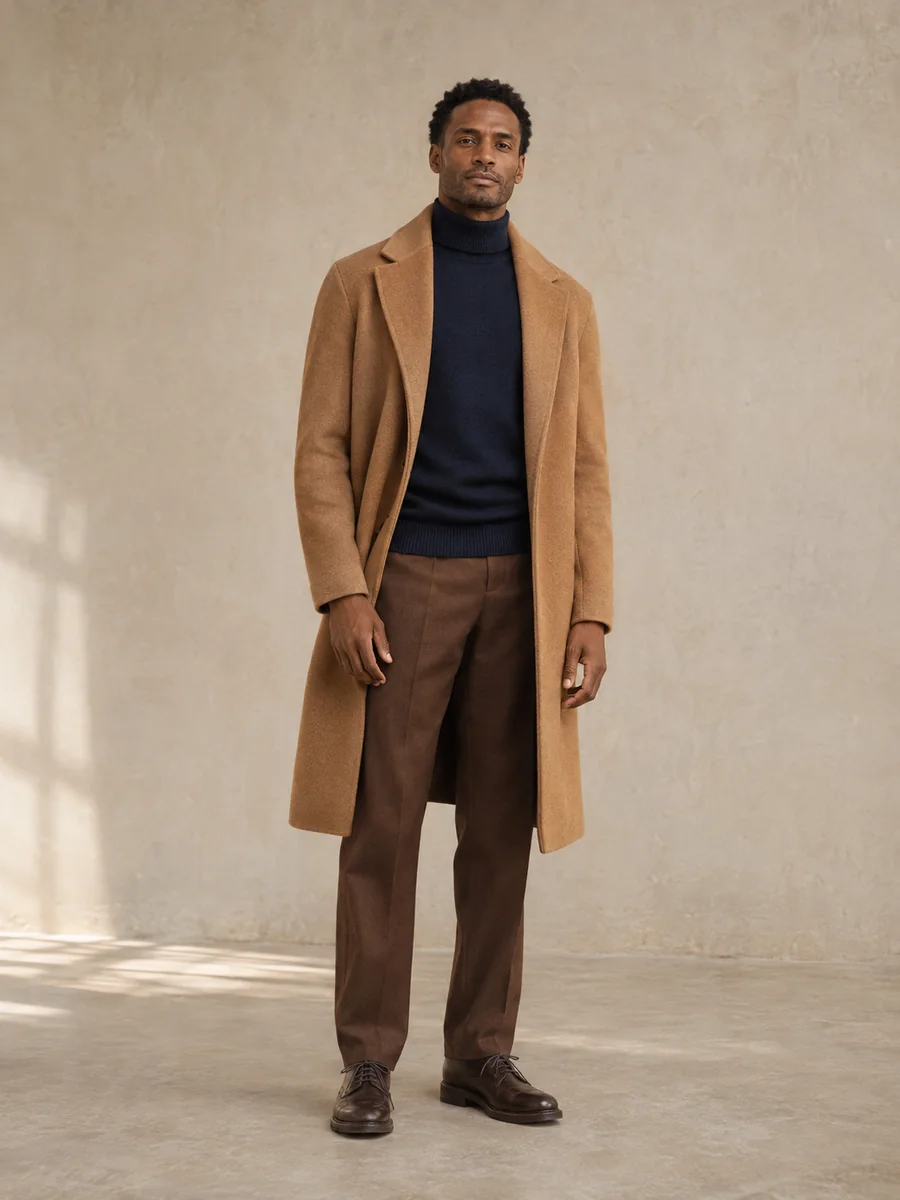
Camel coat with a navy rollneck and brown trousers
Check the practical limits of the arrangement
Look at the side and back, then fasten the coat as you expect to wear it outside. Check that you can turn your head and that the scarf does not pull awkwardly against the collar. Keep loose ends clear of moving machinery or other situations where they could catch, and follow the requirements of your activity.
Choose clothing for the real conditions, including wind, precipitation, journey and time outside. A styling illustration cannot establish insulation or weather suitability. Follow the scarf’s actual care information as well. Once those practical choices are settled, a simple repeated colour and a comfortable placement are usually enough to make the accessory feel integrated.
Explore more outfit ideas or compare the style files.