Start with the collar and the horizontal lines
A rugby shirt works best when its collar and stripes have room to be read. Choose trousers with a relatively quiet surface, establish where the shirt hem should finish, then add only the layers that improve the outline. Denim, cream trousers and corduroy all offer useful alternatives to wearing it as part of a sports outfit.
First, look at the actual shirt. Some versions are long and narrow; others are short and broad. Stripe width and collar contrast also vary. Style that garment rather than a generic idea of a rugby shirt. A large contrast collar may be the focal point even when the body pattern seems restrained.
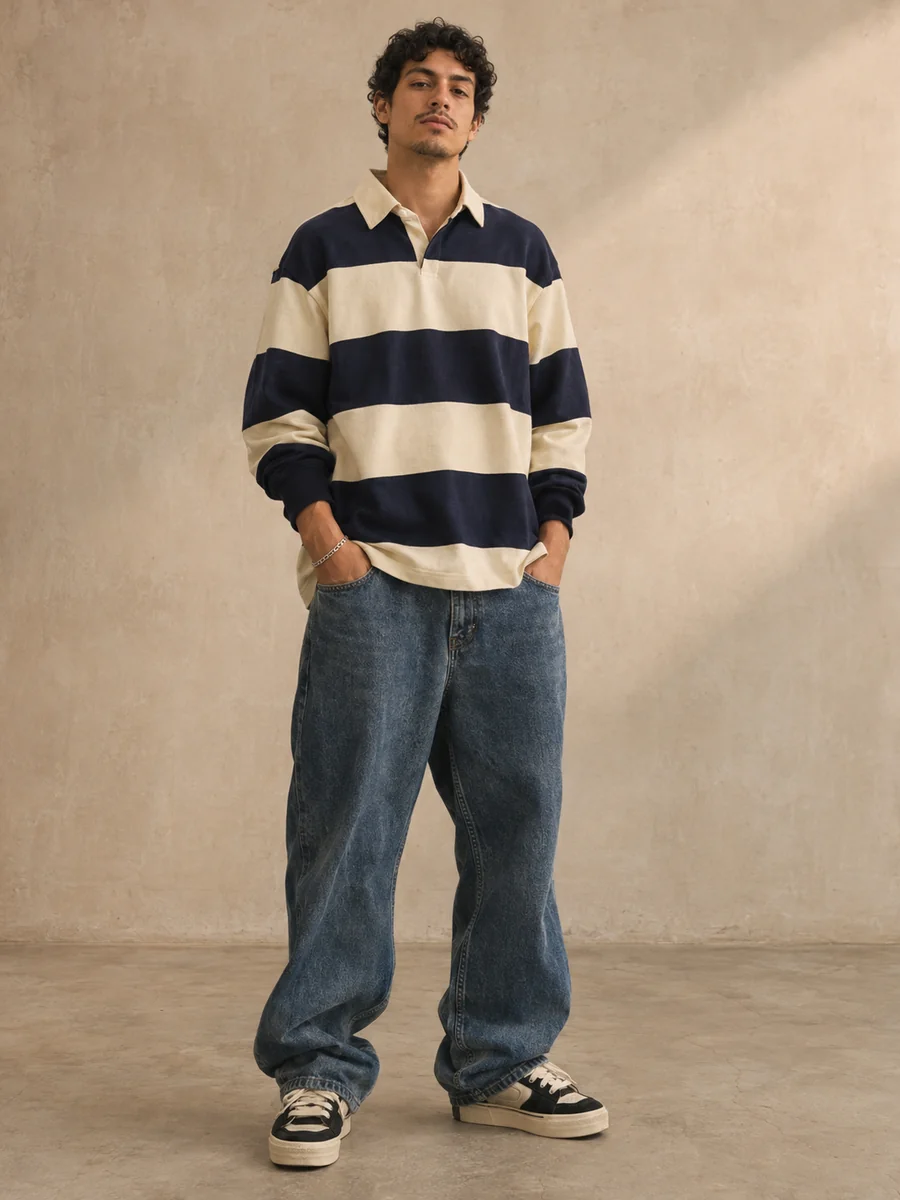
Formula one: navy and cream with baggy denim
A navy-and-cream rugby, broad blue jeans and skate shoes produces a relaxed silhouette with a clear upper pattern. Keep the denim relatively uncomplicated so its seams and wash do not compete with several strong stripes. A small silver detail can finish the look without becoming another large point of interest.
Check the shirt hem against the widest part of the jeans. An oversized rugby can overlap the hips, but a very long body may hide the waistband and shorten the visible trouser line. Try a gentle front tuck only if it settles naturally. If it needs constant adjustment, a different length is a more useful solution.
Navy and cream rugby with baggy denim
Formula two: burgundy stripes and cream trousers
A burgundy-and-navy rugby with cream trousers changes the emphasis from denim texture to colour blocks. Low black shoes keep the hem grounded without repeating every colour above. The pale trousers also make the upper stripe pattern more visible, so there is little need for a patterned bag or conspicuous belt.
Choose the cream trousers for their shape as well as their colour. A relaxed leg gives the rugby some visual support, while a stable waistband prevents the outfit from appearing loose everywhere. Let the hem meet the shoe deliberately. A light trouser leg dragging beneath a dark sole becomes a maintenance problem as well as a distracting finish.
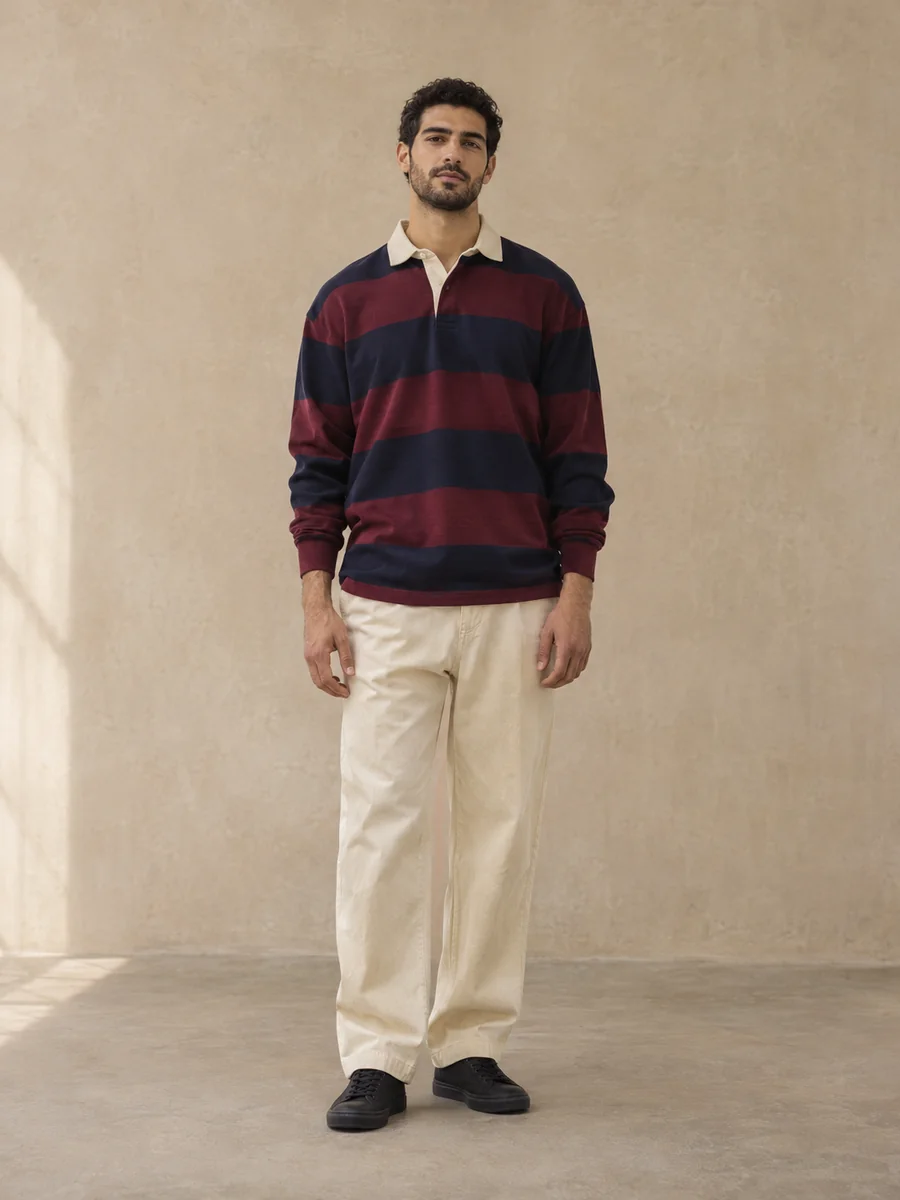
Burgundy and navy rugby with cream trousers
Formula three: cardigan, rugby and brown cords
A charcoal cardigan over a restrained cream-and-navy rugby, brown corduroy trousers and suede-looking shoes creates a softer, more textured direction. Keep the rugby pattern modest enough that the cardigan edges remain legible. The brown trousers add interest through their surface rather than another contrasting stripe.
Arrange the rugby collar before the cardigan. A collar folded awkwardly beneath the knit can produce a lump at the neck. Let it rest where its construction naturally allows, then decide how many cardigan buttons to close. One clear opening is usually easier to read than several competing gaps between shirt placket, collar and cardigan front.
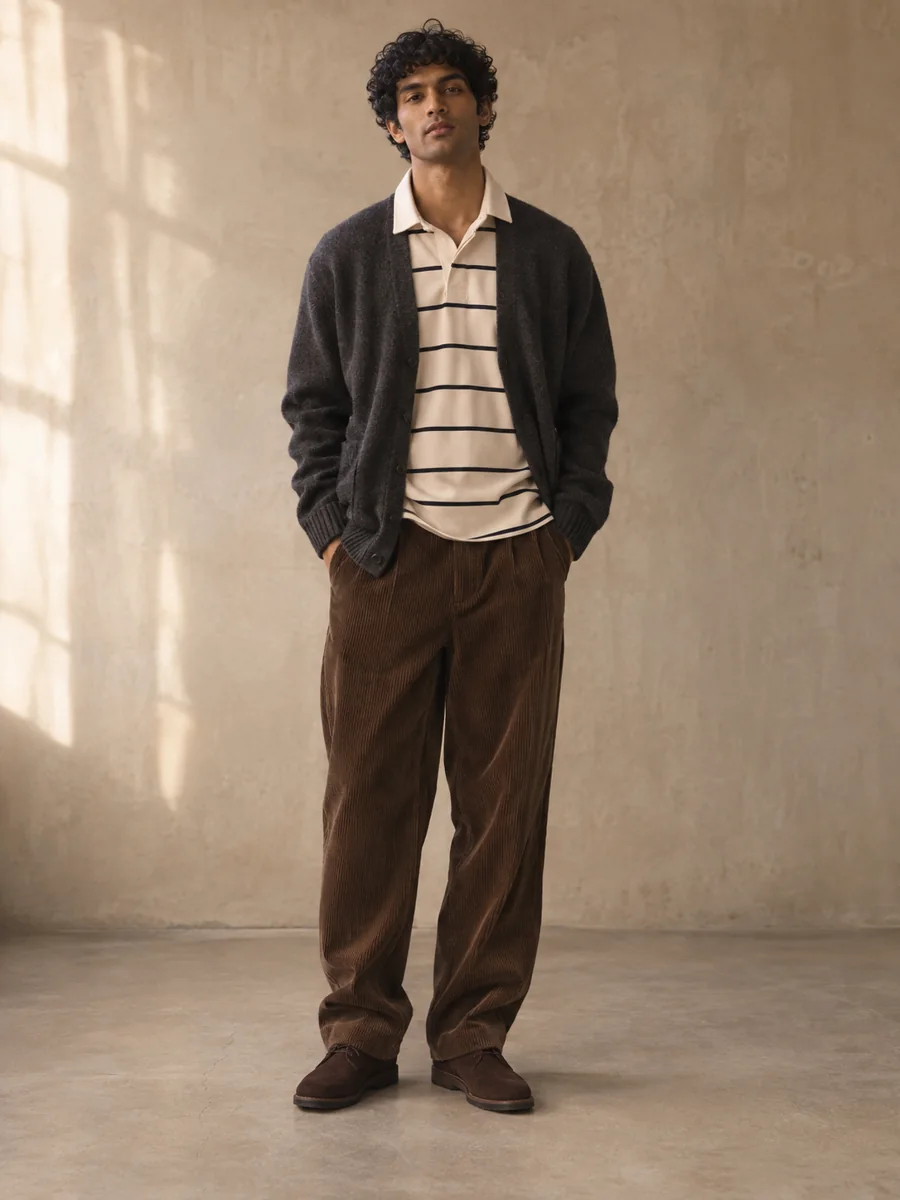
Charcoal cardigan with a rugby shirt and brown cords
Formula four: a bomber around the rugby
A chocolate bomber with a cream-and-navy rugby, charcoal trousers, pale sneakers and a dusty pink beanie uses the shirt as a patterned middle layer. The dark trousers give the upper combination a quiet base. The beanie is optional; it is a limited colour accent rather than a required part of the formula.
Check the jacket open and closed. A broad rugby collar can sit well outside an open bomber but bunch when the jacket is zipped high. Try the closure you will actually use, and avoid forcing the collar into a position it will not hold. If the neck becomes crowded, remove the extra accessory before adding more styling tricks.
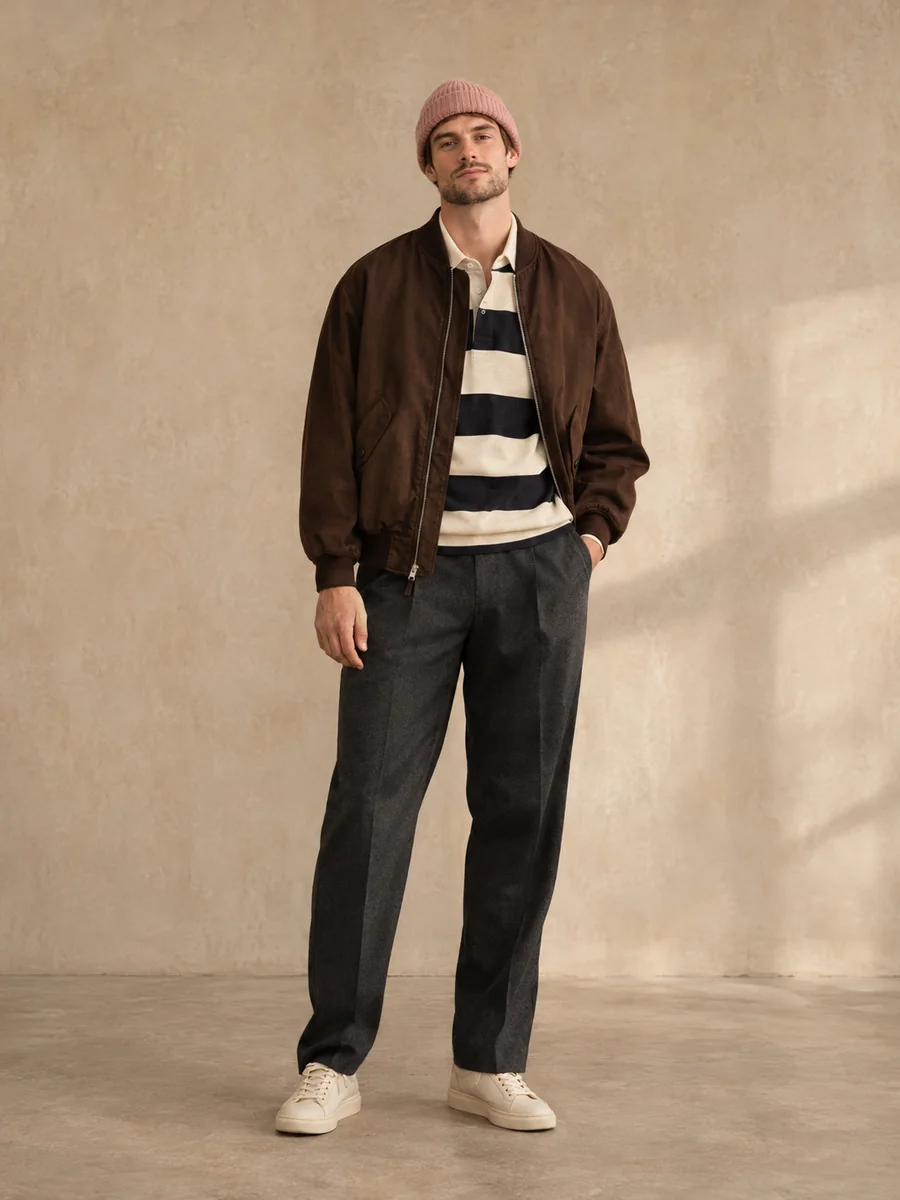
Chocolate bomber, rugby shirt and a pink beanie
Control the stack of hems and cuffs
Layering a rugby shirt is partly a length problem. A short jacket, long rugby and low waistband can create three horizontal bands before the trousers even begin. Decide which boundary matters most. You might show a narrow strip below a jacket, tuck the shirt, or choose outerwear long enough to contain it.
Sleeves need the same attention. Thick rugby cuffs beneath a closely fitted cardigan or jacket can become awkward at the wrist. Try pushing or folding only one layer, and check that you can move comfortably. A clean cuff arrangement often makes the outfit feel more deliberate than another accessory or a larger collar reveal.
Separate playful detail from the dress code
A rugby shirt carries a strong casual character even when paired with pleated trousers or a cardigan. It can make an ordinary day, informal gathering or relaxed workplace outfit more interesting. It does not automatically meet an invitation that asks for a dress shirt, blazer or formal attire. Use the event information before choosing the formula.
Keep the final outfit to a few clear ideas: the shirt pattern, one supporting texture and a leg shape that works with the hem. If the result feels crowded, simplify the lower half first. If it feels too sporty, change the trousers or outer layer before trying to disguise the rugby with extra accessories.
Explore more outfit ideas or compare the style files.