Choose one sporting reference
A retro-sportswear outfit may start with a track jacket, rugby or jersey whose shape and colors recall older athletic clothes. Select that piece first, then decide how ordinary its supporting garments should be. An unbranded item can communicate a clear reference without recreating a team uniform or depending on a recognizable commercial logo.
The concepts do not authenticate vintage garments or establish their age. Use their paneling, collars and proportions as visual comparisons, and check actual material, condition and history separately if those matter when choosing a real older piece. The outfit’s usefulness comes from the arrangement rather than a claim that every item belongs to a specific decade.
Keep the top readable through color placement
A paneled jacket divides the torso; a rugby supplies horizontal stripes and a collar; a jersey may make one broad area of color. Quiet tees and bottoms let the chosen top lead. Another competing print is not required to make the outfit feel nostalgic or give an everyday combination enough visual interest.
A small color repeat at the shoe can connect the outline without creating a matching set. Cream beneath an ecru-paneled jacket works differently from gray beneath a bright top. Compare light distribution as well as color names, then inspect the actual garment shades in ordinary light instead of assuming a screen supplies the final answer.
Ground a paneled jacket with loose denim
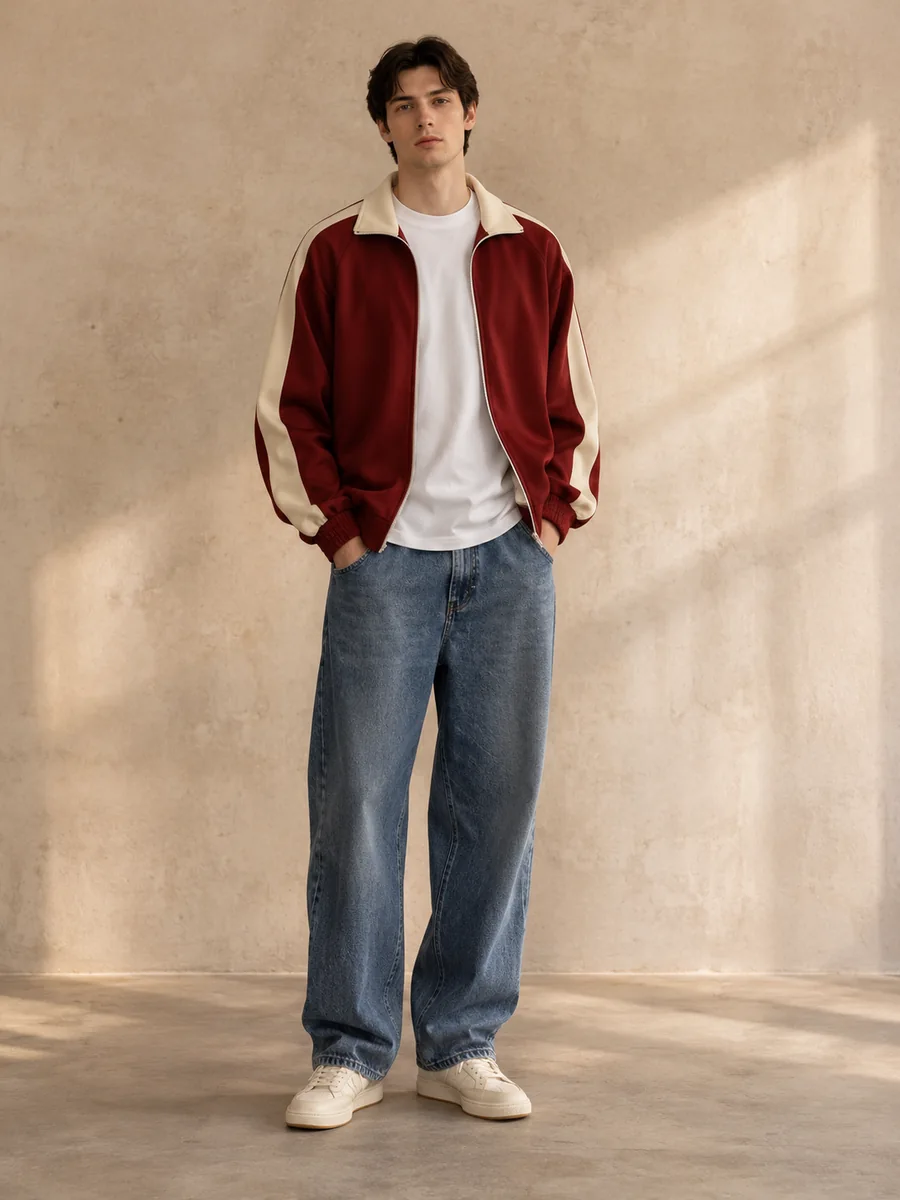
A deep-red-and-ecru track jacket over a white tee frames loose blue jeans. Cream retro-looking sneakers echo the lighter panel at the foot. The denim makes this different from a full tracksuit, while its broader leg gives the jacket another lower balance from the close-cut jeans someone might pair with the same upper color.
Inspect jacket and tee endings around the waistband. A shorter top exposes more leg shape; a longer one loosens the torso line. Set the jean hem above your actual sneakers so its reference comes from a readable outline rather than fabric dragging behind the shoe or gathering where normal movement becomes inconvenient.
Burgundy track panels over white tee and loose blue denim
Pair rugby stripes with straight track trousers
A brown-and-cream rugby above straight navy track trousers makes the upper pattern the focus. Gray sneakers quiet the endpoint and a cream beanie can echo the lighter stripe. The rugby collar adds a different structure from a zip jacket even though both use recognizably sporting-looking pieces as the main upper choice.
Leave the beanie optional when the top already supplies enough detail. Inspect the rugby hem against the trouser rise before adding another layer. A straight track leg can remain sporty without a narrow cuff, so compare its actual fall over the shoe instead of assuming every athletic-looking trouser needs to taper closely at the ankle.
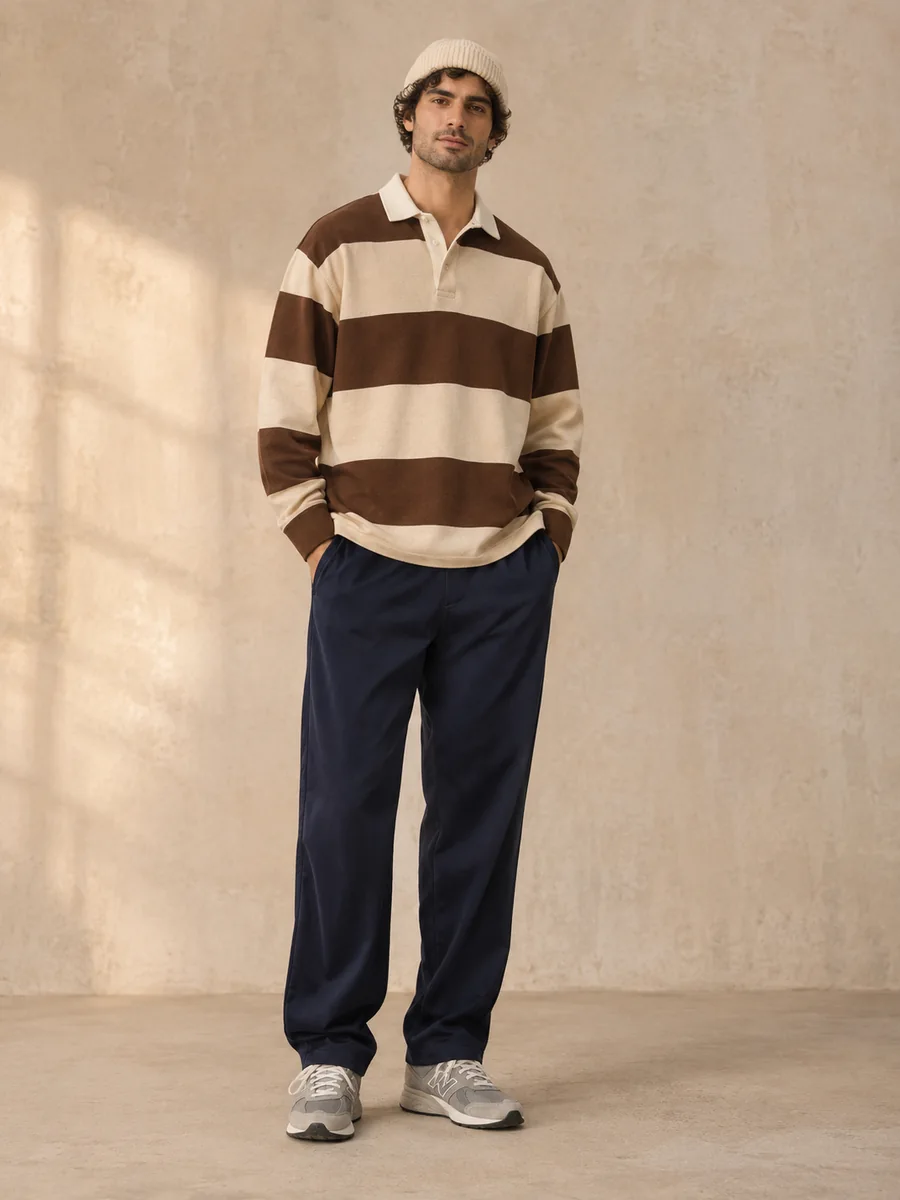
Brown rugby stripes with navy track pants and a cream beanie
Let a jersey lead a broad-short outfit
A green retro-looking jersey without team or brand marks creates a strong upper color above broad black shorts. White sneakers and socks make a clear lower contrast. With fewer layers, the short’s length and width carry more of the silhouette than a jacket would, so they deserve a deliberate fit check.
Try actual coverage and the cut of the short before deciding the combination suits your day. A sporting appearance is not a performance assessment. Check sock height and footwear profile together, then restrain extra accessories so the green torso remains the intended focal area rather than one of several competing details.
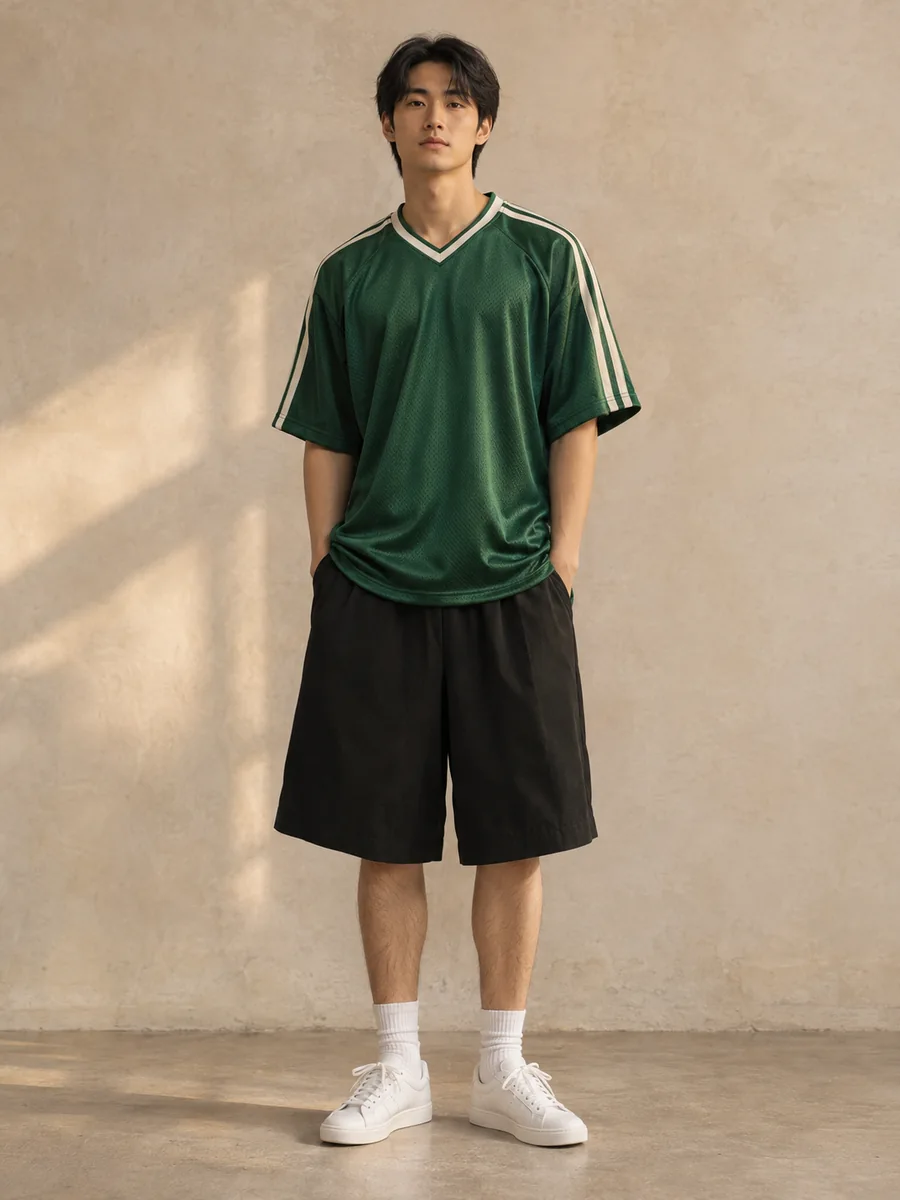
Green retro-style jersey with black shorts and white sneakers
Use blue above a washed gray base
An electric-blue nylon-looking blouson gives washed gray denim a clear outer frame. A gray tee quiets the center, while cream sneakers add a bright endpoint. This uses one larger color choice instead of many small accents, making the jacket’s length and the amount of lower leg volume particularly easy to compare.
Check the blouson both open and closed with the real tee. Its shorter ending may settle differently from a longer track jacket. Decide how much base hem should show beneath it and keep the denim clear of the heel. Smooth-looking fabric cannot establish protection, so choose actual material according to your conditions.
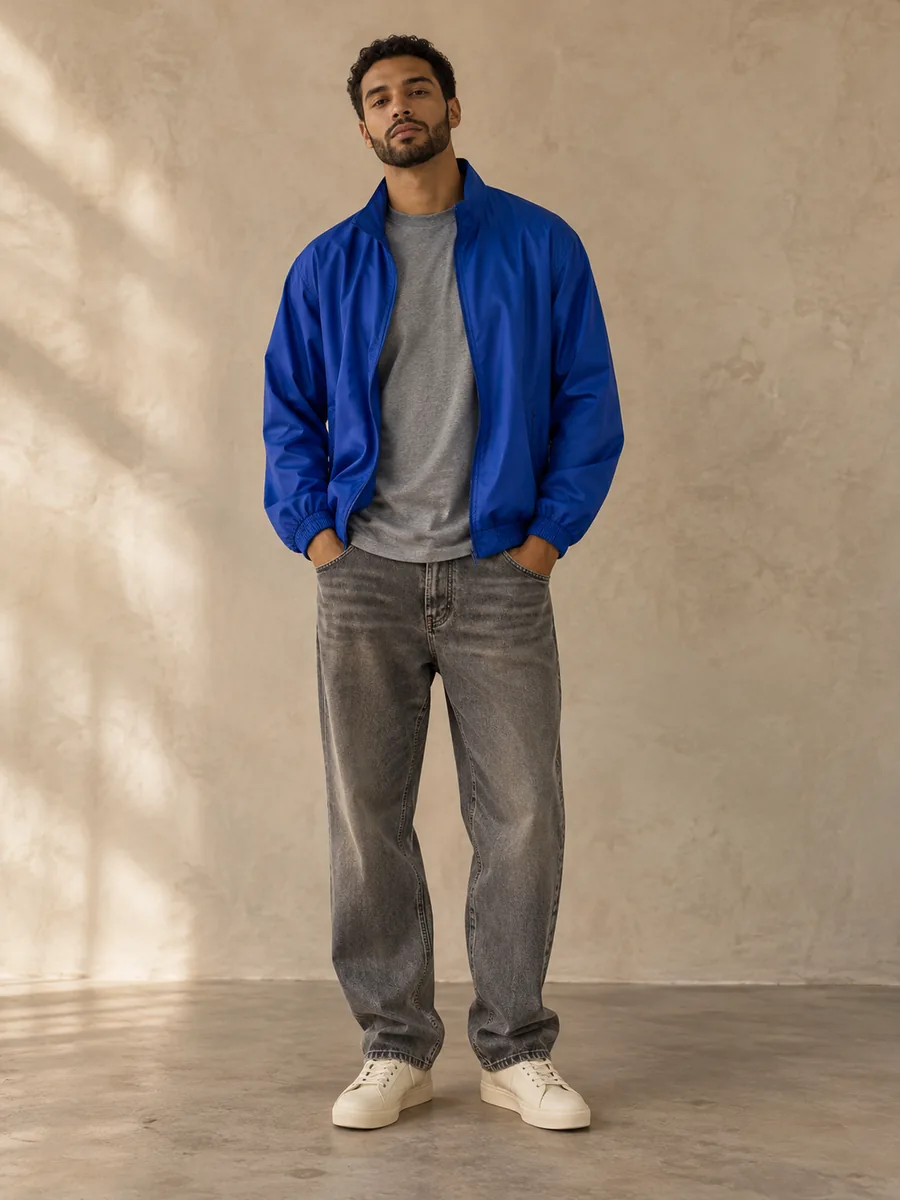
Electric blue nylon-style jacket with washed grey denim
Retain the proportion when changing the reference
Compare Y2K, athleisure and vintage-inspired examples to see how the same broad denim changes under a track jacket, simple hoodie or shorter utility layer. Their neckline and amount of exposed leg differ, even when the palette stays similar. Those details help identify the reference you actually like instead of merging all sporting-looking outfits into one label.
The color tool can show related palettes and the finder can preserve a chosen starting garment. Save formulas that work with your wardrobe, keeping the reasons specific. A recommendation should display a real catalog concept and explain its match, not invent a merchant product or claim that an ungenerated new image was created for the request.
Explore more outfit ideas or compare the style files.