Give pink one clear role
To wear a pink shirt discreetly, start with a muted shade and let the rest of the outfit form a calm frame. Navy, charcoal, chocolate and ecru each change its effect. Choose one dark support colour and one lighter or neutral area, then decide how much of the shirt you want visible.
A pale Oxford beneath a cardigan is a smaller colour statement than the same shirt worn alone over light trousers. Neither needs extra pink accessories. Think in terms of visible area, contrast and texture rather than treating pink as a special category with a separate set of rules for men.
Choose the actual shade in context
The word pink covers many different colours. A dusty rose can sit quietly next to brown, while a clearer pale pink may look sharper against navy. Screen images and shop lighting can alter that relationship. Compare the garment with a piece you own before building a complete outfit around an assumed shade.
Texture matters too. An Oxford weave gives the colour a different visual character from a smooth, shiny shirt. Begin with a finish that suits your usual clothes. If your wardrobe is mostly denim and knitwear, a textured casual shirt may be easier to reuse than a formal-looking shirt selected only because its colour is attractive.
Low visible area: navy cardigan and dark trousers
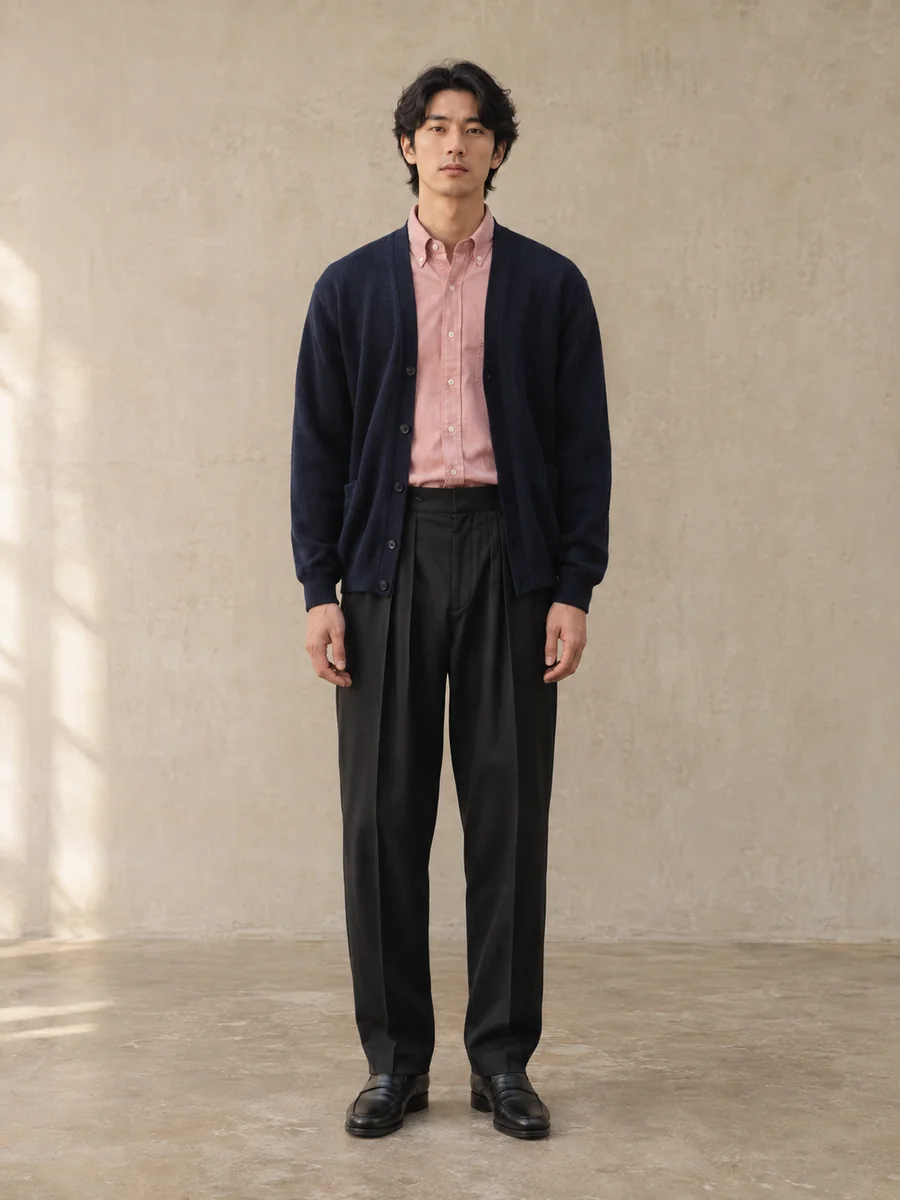
A dusty pink Oxford beneath a navy cardigan, with black pleated trousers and loafers, uses the shirt mostly at the collar and centre front. The cardigan controls how much colour appears. Open it for a larger vertical strip, or button it loosely to concentrate the pink near the face.
Keep the shirt collar settled rather than forcing it high above the knit. A soft collar can sit naturally inside or over the cardigan neckline, depending on its shape. Check the sleeves as well: a small cuff reveal can clarify the layers, but a long sleeve bunch beneath a tight cardigan cuff becomes uncomfortable quickly.
Dusty pink Oxford with a navy cardigan
Moderate contrast: faded navy and cream
A faded navy work jacket over a pale pink Oxford and cream trousers gives the shirt a lighter setting. Loafers make the base feel more deliberate than another casual sneaker combination. The cream does not compete strongly with the shirt, while the jacket supplies a clear darker boundary.
Because the lower half is light, check shirt length carefully. A long curved tail extending well below the jacket may interrupt the clean separation. Try a relaxed tuck if the waistband allows it, then raise your arms to ensure it stays comfortable. The combination benefits from a clean arrangement rather than tightly fastening every layer.
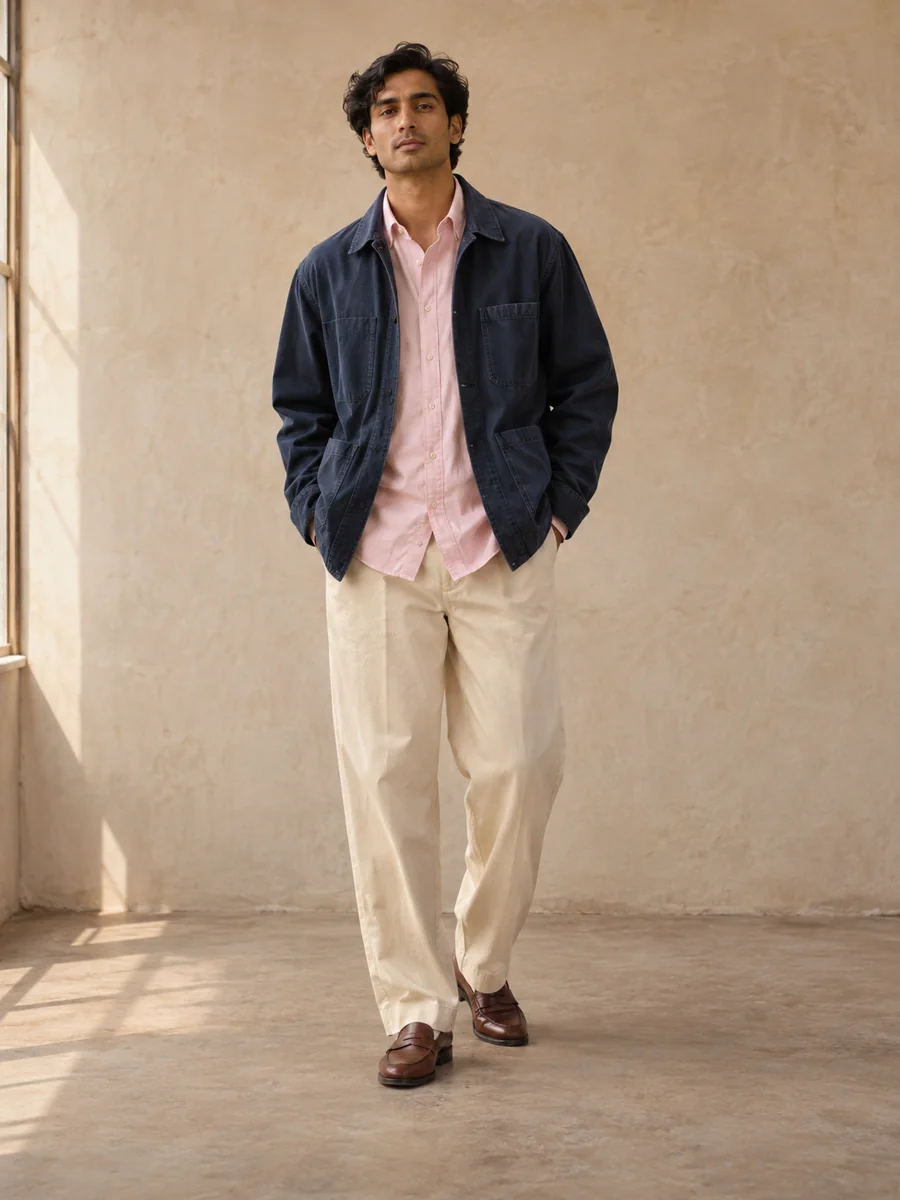
Faded navy work jacket with a pink Oxford
A softer contrast: chocolate tailoring and ecru
A soft chocolate blazer, dusty pink shirt and fluid ecru trousers produces a gentler colour relationship. The blazer frames the pink while the pale trousers keep the overall outfit open. Loafers make a useful finish, provided their shape remains visible beneath the trouser hem.
This formula has more than colour to consider: shoulder construction, trouser drape and shirt collar all influence its formality. A relaxed blazer over an easy shirt differs from a structured business jacket. Use the actual invitation or workplace expectations to decide whether this combination belongs there. A pleasing palette does not settle the dress code.
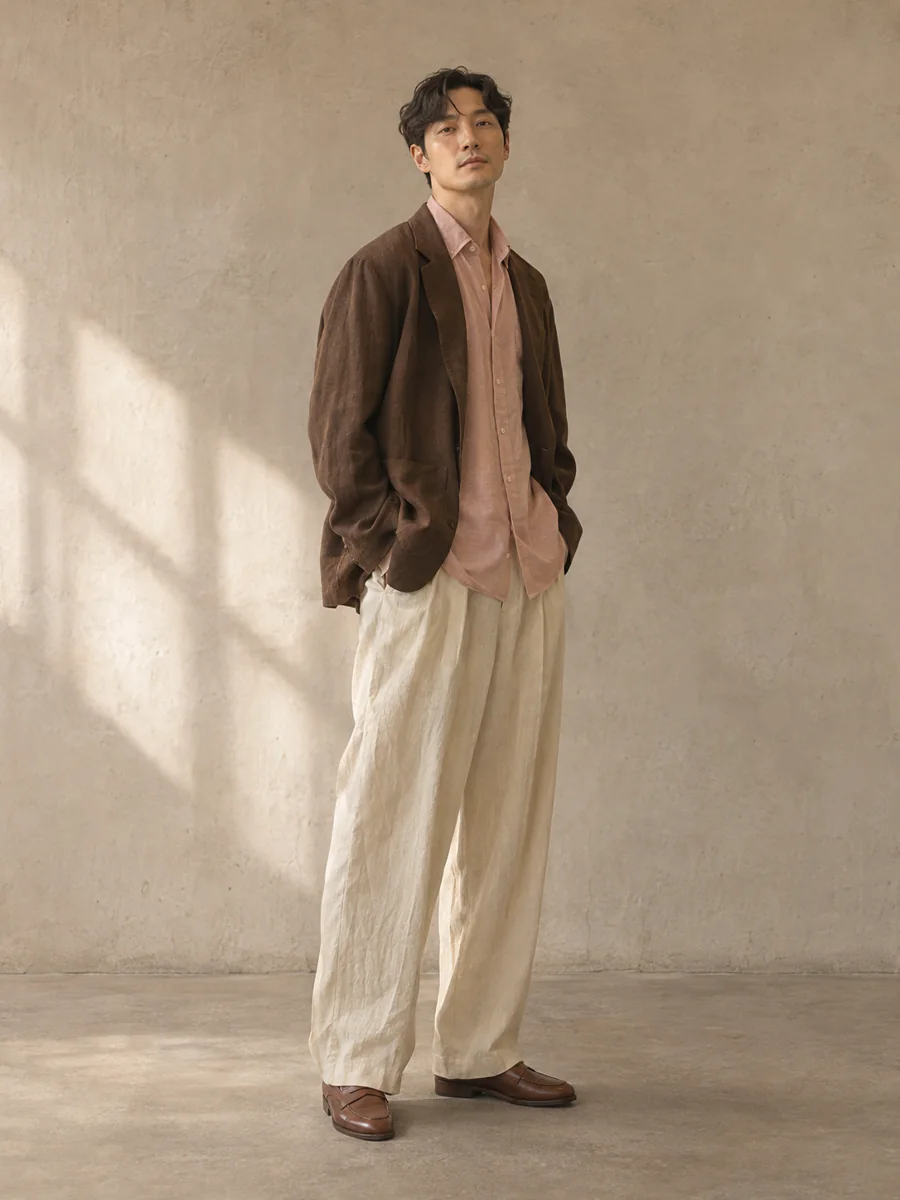
Chocolate blazer with a dusty pink shirt
Use a tee to try the colour relationship first
If you are unsure about a pink shirt purchase, test the palette with a pink tee you already own. A charcoal work shirt over a dusty pink tee, black roomy jeans and brown shoes shows how a limited pink area can lift an otherwise dark outfit. This is a colour exercise rather than a substitute for the shirt’s collar and structure.
Notice whether you like the pink against your outer layer and trousers before adding more pieces. You may find that a small central area is enough. That is useful information: a cardigan or overshirt can make a pink Oxford more adaptable by changing how much of it appears.
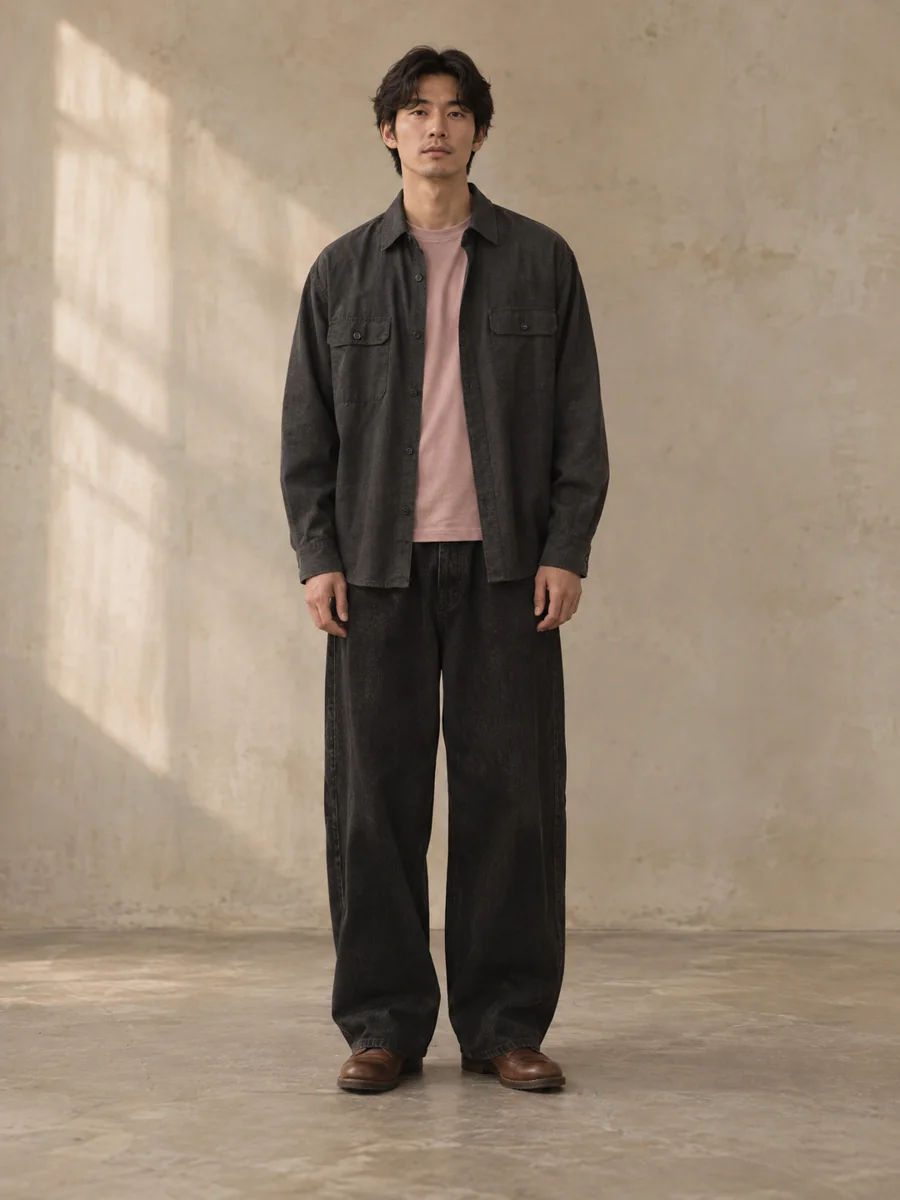
Charcoal work shirt with a dusty pink tee
Finish with a three-level contrast check
Stand back and compare the whole outfit, not the shirt in isolation. At low contrast, the pink sits among similarly softened colours. At moderate contrast, a dark outer layer frames a light shirt. At higher contrast, a clearer pink becomes an obvious focal point against dark trousers. None is automatically better; choose the amount of attention you want.
Before leaving, check the collar, shirt tail and cuff arrangement after sitting down. Keep accessories quiet until those details feel settled. If the outfit seems too sweet or coordinated for your taste, change one large support colour rather than adding darker accessories everywhere. A different trouser often changes the mood more effectively than several small corrections.
| Approach | Supporting pieces | Effect |
|---|---|---|
| Small colour area | Navy cardigan, dark trousers | Pink concentrated at neck and front |
| Framed contrast | Faded navy jacket, cream trousers | Light shirt inside a darker border |
| Soft palette | Chocolate blazer, ecru trousers | Several gentle colour transitions |
Explore more outfit ideas or compare the style files.