Start with the shape of the jeans
Baggy jeans are easiest to style when you make three deliberate choices: where the waistband sits, where the top finishes and how the hem meets the shoe. You can wear a roomy top with roomy denim. The outfit simply needs a few visible boundaries so that the layers read as separate pieces.
Before choosing anything else, try the jeans on with the shoes you actually plan to wear. Check the front, side and back. A wide leg can look clean from the front while gathering heavily behind the heel. Adjust the length or choose a different shoe before adding accessories.
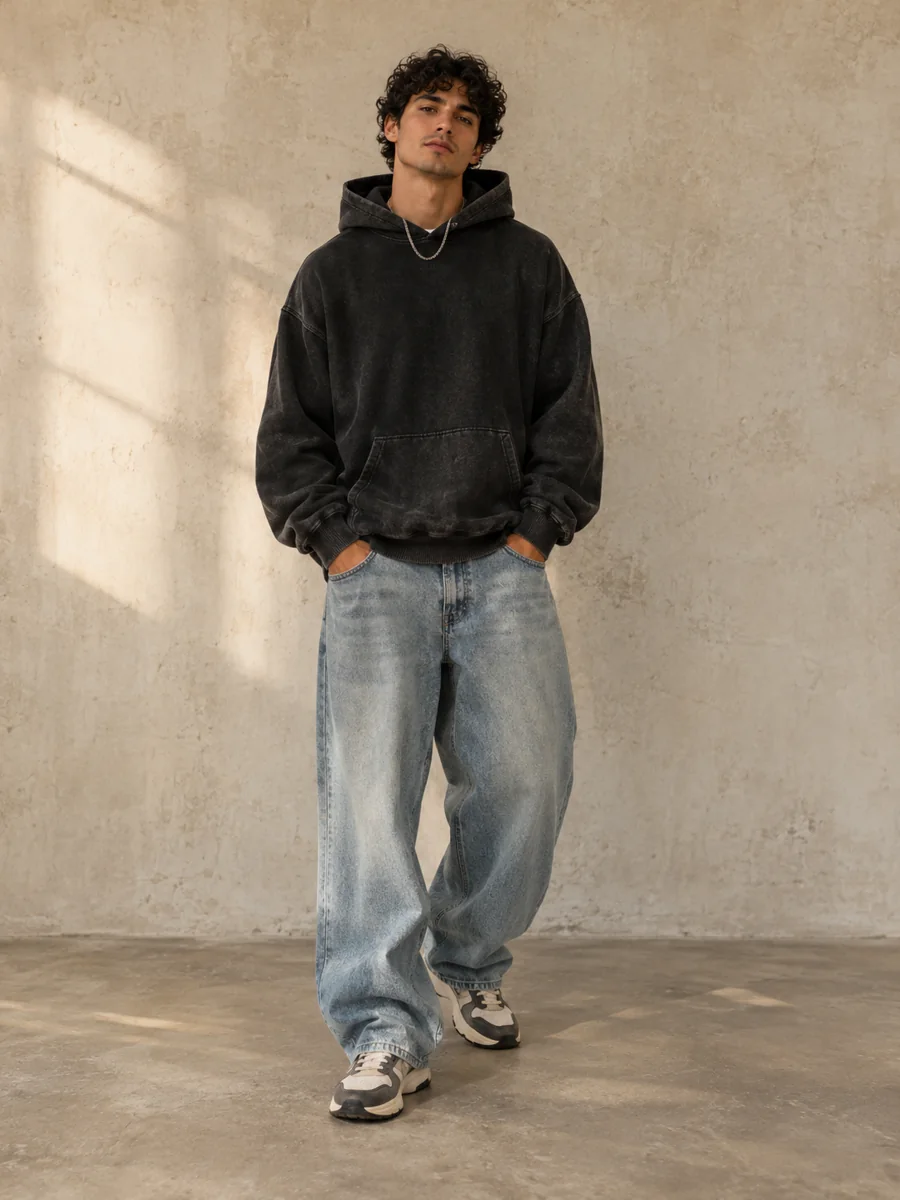
Formula one: washed hoodie and blue denim
A washed black hoodie, blue baggy jeans and chunky sneakers create a useful everyday starting point. Let the hoodie finish around the upper hip rather than covering most of the thigh. The visible length of the jeans then does more of the work, while the shoe gives the wide opening a clear endpoint.
If your hoodie is longer, try folding its waistband inward or selecting a less oversized layer. You do not need to force the hem into a crop. The goal is a proportion that looks intentional when you stand normally, without holding the fabric in place for a photo.
Washed hoodie, baggy denim
Formula two: a shorter jacket over a plain tee
A shorter, structured jacket makes a wide jean feel more defined. Use a simple tee underneath and keep its extra length modest. A small strip of tee below the jacket can show the layering; several competing hems can pull attention away from the silhouette.
Leave enough room through the shoulders and sleeves for comfortable movement. A jacket that appears boxy while standing still can feel restrictive when zipped over another layer. Keep the lower half uncomplicated: a broad leg, a stable waistband and shoes substantial enough to remain visible.
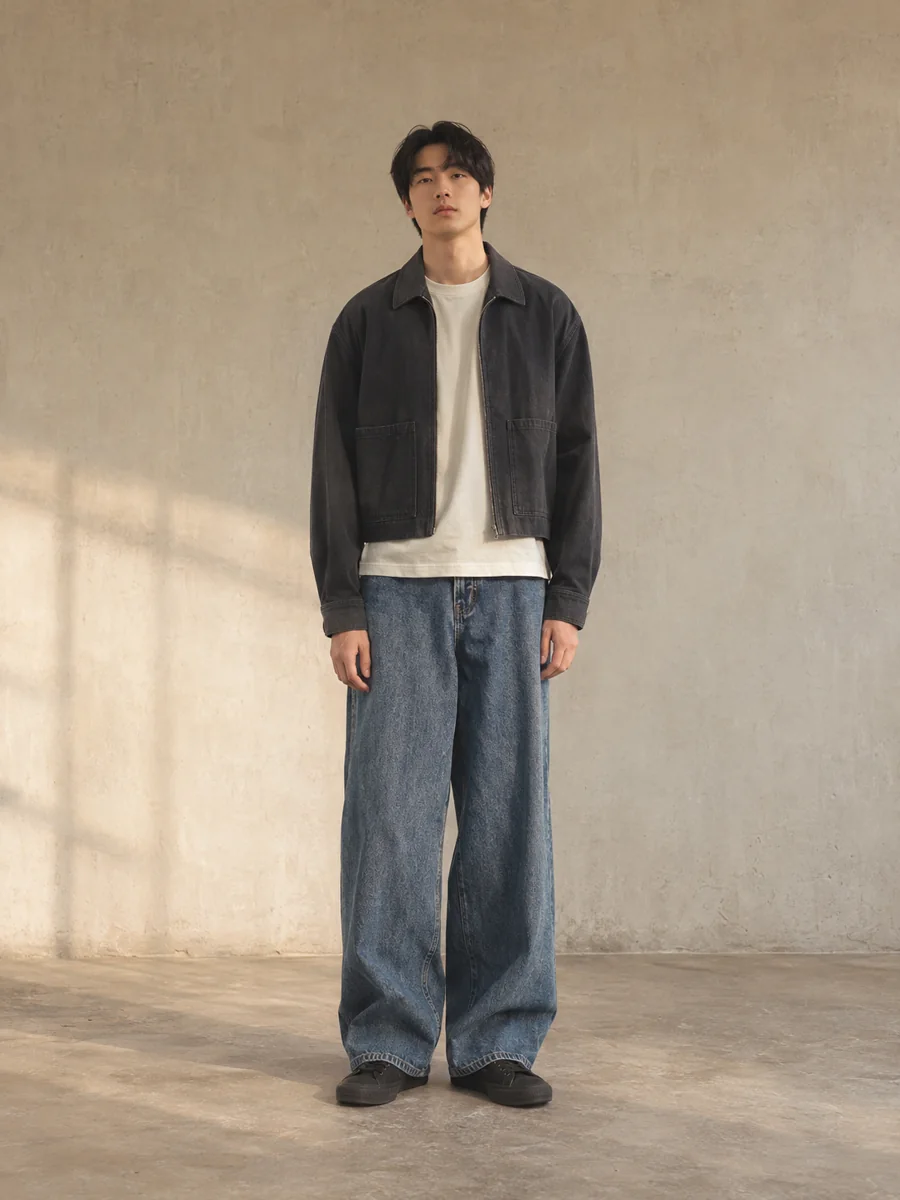
Short jacket, wide-leg denim
Formula three: cardigan and a quieter base
A textured cardigan changes the character of the same denim. Start with a plain tee or a fine knit, then choose a cardigan whose hem sits above the widest part of the jeans. Wearing it open creates two vertical edges and keeps the waistband area readable.
You can use faded blue denim for a softer combination or charcoal denim for a darker one. Avoid making every element equally distressed or heavily textured. If the cardigan carries the texture, let the tee, belt and shoes stay relatively simple. That gives the outfit one clear focal point.
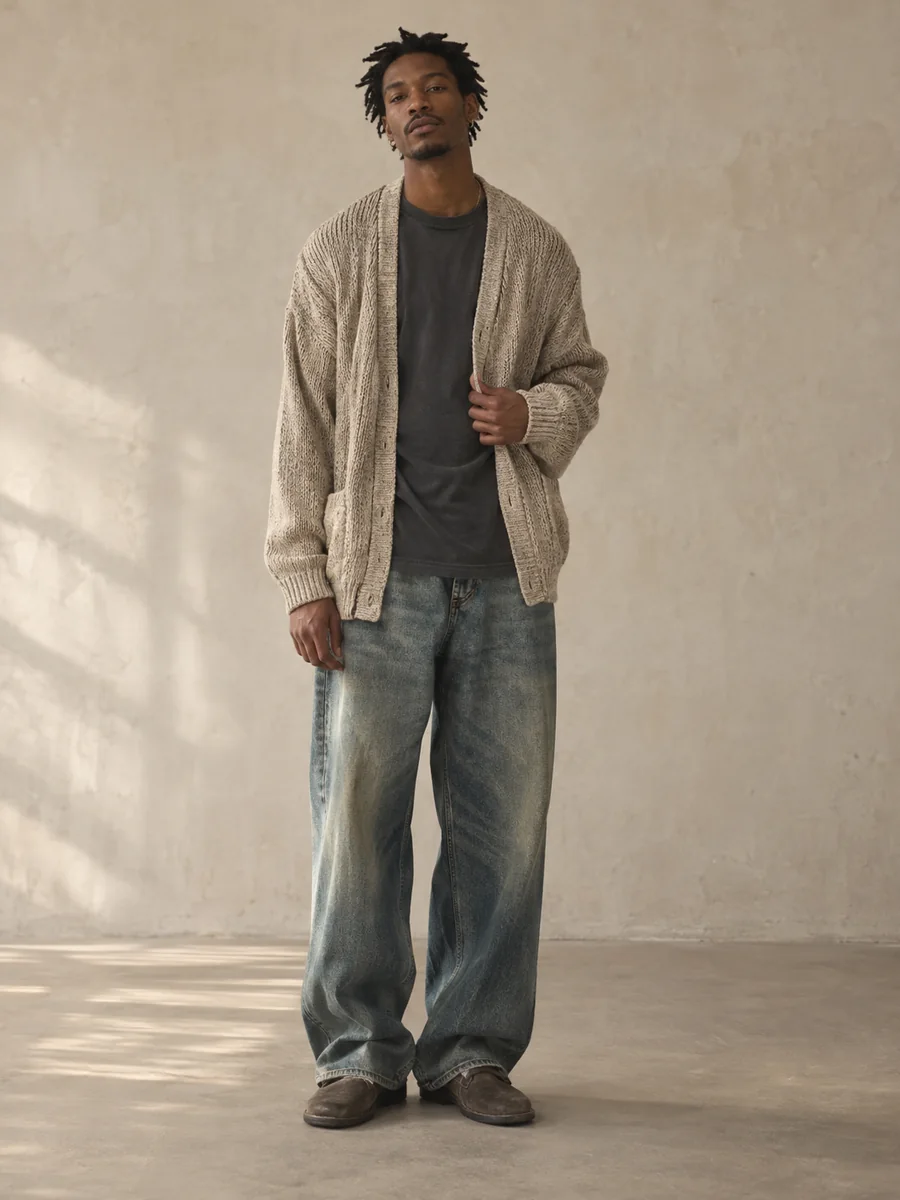
Textured cardigan, wide-leg denim
Formula four: a white tee and grey denim
A white tee with grey baggy jeans works through contrast rather than extra layering. Choose the tee by its overall outline: shoulder position, sleeve width and hem length matter together. A boxy tee can sit above the hip, while a longer tee may benefit from a relaxed front tuck.
Use a small accessory to finish the combination if you want one. A belt, watch or restrained silver detail can make the waistband area feel considered. There is no need to add several accessories simply because the rest of the outfit is minimal.
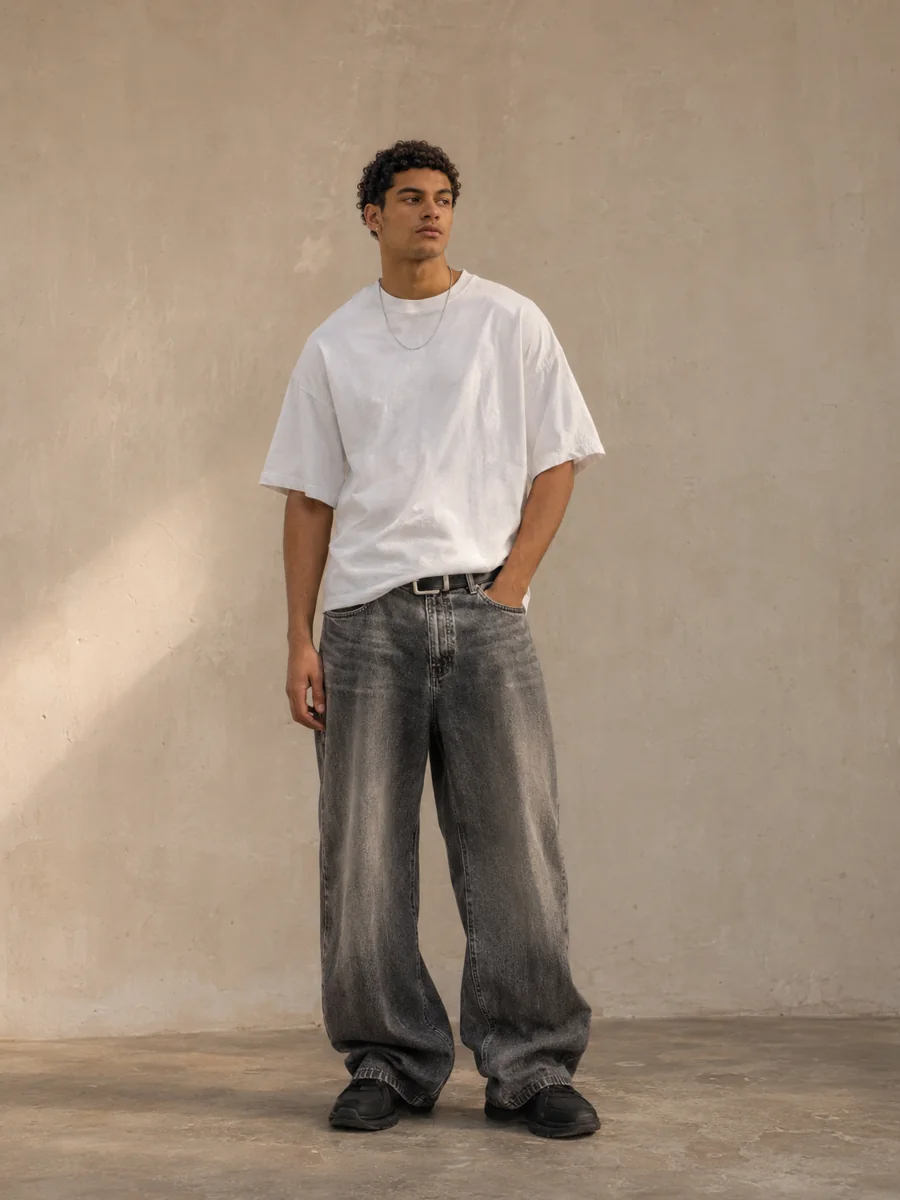
White tee, grey jeans, silver details
Compare the same jeans beneath a shorter brown jacket
A short brown leather-looking jacket over a white tee and broad blue denim gives the baggy jean a different upper frame from a hoodie or cardigan. The jacket colour matters less than its shorter boundary. Keep the tee reveal modest enough that it does not erase the contrast between the jacket hem and the long trouser line. Dark retro shoes provide a quieter endpoint than a strongly contrasting bright pair.
Use this as a comparison with your existing jeans rather than a reason to buy an entire new outfit. Put on the same denim and shoes, then switch only the upper layer. Photograph or inspect the front and side from a similar distance. If the shorter jacket makes the jeans easier to read, the useful discovery is about length, not necessarily about owning that exact jacket. You may be able to create a similar boundary with an overshirt you already have. Check movement and sleeve room before choosing the version that simply looks shortest in the mirror.
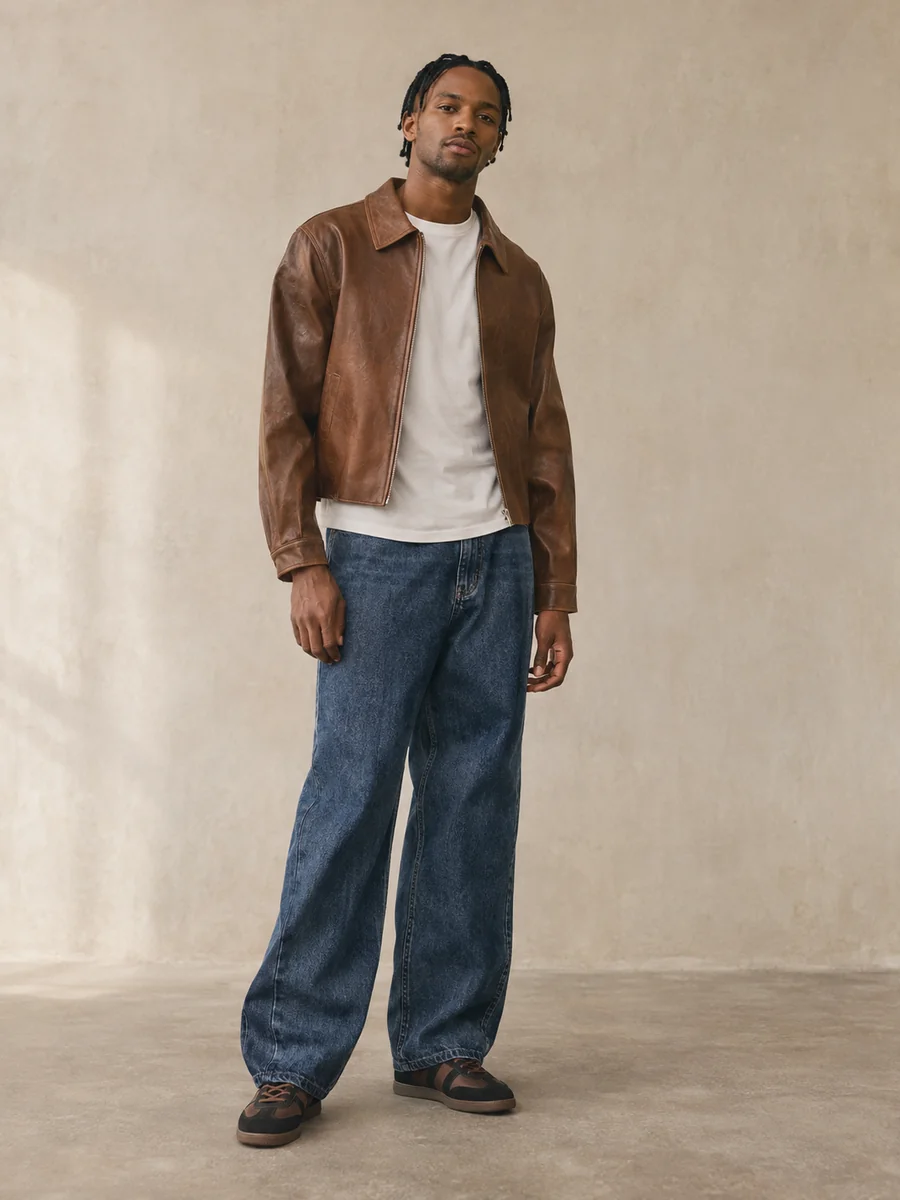
Cropped brown leather-look jacket with wide jeans
Finish at the hem, then move around
A little break over the shoe can suit baggy denim, but fabric dragging under the heel is difficult to maintain. Judge the hem while walking as well as standing. A neat alteration often changes the outfit more than buying another top.
Try the final combination seated and with your usual outer layer. If you constantly lift the trouser leg, pull down the hoodie or adjust the waistband, change that part before adding anything else. Save the formula that works, then vary one element at a time.
- For a heavier shoe, let a small amount of fabric settle over the upper.
- For a slimmer shoe, consider a cleaner break so the footwear does not disappear.
- Keep one clear boundary visible: neckline, waistband, jacket hem or shoe.
Explore more outfit ideas or compare the style files.