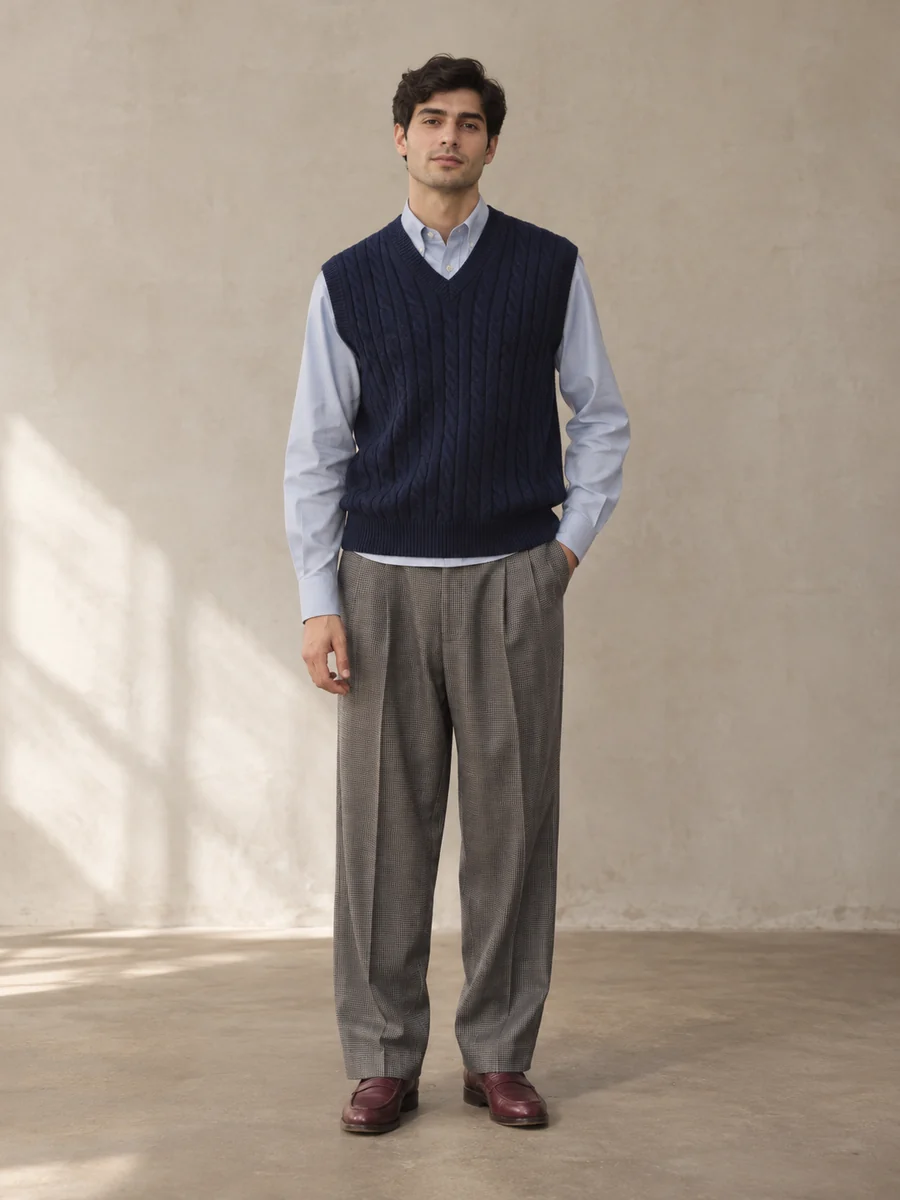
Choose the pattern that leads
Start with the patterned piece you want to wear and put it on with a plain base. Notice its size, contrast and coverage. A small stripe that blends together at a distance behaves differently from a large check with strong light-dark divisions.
Then add a second pattern only if it contributes something you want. An outfit does not become more complete because every available surface has a print. Keeping the first pattern easy to notice is a useful starting point.
Compare the size of the repeat
Scale means the size of a pattern’s repeated shape. Try a small stripe beside a larger check, then compare it with two patterns of similar size. Keep the colors and the surrounding garments as consistent as possible so the difference is actually about scale.
Different scales can make the two surfaces easier to distinguish, but they are not a universal formula. Fabric texture and contrast still change the result. Step back to the distance at which someone would ordinarily see the outfit.
Use a plain layer as breathing room
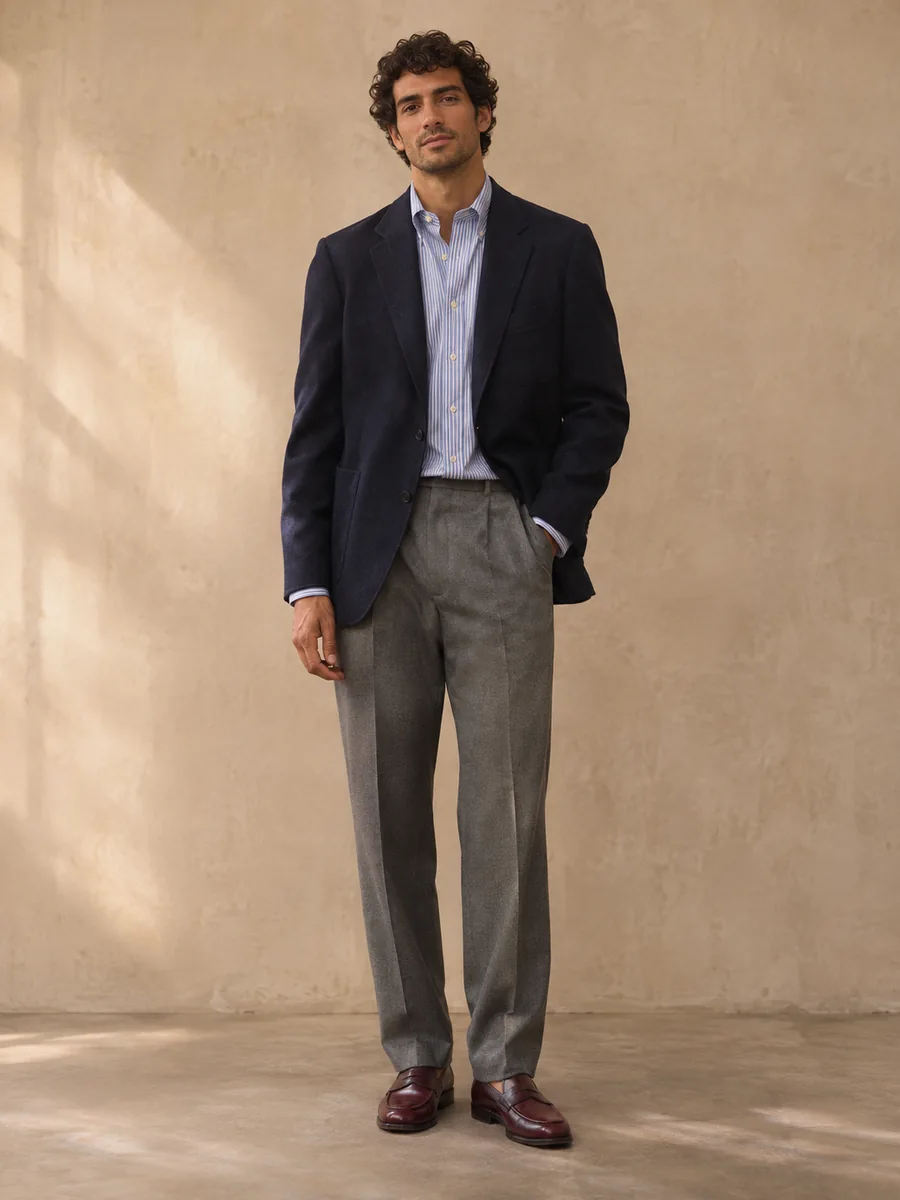
An open plain jacket can frame a patterned shirt and reduce the visible patterned area. A plain trouser keeps the lower half calmer. Try that arrangement before deciding the two patterns require an entirely new set of colors.
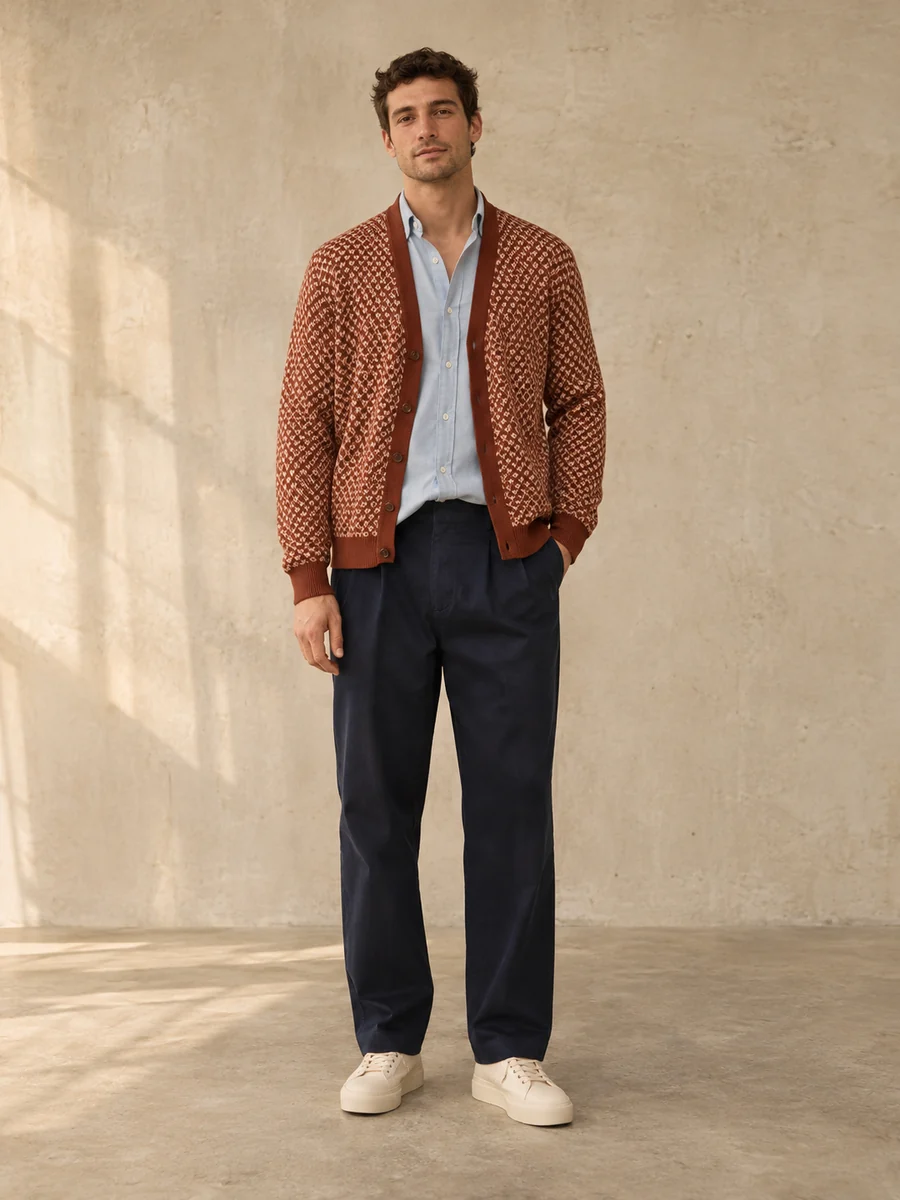
Rust patterned cardigan over a pale blue shirt uses a patterned cardigan with a quieter trouser area. Navy blazer, blue stripes and burgundy loafers gives a striped shirt another frame through its blazer. They are examples of placing a visible pattern, not evidence that every pattern in the gallery should be combined.
Repeat a color without matching everything
A color that appears in both patterns can connect them. Begin with a small repeat that is already present, rather than hunting for exact matches across shoes, socks and accessories. A similar color can still look different in wool, cotton and a printed surface.
If the combination becomes hard to read, compare it without one patterned piece. Replace that piece with a plain color or a texture. Changing only one item helps identify whether the issue was scale, contrast or the amount of patterned area.
Compare stripes at outfit scale before adding a second repeat
Brown rugby stripes with navy track pants and a cream beanie gives a brown-and-cream striped rugby a navy lower half; Navy blazer, blue stripes and burgundy loafers places a blue-and-white striped shirt inside a navy blazer; Rust patterned cardigan over a pale blue shirt uses a patterned cardigan around a blue center. These are three arrangements for giving a pattern space. They are not a suggestion to wear all three patterned garments together.
Use one of your own striped or checked tops as the starting point. Take a view of the complete outfit from a similar distance each time. First leave the pattern fully visible, then place a plain open layer around it. If the second arrangement is easier to read, the useful change may be the smaller visible pattern area rather than a new color or a different print.
Only after that test, try another pattern beside it. Compare a visibly smaller repeat with one close in scale to the first. Keep the shoes and trousers unchanged and look at the two outfits after stepping back. If a plain version is the one you prefer, save that result. Mixing patterns is an option for building a combination, not a task that must be completed on every expressive outfit.
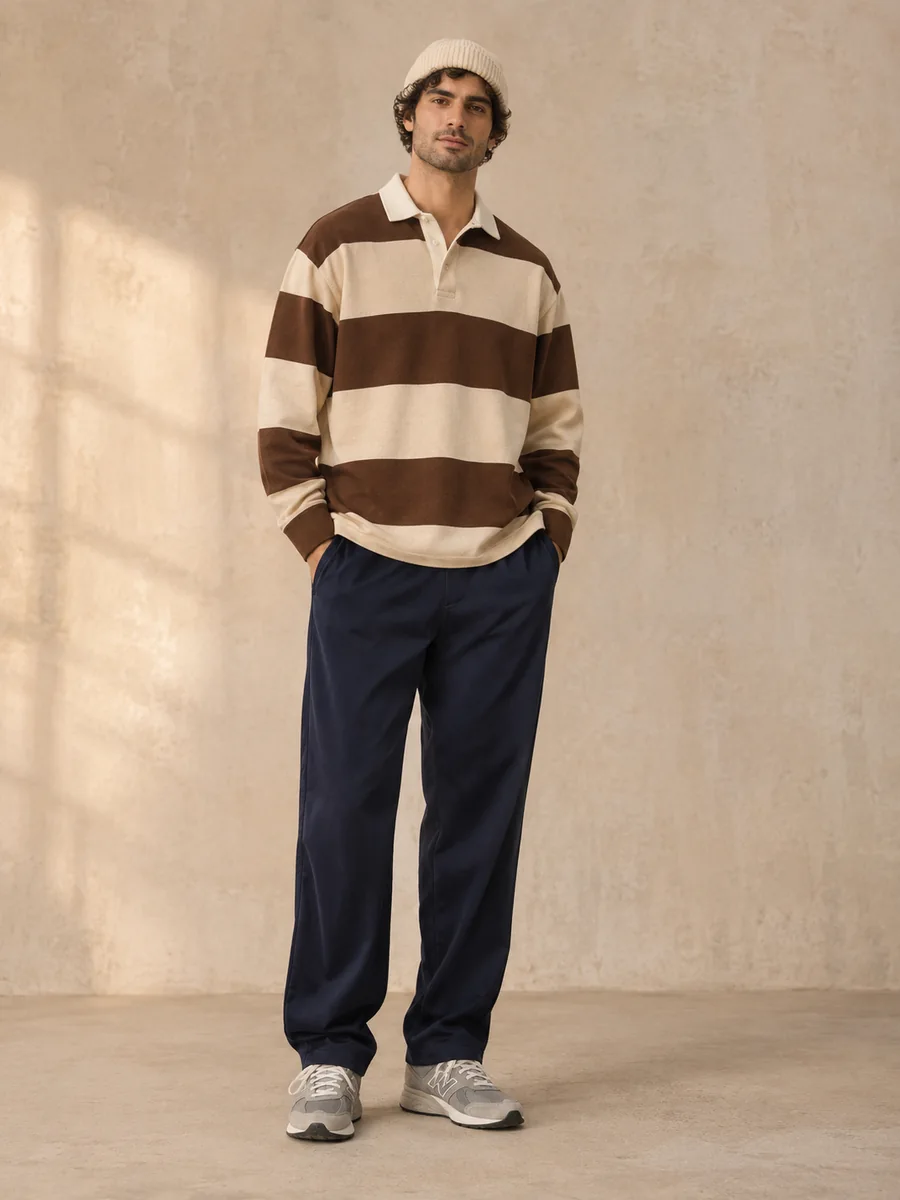
Brown rugby stripes with navy track pants and a cream beanie
Build a useful pattern board
Put the actual pieces beside each other in a moodboard and add a note naming the relationship: “small stripe under a large check” is more informative than “eclectic.” Keep full outfit examples next to detail views so the board does not lose the trouser and shoe balance.
A flat collage cannot predict how fabrics move or how the layers fit. Use it to shortlist a combination, then test the garments together. Save the result you actually want to wear, including a simpler version for days when fewer details feel useful.
Explore more outfit ideas or compare the style files.