Use classic clothes as the reference
Old money-inspired here means selected classic pieces arranged through restrained color and clear proportions. Knit polos, Oxford shirts, pleated trousers and quiet leather-looking shoes supply the vocabulary. A brand, price or family background does not establish taste, and the label should never become a measure of someone’s personal worth or identity.
Begin with a classic garment you like wearing and decide how much structure the setting requires. A polo and trousers differs from a blazer and Oxford. The useful work lies in those relationships, not in trying to imply an imagined lifestyle, copy a wealthy person or use clothing as evidence of social status.
Choose soft structure before detail
A blazer can frame the shoulders without turning every combination into a matching suit. Inspect its space over the real shirt or knit and how its length meets the trouser rise. The relaxed appearance of a generated concept cannot establish size, quality or the construction of an actual jacket.
A restrained belt or shoe can echo a color already present, but neither corrects a jacket that pulls or trousers that drag. Set the main lines first. Accessories are supporting options rather than a list of status symbols that must appear before a classic-inspired outfit can be considered finished.
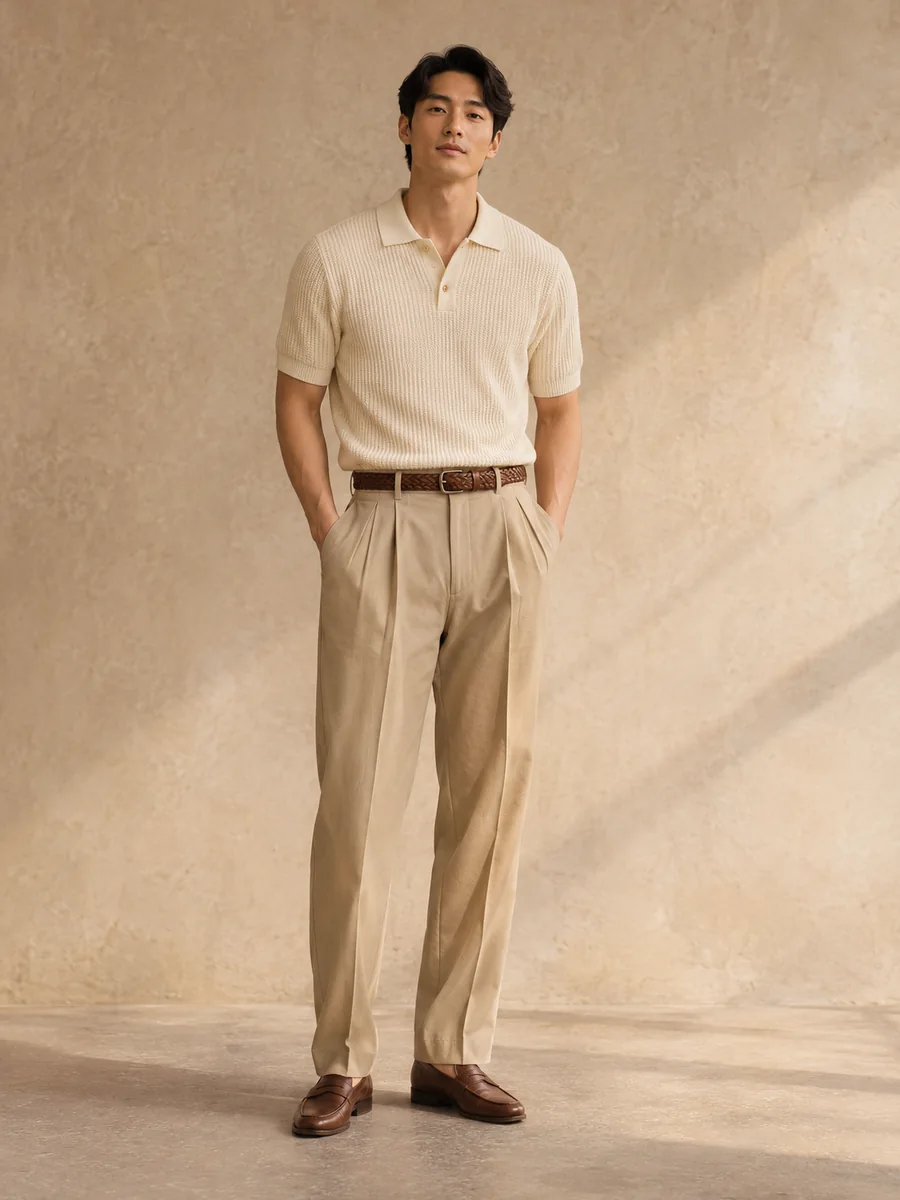
Begin with an ecru polo and beige pleats
An ecru knit polo above beige pleated trousers keeps the main silhouette within a warm pale family. Brown loafers and a woven belt create a smaller darker connection. The collar supplies light structure while the pleats allow a different amount of room from a narrow chino or straight denim base.
Check the polo hem around the actual waistband and the trouser over your loafers. Low shoes expose more of their upper and sock than boots do. Keep the length deliberate without borrowing an exact inseam from a photograph. Similar clothing can create the same arrangement without matching the illustrated fabric surface precisely.
Ecru polo, beige pleats and a woven brown belt
Use a blazer to change the polish
A pale-blue Oxford, navy trousers and soft gray blazer create a clearer upper-to-lower separation. Brown derby-style shoes ground the outline. Compare it with the polo formula: the jacket and exposed shirt collar supply more structure while the palette remains quiet and the supporting pieces do not need another large pattern.
Test the real shirt under the blazer while seated and moving. Inspect sleeve room, collar clearance and the opening instead of selecting the pieces independently. This may suit some smart-casual settings, but appropriateness still depends on the actual place and its expectations rather than a classic label in a gallery.
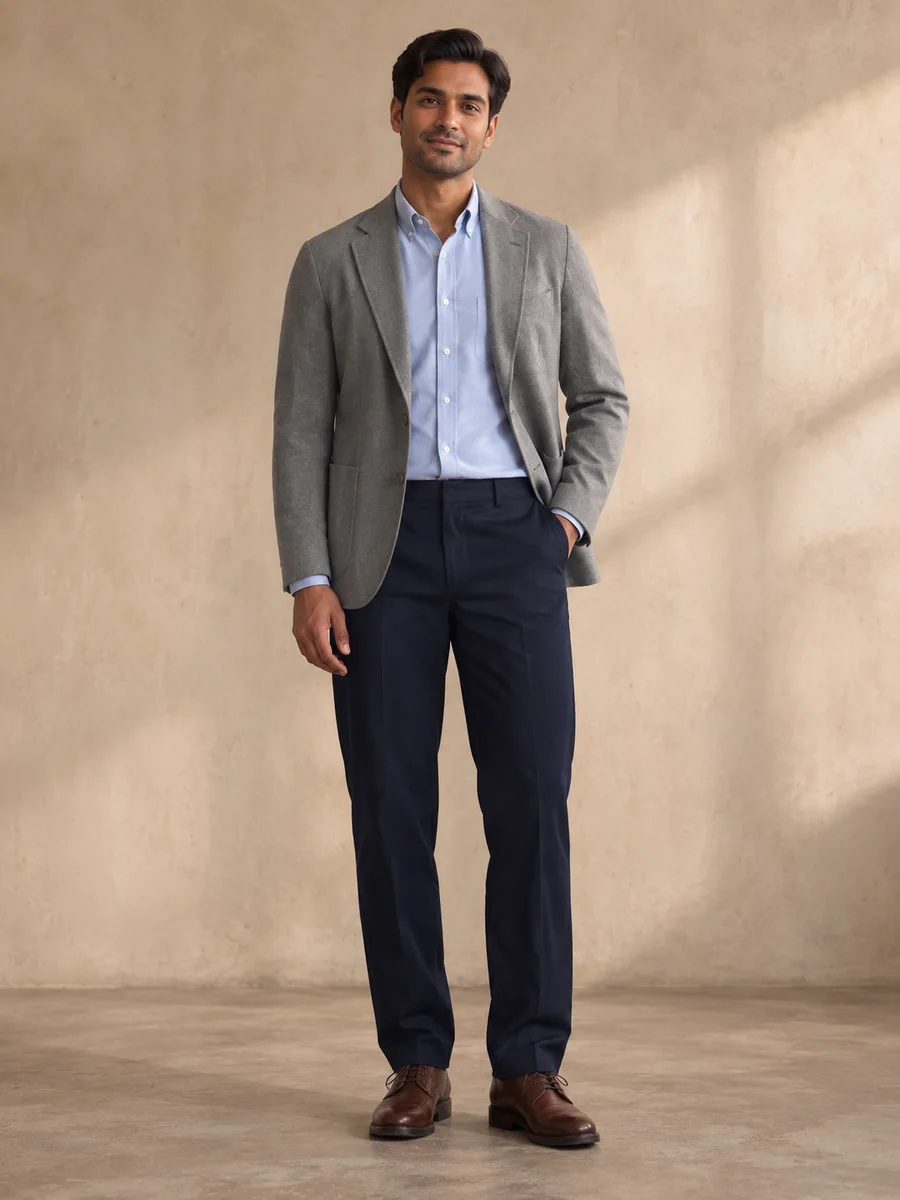
Pale blue Oxford with navy trousers and a soft grey blazer
Keep a lighter version connected through tone
A white linen-looking shirt and cream trousers form a pale base with soft brown loafers as the warmer endpoint. A taupe cardigan over the shoulders adds another quiet layer. The cardigan is editable to the idea; the underlying shirt and trousers should remain useful when it is worn normally or removed.
Check actual coverage and materials for your needs, because generated texture does not verify linen or breathability. If the pale areas merge too much, choose a small difference of shade or surface before adding a bright detail. That preserves the tonal relationship rather than introducing a different focal point without a purpose.
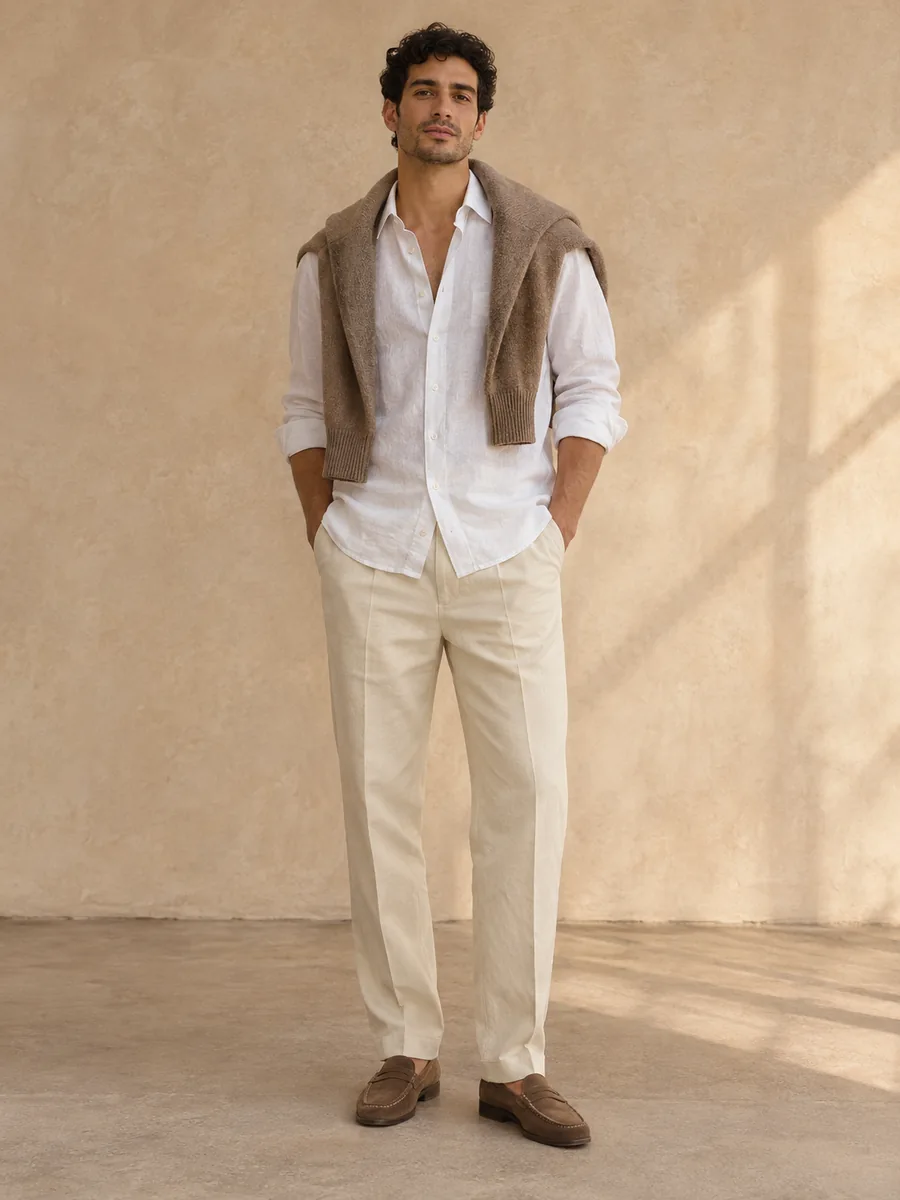
White linen-style shirt with cream trousers and a taupe cardigan
Deepen the base inside camel outerwear
A navy rollneck, gray flannel-looking trousers and camel coat put a darker base inside a warmer long frame. Brown shoes echo that warmth below. The rollneck supplies a continuous neckline rather than the more visible interruption of a shirt collar, giving another way to use classic pieces without a tie.
Make sure the actual coat has room over the knit and set the trouser hem around the intended shoes. The illustration cannot certify warmth or protection. Its useful contribution is the relation between a longer outer line and restrained base, which can be adapted to suitable real clothing and the setting you actually face.
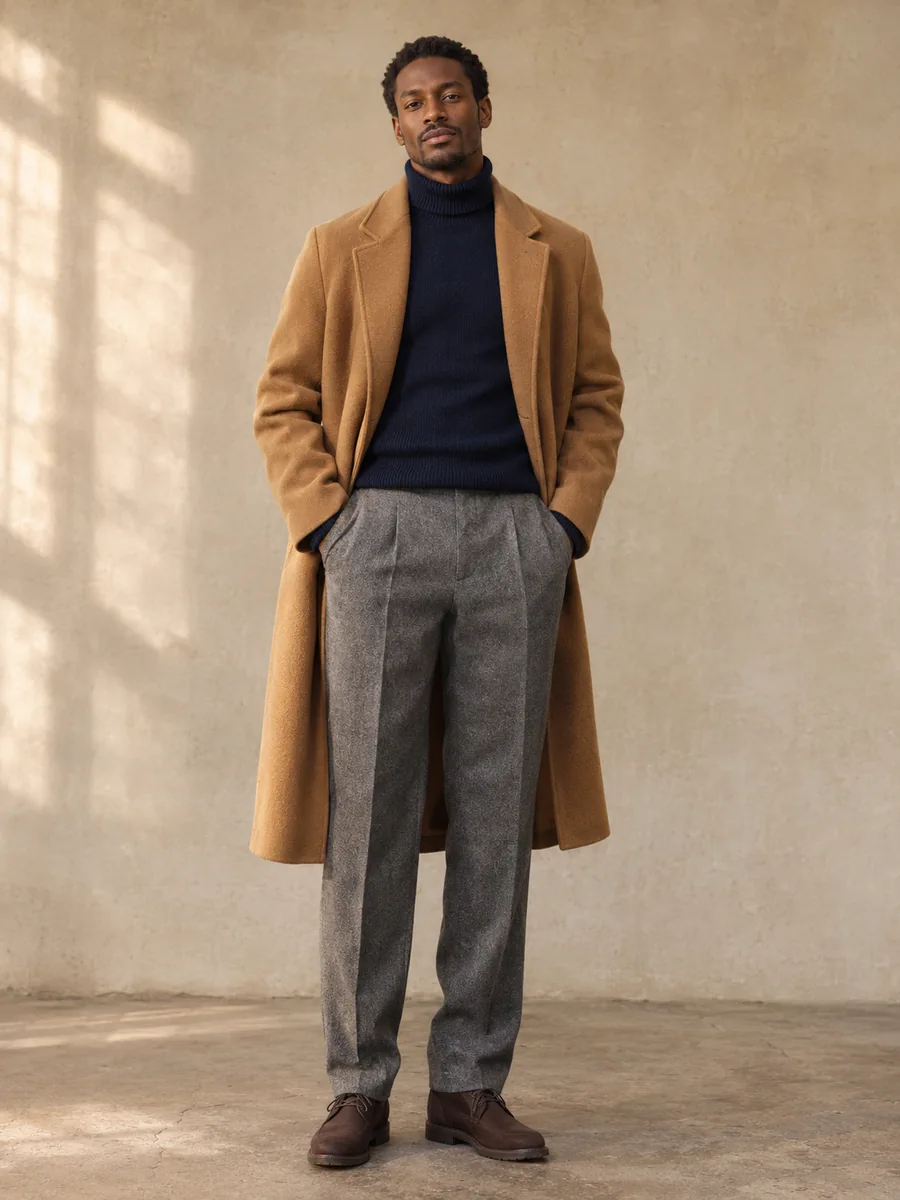
Navy rollneck, grey trousers and a camel overcoat
Borrow a formula rather than a social story
Preppy outfits can foreground sporting stripes and collegiate-looking details; minimalism may share colors while reducing heritage cues further. Compare actual examples to identify whether you like the classic garment, soft tailoring or simply the quiet palette. The aesthetic name does not have to decide every other part of your wardrobe or how you describe yourself.
Use the capsule builder to enumerate real supported arrangements and save useful alternatives in the planner. Keep the pieces that repeat across your days and note their fit. A higher price would not automatically improve those relationships, and an illustrated complete look need not be bought as a separate set before its idea becomes useful.
| Reference | Shared clothing | Emphasis |
|---|---|---|
| Old money-inspired | Polos, pleats, soft jackets | Quiet classic arrangement |
| Preppy | Oxford, knitwear, loafers | Sporting and collegiate details |
| Minimalist | Plain knits and quiet trousers | Fewer decorative heritage cues |
Explore more outfit ideas or compare the style files.