Begin with one western reference
A western-inspired outfit can start with a denim shirt, shaped boot or short suede-looking jacket rather than an entire costume. Choose the piece that fits your wardrobe and keep enough supporting clothing familiar to understand what it changes. A larger buckle or several extra accessories are not required to make the reference readable.
These are visual concepts, not authenticated historical garments or product specifications. Their value lies in outer length, the relationship of denim washes and the trouser opening around the shoe. Check actual materials, fit and suitability separately instead of inferring quality or practical performance from a generated surface that happens to appear robust.
Set the jean around the real boot
A western-shaped boot can have a distinct shaft and toe. Inspect whether the jean opening clears it and how the hem settles above it. A straight leg may work without an extreme flare. Check front, side and back while walking, looking for cloth catching on the shaft or slipping underneath the heel.
Choose the amount of break deliberately. More length may simply create folds above an obstruction instead of solving it. Keep your actual waistband position stable during the check because moving it changes the effective inseam. Once the lower line works, it is easier to judge whether the shirt or jacket needs another length adjustment.
Use a denim shirt above indigo
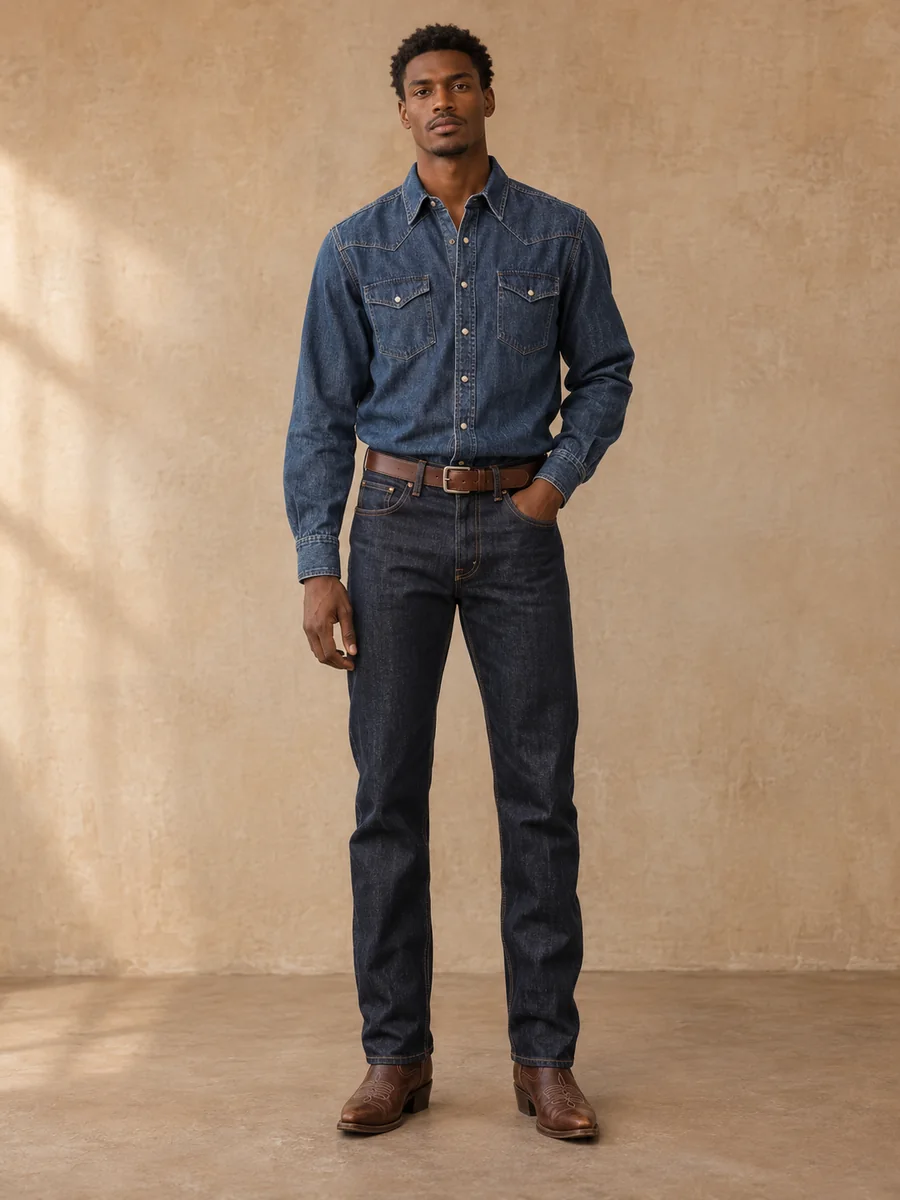
A blue denim shirt with an upper yoke above straight indigo jeans creates a relatively continuous denim formula. Brown western-shaped boots make the lower reference more distinct and a plain brown belt can repeat their warmth at the waist. Shirt construction supplies the upper detail without requiring a large print or additional neck accessory.
Compare close and separated washes with actual clothing. Either can be deliberate, but the boundaries differ. Keep the belt quiet enough for denim and footwear to remain visible, then inspect shirt hem and sleeve movement before adding another detail. The useful formula can work with similar pieces rather than precise replicas of the concept.
Yoke-detail denim shirt with indigo jeans
Put a brown short frame around black denim
A short brown suede-looking jacket above an ecru tee and straight black jeans moves the warmer surface onto the upper body. Black western-shaped ankle boots continue the darker bottom. The light center divides the jacket and denim clearly without another patterned shirt competing with the shorter outer line or shaped shoe.
Inspect the actual jacket over the tee and choose the amount of lighter hem you want visible. Texture in the image does not verify suede content or weight. Set lower length using your own boots, since a different shaft or heel changes the way a straight leg falls and how much break remains practical while moving.
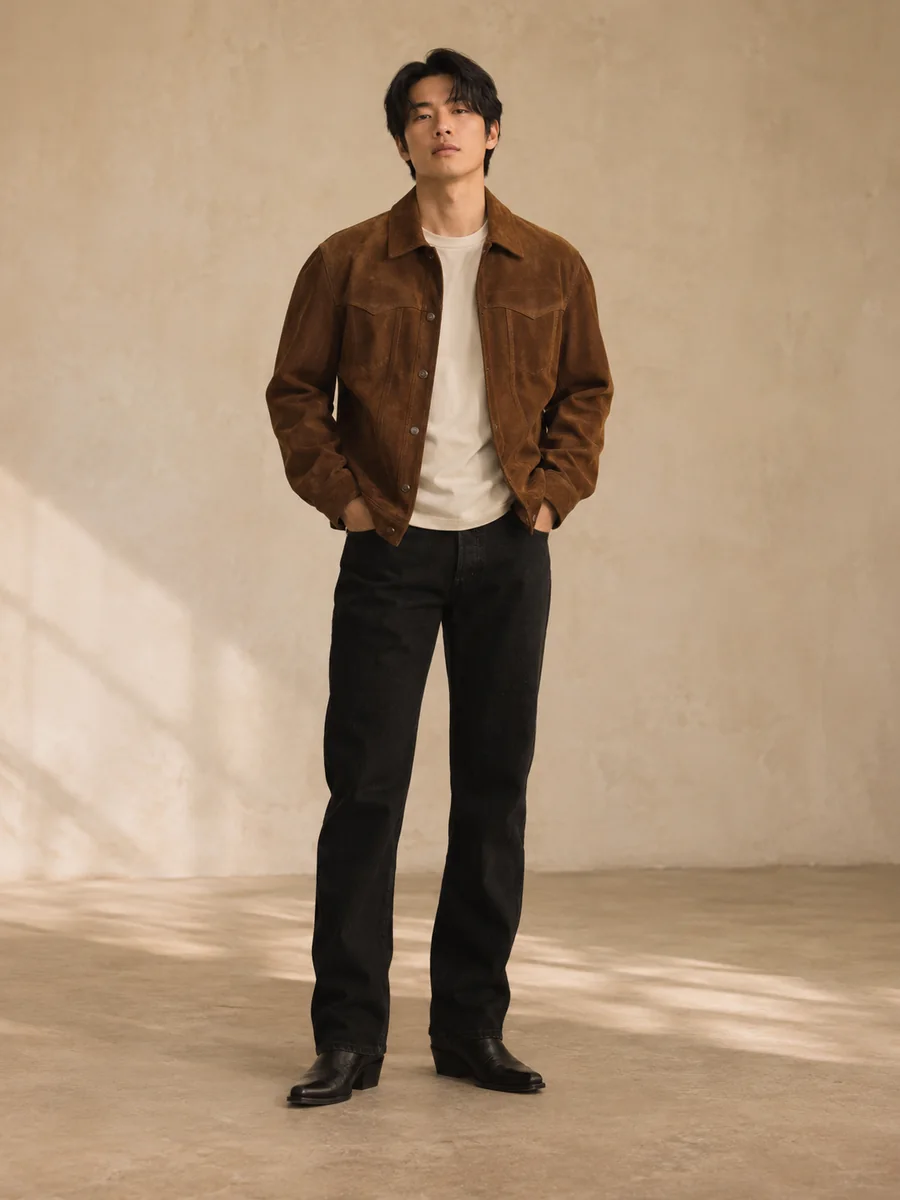
Brown suede-look jacket with a dark denim base
Quiet the upper half with a light shirt
An ecru linen-looking shirt above blue jeans reduces the denim around the torso while brown boots preserve the lower reference. A plain brown belt with a discreet buckle links the two halves rather than becoming the main object. The open neckline offers a softer alternative to the more structured denim-shirt construction.
Use the actual shirt coverage and material that suit the day. A linen-like surface cannot prove fiber or breathability. Inspect hem against trouser rise and make sure the boot opening stays clear. This can remain a useful everyday formula without adding another specifically western-looking garment simply to increase the strength of the reference.
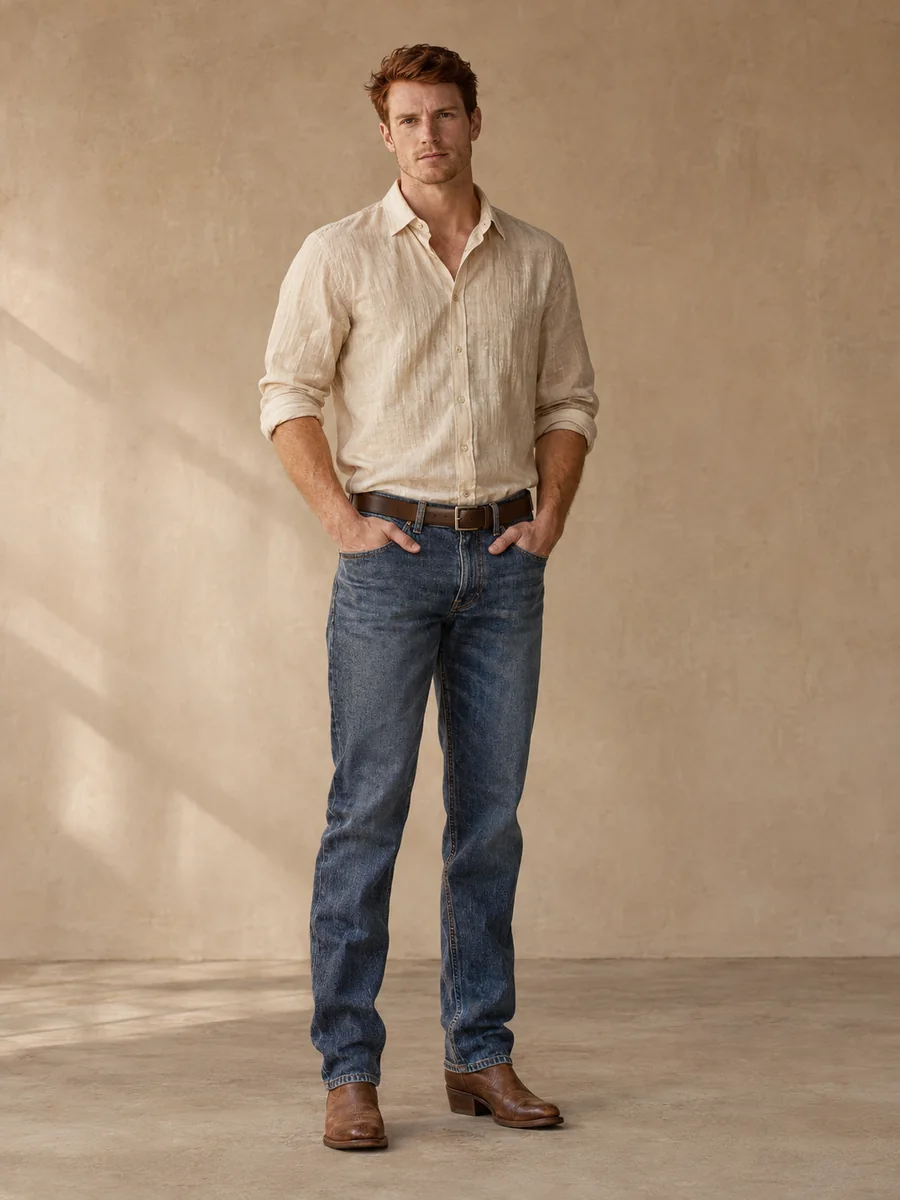
Textured ecru shirt with blue jeans and brown boots
Separate the jacket from a softer denim wash
A dark-blue denim jacket around a light-gray shirt above medium-blue straight jeans makes the difference in washes more obvious. Dark-brown boots ground the lower line. This double-denim formula gives a clearer upper frame than a shirt with indigo jeans, demonstrating that denim-on-denim need not resemble an exact matching set.
Try the jacket open so the gray center remains visible and inspect its ending above the waistband. A shorter frame reveals more of the straight jean. Check the hem around your own boot during movement instead of assuming a stronger denim reference requires more stacked fabric or excess length behind the heel.
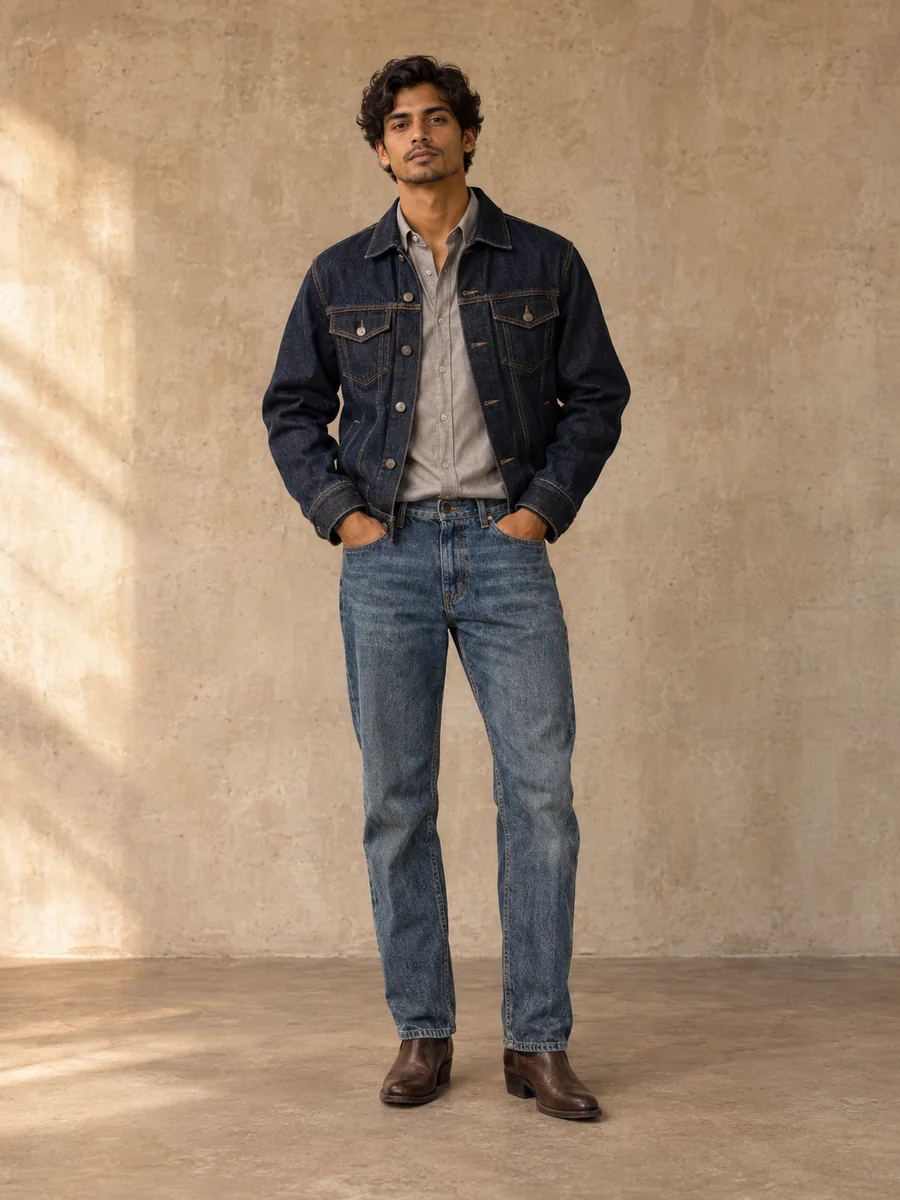
Dark denim jacket with a lighter denim leg
Keep the reference flexible in your wardrobe
Compare workwear, biker and vintage-inspired looks to decide whether denim, a short upper frame or shaped footwear is the feature you enjoy. Jeans can support several directions when their neighboring clothes change. Keeping that useful overlap is more practical than building a separate wardrobe for each label in the style index.
Record actual boot and denim details in the wardrobe tool and use the finder to preserve one as a starting constraint. Confirm generic matches rather than assigning them automatically. Notes on shaft clearance, jacket length and the real trouser rise make the next formula start from a usable adjustment instead of another complete shopping list.
Explore more outfit ideas or compare the style files.